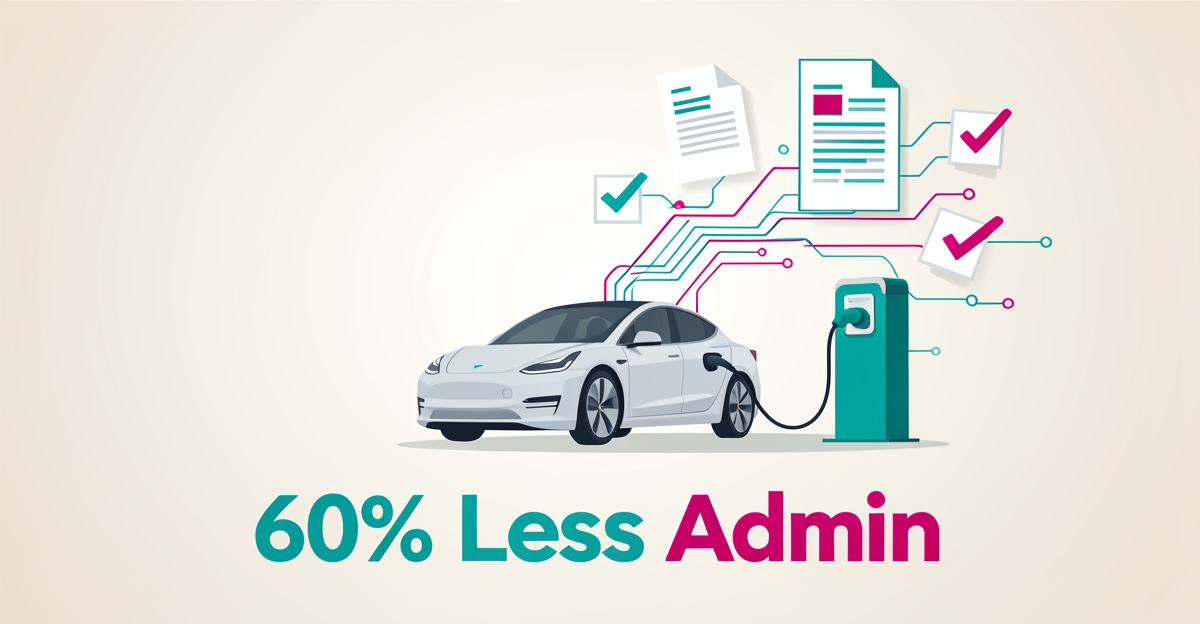
How AI Can Reduce Administrative Workload in EV Charging Operations
Key Facts
- Global EV sales passed 17 million per year back in 2024 and have kept climbing since, with roughly one in five cars sold in China, Europe, and the US now electric
- Industry forecasts have projected the global EV charging market growing into the hundreds of billions of dollars through the late 2020s
- Well-designed custom AI systems can take over the bulk of repetitive admin work, invoicing, permit tracking, and compliance logging, freeing teams to scale without adding office headcount
- AI workflow automation integrates with existing tools like QuickBooks, Xero, and dispatch systems to avoid rip-and-replace disruption
- Compliance documentation for EV charging stations can generate automatically from field inputs, reducing manual administrative burden
- AIQ Labs has deployed 200+ multi-agent systems and runs 4 live SaaS products daily, automation is what we do, not a side offering
Hire a team member that works 24/7 — for less than a part-time wage.
AI receptionists, SDRs, dispatchers and 99+ roles. Trained on your business, fully managed.
Not sure where to start? Ask our AI planner
The Admin Burden Behind EV Charging Growth
The shift to electric vehicles has moved faster than most industries can keep up with. Global EV sales passed 17 million per year back in 2024 and have kept climbing since, with roughly one in five cars sold in China, Europe, and the US now electric. Behind every one of those vehicles sits a charging station that had to be quoted, permitted, installed, invoiced, and kept compliant.
That surge in demand is reshaping the charging market itself. Industry forecasts have projected the global EV charging market growing into the hundreds of billions of dollars through the late 2020s, and EV adoption keeps pulling demand for fast, convenient charging infrastructure along with it. For installers and charging operators, this is both an enormous opportunity and a growing operational strain, because every new project carries a hidden tail of administrative work.
Consider what actually happens after the hardware goes in. An installation company might spend weeks on a single site deployment, then spend nearly as much time on the paperwork surrounding it: generating invoices and chasing payments, tracking permit applications across multiple jurisdictions, logging compliance documentation to meet accessibility and regulatory standards, and reconciling job data across disconnected systems. None of it is the work these businesses went into the industry to do, yet all of it determines whether they get paid and stay audit-ready.
The cost of this manual admin compounds in a fast-scaling market. When demand doubles, manual processes double with it:
- Invoicing and accounts receivable pile up as project volume grows, slowing cash flow at the exact moment growth funding is needed most.
- Permit tracking becomes a bottleneck, since each new site means new applications, jurisdictions, and approval timelines to monitor by hand.
- Compliance logging grows heavier, with operators accountable for meeting design standards such as the U.S. Access Board guidelines for accessible EV charging stations, which require accessible routes, operable parts, and communication features.
- Skilled technicians lose hours to data entry instead of installations, capping how many jobs a team can complete without adding headcount.
The result is a quiet capacity ceiling. Companies in this space can win more contracts than ever, but their back office, not their field crews, becomes the constraint on growth. And in a market expanding this quickly, falling behind on admin while competitors scale means watching opportunity pass by.
This is precisely the problem AI workflow automation is built to solve. By automating repetitive tasks like invoicing, permit tracking, and compliance logging, businesses can redirect administrative hours back into core service work. Rather than adding office staff to keep pace with growth, installers and operators can integrate AI automation with the tools they already use, so the paperwork that follows every installation handles itself.
The companies thriving in this market will be the ones that treat admin burden as a solvable engineering problem, not an unavoidable cost of doing business. That framing changes everything about how a charging business scales. At AIQ Labs, we build automation that integrates with existing tools, from a single workflow rebuild to a full operating system, freeing installers to focus on the field work that actually drives revenue.
The Compliance and Accessibility Paperwork Problem
Accessibility requirements are no longer optional for EV charging stations, they're legally mandated under the ADA and ABA. The U.S. Access Board guidelines require accessible routes, operable parts, and accessible payment systems at every public charging location, with specific attention to user interface design and physical access. These standards exist to ensure that drivers with disabilities can independently use charging infrastructure, but meeting them creates significant administrative overhead for installers and operators.
Manually tracking permits, conducting accessibility audits, and maintaining compliance logs introduces real risk and slows deployment timelines. Each station must be verified for compliance with route width, operable part height, and payment system accessibility, details that are easy to overlook in spreadsheets or paper-based systems. A single missed audit or expired permit can trigger delays, fines, or retrofitting costs that derail projects. As EV adoption keeps accelerating, the pressure to deploy compliant charging infrastructure quickly intensifies, making manual processes a bottleneck rather than a safeguard.
AIQ Labs helps operators automate the administrative burden of compliance by building systems that integrate permit tracking, audit scheduling, and documentation workflows into one place. These tools take the repetitive work off your team's plate, ensuring accessibility requirements are met consistently without slowing down installation crews. By replacing fragmented tracking with intelligent automation, businesses can focus on deploying chargers, not chasing paperwork, while staying aligned with federal accessibility standards. Start the 2-minute Fit Check to see how automation can streamline your compliance workflow.
How AI Automates the Back Office of Charging Operations
AI-powered automation is transforming the back office of EV charging operations by eliminating the repetitive administrative tasks that drain time and resources. AI systems handle invoice processing end to end, extracting data, generating invoices, and flagging exceptions, which accelerates financial workflows and minimizes errors in accounts receivable. Automated permit and compliance logging creates secure audit trails, so regulatory requirements are met without someone babysitting a spreadsheet. AI employees, managed AI staff covering receptionist, SDR, dispatcher, and 99+ other roles, manage scheduling, dispatch, and customer communication around the clock at a fraction of the cost of a human hire, allowing teams to focus on service delivery and infrastructure growth. This shift enables EV charging providers to scale operations efficiently while maintaining compliance and responsiveness. AIQ Labs builds these systems so you own them outright, no vendor lock-in, no per-seat ransom, no dependency on someone else's roadmap. By automating back-office functions, businesses redirect effort toward expanding access to charging networks and improving the user experience. The result is a more agile, cost-effective operation ready to meet rising demand. To explore where automation creates the most leverage in your operation, start with a free 30-minute strategy call to identify high-impact opportunities.
Implementing AI Without Disrupting Your Existing Tools
The biggest mistake operators make with AI is treating it like a rip-and-replace project. In reality, the fastest wins come from fixing one broken workflow while your existing tools stay exactly where they are.
With the global EV charging market expanding through the late 2020s, operational complexity will only intensify. More stations mean more invoices, more permit renewals, and more compliance logging, including documentation tied to federal accessibility guidelines for EV charging stations. Trying to overhaul everything at once is how projects stall.
Start instead with the single workflow that bleeds the most hours, an AI Workflow Build. For most charging operators, that's invoicing, permit tracking, or compliance logging. A targeted rebuild of one of these is fixed-price and phased, and it proves value in weeks, not months, before you expand further.
Critically, effective AI automation integrates with your existing stack rather than replacing it. A well-built system connects to:
- Your CRM for customer records, site histories, and service tickets
- Accounting platforms like QuickBooks or Xero for invoice generation and payment tracking
- Dispatch and scheduling tools your field technicians already use
- Communication channels, email, SMS, and phone, for automated status updates
This matters because as EV adoption keeps accelerating, your charging network will scale, and your automation layer should scale with it, not fight your tools.
Your engagement model should match your risk tolerance. Start Monthly suits operators who want a managed AI employee handling a defined role, with monitoring and improvements included. Build in Milestones lets you approve and pay per phase, keeping everything built so far if you stop. And Own It Outright means full control of the code, agents, and data when the build completes. No fake prices, no invented numbers, you'll know exactly what each phase costs before you commit.
A realistic timeline looks like this: one to two weeks for discovery and workflow mapping, four to twelve weeks for development and integration with your existing systems, one to two weeks for deployment and team training, then ongoing optimization as the system learns your operation.
AIQ Labs structures every engagement this way, phased, integration-first, and sized to the problem. The result is automation that fits your operation today and grows with your network tomorrow.
Freeing Installers to Focus on the Real Work
With administrative burdens lifted, installation teams can redirect their expertise toward the complex, hands-on work that actually moves projects forward. The charging market keeps expanding and EV sales keep climbing, demand that requires every available technician on-site, not buried in paperwork. AIQ Labs builds custom automation systems that integrate with existing tools, so crews can scale output without adding headcount.
- Dispatchers coordinate job sites instead of chasing permit approvals
- Field technicians focus on safe, compliant installations rather than manual data entry
- Project managers track progress in real time through unified dashboards
- Compliance documentation generates automatically from field inputs
The shift from reactive administration to proactive execution changes what a team can accomplish in a season. When invoicing, permit tracking, and compliance logging run themselves, the bottleneck disappears, and the capacity to meet surging charging demand appears without a single new hire. Ready to see where automation creates the most leverage for your operation? Start the two-minute Fit Check at aiqlabs.ai/apply, then book a free 30-minute strategy call at aiqlabs.ai/book to map your biggest bottleneck. Prefer email? Reach the team at [email protected].
Still paying for 10+ subscriptions that don’t talk to each other?
We build custom AI systems you own outright. No vendor lock-in. Full control.
Not sure where to start? Ask our AI planner
Frequently Asked Questions
How much administrative work is actually hiding behind EV charging installations?
Can AI really cut admin time for charging operators, or is that just marketing?
What accessibility compliance paperwork do EV charging operators have to manage?
Will AI automation force us to rip out our current CRM and accounting tools?
How quickly can we get AI admin automation running for invoicing or permits?
Is this only for big operators given how fast EV adoption is growing?
Turning Administrative Overhead Into Operational Advantage
As EV adoption accelerates and the charging market keeps expanding, the businesses that thrive won't be those with the most installers, they'll be the ones that eliminate the administrative bottlenecks constraining growth. Manual invoicing, permit tracking, and compliance logging aren't just time-consuming; they're capacity limits that prevent scaling. By automating these back-office workflows, charging operators can redirect administrative hours back into revenue-generating field work, integrating AI systems with existing tools rather than replacing them. AIQ Labs builds automation that fits your operation, whether you start with a single workflow build, add a managed AI employee, or grow into a full AI operating system you own outright. The path forward begins with identifying where your team loses the most hours. Start the two-minute Fit Check at aiqlabs.ai/apply to map your biggest bottleneck, then book a free 30-minute strategy call to explore high-impact automation opportunities tailored to your infrastructure.
Make AI your competitive advantage — not just another tool.
Strategy, implementation and ongoing optimization. One partner, end to end.
Not sure where to start? Ask our AI planner