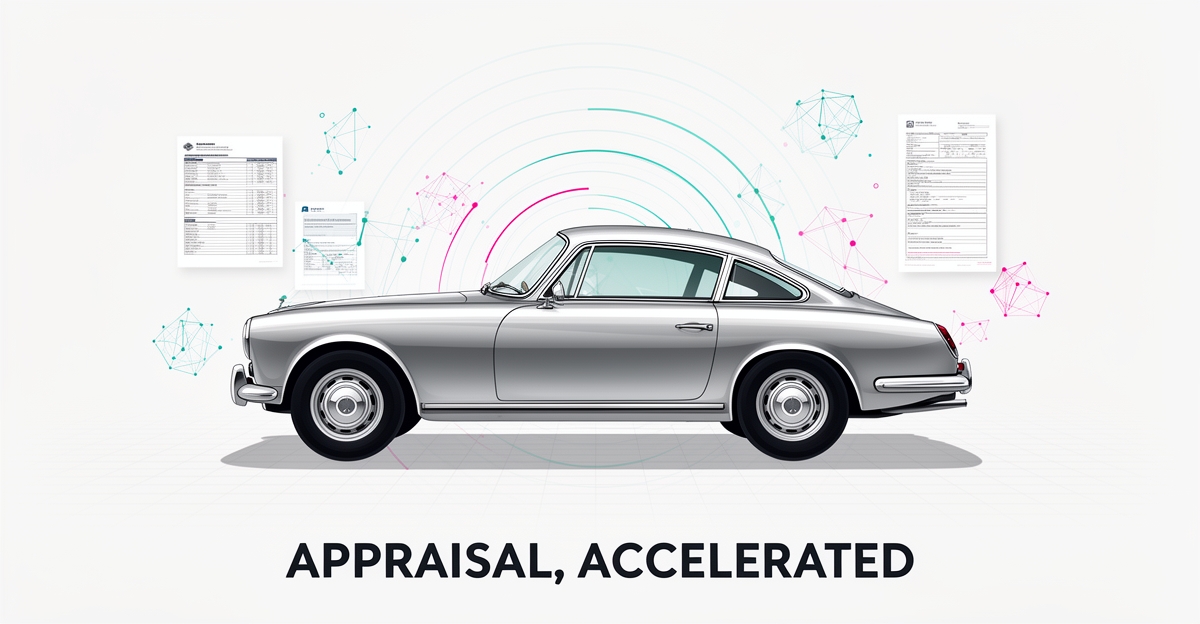
How AI Can Reduce Car Appraisal Time and Improve Pricing Accuracy for Classic Dealers
Key Facts
- AI-powered tools reduced appraisal time by an average of 86% in one study.
- AI systems achieved 98.7% agreement with human appraisers identifying objects according to field evidence.
- AI labor estimates were within 5.1% of actuals versus 11.3% for manual estimates in appraisal research.
- AI can reduce time spent drafting client correspondence by up to 75% per industry research.
- Global automotive AI market is projected to reach USD 48.59 billion by 2034 according to market forecasts.
- Volvo's AI safety system has reportedly reduced accident rates by 50% in a LinkedIn post.
Hire a team member that works 24/7 — for less than a part-time wage.
AI receptionists, SDRs, dispatchers and 99+ roles. Trained on your business, fully managed.
Not sure where to start? Ask our AI planner
The Classic Car Appraisal Bottleneck Dealers Still Face
Classic car dealers lose deals in the gap between a car arriving on the lot and a defensible price landing on a buyer’s screen. The appraisal bottleneck is manual, fragmented, and slow, and it erodes both margin and trust.
Photo review alone drags timelines out. Staff zoom through dozens of images to spot rust, trim, or matching numbers, logging observations by hand. Service record digging adds another layer, with paper histories, scanned invoices, and owner notes pulled from different folders and transcribed into spreadsheets. Market comps then require manual searches across auction results, private sales, and marque-specific guides, often repeated when a detail changes.
The time cost compounds fast. Appraisal research shows AI-powered tools reduced appraisal time by an average of 86% in one study, highlighting how much repetitive work dominates the process today. Industry research on appraisal workflows also finds AI can reduce the time spent drafting client correspondence by up to 75%, freeing specialists from admin.
Human error creeps in where volume meets nuance. Missed service entries, misread option codes, and inconsistent condition grading lead to pricing swings that buyers spot instantly. Field evidence on AI identification reports AI systems achieved 98.7% agreement with human appraisers in identifying objects, with the remaining 1.3% requiring human verification. That pattern mirrors classic car work, where AI handles high-volume pattern matching and humans adjudicate edge cases.
Buyer trust suffers when pricing feels opaque. Collectors expect data-backed justification for a numbers-matching claim or a premium for provenance. Manual comps delivered late create negotiation friction and abandoned inquiries, especially for high-value classics where transparency is a purchase driver.
The current manual loop typically looks like this:
- Manual photo review and condition notes entered by hand
- Service record digging across paper, PDFs, and owner files
- Manual market comp searches with inconsistent sources
- Report drafting and client correspondence done after hours
These steps are precisely the repetitive tasks AI is built to augment. In valuation work, AI excels at automating repetitive and time-consuming tasks, freeing appraisers to focus on higher-level analysis, judgment, and client interaction. AIQ Labs approaches this challenge through AI Document Processing & Management, analyzing photos, service records, and market data to provide instant, data-backed pricing estimates.
The result is not replacement of expertise but acceleration of it. Efficiency can reduce administrative work, while human judgment remains essential for unique circumstances and professional accountability.
How AI Augments Appraisal With Data-Backed Speed
Classic car dealers lose hours to manual photo sorting, service record review and market comps. AI changes the workflow by handling repetitive extraction and pattern matching so appraisers can focus on judgment.
AI systems analyze uploaded photos to identify make, model, trim, options and condition markers. In appraisal work, AI object identification achieved 98.7% agreement with human appraisers, with the remaining 1.3% flagged for human verification. That human-in-the-loop check preserves expertise while removing tedious visual scanning.
Service records and maintenance histories are extracted and structured automatically. AI tools pull dates, mileage, parts and work types from PDFs, scans and photos, then organize them into a centralized timeline. This automated data management replaces manual entry and accelerates the research that underpins a credible valuation.
Market data is processed in parallel. AI algorithms ingest historical sales, auction results and comparable listings to generate initial price estimates. AI labor estimates were within 5.1% of actuals versus 11.3% for manual estimates, showing tighter data-driven pricing signals for condition-adjusted valuations.
The speed gain is substantial. One study found AI-powered tools reduced appraisal time by an average of 86%. For classic dealers, that means faster turnarounds on inbound inventory, quicker buyer quotes and more transparent pricing conversations.
Augmentation, not replacement, remains the model. AI handles the fast, repetitive tasks; appraisers apply context, provenance knowledge and negotiation sense. As Jennifer Garland Ross notes, AI is not doing appraisals, it’s helping move faster through work that used to take far longer.
This aligns with AI Document Processing & Management approaches used by AIQ Labs, where custom AI systems extract, structure and connect data across photos, documents and market feeds. The result is instant, data-backed estimates that support human decisions rather than override them.
Practical benefits for a classic dealership include:
- Photo-first condition scoring with 98.7% identification agreement and human review for edge cases
- Automated service history parsing into a structured maintenance timeline
- Real-time comparable matching from market data for initial valuation bands
- Draft appraisal summaries for faster client communication and internal review
Appraisers keep final authority on unique cars where rarity, matching numbers or restoration quality matter. AI provides the speed and consistency; humans provide the expertise and accountability.
From Photos to Price: The AI Appraisal Workflow Dealers Can Deploy
The appraisal process for classic vehicles has long been a bottleneck of manual research, scattered paperwork, and subjective judgment. AI transforms this workflow into a structured, repeatable system that moves from photos to a defensible price in a fraction of the time.
- Organize documents with AI extraction: Service records, restoration receipts, and ownership history are ingested and structured into a searchable database, eliminating hours of manual data entry.
- Accelerate comparable research with visual search: Computer vision scans auction results, marketplace listings, and private sales databases to surface true comparables based on condition, provenance, and specification—not just make and model.
- Draft reports from dictated findings: The appraiser speaks their observations; the system generates a polished, data-backed report with market context, condition grading, and pricing rationale.
- Review and refine for accuracy: Human expertise validates the output, adjusts for intangibles like originality or historical significance, and finalizes the appraisal.
This approach aligns with research showing that AI-powered tools reduced appraisal time by an average of 86% while AI systems achieved 98.7% agreement with human appraisers in identifying objects. The efficiency gain comes from automating the administrative heavy lifting—AI can reduce the time spent drafting client correspondence by up to 75%—so the appraiser focuses on judgment, not paperwork.
AIQ Labs builds this exact workflow as a custom AI system under the Start Monthly or Build in Milestones ownership models. The development team architects the document extraction pipeline, trains the visual search agents on your specific market data, and integrates the report generation layer with your existing CRM and inventory tools. Because the system is built on your infrastructure, you own the code, the models, and the data—no vendor lock-in, no per-seat subscriptions. An AI Employee can even handle the intake and scheduling layer, fielding seller inquiries, requesting photos and documents, and queuing appraisals for your team around the clock. The result is a complete, owned appraisal operating system that scales with your volume and sharpens with every transaction.
Accuracy, Trust and Ownership in AI-Powered Valuations
Classic car pricing lives or dies on trust, and trust starts with how a valuation is built. Dealers and buyers both feel the risk when estimates rely on manual research and paperwork, and that risk grows as data piles up across photos, service records, and market comps.
AI-augmented appraisal does not remove human judgment; it makes judgment faster and more transparent. Appraisal field reporting shows AI-powered tools reduced appraisal time by an average of 86% in one study, while the same practitioner data found AI systems achieved 98.7% agreement with human appraisers in identifying objects, with the remaining 1.3% requiring human verification. Labor estimates were within 5.1% of actuals with AI versus 11.3% for manual estimates.
Data quality, bias, privacy and transparency remain the real adoption barriers. AI algorithms are only as good as the data they are trained on, and biases in training data can lead to inaccurate or unfair valuations. The “black box” nature of some models makes it difficult to explain how a price was reached, which erodes buyer confidence. Protecting sensitive client information is also paramount when service records and ownership history are processed.
Traditional appraisal relies on manual data entry, manual searching through libraries and databases, and primarily human judgment based on experience. AI-augmented appraisal automates data extraction and organization, enables rapid visual search and data analysis, and produces data-driven estimates with human oversight. Report writing shifts from manual drafting to AI-assisted drafting with human refinement.
Core risks to address before scaling AI valuations include:
- Data bias from incomplete or skewed market histories that can perpetuate unfair pricing
- Data quality gaps where inaccurate or incomplete service records produce unreliable results
- Transparency limits when model reasoning is not explainable to dealers and buyers
- Privacy and security exposure when handling sensitive client and vehicle documents
A risk-mitigated path pairs production-tested multi-agent systems with clear ownership and governance. AIQ Labs builds custom AI systems that businesses own and control, with no vendor lock-in, and runs production AI daily across content personalization, conversational AI and regulated voice AI. That experience informs how valuation workflows are designed with validation layers, human-in-the-loop controls, and audit trails for compliance and review.
For SMB dealers, the SMB-focused implementation model matters. Custom builds can be delivered via Start Monthly, Build in Milestones, or Own It Outright, with full ownership of code, agents and data when complete. True ownership keeps pricing logic auditable and adaptable to a dealer’s own market data, while production-tested multi-agent orchestration brings the speed gains seen in appraisal research without sacrificing the human checks that preserve trust.
Still paying for 10+ subscriptions that don’t talk to each other?
We build custom AI systems you own outright. No vendor lock-in. Full control.
Not sure where to start? Ask our AI planner
Frequently Asked Questions
How much time can AI actually save on classic car appraisals?
Is AI accurate enough to trust for identifying condition and options?
Will AI replace my appraisers or just help them?
Can AI make classic car pricing more transparent for buyers?
What are the biggest risks with using AI for valuations?
Do I own the AI system if I work with AIQ Labs?
Turning Appraisal Bottlenecks Into Competitive Advantage
The classic car appraisal process has long been held back by manual photo reviews, fragmented service records, and time-consuming market comparisons—steps that slow deals, introduce pricing inconsistencies, and erode buyer trust. AI doesn’t replace the appraiser’s expertise; it accelerates it by automating repetitive tasks like photo analysis, document extraction, and comp research, freeing specialists to focus on judgment, provenance, and client relationships. As research shows, AI-powered tools can reduce appraisal time by an average of 86% while achieving 98.7% agreement with human appraisers in object identification, delivering faster, more transparent valuations without sacrificing accuracy. For dealers ready to move beyond bottlenecks, the path forward starts with identifying where AI can remove friction in your specific workflow. Take the first step with a free, no-obligation strategy session to explore how a custom AI system—built, owned, and optimized for your business—can turn appraisal speed into a real market advantage.
Make AI your competitive advantage — not just another tool.
Strategy, implementation and ongoing optimization. One partner, end to end.
Not sure where to start? Ask our AI planner