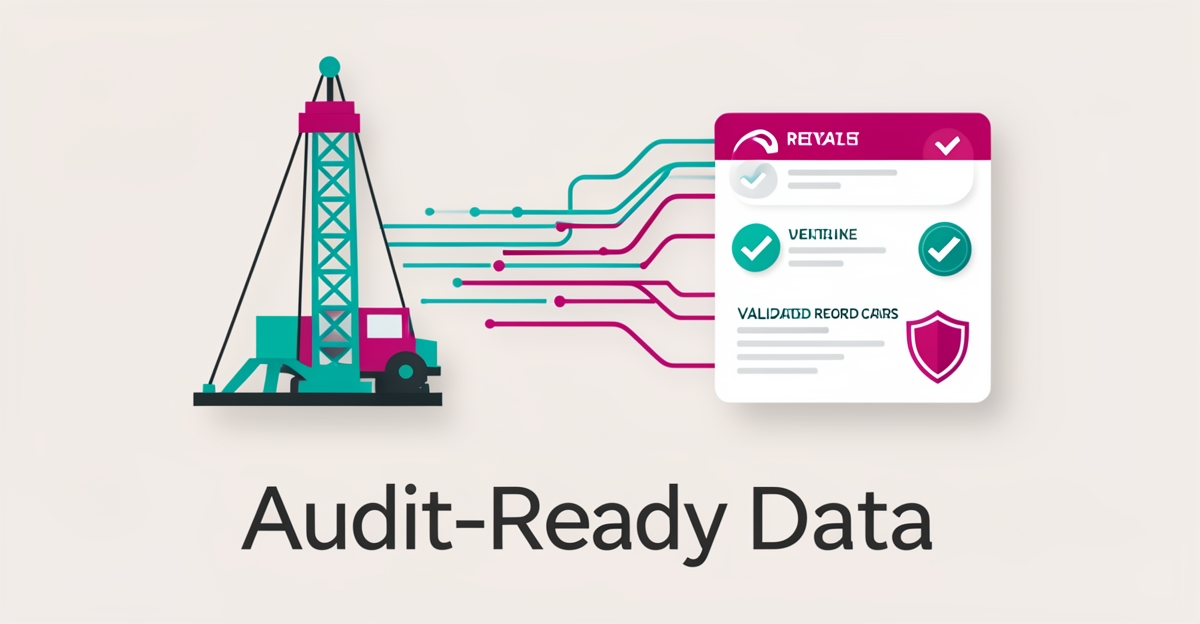
How AI Can Reduce Data Entry Errors in Well Drilling Records and Improve Audit Readiness
Key Facts
- Manual data entry error rates are typically estimated at 1-4%, meaning dozens of errors can slip into every 10,000 entries.
- Well logs and permits are especially vulnerable to transcription inconsistencies that surface during audits.
- AI-powered extraction and validation applies consistent rules to every record, catching depth and formation discrepancies before they reach auditors.
- Knowledge workers commonly spend several hours per week searching for, recreating and duplicating information.
- Avoidable rework from human errors can consume a significant share of an employee's time.
- AIQ Labs has deployed 200+ multi-agent systems and runs 4 live SaaS products daily, this is proven infrastructure, not theory.
Hire a team member that works 24/7 — for less than a part-time wage.
AI receptionists, SDRs, dispatchers and 99+ roles. Trained on your business, fully managed.
Not sure where to start? Ask our AI planner
The Costly Reality of Manual Data Entry in Well Drilling Operations
A single mistyped depth or formation name in a well log can cascade into costly rework, regulatory penalties, and failed audits. Manual data entry remains the weak link in well drilling operations, where field conditions and time pressure amplify human error.
Manual data entry accuracy typically falls in the 96-99% range, which translates to an error rate as high as 4 percent. Industry research on human error in data entry generally places manual error rates between 1-5%, meaning that without verification, companies can produce hundreds of errors for every 10,000 entries into their databases. The aggregate cost of bad data across U.S. businesses is widely cited in the trillions of dollars annually, and in drilling, those errors are not abstract.
Well logs and permits are particularly vulnerable to inconsistencies that trigger audit failures and rework. Workforce studies consistently find that a large share of workers spend a quarter or more of their week on repetitive data entry tasks, and the average knowledge worker spends hours each week looking for, recreating, and duplicating information. The financial exposure compounds quickly when bad data reaches compliance reviews.
The compliance risk is specific and material. Regulators expect traceable, consistent records that match geological benchmarks and permit conditions. Manual transcription introduces variability that is hard to detect until an audit. Inconsistent well logs and permits create gaps in the documentation trail, forcing teams into time-consuming reconciliations and exposing operators to penalties.
Manual processes also create operational drag. Avoidable rework from human errors can consume a substantial portion of a full-time employee's time. In drilling operations, that rework means delayed reporting, slower decision making, and field crews waiting on validated data.
The risks show up across the record lifecycle:
- Transcription mistakes in formation tops and mud logs that conflict with core samples
- Permit data mismatches between field sheets and regulatory submissions
- Inconsistent units or date formats that break downstream analytics and audits
- Missing validation at point of entry that allows errors to propagate through systems
AIQ Labs builds AI systems that cross-check data against known geological benchmarks and flag inconsistencies, addressing exactly this vulnerability. By removing repetitive transcription from people and applying consistent validation logic, organizations reduce error rates while freeing teams to focus on high-value analytical work rather than error-prone data handling. If this describes a bottleneck you already know you have, AI Workflow Builds rebuild that one costly workflow at a fixed price.
How AI-Powered Data Enrichment Ensures Accuracy and Audit Readiness
AI-powered data enrichment transforms well drilling record management by combining OCR, NLP, and intelligent document processing to extract, validate, and enrich field data. Applied consistently across every record, this technology stack removes the variability that manual transcription introduces. AIQ Labs implements these systems to cross-check extracted data against known geological benchmarks, ensuring compliance before records reach auditors.
The validation layer automatically flags inconsistencies that could compromise audit readiness, such as depth discrepancies or formation mismatches that violate geological logic. By maintaining comprehensive audit trails of all data transformations, organizations gain traceability essential for regulatory reviews. This proactive approach prevents compliance issues from escalating, turning data preparation into a strategic advantage rather than a bottleneck.
- Real-time cross-checking against geological benchmarks keeps typical 1-4% manual error rates from reaching auditors
- Automated inconsistency flagging catches depth and formation discrepancies before they trigger compliance failures
- Consistent, rule-based validation applied to every record replaces the variability of 96-99% manual accuracy
The enrichment process goes beyond extraction by contextualizing data with geological standards, creating a unified source of truth that supports both operational decisions and audit preparedness. Field teams spend less time correcting transcription errors and more time analyzing subsurface conditions, directly improving drilling efficiency while maintaining regulatory confidence. This systematic validation ensures that when auditors arrive, records already reflect the highest standards of data integrity.
Implementing AI Data Entry Automation: From Workflow Fix to Audit-Ready System
Manual data entry in well drilling operations carries real risk, with human error rates typically estimated as high as 4 percent. AI-powered automation transforms this workflow by combining OCR, NLP, and intelligent document processing to extract, validate, and enrich field data. AIQ Labs implements these systems to cross-check well logs and permits against geological benchmarks, flagging inconsistencies before they compromise audit readiness.
The implementation process begins with document ingestion, where field reports, permits, and well logs are uploaded in PDF, scanned image, or handwritten formats. Pre-processing uses advanced OCR and computer vision to convert these into machine-readable text, enabling algorithms to identify key data points such as depth measurements, formation types, and equipment specifications. Data extraction then isolates relevant information using trained models that recognize industry-specific terminology and formats.
Validation layers apply rule-based checks and cross-reference extracted data against known geological benchmarks and regulatory standards, automatically flagging inconsistencies for review. Human-in-the-loop controls ensure that low-confidence extractions or flagged items receive expert oversight, maintaining accuracy while preserving operational efficiency. Finally, seamless integration delivers structured data (CSV, XML, JSON) directly into existing drilling management systems, eliminating manual re-entry and creating a continuous audit trail.
- Document ingestion supports PDFs, scanned images, and handwritten notes
- OCR and NLP enable text recognition and contextual understanding
- Validation cross-checks data against geological benchmarks
- Human oversight handles flagged items and low-confidence extractions
- Structured output integrates with existing business systems
This approach removes hours of repetitive work per worker each week, allowing teams to focus on analysis rather than transcription. Well drilling companies get audit-ready records without the cost or complexity of traditional methods. AIQ Labs delivers this through three entry points: AI Employees for managed AI staff at roughly 80% less cost than a human hire, AI Workflow Builds to rebuild the one workflow that costs the most at a fixed price, and AI Operating Systems for a connected operating layer you own outright. Payment models are straightforward, Start Monthly, Build in Milestones, or Own It Outright, with no invented prices and no surprises.
Still paying for 10+ subscriptions that don’t talk to each other?
We build custom AI systems you own outright. No vendor lock-in. Full control.
Not sure where to start? Ask our AI planner
Frequently Asked Questions
How accurate is AI data entry compared to manual entry for well logs?
What specific errors does AI catch in drilling records that humans miss?
How much time can AI automation actually save drilling teams?
What document formats can AI systems process for well drilling records?
How much do data entry errors actually cost drilling companies?
Do I still need human oversight with AI data entry automation?
Turning Data Integrity into Your Competitive Edge
Manual data entry in well drilling isn't just tedious, it's a liability. With human error rates typically as high as 4 percent and rework eating into employee time, the risks to audit readiness and operational efficiency are real. AI-powered automation changes that by extracting, validating, and enriching field data, cross-checking against geological benchmarks to catch inconsistencies before they reach auditors. The result: fewer errors, faster reporting, and teams freed to focus on analysis instead of transcription. For well drilling companies ready to replace manual bottlenecks with audit-ready confidence, the next step is simple: take the 2-minute Fit Check, then book your free 30-minute strategy call to see where AI can deliver the highest impact in your workflows. AIQ Labs builds owned, compliant systems that scale with your business, and you keep full control over your data.
Make AI your competitive advantage — not just another tool.
Strategy, implementation and ongoing optimization. One partner, end to end.
Not sure where to start? Ask our AI planner