How AI Can Reduce Design Errors in Custom Cabinetry Projects
Key Facts
- Custom cabinetry punishes design errors harder than most trades, each project is a one-off, so every flaw carries its full cost in rework
- AI validation checks every drawing against your shop's construction methods, material rules, and tolerances, every time, regardless of who drafted it
- Automated checking removes the variability of manual review: fatigue, workload, and drafter experience no longer affect error rates
- Human-in-the-loop controls keep designers in charge of judgment calls while AI handles repetitive verification
- A single blueprint validation workflow is typically the fastest place to start, measurable results first, then scale
Hire a team member that works 24/7 — for less than a part-time wage.
AI receptionists, SDRs, dispatchers and 99+ roles. Trained on your business, fully managed.
Not sure where to start? Ask our AI planner
The True Cost of Design Errors in Custom Cabinetry
Blueprint mistakes, dimension mismatches, and inconsistencies that only surface during production can derail even the most carefully planned custom cabinetry project. These errors are especially costly because they often go unnoticed until materials are cut and labor is scheduled, triggering expensive rework. Manual review processes frequently miss subtle inconsistencies in complex designs, particularly when relying on human oversight across multiple versions of blueprints or shop drawings. The one-off nature of custom cabinetry amplifies this vulnerability, as there are no repeated units to catch mistakes through production learning, each project starts from scratch, making every design flaw uniquely damaging.
Rework resulting from undetected design errors creates a ripple effect that impacts materials, timelines, and client trust. Wasted wood, hardware, and finishes directly increase project costs, while delays disrupt scheduling and cascade into other jobs. Clients experience frustration when timelines slip or final products don't match expectations, damaging relationships and increasing the likelihood of negative referrals. Unlike mass-produced design work where errors can be averaged out over large volumes, custom cabinetry bears the full cost of each mistake on a per-project basis, making precision not just ideal but essential for profitability.
AI-powered document processing and management systems can validate technical data, cross-check dimensions against material constraints, and flag inconsistencies in real time before production begins. By automating validation against established design standards, these systems reduce reliance on manual review and help catch errors that humans might overlook due to fatigue or complexity. AIQ Labs builds custom AI systems that enforce design integrity throughout the workflow, ensuring blueprints are production-ready and minimizing the risk of costly rework in custom cabinetry projects. For businesses looking to eliminate these avoidable costs, starting with a free strategy call can clarify how AI validation fits into your specific workflow. Schedule your free 30-minute strategy call to explore practical steps toward error-proof design processes.
How AI Validates Blueprints Before Production Begins
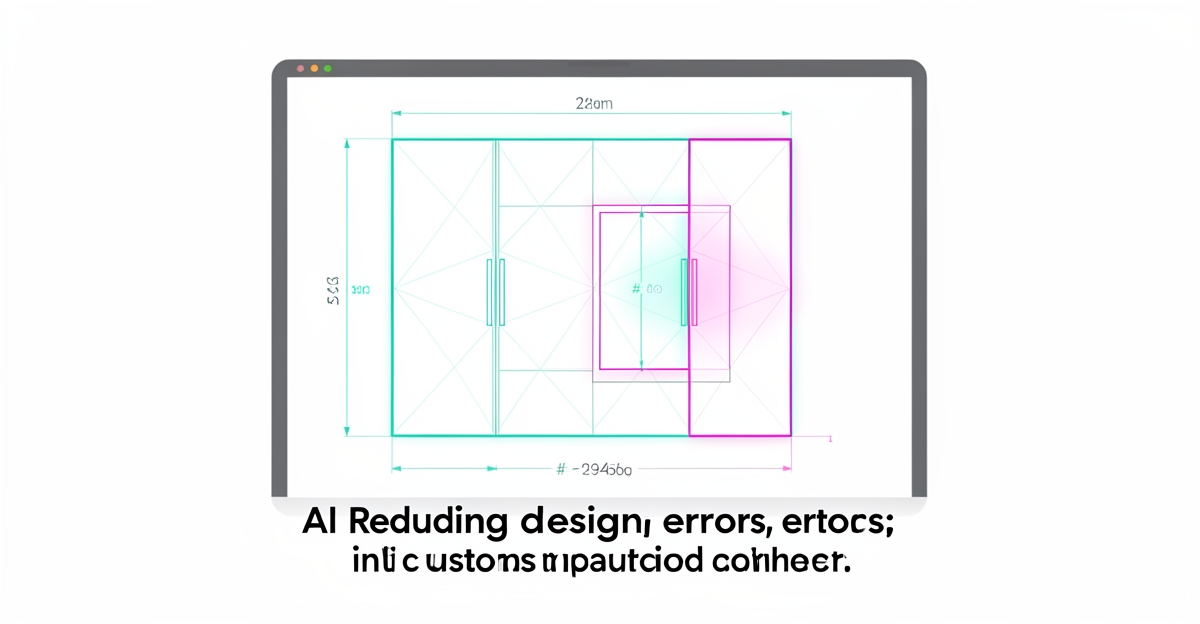
AI systems can validate blueprints before production begins, automatically checking dimensions across every view and sheet to flag inconsistencies like clearance conflicts, hardware misalignment, or spec mismatches. Checks that once required long stretches of manual editing can now run automatically through AI-powered tools that handle repetitive verification tasks. By catching errors early, these systems prevent costly rework and ensure technical accuracy before materials are cut or assembled.
AIQ Labs builds custom AI systems that validate technical data and enforce design standards in real time, integrating directly into cabinetry workflows to reduce human error. AI document processing cross-references measurements, materials, and hardware specifications across all drawing sets, ensuring consistency from concept to production. This level of validation supports tighter tolerances and fewer field adjustments, directly improving project outcomes.
- AI design tools automate repetitive checking tasks, freeing designers from manual proofreading
- Validation runs identically on every drawing, removing drafter-to-drafter variability
- Errors are flagged before materials are ordered or cut, not after
These capabilities demonstrate how AI shifts design validation from a bottleneck to a streamlined checkpoint, allowing designers to focus on creativity while maintaining rigorous technical control. By embedding validation into the early stages of the workflow, custom cabinetry shops gain confidence that their blueprints are production-ready, minimizing waste, avoiding delays, and delivering flawless results to clients.
Enforcing Your Design Standards in Real Time
The most dangerous design errors are not the ones a shop has never seen before, they are the ones that violate standards the shop already has, caught too late because enforcement depended on whoever happened to review the drawing that day. This is where AI earns its place: not as a designer, but as a tireless guardian of the rules your shop already lives by.
The distinction matters. AI is not a replacement for human creativity, but rather a tool to enhance it. Your designers still make the judgment calls, proportions, aesthetics, client trade-offs. The AI simply makes sure no decision quietly breaks your construction methods, material rules, or tolerances.
In practice, this means encoding your shop's specific standards into a validation layer that checks every project automatically:
- Construction methods, joinery specs, assembly sequences, and hardware requirements applied uniformly
- Material rules, grain direction, sheet-good yield limits, and species-specific constraints flagged before ordering
- Tolerances, clearance minimums and dimension thresholds checked on every drawing, every time
The payoff is consistency that manual proofreading cannot match. High-precision industries have already adopted AI-driven design automation for exactly this reason: when standards enforcement is absolute, machines excel at it. The same principle scales down to a cabinet shop's rule set.
It also reclaims skilled time. Designers report that edits and checks that once consumed long stretches of the workday can now happen in a few clicks, freeing them for creative work instead of proofreading. Because error rates vary by drafter, experience, fatigue, workload, automated enforcement removes that variability entirely, applying identical scrutiny to the junior drafter's first project and the senior designer's five-hundredth.
This is precisely the kind of system AIQ Labs builds through AI Workflow Builds: custom validation layers trained on a shop's own standards, checking technical data in real time while keeping human-in-the-loop controls for the decisions that genuinely need a designer's eye. The AI flags; the human decides. Your standards stop living in a binder or a veteran's memory, and start living in every project that leaves the shop.
Implementing AI Design Validation in Your Shop
A single blueprint validation pipeline is where most cabinetry shops begin to feel the cost of design errors, missed dimensions, conflicting notes, or outdated revisions that only surface during fabrication. By focusing AI validation on this high-pain workflow first, teams can catch inconsistencies before materials are cut, reducing rework that erodes both profit and client trust. This targeted approach mirrors AIQ Labs' recommended strategy: rebuild the one workflow that costs the most, at a fixed price and in phases, so shops can validate results quickly before scaling across operations.
Integrating AI with existing CAD and project tools creates a seamless validation layer that checks blueprints against established design standards in real time. The system can flag dimensional inaccuracies, material mismatches, or annotation conflicts, issues that consume significant time when corrected manually. This integration doesn't require replacing current software; instead, it enhances tools like AutoCAD or SketchUp with intelligent cross-checking that operates silently in the background.
Every flagged item routes to a human reviewer for final judgment, preserving the designer's expertise while offloading tedious validation tasks. This human-in-the-loop control ensures that AI acts as a precision assistant, not a replacement, combining automated accuracy with the irreplaceable nuance of professional experience, especially in custom work where client-specific details demand careful interpretation.
To implement this, shops can begin by mapping their current blueprint review process, identifying where errors most frequently occur, and defining the validation rules AI should enforce, such as standard cabinet depths, clearance requirements, or hardware placement guidelines. AIQ Labs' approach supports this through custom-built systems that include validation layers and audit trails, ensuring every check is logged and traceable for quality control and client transparency. Starting small allows teams to refine the system based on real feedback, building confidence before expanding to other workflows like material estimation or cut-list generation.
By anchoring AI validation in a single, high-impact process, cabinetry shops gain measurable improvements in accuracy and turnaround time without overhauling their entire operation. This phased, practical adoption reduces risk, demonstrates value quickly, and lays the foundation for broader AI integration, turning a persistent pain point into a repeatable strength.
From Error-Prone to Error-Proof: Your Next Step
The cost of design errors in custom cabinetry extends far beyond wasted materials, it erodes trust, delays timelines, and inflates project budgets. Shops that validate designs with AI catch inconsistencies in dimensions, material specs, and joinery details before the first cut is made, turning potential rework into prevented loss. Competitors relying solely on manual reviews often absorb these costs silently, unaware how much profit leaks through undetected flaws.
AI-driven validation doesn't replace the craftsman's eye, it augments it. By cross-checking blueprints against historical build data and industry tolerances, AI systems flag deviations that even experienced designers might overlook under deadline pressure. This isn't about removing human judgment; it's about ensuring that judgment is informed by complete, accurate data. AI tools excel at handling repetitive verification tasks, freeing designers to focus on creative problem-solving and client collaboration.
Automated validation replaces manual spot-checks with full-coverage review, every dimension, every sheet, every time. That means fewer callbacks, less material waste, and stronger client confidence in your shop's reliability. When every cabinet aligns with the approved design from the start, your team spends more time building and less time fixing.
- Real-time dimension checking against CNC tolerances
- Automated clash detection for hardware and joinery
- Material optimization based on cut-list accuracy
- Version control that prevents outdated drawing usage
- Audit trails that trace every design change
The financial impact is clear: shops using AI validation typically report faster project closeouts and stronger referral rates, not because they cut corners, but because they eliminate avoidable mistakes. In an industry where reputation hinges on precision, preventing errors isn't just efficient, it's a competitive necessity.
Take the next step toward error-proof design. Start the two-minute Fit Check to see how AI validation could fit your workflow, then book a free 30-minute strategy call with an AIQ Labs engineer to map where design validation delivers the highest ROI. Have questions in the meantime? Reach the team at [email protected] to explore how AI employees and custom workflow builds can enforce your standards in real time.
Still paying for 10+ subscriptions that don’t talk to each other?
We build custom AI systems you own outright. No vendor lock-in. Full control.
Not sure where to start? Ask our AI planner
Frequently Asked Questions
How much time can AI actually save on blueprint checking in custom cabinetry?
Will AI replace my designers or just help them?
Can AI really catch errors that humans miss in cabinet shop drawings?
Is AI validation proven in precision design outside of cabinetry?
What design standards can AI enforce for my shop?
How do I start using AI validation without overhauling everything?
Precision Is the New Competitive Edge
Every dollar lost to a misread dimension or a missed spec is a dollar you never had to lose. As this article has shown, custom cabinetry punishes design errors harder than almost any other trade, each project is a one-off, so every flaw carries its full cost in rework, wasted materials, and strained client trust. AI validation changes the math: it cross-checks dimensions, enforces your shop's construction methods and tolerances on every drawing, and flags inconsistencies before the first sheet is cut, while your designers keep full creative control through human-in-the-loop review. The result is fewer callbacks, faster closeouts, and a reputation built on precision. You don't need to overhaul your shop overnight; starting with a single blueprint validation pipeline delivers measurable wins and builds the foundation for broader automation. If you're ready to stop absorbing avoidable costs silently, take the two-minute Fit Check, then book a free 30-minute strategy call with an AIQ Labs engineer to map where design validation delivers the highest ROI for your workflow, no obligation, just clarity.
Make AI your competitive advantage — not just another tool.
Strategy, implementation and ongoing optimization. One partner, end to end.
Not sure where to start? Ask our AI planner