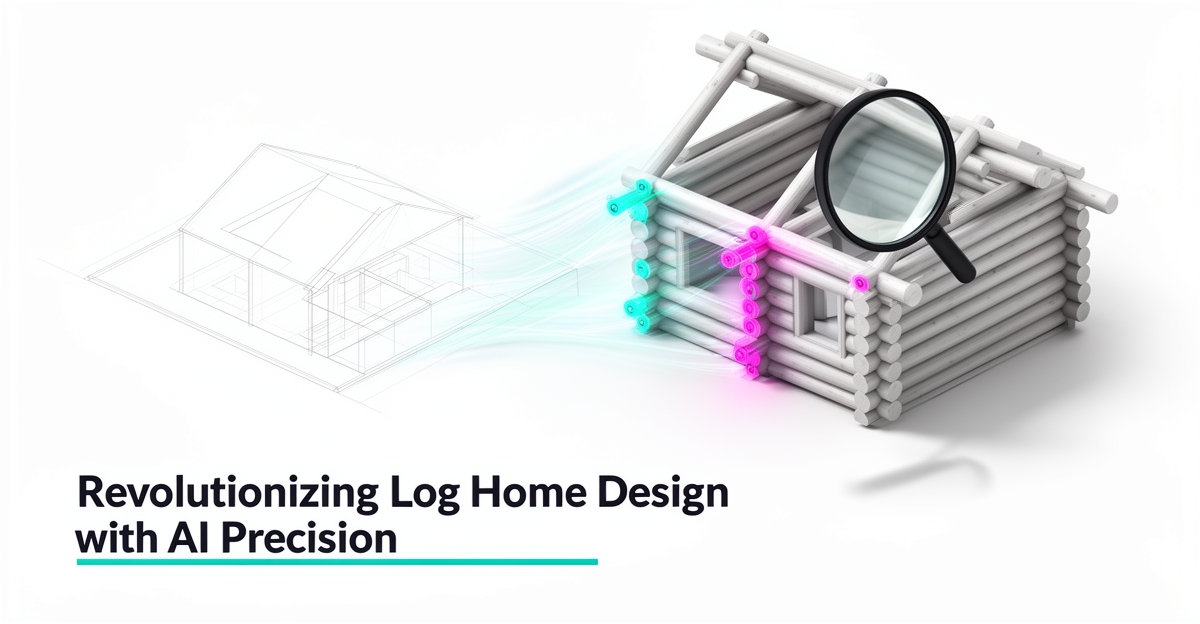
How AI Can Reduce Design Mistakes in Custom Log Home Projects
Key Facts
- A majority of interior designers have integrated AI-powered tools into design processes, according to industry research
- AI interior design tools are reported to reduce project timelines by roughly 20% while increasing productivity by about 15% per Netguru analysis
- AI-generated prototypes often fail due to tiny inconsistencies scattered across design systems says Smashing Magazine
- AI-driven design automation in EDA can increase productivity, decrease costs, and speed up design cycles per Wikipedia overview
- The global market for AI applied to interior design was estimated at over $1 billion as of the mid-2020s per market data
Hire a team member that works 24/7 — for less than a part-time wage.
AI receptionists, SDRs, dispatchers and 99+ roles. Trained on your business, fully managed.
Not sure where to start? Ask our AI planner
The Hidden Cost of Design Mistakes in Custom Log Home Projects
In custom log home projects, even minor design inconsistencies can escalate into major financial setbacks during construction. A single misaligned dimension or unchecked material assumption often triggers cascading rework that disrupts timelines and inflates budgets. Industry surveys suggest a majority of interior designers now use AI-powered tools to catch these issues early, recognizing that small oversights in client inputs or structural planning frequently become expensive problems when not systematically verified according to industry research. Without automated cross-checking, design teams risk overlooking conflicts between aesthetic preferences, load-bearing requirements, and material limitations—errors that are far costlier to fix mid-build than during digital planning.
The hidden cost stems from how tiny inconsistencies accumulate across interconnected design systems. As noted in industry analysis, AI-generated prototypes often fail to deliver reliable results because of "tiny inconsistencies scattered all across a design system"—undocumented decisions, hard-coded values, or overreliance on AI interpreting mock-ups without clear guidance per Smashing Magazine. In log home construction, this might appear as a client-requested window size that doesn't align with log settling calculations, or a roof pitch that conflicts with local snow load codes. When these issues go undetected, they necessitate structural revisions, material reorders, and labor-intensive corrections that can add weeks to schedules and thousands to project costs.
AI-driven design automation addresses this by treating design decisions as traceable infrastructure rather than isolated choices. By establishing structured spec files, token layers, and auditing routines—practices proven effective in electronic design automation where AI increases productivity while decreasing costs per industry research, custom log home builders can systematically validate inputs against engineering constraints. This proactive approach transforms design from a reactive process into a quality-controlled workflow, where inconsistencies are flagged before foundation pouring begins. For firms seeking to minimize rework through smarter design validation, AIQ Labs' AI Workflow Builds rebuild the one workflow that costs the most—design validation included—at a fixed price, in phases.
How AI Catches Log Home Design Issues Before Construction Starts
The most expensive log home mistakes are the ones nobody notices until the first log is cut. AI systems change that math by analyzing client inputs, comparing design choices against structural and material rules, and flagging mismatches while changes still cost a conversation instead of a rebuild.
The core approach borrows from how leading design teams make AI reliable: treat every decision as documented infrastructure. According to Smashing Magazine, AI-generated work often fails because of "tiny inconsistencies scattered all across a design system" — decisions made but never documented, hard-coded values never cleaned up. In a log home context, that translates to a client's request for oversized window openings that conflicts with load-bearing wall placements, or a roof pitch that doesn't match the specified rafter system. When those rules live in structured spec files, AI can cross-reference every design choice against them automatically.
Effective AI systems for custom builds typically operate on three layers:
- Spec files that capture structural rules, material constraints, and client priorities in a format AI can read and apply consistently
- A token layer of named, approved variables — log dimensions, fastener specs, finish options — so AI selects from a closed set instead of inventing values ad hoc
- An auditing layer, modeled on tools like FigmaLint, that scans designs for detached elements, missing states, and hard-coded values that signal inconsistency
The payoff is measurable. Industry research suggests AI design tools can reduce project timelines by roughly 20% while increasing productivity by about 15%, and a majority of interior designers have already integrated AI-powered tools into their workflows. The same pattern is playing out in adjacent fields: AI-driven design automation in electronic design increases productivity, decreases costs, and speeds up design cycles — proof that constraint-based AI checking scales to complex technical work.
Transparency matters as much as detection. Design leaders like SAP and IBM emphasize explainable AI — showing users what the system flagged, why, and how it reached that conclusion. For a log home client, that means seeing "this window placement conflicts with your structural spec" rather than a silent auto-correction, preserving human control over every decision.
This is where purpose-built systems earn their keep. AIQ Labs builds AI systems that learn from a builder's past projects, analyze each new client's inputs for consistency against structural and material rules, and flag mismatches early — reducing rework and keeping the builder's judgment at the center of every call.
What an AI-Ready Design Workflow Looks Like for Log Home Builders
Custom log home projects fail early when assumptions replace documentation. An AI-ready workflow treats design decisions as infrastructure so the system can analyze client inputs, detect inconsistencies, and flag structural or material issues before they become expensive rework.
The operating model starts with documented decisions that AI can consume. Smashing Magazine argues design decisions must be treated as infrastructure, with every decision and prioritization finding a path into spec files consumed by AI. For log homes this means structured spec files in Markdown that capture spacing rules, log spans, material grades, fastener standards, and component usage guidelines. Spec files are more cost-effective and accurate than relying on AI to recognize patterns from mock-ups.
A token layer constrains choices and prevents ad-hoc values. An updated list of all tokens lets AI choose from a closed set of named variables for log profiles, insulation R-values, window sizes, and finish options instead of inventing values. This layer is paired with an auditing layer that uses tools like FigmaLint to detect detached instances, missing states, hard-coded values, and other inconsistencies. AI-generated prototypes often don't deliver consistently decent results because of tiny inconsistencies scattered across design systems.
The workflow runs as a continuous loop:
- Spec capture: Client inputs are normalized into structured fields and cross-referenced against documented span and material rules.
- Automated audit: Scripts scan prototypes for hard-coded values, mismatched log diameters, or non-compliant clearances and flag them for review.
- Human judgment: Designers review flagged items, approve corrections, and update spec files so the system learns from past projects.
This structure mirrors how AI is already changing design practice. Industry research suggests a majority of interior designers have integrated AI-powered tools, with reported reductions in project timelines of roughly 20% alongside productivity gains. The same principles apply to log home construction, where early detection of structural or material conflicts prevents costly field changes.
AIQ Labs builds systems that learn from past projects to improve accuracy and reduce rework, aligning with the broader trend of AI-driven design automation that can increase productivity, decrease costs, and speed up design cycles. Transparency and explainability remain essential, with clear labels for AI-generated suggestions and progressive disclosure from what was flagged to why and how it was determined.
Human review stays at the final gate. AI surfaces risks, suggests alternatives, and enforces consistency, while experienced builders provide the final judgment on constructability, client preference, and site-specific constraints.
How to Implement AI in Your Log Home Design Process Without Disrupting Your Team
Implementing AI in log home design doesn't require overhauling your entire process overnight. A phased approach lets teams adapt gradually while maintaining control over creative decisions and project timelines. Start by documenting your current design rules—spacing standards, material specifications, and structural requirements—as structured spec files that AI can reference. This foundational step turns informal knowledge into actionable infrastructure for consistent AI outputs. According to research, treating design decisions as infrastructure through documented spec files is more reliable than expecting AI to infer patterns from mockups alone.
Next, establish a token layer that maintains named variables for recurring design elements like log diameters, joinery types, and insulation values. This prevents AI from generating inconsistent or ad-hoc values that could compromise structural integrity. Pair this with auditing tools such as FigmaLint to routinely check for hard-coded values, detached instances, or missing interactive states in your design files. These layers work together to catch discrepancies early—before they become costly rework on-site. Teams using this three-layer approach report fewer inconsistencies in AI-generated prototypes, as tiny errors across systems are minimized when AI operates within clearly defined constraints.
Finally, pilot the AI system on one low-risk project to validate its ability to flag potential issues like material mismatches or load-bearing concerns. Keep humans in the loop for final approvals, using the AI as a consistency checker rather than a replacement for expertise. AIQ Labs supports this phased rollout through AI Workflow Builds—fixed-price, milestone-based projects that integrate with your existing tools, like project management or CAD software, so adoption doesn't disrupt current workflows. Scale only after proving value on the pilot, refining spec files and token libraries based on real-world feedback. This methodical path reduces implementation risk while building team confidence in AI as a reliable design partner. To explore how this approach fits your specific workflow, start with the two-minute Fit Check and book a free 30-minute strategy call to map your biggest bottleneck and identify high-ROI automation opportunities.
Still paying for 10+ subscriptions that don’t talk to each other?
We build custom AI systems you own outright. No vendor lock-in. Full control.
Not sure where to start? Ask our AI planner
Frequently Asked Questions
How can AI actually prevent costly mistakes in custom log home design before construction starts?
What specific layers make an AI system effective for catching log home design inconsistencies?
Is there proof that AI tools actually reduce project timelines and increase productivity in design workflows like log home building?
Won't AI just replace my expertise as a log home designer or builder?
How do I start implementing AI in my log home design process without disrupting my team's workflow?
Build Once, Build Right: Turning Design Rules Into Rework Prevention
Custom log home mistakes are rarely dramatic at first — they're small, undocumented assumptions that compound into structural conflicts, material reorders and costly field changes. AI reduces that risk by treating design decisions as infrastructure: structured spec files, a closed token layer for log profiles and materials, and an auditing layer that flags hard-coded values and non-compliant clearances before the first log is cut. When rules are explicit, AI can cross-reference client inputs against span limits, snow loads and fastener standards, surfacing explainable mismatches while changes are still a conversation. Teams that adopt this approach move from reactive fixes to quality-controlled workflows, and the pattern is already established. A majority of interior designers have integrated AI-powered tools into their processes according to industry surveys, with reported gains in timeline and productivity. For log home builders, the next step is documenting your current rules into AI-readable specs and piloting an audit on a low-risk project. If you want a clear map of your biggest bottleneck and high-ROI automation opportunities, start the two-minute Fit Check at aiqlabs.ai/apply, then book a free 30-minute strategy call — no pitch, just a working session.
Make AI your competitive advantage — not just another tool.
Strategy, implementation and ongoing optimization. One partner, end to end.
Not sure where to start? Ask our AI planner