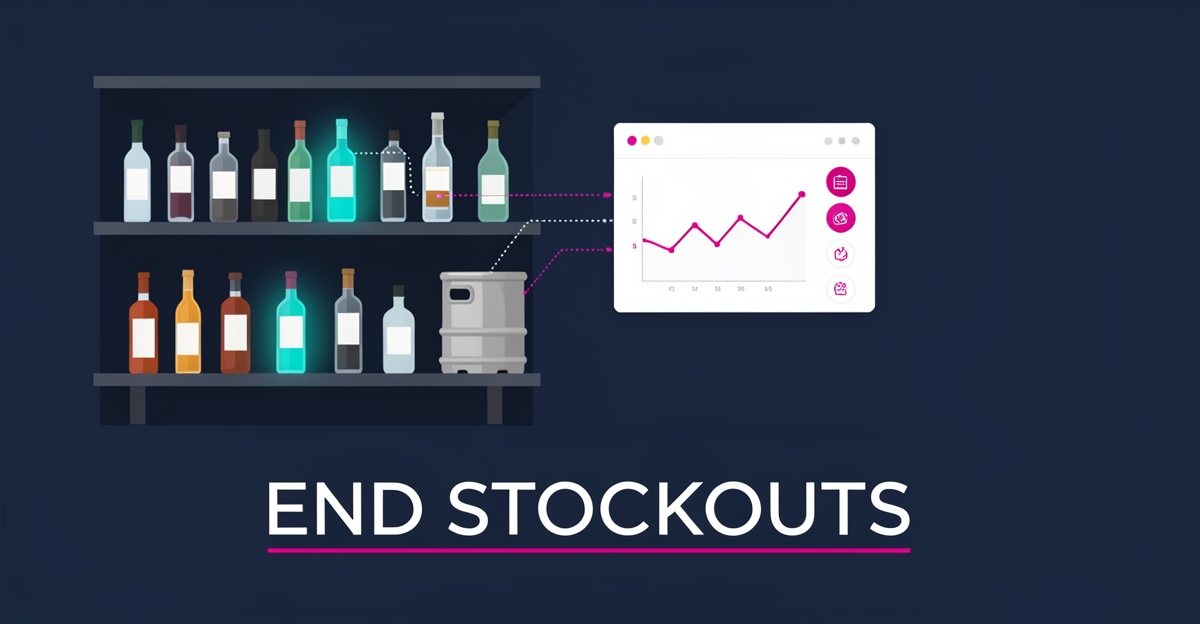
How AI Can Reduce Drink Stockouts and Improve Inventory Accuracy in Nightlife Businesses
Key Facts
- AI-driven inventory management can reduce waste by 15-25% while helping prevent costly stockouts according to industry research.
- High-volume bars typically spend tens of thousands of dollars monthly on inventory per drinking-establishment research.
- AI agents that monitor and automatically reorder liquor can reduce excess inventory holding costs by 20-30% in high-volume beverage operations.
- AI demand forecasting can meaningfully reduce both stockouts and excess inventory in high-volume beverage operations according to industry analyses.
- Many establishments see payback on AI investments within 6-12 months according to industry analysis.
- Real-time stock tracking is one of the most valuable features of modern inventory solutions for bars.
- Inventory management software helps organizations reduce stock shortages and limit overstocking by maintaining systematic records.
Hire a team member that works 24/7 — for less than a part-time wage.
AI receptionists, SDRs, dispatchers and 99+ roles. Trained on your business, fully managed.
Not sure where to start? Ask our AI planner
The Hidden Cost of Stockouts and Overstocking in Nightlife
Every empty tap handle and dusty bottle of slow-moving liqueur quietly drains profit from a nightlife business. In an industry built on razor-thin margins, the twin problems of stockouts and overstocking represent one of the largest controllable costs bar owners face.
The financial toll is significant. According to industry research on drinking establishments, high-volume bars can spend tens of thousands of dollars monthly on inventory, meaning even small percentage losses translate into significant missed revenue or waste each month. Without reliable systems, bar owners risk overstocking, spoilage, and inventory discrepancies that lead to significant financial losses, as inventory experts note.
Stockouts hit hardest during peak hours. When a popular vodka or craft beer runs dry on a Friday night, those sales disappear permanently, customers rarely wait for a restock. Meanwhile, the opposite problem quietly compounds: excess inventory ties up cash flow, and perishable or trend-sensitive products lose value on the shelf.
The operational costs extend beyond the products themselves:
- Manual counting consumes labor hours that staff could spend on revenue-generating activities
- Ordering guesswork leads to emergency purchases at premium prices or missed volume discounts
- Overpouring and spillage go undetected without systematic tracking, eroding margins invisibly
- Multi-location inconsistency makes it nearly impossible to maintain accurate records across venues
Most drinking establishments still rely on manual processes for these core operations. Research from HumanAI indicates that most bars use only basic POS analytics, while advanced applications like predictive inventory management remain underutilized despite showing strong results for early adopters.
The good news: the same research suggests AI-driven inventory management can reduce waste by 15-25% while helping prevent costly stockouts during busy periods. AI agents that monitor and automatically reorder liquor inventory can reduce excess inventory holding costs by 20-30%, according to the same analysis. For bars and nightclubs, these aren't marginal improvements, they represent a fundamental shift in profitability.
This is exactly the gap that custom AI inventory systems address. AIQ Labs builds solutions that sync directly with POS data and supply chains, replacing spreadsheet guesswork with predictive ordering that accounts for sales velocity, upcoming events, and seasonal patterns, so the right bottles are always on the shelf, and capital isn't trapped in slow-moving stock.
How AI Predicts Demand and Automates Reordering to Eliminate Guesswork
Nightlife businesses often lose revenue not from lack of demand, but from poor inventory timing, running out of top sellers while tying up capital in slow-moving stock. AI-driven demand forecasting eliminates this guesswork by analyzing sales history, weather patterns, local events, and seasonal trends to predict what will sell and when. According to industry research, these systems can meaningfully reduce both stockouts and excess inventory, directly improving cash flow and profitability in high-volume beverage operations. This precision helps bars stock only what's needed, minimizing waste while keeping popular drinks available during peak hours.
Automated reordering takes forecasting a step further by triggering purchases at optimal thresholds, factoring in delivery lead times and upcoming promotions. Instead of relying on manual checks or intuition, AI agents monitor real-time pour counts and sales velocity to place orders just before stock dips below critical levels. This approach not only helps prevent shortages during busy nights but also reduces excess inventory holding costs by 20-30% through smarter replenishment cycles. For a bar spending tens of thousands monthly on inventory, such efficiency can translate into thousands of dollars in annual savings by avoiding overstock and spoilage.
- Analyzes sales history, weather, local events, and seasonality for accurate demand prediction
- Triggers automated reordering at optimal thresholds to prevent stockouts and overstock
- Reduces both stockouts and excess inventory based on real-world implementations
- Integrates with POS systems and supply chains for seamless, real-time inventory synchronization
- Cuts waste by 15-25% while improving cash flow through optimized ordering cycles
By replacing reactive inventory habits with predictive, automated systems, nightlife venues gain the consistency and control needed to operate efficiently. AIQ Labs builds custom inventory solutions, whether as a focused Workflow Build or as part of a broader AI Operating System, that sync with existing POS data and distributor networks, enabling bartending teams to anticipate demand, track low stock, and reorder essential drinks without manual intervention, turning inventory management from a liability into a strategic advantage.
Real-Time Tracking, POS Integration, and Waste Reduction for Smarter Bar Operations
Real-time inventory tracking transforms how bars manage their beverage supply chain by syncing directly with POS data to create a single source of truth for stock levels. When a drink is poured, the system instantly updates inventory counts, eliminating the lag between sales and stock adjustments that causes discrepancies in manual systems. This continuous visibility allows managers to see exactly what's on hand at any moment, reducing guesswork during peak service hours. AIQ Labs builds custom inventory systems that integrate with existing POS platforms to deliver this real-time synchronization, ensuring stock data reflects actual consumption rather than estimates. Real-time stock tracking is one of the most valuable features of modern inventory solutions, helping bars monitor inventory levels continuously to prevent both stockouts and overstocking.
Integrating AI-driven inventory with supply chain data enables smarter reordering decisions that account for lead times, upcoming events, and consumption patterns. Systems can automatically trigger purchase orders when stock reaches predefined thresholds, using historical sales velocity and forecasted demand to optimize timing and quantities. This automation reduces the risk of human error in manual reorder processes while ensuring essential items are replenished before they run out. By analyzing pour counts and sales trends, AI agents identify optimal reorder points that balance availability with carrying costs, particularly valuable for high-turnover spirits and seasonal beverages. AI agents that monitor and automatically reorder liquor inventory can reduce excess inventory holding costs by 20-30%, freeing up capital otherwise tied up in stagnant stock.
Waste analytics powered by AI uncover hidden sources of loss that directly impact profitability in high-volume beverage operations. These systems track variance between expected and actual usage, flagging issues like overpouring, spillage, or spoilage before they become costly problems. Implementing FIFO (First-In, First-Out) practices through automated stock rotation ensures older inventory is used first, minimizing spoilage of perishable items like craft beer or fresh garnishes. Detailed waste reports highlight specific products or shifts where losses occur, enabling targeted staff training and process adjustments. AI-driven inventory management can reduce waste by 15-25% while helping prevent costly stockouts during busy periods, translating to significant savings for bars spending tens of thousands monthly on inventory. Inventory management software is intended to help organizations reduce stock shortages and limit overstocking by maintaining systematic records that support data-driven decisions.
- Real-time POS integration eliminates stock count lag
- Automated reordering prevents both stockouts and overstocking
- Waste analytics identify overpouring and spoilage sources
- FIFO practices reduce spoilage of perishable beverages
- Supply chain sync optimizes order timing and quantities
Implementation Path: From Assessment to Owned AI Inventory System with AIQ Labs
Moving from manual counts to an owned AI inventory system is faster than most nightlife operators expect, and the financial payoff can arrive quickly.
A structured adoption path reduces risk while building a system that syncs with POS data and supply chains to prevent overstocking or shortages. AIQ Labs offers three entry points: AI Employees for managed AI staff at roughly 80% less than a human hire, Workflow Builds to rebuild the one workflow that costs you the most at a fixed price, and AI Operating Systems for a single connected operating layer built in phases and owned outright.
Discovery starts with a focused assessment of current workflows, SKU accuracy, and data quality. Clean SKU mapping and disciplined counts are prerequisites for reliable forecasting, and the assessment maps demand drivers such as sales history, weather, local events, and seasonality. This step defines reorder points and integration requirements with POS and distributor systems.
The custom system build replaces subscription tools with an owned asset. The build architects predictive demand forecasting, automated reordering, and real-time stock visibility that syncs with POS sales in real time. True ownership means clients control code, agents, and data with no vendor lock-in.
Implementation follows a practical sequence:
- Assessment and architecture to align inventory parameters and integration points
- Custom build and POS/supplier integration for automated reorder triggers
- Staff training on exception handling and daily workflows
- Ongoing optimization with monitoring, waste analytics, and model tuning
Staff training ensures automation enhances rather than replaces human judgment on the floor. Teams learn to review AI-generated orders, confirm delivery lead times, and handle event-driven spikes.
Payment flexibility supports SMB cash flow. Start Monthly delivers a managed AI employee on a flat monthly plan, with the ability to pause or adjust anytime. Build in Milestones splits a workflow system into phases, with approval and payment per phase and the ability to stop anytime while keeping everything built so far. Own It Outright gives you the full system as a permanent asset with no recurring software fees.
Early adopters see material impact. Industry research suggests AI-driven inventory management can reduce waste by 15-25% while helping prevent costly stockouts during busy periods. For a bar spending tens of thousands monthly on inventory, that can translate to thousands in savings. The same research finds AI agents that monitor and automatically reorder liquor inventory can reduce excess inventory holding costs by 20-30%.
Many establishments see payback on AI investments within 6-12 months, according to industry analysis. With owned systems, continuous improvement compounds those gains over time.
Still paying for 10+ subscriptions that don’t talk to each other?
We build custom AI systems you own outright. No vendor lock-in. Full control.
Not sure where to start? Ask our AI planner
Frequently Asked Questions
How much can AI-driven inventory management actually reduce waste for a nightlife business?
Will implementing an AI inventory system require me to replace my current POS or disrupt daily operations?
How quickly can I expect to see a return on investment from an AI inventory system?
Can AI really predict what drinks will sell and when, or is it just guessing based on past sales?
I'm worried about staff pushback or complexity, will my team actually use this system, or will it just add more work?
What makes an owned AI inventory system better than a subscription-based inventory app I might already be using?
Turning Inventory from a Liability into Your Competitive Edge
The cost of guesswork in nightlife inventory is no longer just operational, it's financial. From stockouts that erase peak-hour sales to overstock that ties up cash and spoils on the shelf, manual processes are quietly eroding profitability in an industry where every percentage point matters. AI-driven inventory management changes that equation by predicting demand, automating reordering, and delivering real-time visibility, reducing waste by 15-25% and excess holding costs by 20-30% according to industry research. These aren't incremental gains; they're foundational shifts that free up capital, labor, and focus for what truly drives revenue: the customer experience. The path forward starts with clarity. Take the free two-minute Fit Check to see where AI can unlock immediate value in your operations, no obligation, just a real working session with an AI engineer to map your biggest bottleneck and identify high-ROI opportunities. If there isn't a clear win, we'll say so. Start your Fit Check today and discover how owned AI inventory systems can turn a persistent cost center into a strategic advantage.
Make AI your competitive advantage — not just another tool.
Strategy, implementation and ongoing optimization. One partner, end to end.
Not sure where to start? Ask our AI planner