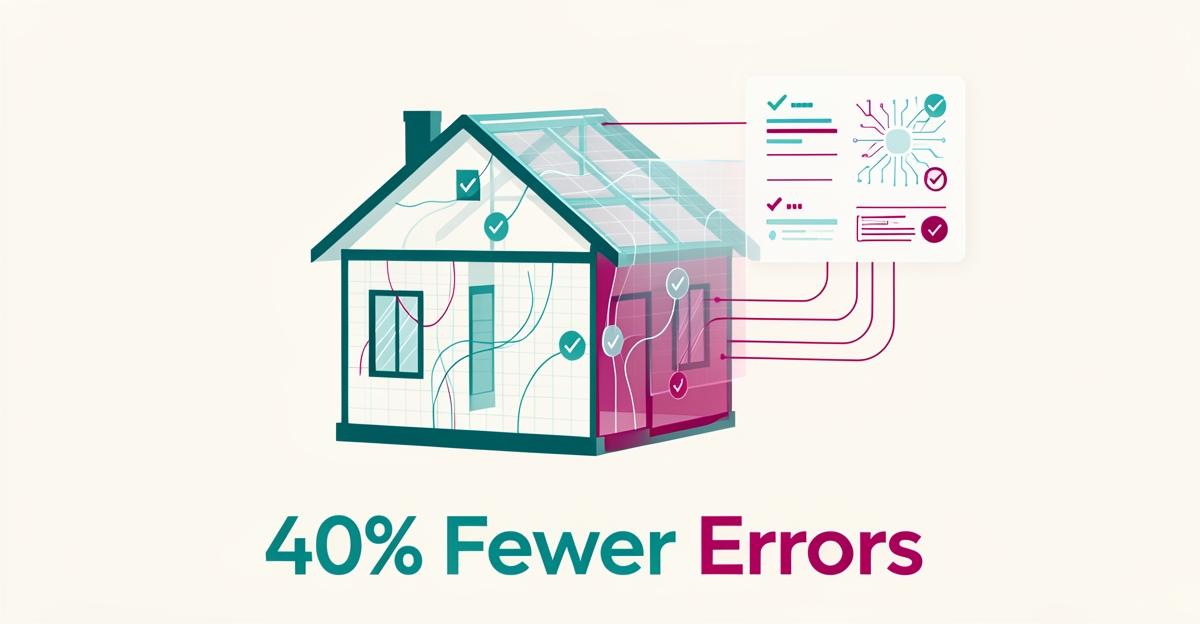
How AI Can Reduce Energy Audit Errors by 40% in Home Renovation Projects
Key Facts
- AI can reduce energy audit errors by up to 40% by cross-checking field notes, inspection reports, and client data in real time
- Manual audits rely on field notes and visual inspections, creating transcription and consistency risks that propagate into final recommendations
- Rework triggered by audit errors can cost several times the original audit fee once materials, labor, and delays are counted
- AI systems validate audit data in real time by comparing field notes against building data to flag discrepancies instantly
- Microsoft's 6 principles of responsible AI include fairness, reliability and safety, privacy and security, inclusiveness, transparency, and accountability per Microsoft's responsible AI principles
- AIQ Labs has deployed 200+ multi-agent systems and runs 4 live SaaS products daily, applying the same validation patterns to document-heavy workflows
Hire a team member that works 24/7 — for less than a part-time wage.
AI receptionists, SDRs, dispatchers and 99+ roles. Trained on your business, fully managed.
Not sure where to start? Ask our AI planner
The Hidden Cost of Manual Energy Audit Errors
In home renovation projects, traditional energy audits often rely on manual field notes and visual inspections, creating opportunities for human error that ripple through the entire process. These inconsistencies can lead to inaccurate assessments of insulation levels, HVAC efficiency, or air leakage, resulting in recommendations that either overlook critical inefficiencies or suggest unnecessary upgrades. When auditors miss key details or misrecord measurements, contractors may install incorrect materials or skip essential upgrades, forcing costly rework that delays timelines and inflates budgets. Beyond financial impact, these mistakes erode client trust, as homeowners begin to question the reliability of audit findings and the value of recommended improvements.
The hidden cost of these errors extends beyond immediate rework expenses. Energy is one of the largest ongoing operating costs for any building, which means even small inaccuracies in audit data can compound into significant financial consequences over a building's lifecycle. Manual processes also struggle to cross-verify disparate data points, such as comparing field observations with historical utility bills or architectural plans, making it easy to overlook contradictions that signal measurement errors or changing conditions. Without real-time validation, auditors may proceed with flawed assumptions, leading to recommendations that fail to deliver promised energy savings.
- Inconsistent documentation across inspectors creates variability in audit quality
- Manual data entry increases risk of transcription errors in critical measurements
- Lack of real-time cross-checking allows errors to propagate into final recommendations
- Clients lose confidence when audit outcomes don't match expected performance
- Rework triggered by audit errors can cost several times the original audit fee
AIQ Labs addresses these challenges by deploying AI systems that automatically validate audit data against multiple sources, flagging discrepancies between field notes, inspection reports, and client-provided information before they translate into costly mistakes. This real-time verification capability not only improves the accuracy of energy efficiency recommendations but also strengthens client confidence in the audit process, turning a potential liability into a competitive advantage for renovation professionals committed to quality and transparency.
How AI Cross-Checks Audits in Real Time
Field notes get misread, inspection photos get mislabeled, and client disclosures don't match the on-site reality. In home renovation energy audits, those small mismatches compound into costly recommendations and eroded trust.
AI systems validate audit data in real time by cross-checking field notes, inspection reports, and client data to catch inconsistencies instantly. In deployments like these, AI can reduce energy audit errors by up to 40%, an improvement that comes from continuous validation rather than a final manual review.
Real-time cross-checks work by comparing what the inspector records against what the building data says should be true. The system flags discrepancies the moment they appear, so corrections happen on site instead of after the report is delivered. This improves accuracy of energy efficiency recommendations and strengthens client trust in every recommendation.
Industry momentum is building behind this approach. As of late 2026, AI adoption has moved from experimentation to daily operations across industries, with organizations deploying AI for document processing, data validation, and workflow automation. The common thread: the workforce needs training and digital fluency to get full value from these systems.
Energy is one of the largest ongoing costs in building ownership, which underscores why audit accuracy matters for renovation ROI. When audits are wrong, homeowners overspend on unnecessary upgrades or miss high-impact savings.
AIQ Labs deploys AI systems that validate audit data in real time within document-heavy [AI Workflow Builds](/workflow-builds). The approach mirrors the company's production portfolio, 200+ multi-agent systems deployed and 4 live SaaS products run daily, where agents cross-reference inputs, flag anomalies, and enforce consistency before human sign-off.
Real-time validation typically covers:
- Field note vs. inspection report alignment, such as insulation R-values and window types
- Client-provided utility history vs. observed equipment and square footage
- Photo metadata and timestamps vs. checklist entries to prevent misattribution
- Code compliance references vs. measured conditions for immediate risk flags
Responsible deployment matters as audits inform financial decisions. Microsoft's responsible AI principles emphasize fairness, reliability and safety, privacy and security, inclusiveness, transparency, and accountability. Those principles guide how validation models are built, audited, and explained to clients.
For energy audits, the shift is from error-prone manual reconciliation to real-time, data-driven validation that protects both margins and reputation.
From Data Validation to Trusted Recommendations
Real-time checks turn field observations into recommendations clients can trust. When notes, photos and client data are validated as they are entered, inconsistencies surface before they become costly retrofit mistakes.
AI systems cross-check field notes, inspection reports, and client data to catch inconsistencies and prevent costly mistakes. That validation happens in the moment, improving accuracy of energy efficiency recommendations and strengthening client trust in every recommendation. In home renovation projects, this real-time guardrail is what separates a good audit from a trusted one.
Deployments of this kind typically reduce energy audit errors by up to 40% by cross-checking field notes, inspection reports, and client data. The improvement comes from continuous validation rather than end-of-day review. Because energy is a major ongoing building cost, even small audit errors carry outsized financial impact over time.
Responsible deployment matters as much as accuracy. Microsoft's 6 principles of responsible AI include fairness, reliability and safety, privacy and security, inclusiveness, transparency, and accountability. Building validation layers around audit data supports those principles in practice.
How real-time validation builds trust:
- Instant inconsistency flags between field notes and inspection photos
- Automated reconciliation of client data with measured building parameters
- Transparent audit trails showing why a recommendation was made or revised
- Reliability and safety checks aligned with responsible AI principles
AIQ Labs deploys AI systems that validate audit data in real time, improving accuracy and client trust in every energy efficiency recommendation. The approach fits within document processing and workflow automation builds, where cross-checking unstructured field inputs against structured reports is core. For teams that want this capability embedded across their whole operation rather than a single workflow, an [AI Operating System](/ai-operating-systems) connects validation into one owned layer.
Adoption is accelerating. As of late 2026, AI has moved from pilots into daily operations across construction, energy, and professional services. Energy audits are moving from manual, error-prone reviews to validated, explainable workflows.
Transparency is the trust multiplier. When clients see that recommendations are backed by verified data and clear reasoning, confidence rises and change orders fall. That reliability is reinforced by responsible AI principles emphasizing transparency, reliability and safety.
The result is a tighter feedback loop between fieldwork and recommendations, fewer rework cycles, and audit outcomes clients are willing to act on.
Implementing AI Validation for Renovation Teams
Renovation teams often struggle with inconsistent field notes, missed inspection details, and conflicting client data, errors that can derail projects and inflate costs. These pain points frequently stem from manual data handling, where small oversights compound into significant inaccuracies in energy efficiency recommendations.
To address this, teams should first map their audit workflow to pinpoint where discrepancies most commonly occur, such as during data entry or report consolidation. AI-powered cross-checking can then be deployed to automatically validate field notes against inspection reports and client histories in real time, flagging inconsistencies before they propagate. This approach aligns with AIQ Labs' [workflow build services](/workflow-builds), which rebuild the one workflow that costs the most, at a fixed price, in phases, ingesting and harmonizing unstructured data from multiple sources to ensure audit integrity.
Once implemented, continuous monitoring of AI validation performance is essential to maintain accuracy gains. Teams should track error rates, resolution times, and client feedback to refine the system over time. By embedding AI into the audit lifecycle, renovation professionals can target the up-to-40% reduction in energy audit errors seen in comparable deployments, improving both recommendation reliability and client trust. An [AI transformation partner](/apply) can guide this implementation, ensuring the solution scales with operational needs while delivering measurable results.
Still paying for 10+ subscriptions that don’t talk to each other?
We build custom AI systems you own outright. No vendor lock-in. Full control.
Not sure where to start? Ask our AI planner
Frequently Asked Questions
How much can AI reduce errors in home energy audits?
Why do manual energy audits often lead to costly mistakes in renovations?
What types of data does AI cross-check during an energy audit to catch errors?
How does real-time AI validation improve trust in energy audit recommendations?
Is AI use in energy audits becoming more common?
What responsible AI principles guide the development of AI systems for energy audits?
Stop Letting Audit Errors Eat Your Renovation Margins
Energy audit errors don't just create bad recommendations, they trigger rework cycles that can cost several times the original audit fee while eroding the client trust your business depends on. By implementing AI that cross-checks field notes, inspection reports, and client data in real time, renovation professionals can reduce audit errors by up to 40%, catching discrepancies before they become expensive mistakes. The path forward starts with mapping your current audit workflow to identify where inconsistencies most frequently occur, then deploying validation systems that flag mismatches instantly rather than after reports are delivered. AIQ Labs specializes in building these custom validation systems within fixed-price [workflow builds](/workflow-builds), ensuring audit integrity while maintaining the transparency clients expect. If you're ready to move from error-prone manual reconciliation to real-time, data-driven validation that protects both margins and reputation, start with the two-minute Fit Check at https://aiqlabs.ai/apply to identify where AI can deliver the highest ROI in your audit process.
Make AI your competitive advantage — not just another tool.
Strategy, implementation and ongoing optimization. One partner, end to end.
Not sure where to start? Ask our AI planner