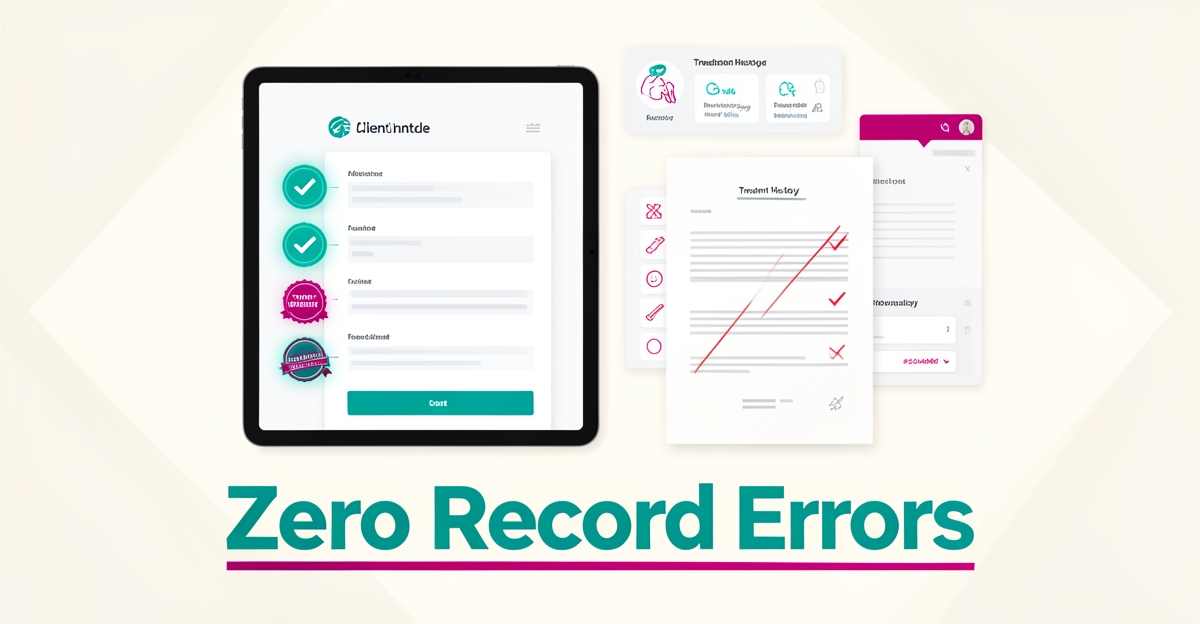
How AI Can Reduce Errors in Client Record-Keeping for Esthetician Studios
Key Facts
- Manual data entry without verification can produce error rates of several percent, meaning dozens of mistakes per 1,000 client intake forms.
- Bad data costs U.S. businesses an estimated $3.1 trillion annually due to rework, compliance penalties, and lost opportunities, according to widely cited industry research.
- AI can automatically extract and interpret information from intake forms with contextual understanding, such as recognizing 'Retin-A' as a medication.
- AI can instantly flag discrepancies like mismatched age and date of birth or identify contraindicated treatments based on recorded allergies.
- The ETSI standard EN 304 223 defines 13 principles and 72 trackable requirements for AI cybersecurity.
- Serious AI incidents must be reported within 72 hours under certain governance frameworks.
- Data protection law is directly applicable to AI-supported data processing, requiring transparency about purpose and data sources.
Hire a team member that works 24/7 — for less than a part-time wage.
AI receptionists, SDRs, dispatchers and 99+ roles. Trained on your business, fully managed.
Not sure where to start? Ask our AI planner
The Hidden Cost of Human Error in Client Records
The hidden cost of human error in client records extends far beyond simple typos or misplaced files, it directly impacts client safety, operational efficiency, and regulatory compliance. Industry research has long suggested that data entry without verification can produce error rates of several percent, meaning that for every 10,000 client intake forms processed manually, hundreds may contain inaccuracies. These errors are not merely administrative; they can result in serious consequences such as administering a treatment contraindicated by an unrecorded allergy or overlooking a critical detail in a client's skin history. The financial toll is equally significant, with widely cited estimates putting the cost of bad data to U.S. businesses at $3.1 trillion annually due to rework, compliance penalties, and lost opportunities.
For esthetician studios, where personalized care hinges on precise documentation of skin types, product sensitivities, and treatment histories, even minor inaccuracies can erode trust and increase liability. Common data entry pitfalls include omissions, transposed information, inconsistent formatting, and failure to cross-reference related fields, such as flagging a client's use of isotretinoin when proposing a chemical peel. These mistakes often trigger downstream effects, including claim denials, manual reprocessing, and potential health risks that could have been prevented with accurate, validated records at the point of entry. Implementing safeguards that catch errors before they propagate is essential to maintaining both clinical integrity and business continuity. AIQ Labs supports this need through AI Workflow Builds that automate data capture, validate entries against known patterns, and reduce reliance on manual input, helping studios build a foundation of accurate, secure, and compliant client records.
How AI Prevents Errors Before They Happen
In the fast-paced environment of an esthetician studio, where accurate client records directly impact safety and satisfaction, preventing errors before they occur is essential. AI-powered systems excel at stopping mistakes at the source by combining intelligent data capture with real-time validation. Unlike manual entry, which is prone to fatigue and distraction, AI can automatically extract and interpret information from intake forms with contextual understanding, recognizing, for example, that "Retin-A" refers to a medication rather than just a string of text. This capability ensures that data is not only captured accurately but also categorized correctly from the outset, reducing the likelihood of downstream mistakes.
Beyond capture, AI continuously monitors records for inconsistencies that might go unnoticed by human staff. It can instantly flag discrepancies such as a mismatched age and date of birth or identify contraindicated treatments based on a client's recorded allergies or skin type. These predictive validations work silently in the background, alerting practitioners to potential risks before a service is booked or performed. For estheticians, this means fewer adverse reactions, better compliance with health standards, and more personalized care plans grounded in accurate, trustworthy data. AIQ Labs embeds these safeguards directly into studio workflows, whether as a single rebuilt intake-and-records workflow or as part of a broader AI Operating System connecting scheduling, intake, and client history. By anchoring data integrity in AI-driven prevention, studios can shift from correcting errors to avoiding them entirely, building a foundation of confidence for both clients and staff.
Implementing AI with Governance and Human Oversight
Deploying AI for client records without guardrails turns efficiency gains into liability. For esthetician studios handling skin types, allergies and treatment histories, governance is what keeps automation safe and trustworthy.
A practical framework starts with visibility. Mandate an AI inventory to document what AI is live, where it processes client data, which pipelines it touches and who supplied it. Governance guidance emphasizes that accountability must be named, not assumed, for each system.
Assign named accountability aligned to ETSI EN 304 223 roles: developers, system operators and data custodians. The standard defines 13 principles and 72 trackable requirements for AI cybersecurity, and makes explicit that AI risk lives between teams. Clear ownership prevents gaps when records are scanned, categorized and stored.
Risk checks and data controls come next. Before deployment, assess for bias, privacy violations, security vulnerabilities and hallucinations. Establish controls for consent, masking, access limits and data lineage. Data protection authorities confirm that data protection law is directly applicable to AI-supported data processing, requiring transparency about purpose, functionality and data sources, and that high-risk processing typically requires a data protection impact assessment.
Human-in-the-loop protocols protect clients from AI errors. Human checkpoints for high-risk actions and approval gates for agentic systems keep professionals in control. This matters because manual data entry without verification can carry meaningful error rates, and bad data costs U.S. businesses an estimated $3.1 trillion annually. The point of AI is not just catching errors, it is preventing them from happening in the first place.
Continuous monitoring completes the lifecycle. Security must span secure design, development, deployment, maintenance and end of life, with retraining treated as redeployment. Document model cards and datasheets for compliance, monitor for data drift and bias, and report serious incidents within 72 hours where frameworks require it.
Implementation steps esthetician studios can adopt:
- Mandate an AI inventory of all record-keeping tools and data flows.
- Assign named accountability for developer, operator and data custodian roles.
- Define an AI policy on data use, privacy and security with human approval gates.
- Implement data controls for consent, masking and lineage, and continuous monitoring.
AIQ Labs builds record-keeping workflows with compliance and privacy safeguards baked in, embedding these governance practices into systems that scan, categorize and securely store sensitive client records. With structured oversight, studios gain error reduction without sacrificing trust.
Still paying for 10+ subscriptions that don’t talk to each other?
We build custom AI systems you own outright. No vendor lock-in. Full control.
Not sure where to start? Ask our AI planner
Frequently Asked Questions
How much do human errors in data entry actually cost businesses each year?
What is the error rate for manual data entry without verification?
Can AI prevent errors before they happen in client records, or does it only catch them after the fact?
What are the risks of using AI for sensitive client data like allergies or treatment history?
Do esthetician studios need to follow data protection laws when using AI for client records?
What steps should an esthetician studio take to safely implement AI for client record-keeping?
Turn Client Records from a Risk into Your Competitive Edge
AI doesn't just reduce errors in client record-keeping, it transforms how esthetician studios operate by preventing mistakes before they happen, safeguarding client trust, and ensuring compliance with data protection standards. By automating data capture, validating entries in real time, and embedding human oversight, studios can eliminate costly inaccuracies that lead to treatment risks, claim denials, or reputational harm. The path forward starts with intention: audit your current AI use, assign clear accountability, and implement controls for consent, masking, and continuous monitoring. AIQ Labs helps studios build record-keeping workflows with these safeguards baked in, so your records are not only accurate but also secure, compliant, and ready to scale. Start with the 2-minute Fit Check to see where AI can make the biggest impact in your workflow, then book your free 30-minute strategy call to make intelligent record-keeping one of your studio's strongest assets.
Make AI your competitive advantage — not just another tool.
Strategy, implementation and ongoing optimization. One partner, end to end.
Not sure where to start? Ask our AI planner