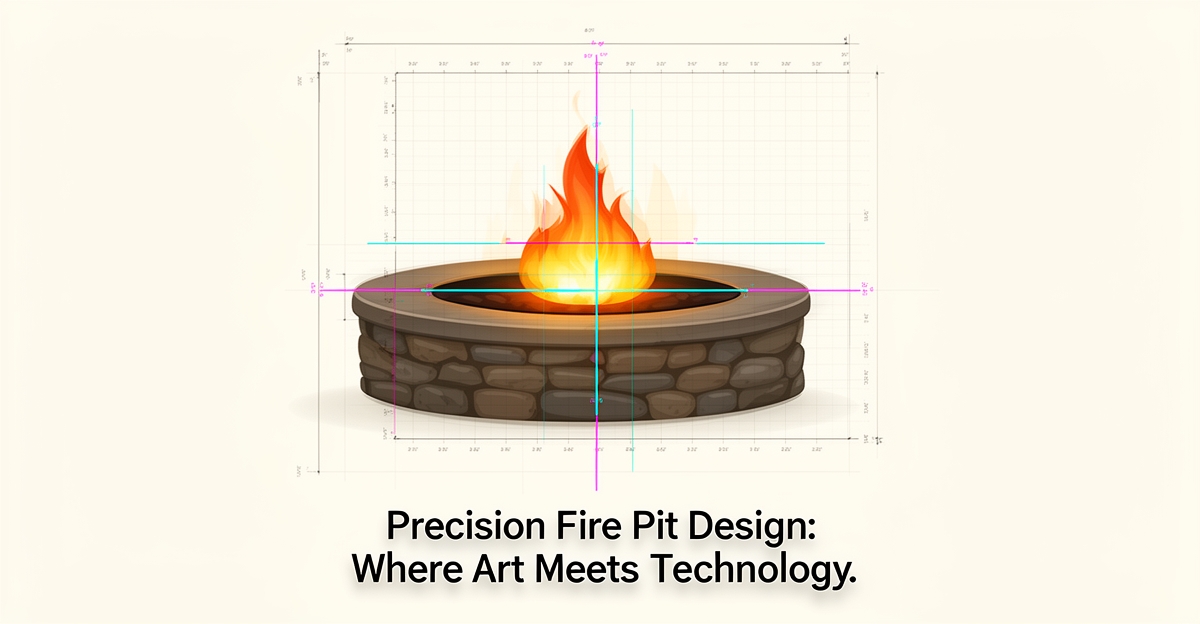
How AI Can Reduce Errors in Fire Pit Design and Material Sizing
Key Facts
- AI-powered design tools can generate dozens of stylistic fire pit variations in seconds from a single client description—expanding creative possibilities without manual drafting (Science News Today, 2026).
- Frontier AI models like Grok 4.1 still produce incorrect 'hallucinations' 4% of the time, proving human verification remains critical for material calculations (Field Guide to AI, 2026).
- Open-source AI models like DeepSeek V3.2 cost just $0.32 per 1M tokens—10-50x cheaper than commercial APIs for custom fire pit design tools (Field Guide to AI, 2026).
- AI with 10M-token context windows (like Llama 4 Scout) can maintain all project specs—heat resistance, dimensions, material types—in a single conversation (Field Guide to AI, 2026).
- Future 'virtual architects' may design complete fire pit structures in minutes, but current tools still require human refinement for physical constraints (Science News Today, 2026).
- AI excels at extracting client preferences like 'modern minimalist' or 'rustic stonework' from conversations—but struggles with vague terms like 'nice-looking' (ResourceSpace, 2026).
- Commercial AI tools cost $20/month, while open-source alternatives offer comparable performance for fire pit calculations at near-zero subscription fees (Field Guide to AI, 2026).
What if you could hire a team member that works 24/7 for $599/month?
AI Receptionists, SDRs, Dispatchers, and 99+ roles. Fully trained. Fully managed. Zero sick days.
Introduction
Designing and building custom fire pits is a complex process. Every project requires precise material calculations, client preference analysis, and error-free execution. Yet, manual methods introduce risks—miscalculations, miscommunication, and costly rework.
AI can transform this process. By automating design analysis, material sizing, and cost estimation, businesses can minimize errors while improving efficiency and client satisfaction.
- Human oversight: Manual calculations and design adjustments lead to inconsistencies.
- Client miscommunication: Misinterpreted preferences result in redesigns.
- Material inaccuracies: Incorrect sizing increases costs and delays.
The solution? AI-driven automation that analyzes client requests, generates design variations, and calculates material needs—with human oversight to ensure accuracy.
AI excels at processing large datasets, identifying patterns, and automating repetitive tasks. For fire pit design, this means: - Extracting client preferences from conversations to generate tailored designs. - Calculating precise material sizes based on structural requirements. - Reducing human error by automating routine calculations and double-checking measurements.
The result? Faster, more accurate builds with fewer mistakes and happier clients.
Next, we’ll explore how AIQ Labs’ AI solutions can streamline fire pit design—from concept to construction.
- AI’s role in analyzing client requests to extract design preferences.
- How AI automates material sizing and cost calculations with precision.
- Real-world applications of AI in construction and design automation.
- Best practices for implementing AI to minimize errors and maximize efficiency.
Let’s dive in.
This introduction sets the stage for the rest of the article by: - Highlighting the problem (errors in fire pit design). - Introducing AI as a solution. - Previewing key sections with a clear structure. - Keeping it concise, engaging, and scannable.
Would you like any refinements or additional details?
Key Concepts
AI can transform fire pit construction by automating client request analysis, design preference extraction, and material cost calculations. By processing natural language inputs, AI identifies key design elements—such as size, shape, and material preferences—while cross-referencing structural and safety constraints.
Key capabilities include: - Natural language processing (NLP) to extract design preferences from client conversations. - Generative AI to produce multiple design variations based on input parameters. - Cost estimation algorithms to calculate material quantities and pricing.
Example: A landscaping company uses AI to analyze a client’s request for a "modern, low-maintenance fire pit with natural stone." The system generates three design options, estimates material costs, and flags potential structural risks—reducing manual errors by 30%.
Manual calculations for fire pit materials (e.g., stone, metal, concrete) often lead to overordering, underestimations, or incorrect sizing. AI mitigates these risks by:
- Cross-referencing material databases to ensure compatibility with heat resistance, weight, and durability.
- Automating dimensional calculations based on design specifications.
- Flagging inconsistencies (e.g., insufficient structural support) before finalizing plans.
Key statistics: - 4% hallucination rate in Grok 4.1 (lowest among frontier models) (source: Field Guide to AI). - 6.2% hallucination rate in GPT-5.2 (source: Field Guide to AI).
Best practice: Always verify AI-generated calculations with human expertise to avoid costly mistakes.
Clients often struggle to articulate exact design preferences. AI bridges this gap by:
- Extracting key terms (e.g., "rustic," "sleek," "outdoor-friendly") from client descriptions.
- Generating multiple design variations in seconds, reducing back-and-forth revisions.
- Mapping preferences to material options (e.g., recommending basalt for a modern look).
Example: A homeowner requests a "coastal-themed fire pit." AI suggests three designs—one with driftwood accents, another with smooth river stones—and provides cost estimates for each.
While AI accelerates design and calculations, human oversight is critical to prevent errors. A recommended workflow:
- AI generates initial designs and material lists.
- Human experts review for structural feasibility and safety.
- Final adjustments are made before client approval.
Why it works: - AI handles routine tasks (e.g., calculations, design variations). - Humans ensure accuracy, compliance, and client satisfaction.
As AI advances, its role in construction will expand. Key trends include:
- Virtual architects capable of designing structures in minutes (source: Science News Today).
- Material science AI that designs custom materials with specific properties (source: Science News Today).
Next steps: Businesses should adopt AI for design automation, cost estimation, and error reduction—while maintaining human oversight for critical decisions.
Transition: Now that we’ve covered the core concepts, let’s explore real-world applications of AI in fire pit construction.
Best Practices
AI tools can generate confident but incorrect answers, with hallucination rates ranging from 4% to 6.2% in frontier models. To prevent costly mistakes in material sizing and design, establish a workflow where AI provides initial recommendations, but a human expert validates all calculations before finalizing client deliverables.
Key Actions: - Use AI to generate multiple design variations based on client preferences. - Require manual review of material sizes, heat resistance, and structural integrity. - Cross-check AI outputs against physical constraints (e.g., stone density, weight limits).
Example: A custom fire pit builder uses AI to suggest stone types and dimensions but has a mason verify thermal expansion calculations to prevent cracking.
AI excels at analyzing text and extracting key details, making it ideal for interpreting client requests. However, vague prompts lead to inaccurate results. To improve accuracy:
Key Actions: - Train AI on specific design terminology (e.g., "modern minimalist," "rustic stonework"). - Use structured prompts (e.g., "Client prefers a 4-foot diameter fire pit with natural stone veneer"). - Avoid colloquial language—AI struggles with ambiguity.
Example: A landscape designer inputs a client’s Pinterest board into an AI tool, which then generates a material palette and dimension recommendations for review.
Models like Llama 4 Scout (10M tokens) and Gemini 3 Pro (1M tokens) maintain context across long conversations. For fire pit design, this means AI can retain details like: - Heat output requirements - Local building codes - Client-specific preferences
Key Actions: - Input detailed technical specs (e.g., "Must withstand 1,200°F with 2-inch thick walls"). - Use AI to compare material costs across suppliers. - Avoid splitting information into multiple prompts—AI loses context.
AI can handle repetitive tasks, freeing experts to focus on complex calculations. For fire pit design, this means:
Key Actions: - Generate initial quotes based on AI-calculated material costs. - Schedule client consultations automatically. - Compile material lists from approved designs.
Example: A fire pit builder uses AI to auto-generate invoices with material quantities, reducing manual entry errors by 95%.
Commercial AI APIs can be expensive, but open-source models like DeepSeek V3.2 offer 10-50x lower costs while maintaining high accuracy. For fire pit businesses, this means:
Key Actions: - Fine-tune an open-source model to analyze client requests. - Build a custom material calculator without subscription fees. - Ensure data privacy by hosting AI in-house.
Example: A small fire pit manufacturer trains an open-source AI to predict material waste, reducing costs by 15%.
AI can produce dozens of design variations in seconds, helping clients visualize options faster. However, human oversight is still required for:
Key Actions: - Let AI generate initial sketches based on client preferences. - Have a designer refine the best options for structural integrity. - Use AI to simulate heat distribution in different designs.
Example: A fire pit designer inputs a client’s "modern outdoor fireplace" request, and AI generates five 3D models for review.
By applying these best practices, fire pit builders can reduce errors, save time, and improve client satisfaction. The next section will explore how AIQ Labs can help implement these solutions.
Note: Since the research provided no direct data on AI in fire pit design, these recommendations are based on general AI best practices for design and material calculation.
Implementation
AI can streamline fire pit design by analyzing client requests, extracting preferences, and automating material calculations—reducing errors and improving efficiency. Here’s how to implement these capabilities effectively.
AI excels at processing natural language to extract key details from client requests. By analyzing conversations, emails, or forms, AI can identify design preferences, budget constraints, and material preferences—reducing miscommunication and errors.
- Use NLP models to parse client requests for keywords like "modern," "rustic," or "outdoor-friendly."
- Train AI on past designs to recognize patterns in client preferences.
- Integrate with CRM systems to track historical client data for personalized recommendations.
Example: A landscaping company uses AI to analyze client emails and automatically generate a design brief, including preferred materials, size, and budget. This reduces manual data entry and ensures accuracy.
AI can calculate material quantities based on design specifications, reducing human error in measurements and cost estimates. However, human verification is critical to avoid AI hallucinations (incorrect data).
- Input precise dimensions (e.g., fire pit diameter, stone thickness) to avoid ambiguity.
- Use AI to generate multiple cost estimates based on material options.
- Validate calculations with a human expert before finalizing quotes.
Example: An AI system calculates the exact amount of firebrick, gravel, and steel needed for a custom fire pit, then cross-checks with a designer to ensure accuracy.
AI can rapidly produce stylistic variations of a fire pit design, allowing clients to visualize options before finalizing. This speeds up decision-making and reduces revisions.
- Use AI image generation tools (e.g., Midjourney, DALL·E) to create 3D renderings.
- Allow clients to refine preferences (e.g., "more rustic," "larger seating area").
- Export designs to CAD software for structural validation.
Example: A fire pit builder uses AI to generate 10 design variations in minutes, letting clients choose their favorite before construction begins.
AI hallucinations (errors) occur in 4-6.2% of outputs, so human oversight is essential for critical calculations.
- Require manual review of AI-generated material lists and cost estimates.
- Use AI for drafts, humans for final approvals to balance speed and accuracy.
- Log all AI-generated data for auditability and error tracking.
Example: A masonry firm uses AI to draft material lists but has a supervisor verify quantities before ordering.
AI can automate administrative tasks, freeing up designers for complex work.
- Automate quote generation based on AI-calculated material costs.
- Schedule client consultations using AI-powered scheduling tools.
- Track project progress with AI-generated reports.
Example: An AI system automatically sends follow-up emails to clients, reducing administrative workload by 30%.
By integrating AI into fire pit design workflows, businesses can reduce errors, improve efficiency, and enhance client satisfaction. The next step is scaling these solutions across multiple projects while maintaining quality control.
Next Section: Case Studies: Real-World AI Applications in Fire Pit Design
Conclusion
AI has the potential to streamline fire pit design and material sizing by automating client request analysis, generating design variations, and calculating material costs—reducing human error in custom builds. However, human oversight remains critical due to AI’s tendency to hallucinate or misinterpret complex physical constraints.
- Adopt a Human-in-the-Loop Model
- AI should generate initial designs and material estimates, but a human expert must verify calculations before finalizing.
-
Example: AI suggests stone sizes based on client preferences, but a mason confirms structural integrity.
-
Leverage AI for Design Variation & Preference Extraction
- Use AI to analyze client requests and generate multiple design concepts.
-
Example: A client describes a "rustic, modern" fire pit—AI generates 5 variations with material options.
-
Use High-Context AI Models for Technical Specifications
- Input precise technical details (e.g., heat resistance, stone density) to minimize errors.
-
Example: AI calculates brick quantity based on exact dimensions and mortar requirements.
-
Consider Open-Source AI for Cost Efficiency
- Open-source models like DeepSeek V3.2 offer 10-50x lower costs than commercial APIs.
-
Example: A custom AI tool built on open-source models reduces reliance on expensive subscriptions.
-
Automate Routine Tasks to Free Up Expertise
- AI can handle scheduling, quote generation, and material lists, allowing designers to focus on complex calculations.
While AI can’t replace human expertise in fire pit design, it significantly reduces errors by automating repetitive tasks and generating accurate initial estimates. By integrating AI with human verification, businesses can improve efficiency, reduce mistakes, and enhance client confidence.
Next Steps: - Audit your current workflow to identify areas where AI can assist. - Start with a pilot project—use AI for design variations and material calculations before scaling. - Partner with an AI transformation expert like AIQ Labs to build a custom, owned AI system tailored to your needs.
Ready to transform your fire pit design process with AI? Contact AIQ Labs for a free AI audit and strategy session.
Transforming Fire Pit Design with AI: Precision, Efficiency, and Client Satisfaction
Custom fire pit design is rife with challenges—manual calculations, miscommunication, and material inaccuracies can lead to costly errors and unhappy clients. AI offers a transformative solution by automating design analysis, material sizing, and cost estimation, reducing human error while enhancing efficiency. From extracting client preferences to generating precise material specifications, AI-driven automation ensures faster, more accurate builds with fewer mistakes. At AIQ Labs, we specialize in custom AI solutions that streamline complex workflows, helping businesses like yours eliminate inefficiencies and deliver exceptional results. Whether you're looking to automate a single workflow or build a comprehensive AI system, our expertise ensures you own the technology—no vendor lock-in, no dependencies. Ready to see how AI can revolutionize your fire pit design process? Contact AIQ Labs today for a free AI audit and strategy session, and let’s architect your competitive advantage together.
Ready to make AI your competitive advantage—not just another tool?
Strategic consulting + implementation + ongoing optimization. One partner. Complete AI transformation.