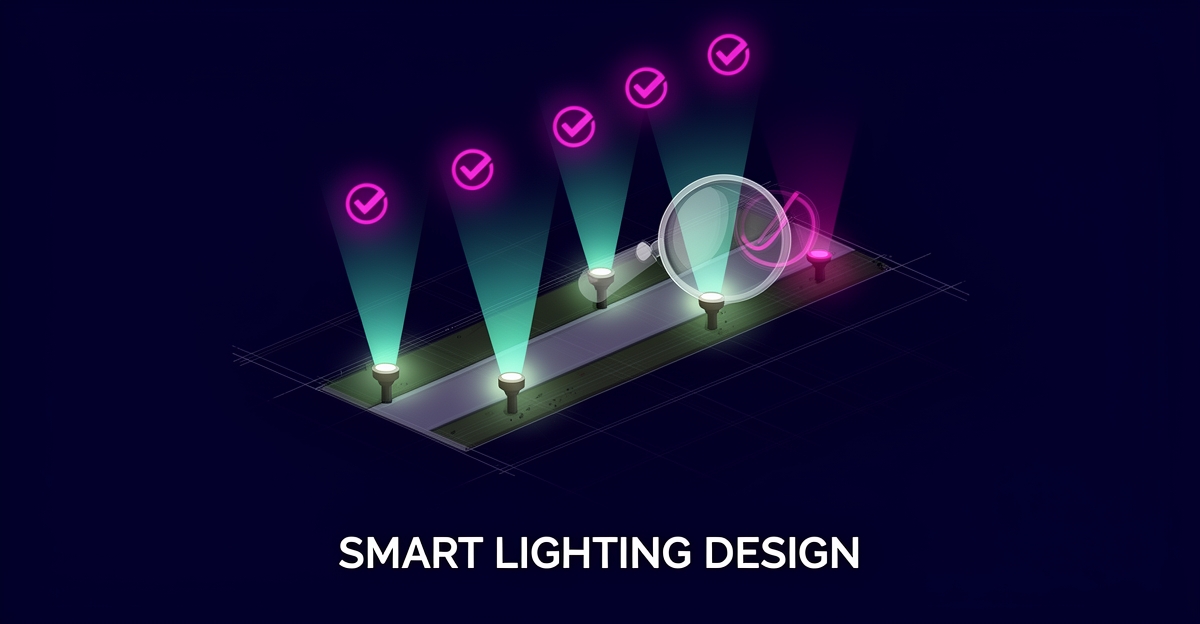
How AI Can Reduce Errors in Landscape Lighting Design Estimates
Key Facts
- AI-powered tools can validate designs against real-world conditions according to architectural lighting software research
- AI can automate information gathering, saving up to hours of research per project based on LinkedIn research on AI impact
- AI-powered tools can reduce rework by providing traceable reports and highlighting potential discrepancies early per software benchmarking data
- AI can improve the accuracy of photometric simulations by integrating fixture and surface parameters per industry analysis
- AI can identify potential issues in architectural lighting design calculations before they reach the field as noted in architectural lighting software research
Hire a team member that works 24/7 — for less than a part-time wage.
AI receptionists, SDRs, dispatchers and 99+ roles. Trained on your business, fully managed.
Not sure where to start? Ask our AI planner
The High Cost of Manual Errors in Landscape Lighting Estimates
Manual errors in landscape lighting design estimates can quickly spiral into costly problems, turning what should be a straightforward project into a source of frustration for both designers and clients. Incorrect coverage calculations often result in under- or over-lit spaces, while mismatched fixture specifications can lead to incompatible components that fail to meet performance or aesthetic goals. Overlooked environmental factors, such as soil type, vegetation density, or local weather patterns, further compound these issues, creating designs that look good on paper but fail in practice.
These mistakes don’t just affect the visual outcome; they trigger a cascade of avoidable expenses. Rework becomes necessary when fixtures must be relocated or replaced after installation, driving up labor and material costs. Budget overruns follow as contingency funds are drained to fix preventable errors, and timelines stretch as teams backtrack to correct flawed assumptions. Perhaps most damaging is the erosion of client trust, when expectations aren’t met due to avoidable miscalculations, satisfaction plummets and referrals dry up.
AI-powered tools are already proving effective at catching these issues early. For example, AI can automate information gathering, saving up to hours of research that would otherwise be spent manually verifying site conditions and fixture compatibility. It can also identify potential issues in architectural lighting design calculations before they reach the field, reducing the likelihood of costly oversights. By integrating fixture and surface parameters, AI improves the accuracy of photometric simulations, ensuring that light distribution matches design intent. These capabilities allow designers to validate their work against real-world conditions, significantly lowering the risk of errors that lead to rework and dissatisfaction. AI-powered tools can validate designs against real-world conditions, AI can automate information gathering, saving up to hours of research, and AI can identify potential issues in architectural lighting design calculations.
- Incorrect coverage calculations leading to poor light distribution
- Mismatched fixture specs causing compatibility or performance issues
- Overlooked environmental factors like soil, vegetation, or weather
- Increased rework, labor costs, and project delays
- Budget overruns and diminished client satisfaction
By catching these errors during the design phase, before any trenching or wiring begins, AI helps landscape lighting professionals deliver accurate, reliable estimates that align with both technical requirements and client expectations. This proactive verification not only protects budgets and timelines but also builds confidence in the design process, setting the stage for smoother execution and stronger client relationships. AIQ Labs supports this shift by developing custom AI systems that validate designs against real-world conditions, reducing rework and enhancing overall project outcomes.
How AI Verifies and Validates Design Parameters in Real Time
Manual estimates in landscape lighting leave room for miscalculated coverage, mismatched fixtures, and overlooked site conditions. AI-powered verification closes that gap by checking inputs against standards and real-world data before a design moves to installation.
AI systems automatically cross-check design inputs against real-world conditions, photometric standards, and live fixture databases as part of the workflow. According to architectural lighting software research, AI-powered tools can validate designs against real-world conditions and identify potential issues in architectural lighting design calculations before implementation.
The validation happens in real time as parameters are entered. Site topography, surface reflectance, mounting height, and environmental factors are integrated with fixture photometrics to test coverage and uniformity. Industry analysis notes AI can improve the accuracy of photometric simulations by integrating fixture and surface parameters, reducing guesswork in complex layouts.
Automated checks also replace hours of manual research. LinkedIn research on AI impact highlights AI can automate information gathering, saving up to hours of research per project. That time savings shifts designer focus from tedious verification to creative refinement.
Real-time validation is built around traceable, auditable logic. AI flags mismatches such as incorrect lumen packages, incompatible beam angles, or code non-compliance, and highlights discrepancies with traceable reports. Software benchmarking shows AI-powered tools can reduce rework by providing traceable reports and highlighting potential discrepancies early.
For landscape lighting firms, this means fewer change orders and less client dissatisfaction. AIQ Labs deploys custom AI systems that validate designs against real-world conditions as part of AI Workflow & Task Automation, embedding verification into the estimate process rather than adding a separate review step.
Common validation checks performed automatically include:
- Coverage and uniformity verification against target illuminance levels and site geometry
- Fixture specification cross-checks for lumen output, beam spread, and mounting compatibility
- Glare and surface effect mitigation analysis based on environmental conditions
- Code and standard compliance screening for local regulations and safety requirements
The result is faster, more reliable estimates with built-in confidence. AI does not replace designer judgment; it augments it by surfacing risks early and documenting why a parameter was accepted or flagged. Human oversight remains essential to interpret results and align the final design with aesthetic intent.
By weaving automated validation into the design workflow, firms reduce errors at the source and protect margins from costly rework.
From Estimate to Execution: Implementing AI in Your Lighting Design Workflow
Landscape lighting design estimates often falter at the transition from concept to execution, where minor oversights in coverage or fixture specs can trigger costly rework. AI transforms this critical phase by introducing systematic verification at every step, ensuring designs are not only creative but also technically sound before installation begins. According to industry research, AI-powered tools can validate designs against real-world conditions, significantly reducing the risk of field-level discrepancies that lead to client dissatisfaction.
The implementation process starts with precise data input: site topography, fixture specifications, and desired illumination levels are entered into the AI system, which then performs automated photometric calculations. These calculations consider complex variables like glare, surface reflectance, and beam spread, factors frequently missed in manual estimates. As noted in the same research, AI can improve the accuracy of photometric simulations by integrating fixture and surface parameters, ensuring that theoretical designs align with physical realities.
Once the initial calculations are complete, the AI system generates verification reports that highlight potential inconsistencies, such as uneven coverage or mismatched lumen outputs. These traceable reports enable designers to identify and correct issues early, a capability directly linked to reduced rework. Research indicates that AI-powered tools can reduce rework by providing traceable reports and highlighting potential discrepancies, turning what was once a reactive process into a proactive quality check.
To streamline workflow integration, AIQ Labs’ custom AI systems can be embedded into existing design tools via API, allowing seamless data flow between CRM, project management, and lighting design platforms. This integration supports the automation of repetitive tasks like report generation and documentation, freeing designers to focus on creative refinement. The system continuously learns from project outcomes, improving its validation logic over time and adapting to regional code requirements or common client preferences.
The final step involves human review of AI-generated insights, where designers apply their expertise to interpret validation results and make informed adjustments. This collaborative approach ensures that AI augments rather than replaces professional judgment, maintaining design integrity while enhancing precision. By embedding AI into the estimation-to-execution workflow, landscape professionals gain a reliable partner that minimizes errors, accelerates delivery, and builds client trust through consistently accurate lighting solutions. For businesses ready to own their AI transformation, AIQ Labs offers custom systems built for production use, explore how to start with a Free Strategy Call to map your highest-impact automation opportunity.
Still paying for 10+ subscriptions that don’t talk to each other?
We build custom AI systems you own outright. No vendor lock-in. Full control.
Not sure where to start? Ask our AI planner
Frequently Asked Questions
What are the most common errors in manual landscape lighting estimates?
How does AI actually catch errors in lighting design estimates?
Can AI improve the accuracy of photometric calculations for complex sites?
Will AI save time on lighting design projects or just add another tool to learn?
Does AI replace the designer's judgment in landscape lighting design?
How do I get started adding AI validation to my lighting design workflow?
Lighting the Path Forward: From Guesswork to Guaranteed Results
As we've seen, manual errors in landscape lighting design estimates create a costly domino effect, from incorrect coverage calculations and mismatched fixtures to overlooked environmental factors that lead to rework, budget overruns, and eroded client trust. AI transforms this process by validating designs against real-world conditions in real time, automating information gathering, and improving the accuracy of photometric simulations through integrated fixture and surface parameters. The result is faster, more reliable estimates that protect margins and build client confidence before a single wire is laid. For landscape lighting professionals ready to eliminate guesswork and deliver consistently accurate solutions, the next step is clear: start with a free strategy call to map your highest-impact automation opportunity. Book your free 30-minute strategy call and discover how AIQ Labs’ custom AI systems can validate your designs, reduce rework, and strengthen client relationships from estimate to execution.
Make AI your competitive advantage — not just another tool.
Strategy, implementation and ongoing optimization. One partner, end to end.
Not sure where to start? Ask our AI planner