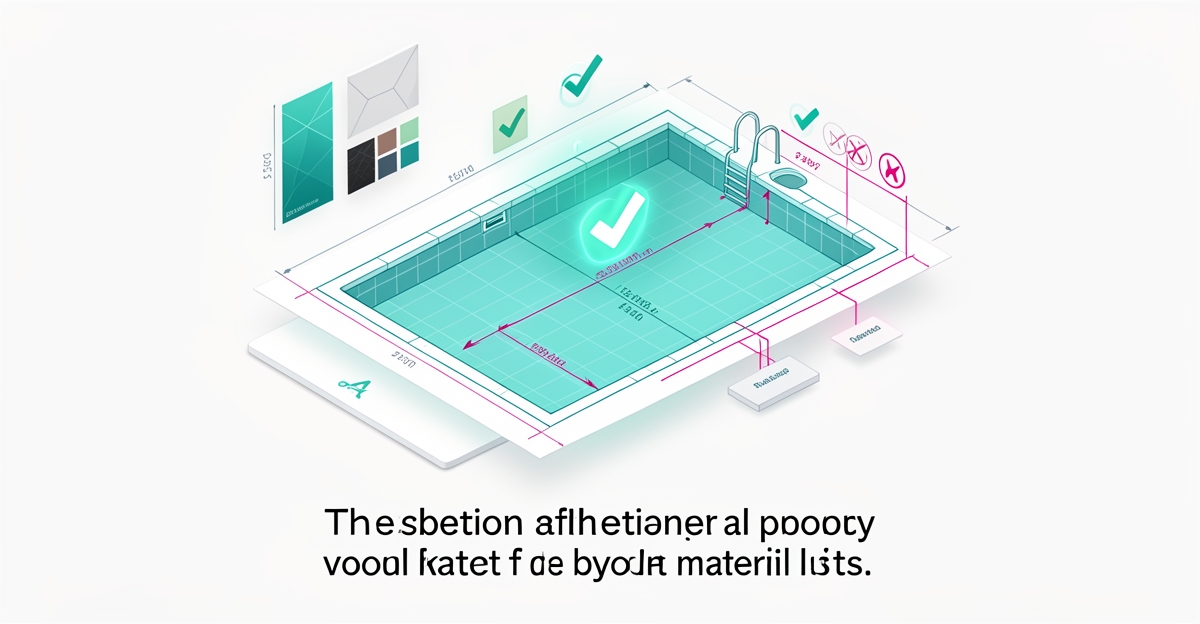
How AI Can Reduce Errors in Pool Design Estimations and Material Orders
Key Facts
- Manual errors in pool design estimations can trigger costly rework and delay timelines due to inaccurate measurements or misinterpreted material specifications.
- AI systems automate extraction and validation of dimensions, material grades, and quantities from PDFs, CAD files, and supplier quotes, flagging inconsistencies before orders are placed.
- AIQ Labs builds self-improving AI systems that learn from historical pool projects to refine accuracy with every new job by comparing estimates against actual material usage and final invoices.
- AI-powered validation cross-references design specifications against historical project databases and regional code requirements to flag discrepancies like mismatched liner thickness or pump size.
- By integrating with historical project data, AI identifies patterns such as recurring underestimations of coping stone quantities or over-ordering of PVC fittings, adjusting future predictions accordingly.
- AIQ Labs' systems enable seamless cross-checking between architectural plans, material specs, and pricing engines, turning estimation into a proactive quality control mechanism.
- Operational delays from manual mistakes in pool installations can halt work mid-installation, requiring redesigns, additional permits, or structural adjustments, affecting project backlogs and skilled labor efficiency.
Hire a team member that works 24/7 — for less than a part-time wage.
AI receptionists, SDRs, dispatchers and 99+ roles. Trained on your business, fully managed.
Not sure where to start? Ask our AI planner
The Cost of Manual Errors in Pool Project Estimations
Manual errors in pool design estimations carry significant financial and operational consequences that ripple through entire projects. Inaccurate measurements or misinterpreted material specifications can trigger costly rework, delay timelines, and inflate budgets beyond initial projections. These mistakes often stem from manual data entry, inconsistent documentation, or human oversight during the takeoff and pricing phases, areas where even small miscalculations compound quickly. For pool renovation businesses relying on precision, such errors don't just affect profitability; they erode client trust and strain operational capacity. Industry experience consistently shows that rework from avoidable mistakes is one of the largest drains on construction productivity and cost control. Addressing these vulnerabilities requires systems that minimize human intervention in critical estimation workflows while maintaining accuracy and traceability.
The financial toll of estimation errors extends beyond immediate material waste. When incorrect dimensions lead to over- or under-ordering of liners, coping, or filtration systems, projects face either costly returns and restocking fees or urgent rush orders at premium prices. Both scenarios disrupt cash flow and scheduling, particularly when specialized components have long lead times. Additionally, pricing data errors, such as outdated unit costs or misapplied tax rates, can undermine bid accuracy, leading to either lost profits or uncompetitive quotes. Construction firms routinely lose revenue to preventable errors in planning and documentation, with rework consuming labor hours that could otherwise advance new projects. These inefficiencies are especially pronounced in trades like pool installation, where custom designs and site-specific variables increase the margin for human error during manual calculations.
Operational delays further amplify the cost of manual mistakes. When crews discover discrepancies mid-installation, such as a mismatch between designed deck elevations and actual pool walls, work halts until corrections are made, often requiring redesigns, additional permits, or structural adjustments. This downtime affects not only the current project but also backlogs subsequent jobs, creating a cascade of scheduling conflicts. In an industry facing persistent skilled labor shortages, every hour lost to avoidable rework represents a critical drain on limited talent. AI-driven document processing and validation tools can mitigate these risks by automatically cross-checking design dimensions against material databases, flagging inconsistencies before orders are placed. By anchoring estimation workflows in verified data, pool renovation businesses can reduce reliance on manual checks, improve first-time accuracy, and protect both margins and timelines from the hidden costs of human error.
How AI Automates Validation and Cross-Checking in Pool Design Workflows
Pool design workflows often involve manually reviewing blueprints, material takeoffs, dimension callouts, and pricing sheets, processes prone to human error that can cascade into costly overruns. AI systems now automate the extraction and validation of these critical data points by parsing design documents, cross-referencing specifications against historical project databases, and flagging inconsistencies before orders are placed. This reduces reliance on manual checks and ensures alignment between design intent, material requirements, and budget constraints.
AI-powered validation leverages natural language processing and computer vision to extract dimensions, material grades, and quantities from PDFs, CAD files, and supplier quotes, then compares them against established project rules and past successful builds. For example, if a design specifies a liner thickness inconsistent with regional code requirements or a pump size mismatched to pool volume, the system flags the discrepancy for review. This capability mirrors AI's broader role in technical work, where it automates testing and quality checks to catch flaws before they become expensive problems, paralleling how AI catches design flaws before they become physical errors on site.
By integrating with historical project data, AI continuously learns from past estimations and outcomes, improving its accuracy over time. It identifies patterns such as recurring underestimations of coping stone quantities or over-ordering of PVC fittings, adjusting future predictions accordingly. This adaptive learning reflects principles of predictive engineering analytics, where simulation and testing processes are refined to improve collaboration and accuracy across complex workflows. In pool design, this means fewer change orders, less material waste, and tighter alignment between estimated and actual costs.
AIQ Labs builds custom systems that embed this validation logic directly into pool design workflows, enabling seamless cross-checking between architectural plans, material specs, and pricing engines. These systems don't just extract data, they understand context, apply industry-specific rules, and evolve with each project, turning estimation from a reactive task into a proactive quality control mechanism. As a result, teams spend less time correcting avoidable mistakes and more time delivering pools that meet design, safety, and budget expectations on the first try.
Building a Self-Improving AI System for Pool Estimations with AIQ Labs
Pool design estimations often falter due to manual processes that struggle to capture complex variables like irregular shapes, varying material grades, and fluctuating regional pricing. AIQ Labs addresses this by building self-improving AI systems that learn directly from your historical pool projects, turning past estimates into a living knowledge base that refines accuracy with every new job. This approach moves beyond static templates to create adaptive intelligence that understands the nuances of your specific workflows and common estimation pitfalls.
The system begins by ingesting your archived project data, including original estimates, actual material usage, change orders, and final invoices, to identify patterns where predictions diverged from reality. Using multi-agent workflows, specialized AI agents analyze these discrepancies: one agent cross-references dimensions against as-built measurements, another validates material specifications against supplier catalogs, and a third tracks pricing variances over time. AI models are well suited to detecting subtle patterns in complex datasets that humans overlook, enabling the system to isolate root causes of estimation errors, such as consistently underestimating coping material for freeform pools or over-ordering tile due to unclear waste factors. This diagnostic phase establishes a baseline for continuous improvement, ensuring each iteration targets the most impactful sources of inaccuracy.
What truly sets this system apart is its ability to evolve with your business. After each completed project, the AI automatically ingests the final data, compares it against the original estimate, and adjusts its internal models to reduce future deviation. This creates a virtuous cycle where estimation accuracy improves incrementally, mirroring how predictive engineering analytics refines product design through iterative simulation and testing. Over time, the system learns to anticipate project-specific risks, like soil conditions affecting excavation volume or regional code changes impacting required materials, transforming estimation from a reactive task into a proactive, intelligence-driven process. By anchoring improvements in your own project history, the AI delivers increasingly precise forecasts that reduce material waste, prevent costly change orders, and build client trust through reliable budgeting. Depending on where estimation sits in your operation, this can start as a single AI Workflow Build targeting your most expensive workflow, or grow into a full AI Operating System you own outright, built in phases, with pricing agreed up front.
Still paying for 10+ subscriptions that don’t talk to each other?
We build custom AI systems you own outright. No vendor lock-in. Full control.
Not sure where to start? Ask our AI planner
Frequently Asked Questions
How does AI actually prevent errors in pool design estimates?
What specific types of errors can AI catch in pool renovation projects?
How does AI learn to improve estimation accuracy over time?
Can AI help with the labor shortage in pool construction?
What makes AIQ Labs' approach different from generic estimating software?
How do I get started with AI for my pool renovation business?
Make AI your competitive advantage — not just another tool.
Strategy, implementation and ongoing optimization. One partner, end to end.
Not sure where to start? Ask our AI planner