How AI Can Reduce Food Waste by 25% in Fast-Casual Dining Operations
Key Facts
- Food waste is a major regulatory and cost pressure across foodservice, with the EU alone wasting tens of millions of tonnes of food annually.
- AI-powered inventory management can meaningfully reduce excess stock, industry studies commonly report reductions of up to 40%.
- AI-driven demand prediction helps restaurants avoid both missing ingredients and costly overordering.
- Inventory management is one of the restaurant back-office functions most suited to full AI automation.
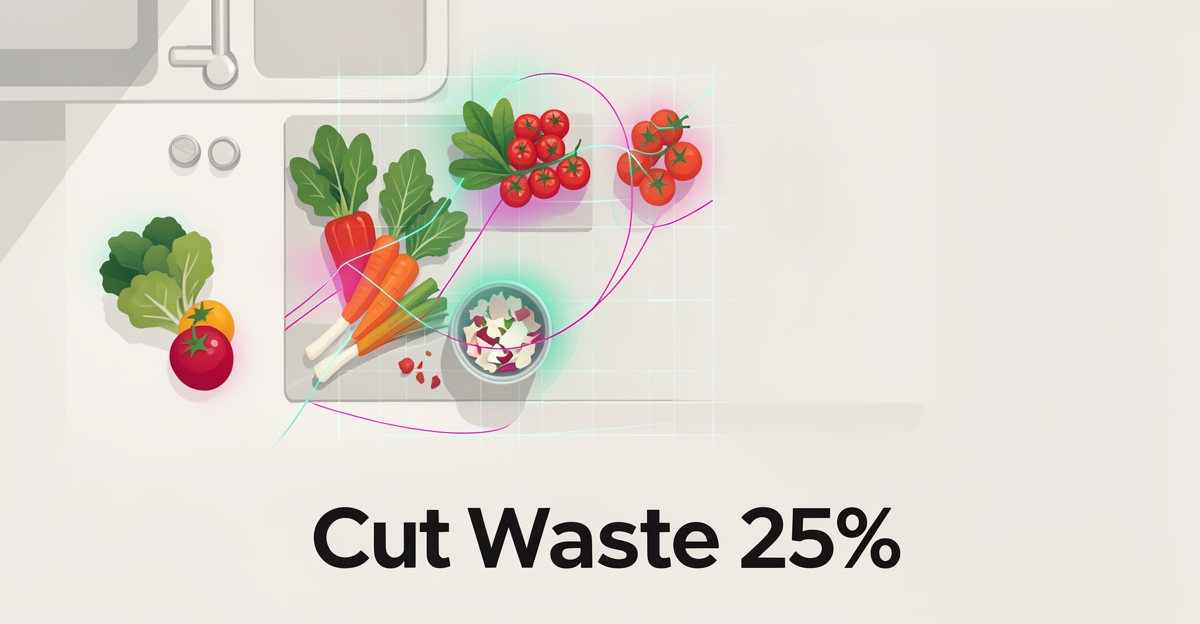
- Closed-loop AI forecasting supports cutting food waste by up to 25% in fast-casual dining operations.
Hire a team member that works 24/7 — for less than a part-time wage.
AI receptionists, SDRs, dispatchers and 99+ roles. Trained on your business, fully managed.
Not sure where to start? Ask our AI planner
The Hidden Cost of Food Waste in Fast-Casual Dining
Food waste represents a silent drain on fast-casual restaurant profitability, with operators often underestimating its true financial toll. The scale of the problem is enormous, the European Union alone wastes tens of millions of tonnes of food annually, and foodservice operations worldwide mirror those inefficiencies. For fast-casual establishments, this waste stems not just from overproduction but from the constant tension between maintaining fresh inventory and responding to unpredictable customer demand, where even small miscalculations in ingredient ordering can lead to significant spoilage losses before service even begins.
Traditional inventory methods, reliant on manual counts and historical averages, fail in this volatile environment. These systems lack the agility to adjust for daily fluctuations in foot traffic, weather impacts, or local events that drastically alter demand patterns. As a result, restaurants frequently over-order to avoid stockouts, only to watch perishable items like leafy greens, dairy, and prepared proteins expire unused. The financial impact compounds when considering labor costs tied to handling, storing, and ultimately discarding this wasted inventory, expenses that vanish without contributing to revenue or customer satisfaction.
This operational blind spot creates a dual burden: unnecessary costs erode thin margins while the environmental footprint of uneaten food grows. AI-powered inventory management offers a path forward by replacing guesswork with predictive precision. By analyzing real-time sales data, seasonal trends, and external factors, AI systems can forecast ingredient needs with far greater accuracy, reducing over-ordering and minimizing spoilage risk. Such automation doesn't just cut waste, it transforms inventory from a cost center into a dynamically optimized function that aligns supply with actual consumption, laying the groundwork for both economic and environmental resilience in fast-casual dining.
How AI Predicts Demand and Optimizes Inventory in Real Time
Fast-casual restaurants face constant pressure to balance freshness with efficiency, and overstocking remains a silent profit drain. AI-powered demand forecasting transforms this challenge by turning historical sales, seasonal trends, and external factors into precise, real-time inventory guidance. AI-driven demand prediction helps restaurants avoid both missing ingredients and costly overordering, directly addressing the root causes of spoilage.
These systems continuously analyze point-of-sale data, weather patterns, local events, and even social media trends to anticipate demand shifts before they happen. By integrating with existing inventory tools, AI automates reorder points and adjusts order quantities dynamically, ensuring ingredients arrive just in time for peak service without excess sitting in storage. Industry studies commonly report that AI-powered inventory management can reduce excess stock by up to 40%, significantly lowering the risk of perishable items going to waste.
- Real-time sales pattern analysis for immediate demand adjustments
- Seasonality and trend detection to anticipate recurring fluctuations
- External factor integration (weather, events, holidays) for predictive accuracy
- Automated reorder optimization to prevent both stockouts and overstocking
- Continuous learning from actual vs. predicted outcomes to improve forecast precision
For fast-casual operations where menu items rely on fresh, perishable ingredients, this level of precision means less spoilage, lower carrying costs, and more consistent ingredient quality. AIQ Labs builds these forecasting capabilities directly into restaurant workflows, whether as a single AI Workflow Build targeting your most expensive inventory process or as part of a broader AI Operating System that connects forecasting, ordering, and reporting in one layer you own outright. By aligning procurement with actual consumption patterns, these systems turn inventory from a liability into a streamlined, predictable component of operations, cutting waste while safeguarding the freshness that keeps customers coming back.
Implementing AI Inventory Systems: From Assessment to Ongoing Optimization
Implementing AI inventory systems begins with a clear assessment of current workflows to identify inefficiencies and waste points. Fast-casual operators should map out how ingredients move from delivery to disposal, noting where over-ordering, spoilage, or manual tracking errors occur. This foundational step ensures the AI solution targets real pain points rather than adding complexity. AIQ Labs starts every engagement this way: a two-minute Fit Check, then a free 30-minute strategy call to map bottlenecks and identify the highest-ROI automation opportunity before anything gets built.
Integration with existing POS and supply chain tools is critical for seamless data flow. The AI system must pull real-time sales data, ingredient usage, and delivery schedules to build accurate demand forecasts. When connected properly, AI-powered inventory management can automate reordering and minimize both stockouts and excess inventory, key drivers of food waste. Inventory management is one of the back-office functions most suited to full AI automation, enabling restaurants to optimize costs while maintaining freshness.
Staff training and change management follow technical setup, ensuring kitchen managers and suppliers trust and use the system effectively. Teams need to understand how to interpret AI-generated alerts, adjust par levels, and act on predictive insights without overriding the technology unnecessarily. Ongoing optimization then refines the model using actual waste data, seasonal trends, and menu changes. Over time, this closed-loop process improves forecast accuracy, reduces spoilage, and supports the broader goal of cutting food waste by up to 25% in fast-casual dining operations. AIQ Labs builds in milestones, so you can start monthly, expand in phases, and own the system outright once it's proven.
Still paying for 10+ subscriptions that don’t talk to each other?
We build custom AI systems you own outright. No vendor lock-in. Full control.
Not sure where to start? Ask our AI planner
Frequently Asked Questions
How much food waste can AI actually reduce in a fast-casual restaurant?
How does AI know how much food to order each day?
Why do traditional inventory methods fail in fast-casual restaurants?
Do I need to replace my existing POS or inventory tools to use AI?
Will my staff struggle to adopt an AI inventory system?
How do I get started with AI inventory forecasting for my restaurant?
Turning Food Waste Into Your Next Competitive Advantage
Food waste doesn't have to be a fixed cost of doing business. As we've seen, the gap between what fast-casual restaurants order and what customers actually buy is where margins quietly disappear, but AI-powered demand forecasting closes that gap, cutting excess stock by up to 40% and putting a 25% reduction in food waste within reach. The path is straightforward: assess where waste occurs in your workflow, integrate forecasting with your existing POS and supply chain tools, and let the system learn and improve with every service. Operators who make this shift turn inventory from a liability into a precision instrument, protecting freshness, cash flow, and the environment at the same time. If you're ready to see where AI could make the biggest difference in your operation, AIQ Labs offers a free strategy call to map your bottlenecks and identify your highest-ROI automation opportunities. Take the two-minute Fit Check at aiqlabs.ai/apply to get started, and if there isn't a clear win, we'll tell you that too.
Make AI your competitive advantage — not just another tool.
Strategy, implementation and ongoing optimization. One partner, end to end.
Not sure where to start? Ask our AI planner