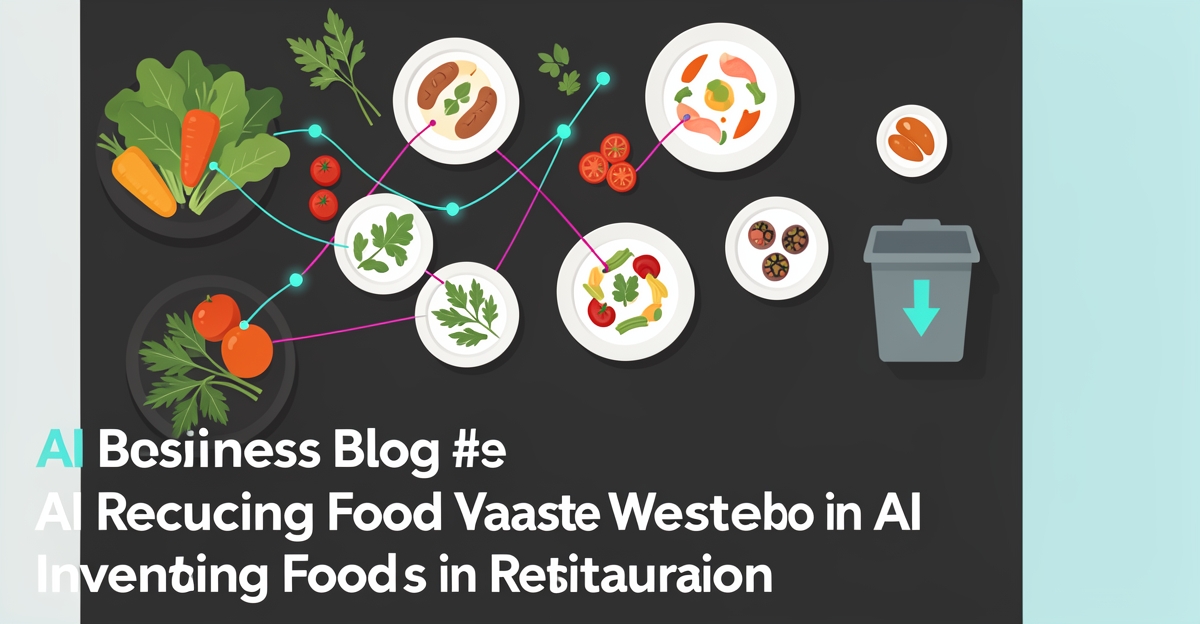
How AI Can Reduce Food Waste by 25% in Full-Service Restaurants
Key Facts
- AI-powered systems can reduce avoidable food waste by 25% to 60% according to industry research
- AI-powered systems typically reduce inventory levels by 20% to 60% while improving cash flow per industry research
- AI-driven kitchens can save 20% to 60% in labor hours per 1,000 orders per industry research
- AI-powered systems improve order accuracy to 98% to 99.5% per industry research
- AI-powered systems can cut customer wait times by 20% to 60% via optimized workflows per industry research
- Food waste generates roughly 4.9 gigatonnes of CO₂ equivalent annually per Drawdown research
- Each tonne of avoidable waste carries a carbon penalty of about 2.82 t CO₂-eq per Drawdown research
Hire a team member that works 24/7 — for less than a part-time wage.
AI receptionists, SDRs, dispatchers and 99+ roles. Trained on your business, fully managed.
Not sure where to start? Ask our AI planner
The Hidden Cost of Food Waste in Full-Service Kitchens
Most full-service kitchens don't realize how much profit evaporates before a single plate leaves the pass. The waste log tells the real story: over-prepped proteins, expired produce, and inventory bloat that ties up cash flow while food loss contributes roughly 4.9 Gt CO₂-eq/yr globally.
Every tonne of avoidable waste carries a carbon penalty of about 2.82 t CO₂-eq, turning kitchen inefficiency into a measurable climate liability. Operators who treat waste as a cost of doing business typically absorb 25% to 60% higher avoidable losses than necessary, according to industry benchmarks on zero-waste systems. Those losses compound across labor hours, storage costs, and missed revenue from inconsistent portions.
- Over-prep driven by gut-feel forecasting instead of sales patterns
- Inventory bloat from static par levels that ignore seasonality
- Waste logs that sit unused because no one has time to analyze them
- Portion drift that erodes margin plate by plate
AIQ Labs works with restaurant groups to close this loop by building custom AI systems that ingest daily sales, inventory counts, and waste logs, then predict prep volumes with precision. The same research on AI-powered waste reduction points to payback periods of 1 to 4 years, making the business case as clear as the environmental one.
How AI Predicts Portions and Adjusts Prep Volumes
AI can transform kitchen operations by analyzing daily sales, inventory, and waste logs to forecast demand and dynamically adjust preparation volumes. This data-driven approach enables restaurants to align food production with actual customer needs, minimizing over-preparation and spoilage. By leveraging historical patterns and real-time inputs, AI systems continuously refine their predictions, ensuring prep volumes stay optimized without sacrificing menu availability or quality.
Research shows that AI-powered systems can reduce avoidable food waste by 25% to 60% through precise portion forecasting and prep adjustments, per industry research. Simultaneously, these systems typically lower inventory levels by 20% to 60%, reducing excess stock that often expires before use. Labor efficiency also improves, with AI-driven kitchens saving 20% to 60% in labor hours per 1,000 orders by streamlining prep workflows and reducing rework.
- Analyzes sales trends, inventory turnover, and waste logs in real time
- Forecasts daily demand by menu item and service period
- Automatically adjusts prep volumes to match predicted needs
- Reduces overproduction and spoilage without impacting service
- Continuously learns from outcomes to improve future predictions
For full-service restaurants, this means less guesswork in the kitchen and more confidence in prep decisions. AIQ Labs builds these systems through AI Workflow Builds that sync with your POS and inventory tools to deliver these insights directly to kitchen teams. By turning waste data into actionable forecasts, restaurants gain control over one of their most persistent cost centers while supporting broader sustainability goals.
From Forecast to Plate: Inventory, Accuracy and Customer Experience
AI-powered inventory management transforms how full-service restaurants balance supply and demand, turning forecasting into a precise science that directly impacts the customer experience. By analyzing daily sales patterns, real-time inventory levels, and historical waste logs, AI systems predict exact portion needs and adjust preparation volumes accordingly. This eliminates the guesswork that leads to both stockouts and excess inventory, ensuring kitchens operate with optimal stock levels. As a result, restaurants can reduce avoidable food waste by 25% to 60%, directly improving margins while maintaining consistent menu availability.
These operational improvements translate into measurable gains in service quality and customer satisfaction. AI-driven systems can enhance order accuracy to between 98% and 99.5%, minimizing errors that frustrate diners and increase waste from remakes. Simultaneously, streamlined kitchen workflows can reduce wait times by 20% to 60%, allowing guests to receive their meals faster without compromising quality. Together, these efficiencies create a smoother dining experience where accuracy and speed reinforce each other, building trust and encouraging repeat visits.
- Reduces avoidable food waste by 25% to 60% through predictive inventory adjustments
- Improves order accuracy to 98% to 99.5% with AI-powered vision and automation
- Cuts customer wait times by 20% to 60% via optimized kitchen workflows
- Lowers labor hours per 1,000 orders by 20% to 60%, freeing staff for guest-focused tasks
- Decreases excess inventory by 20% to 60%, improving cash flow and storage efficiency
For restaurants seeking to implement these capabilities, AIQ Labs develops custom AI systems that integrate directly with kitchen inventory and POS platforms to deliver data-driven portion forecasting and prep optimization. This end-to-end approach ensures that waste reduction strategies are not only accurate but also sustainable, aligning operational excellence with long-term profitability and customer loyalty. By connecting forecast to plate, AI turns inventory management into a strategic advantage that serves both the bottom line and the dining experience.
Building a Custom AI Waste Reduction System with POS and Kitchen Integration
Most restaurants know they're throwing money in the trash, industry research shows that AI-powered systems can reduce avoidable waste by 25% to 60%, but few know how to build the infrastructure to stop it. The difference between operators who slash waste and those who keep guessing comes down to one thing: a custom AI system that actually talks to your POS, kitchen inventory, and waste logs.
Off-the-shelf inventory tools promise quick fixes, but they can't handle the complexity of full-service operations where menu engineering, prep timing, and daily specials create thousands of data points. A custom AI waste reduction system syncs directly with your existing POS to track every plate sold, monitors kitchen inventory in real time, and cross-references waste logs to identify patterns. The system learns that Tuesday lunch service needs 30% fewer prep vegetables than Friday dinner, or that your seafood special consistently generates waste when the weather forecast predicts rain.
This level of integration delivers measurable results. Research shows that AI-powered systems can reduce inventory levels by 20% to 60% while cutting labor hours per 1,000 orders by up to 60%. The environmental impact matters too, food waste generates roughly 4.9 gigatonnes of CO₂ equivalent annually, making reduction efforts both profitable and responsible.
Building this system requires three core components working in sync:
- POS integration that captures every transaction, modification, and timing pattern to build accurate demand forecasts
- Kitchen inventory sync that tracks ingredient levels, expiration dates, and prep batch sizes in real time
- Waste log automation that records what gets tossed, when, and why, feeding the AI model to prevent repeat mistakes
- Predictive prep guidance that adjusts daily based on historical patterns, reservations, weather, and local events
AIQ Labs builds these systems using a true ownership model, you own the code, the data, and the AI agents outright. No vendor lock-in, no monthly SaaS fees that increase every year, no dependency on a third party's roadmap. The system becomes your competitive advantage, not a subscription expense.
The investment structure adapts to your operation's needs. Start Monthly delivers a working system with setup, training, integrations, and ongoing optimization for less than a part-time hire. Build in Milestones splits the project into phases, you approve and pay for each stage as it ships, keeping everything built so far if priorities shift. Own It Outright provides a complete AI operating system with full code ownership when the build finishes. Full payment-model details are on the pricing page.
Custom beats off-the-shelf because full-service restaurants don't fit templates. Your menu changes seasonally, your suppliers vary by region, and your waste patterns reflect your specific operation. A custom AI system learns your business, integrates with your existing tools, and improves continuously based on your actual data, not generic industry benchmarks that ignore what makes your restaurant unique.
Still paying for 10+ subscriptions that don’t talk to each other?
We build custom AI systems you own outright. No vendor lock-in. Full control.
Not sure where to start? Ask our AI planner
Frequently Asked Questions
Can AI really cut food waste in a full-service restaurant, or is that just marketing?
How does AI predict what to prep each day?
Will AI help with inventory costs and labor too?
Does reducing waste actually impact customer experience?
Is food waste reduction just a cost saving or does it matter environmentally?
Do I need to replace my POS and kitchen systems to use AI for waste reduction?
From Waste Log to Profit Margin
Turning waste logs into daily prep guidance is where full-service restaurants finally close the loop on profit leakage. By connecting daily sales, inventory counts, and waste data, AI can forecast demand by item and service period, adjust prep volumes in real time, and reduce avoidable waste by 25% to 60% while cutting labor hours, excess inventory, and wait times. The result is tighter margins, consistent plate availability, and a kitchen that learns from every service instead of guessing. For operators ready to move beyond static pars and gut-feel forecasting, a custom system that syncs with your POS and kitchen inventory makes those insights actionable for your team. AIQ Labs builds those owned systems for restaurants, with integration and training included. Start the 2-minute Fit Check to book a free 30-minute strategy call, map your biggest bottleneck, and see whether a clear, high-ROI waste reduction opportunity exists for your operation.
Make AI your competitive advantage — not just another tool.
Strategy, implementation and ongoing optimization. One partner, end to end.
Not sure where to start? Ask our AI planner