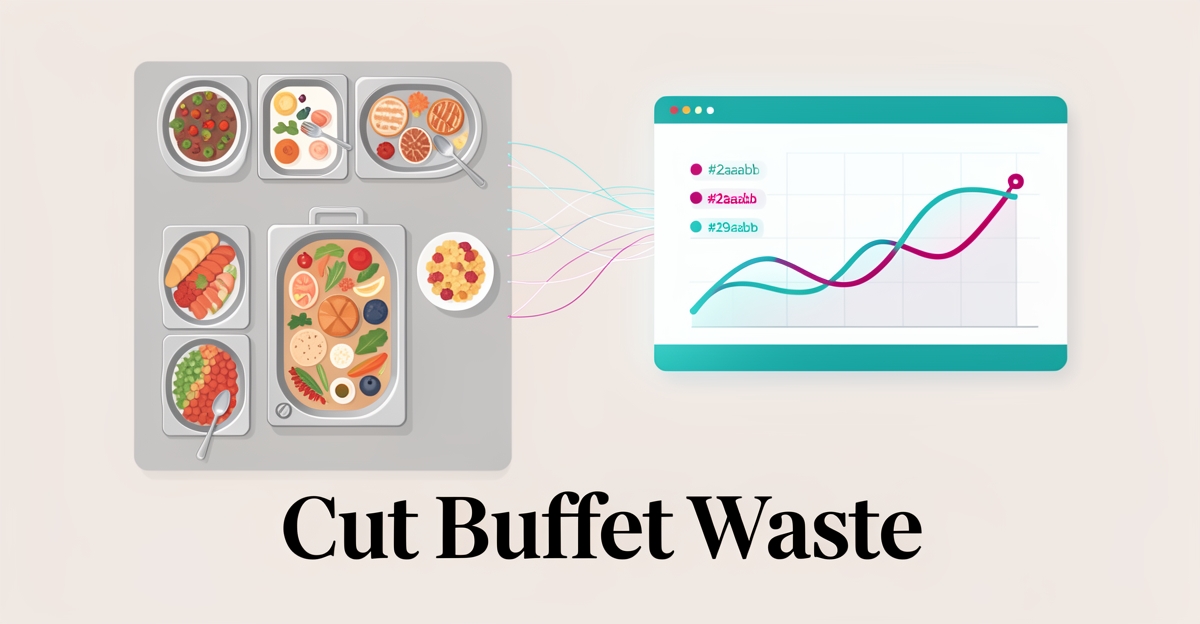
How AI Can Reduce Food Waste in Buffet Restaurants Without Increasing Costs
Key Facts
- US businesses left behind $108 billion in surplus food in 2023, according to ReFED's 2025 report.
- Food waste costs the restaurant and hospitality industry more than $100 billion annually, as reported by Business Insider.
- Operators using AI for demand prediction typically cut food waste by 15–20%, based on buffet industry analysis.
- The Four Seasons Peninsula Papagayo cut food waste by 50% within eight months of installing Winnow's AI monitoring system.
- Thirteen Hilton hotels in the UAE recorded a 76% reduction in kitchen waste using AI-powered waste tracking.
- Ashford Castle reduced trimmings waste by 90% and overall waste by 58% in 2024 through AI-driven waste analytics.
- AI-driven inventory management can reduce food costs by 5–15% and labor costs by 10–20%, with ROI typically achieved within 6 to 12 months per industry benchmarks.
Hire a team member that works 24/7 — for less than a part-time wage.
AI receptionists, SDRs, dispatchers and 99+ roles. Trained on your business, fully managed.
Not sure where to start? Ask our AI planner
Why Buffets Inherently Waste Food (And Why It’s Not Your Fault)
If your buffet trays come back full at closing time, you're not running a bad kitchen, you're running a system designed to produce exactly that outcome. Buffet waste isn't a discipline problem; it's a structural one.
At the heart of the model is a prediction problem. Operators must guess how many guests will show up, what they'll eat, and how much of it, hours or days in advance. And because a spread that runs empty reads as a failure, kitchens overproduce by default. As one analysis of hotel buffet operations puts it, operators are "scared of running out" and equate a full spread with quality, so the system pushes toward excess no matter how careful the staff is (Woke Waves).
That's why the waste isn't your fault. It's baked into the economics of the format itself. The same source describes the buffet as "a machine for multiplying tiny miscalculations into giant piles of leftovers", every small forecasting error, multiplied across dozens of dishes and hundreds of covers, compounds into staggering surplus. Multiply that across the industry and the numbers become sobering: US businesses left behind $108 billion in surplus food in 2023, and food waste costs the restaurant and hospitality industry more than $100 billion annually (Business Insider).
Several forces conspire against even the most conscientious buffet operator:
- Fear of the empty tray, a buffet that looks "picked over" invites complaints, so chefs hedge by overpreparing every service.
- Unpredictable demand, guest counts shift with weather, local events, and day of week, none of which a clipboard and gut feeling can reliably account for.
- Batch-cooking economics, pans must be filled to look appealing, even when the last third of every tray typically goes uneaten.
- Invisible waste, without measurement, trim waste and overproduction remain vague categories rather than specific, fixable problems.
The scale of the problem explains why even well-run operations see meaningful waste. Food waste accounts for roughly 8% of global carbon emissions, and the hospitality industry's reliance on manual, intuition-based forecasting makes overproduction the rational response to uncertainty (Business Insider). Operators using gut-feel ordering and spreadsheet scheduling simply have no mechanism to tighten the loop.
The encouraging news is that structural problems respond to structural solutions. When kitchens replace guesswork with data, forecasting demand from historical sales, weather, and event patterns, waste drops measurably, with typical reductions of 15–20% from AI-driven demand prediction alone (Lavu). That's the gap between a system built to overproduce and one built to prepare the right amount. Understanding that your waste is engineered, not earned, is the first step toward engineering it out.
How AI Predicts, Tracks, and Optimizes to Eliminate Waste at the Source
Buffet kitchens lose money in a way that's hard to see: every tray of scrambled eggs that goes uneaten was a prediction failure, not a carelessness failure. AI attacks that failure at its source, before food is prepped, while it's cooking, and the moment it hits the waste bin.
The first application is demand forecasting. AI systems analyze historical sales data, local events, weather patterns, and guest behavior to predict guest counts and item popularity with accuracy that can reach 95% or higher, according to research on predictive analytics. Operators using AI for demand prediction typically cut food waste by 15–20%, as documented in buffet industry analysis. The Ritz-Carlton Bangkok takes this further, preparing food for only 50% of expected guests and cooking fresh dishes in 10–15 minutes for walk-ins, an approach that controls quantities while maintaining quality.
The second application is real-time waste tracking. Computer-vision systems like Winnow mount cameras and smart scales above waste bins, identifying more than 1,000 food types and converting waste from a vague category into specific, actionable data, exactly which dishes and prep stations are producing the most loss. PreciTaste's vision-fueled food tracking, now deployed in over 5,000 locations globally, monitors makeline and buffet inventory in real time to prevent both stockouts and overstocking. The results are dramatic: the Four Seasons Peninsula Papagayo cut food waste by 50% within eight months of installing Winnow, and thirteen Hilton hotels in the UAE recorded a 76% reduction in kitchen waste.
The third lever is smart labor scheduling. AI uses sales forecasts and historical data to recommend optimal staffing for each shift, preventing overstaffing during slow periods and understaffing during rushes. That translates to a 5–10% reduction in labor costs, according to restaurant industry research, with integrated AI systems delivering 10–20% labor savings overall.
The combined effect shows up in the numbers:
- 50–90% documented waste reductions at high-end hotels using AI monitoring
- 5–15% food cost savings from better inventory management
- ROI typically achieved within 6 to 12 months of deployment
The key insight is that these applications work as a system. Forecasting tells you how much to prep, computer vision tells you what you got wrong, and scheduling aligns your labor to the corrected plan. This is the model behind custom AI systems that learn from real-time sales data and automatically adjust inventory and prep schedules. AIQ Labs builds exactly these kinds of integrated, owned systems for restaurants, whether as a single Workflow Build or a full AI Operating System, rather than patchwork point solutions.
Waste stops being an accepted cost of doing business and becomes a measurable, fixable variable.
From Surplus to Savings: Turning Waste Data into Profit and Sustainability
Waste data is not a report card; it is a recipe for innovation. When AI-powered tracking reveals exactly what gets tossed, buffets can transform that surplus from a loss leader into a profit center.
According to Business Insider, properties using these insights have achieved dramatic results, Ashford Castle reduced trimmings waste by 90% and overall waste by 58% in 2024. This granular visibility turns "trash" into inventory.
The key is creative repurposing driven by data. When AI identifies surplus croissants or sourdough, chefs can pivot them into bread-and-butter pudding or crackers rather than discarding them. Vegetable trimmings become kombucha or pesto, while meat trimmings find new life in spring rolls or amuse-bouche items.
This approach exemplifies how AIQ Labs helps restaurants build custom AI systems that learn from real-time sales data to optimize inventory and prep schedules automatically.
Beyond the kitchen, AI enables dynamic menu adjustments that prevent waste before it happens. By analyzing historical sales and local events, these systems can reduce food waste by 15–20% through precise demand forecasting. Operators can also leverage surplus redistribution platforms like Too Good To Go to sell excess prepared food at reduced prices, recovering revenue that would otherwise end up in the bin.
The financial impact is substantial. Industry data shows AI-driven inventory management can reduce food costs by 5–15% while cutting labor costs by 10–20%. For most operations, these systems deliver ROI within 6 to 12 months, turning sustainability from a cost center into a competitive advantage.
Here are specific ways AI transforms surplus into savings:
- Precision Prep: Cook fresh dishes in 10–15 minutes for walk-ins rather than overproducing for the full expected count
- Ingredient Intelligence: Use computer vision to identify exactly which items (scrambled eggs, rice, pastries) are being wasted by dish and station
- Menu Engineering: Adjust offerings based on real-time popularity and profitability data
- Smart Redistribution: Automatically flag surplus for donation or discount sale via integrated platforms
When waste data drives menu design, buffets stop guessing and start profiting. The result is a leaner operation that delights guests while protecting margins.
Implementing AI Without Disruption: A Practical Path for Buffet Operators
For buffet operators wary of operational upheaval, adopting AI doesn’t require a full-scale system overhaul. Starting with a single, high-impact workflow, like AI-powered inventory forecasting, lets restaurants test value quickly while minimizing risk. According to industry benchmarks, such targeted implementations typically take just 2 to 8 weeks to deploy, aligning with AIQ Labs’ milestone-based approach for SMBs. This phased strategy lets teams build confidence in the technology before expanding to adjacent functions like labor scheduling or waste tracking.
A low-risk entry point is deploying an AI Employee focused on a specific task, such as monitoring real-time sales patterns to adjust prep volumes. These managed agents integrate with existing POS systems, like Toast or Square, without requiring rip-and-replace infrastructure. As noted in comparative analyses, AI-driven demand forecasting alone can reduce food waste by 15–20% and lower food costs by 5–15%, delivering measurable ROI within 6 to 12 months. By anchoring each phase to clear outcomes, like reduced overproduction or fewer stockouts, operators maintain control over pacing and investment.
- Begin with a single workflow fix, such as inventory forecasting or demand prediction
- Use AI Employees or modular milestones to avoid disruption and maintain flexibility
- Integrate with current POS and kitchen systems for real-time data synchronization
- Measure impact at each stage before scaling to adjacent operations like labor or menu optimization
This incremental path ensures AI enhances, not disrupts, the buffet experience, turning waste reduction into a sustainable, cost-neutral advantage. Operators retain full ownership of built systems, enabling long-term adaptation without vendor lock-in. For those ready to start, a focused workflow fix delivers proof of concept in weeks, not months.
Still paying for 10+ subscriptions that don’t talk to each other?
We build custom AI systems you own outright. No vendor lock-in. Full control.
Not sure where to start? Ask our AI planner
Frequently Asked Questions
Will using AI to cut buffet waste end up costing me more than it saves?
How accurate is AI demand forecasting for a buffet with unpredictable guest counts?
What kind of waste reduction are hotels actually seeing with AI?
Can we implement AI without shutting down service or overhauling our POS?
Does AI just tell me what’s wasted, or does it help me use surplus?
Is AI for buffet waste only for big luxury hotels?
Sharper Buffets, Stronger Margins
Buffet waste isn’t a failure of discipline, it’s the predictable result of a system built on guesswork and fear of empty trays. Replacing intuition with data changes that equation: AI demand forecasting cuts overproduction by 15–20%, real-time computer vision turns vague waste into specific, fixable actions, and smart scheduling aligns labor to actual service. The result is less surplus, tighter food costs, and a kitchen that can still deliver abundance without the waste baked in. For operators ready to move from reactive to precise, the practical path is incremental, start with one high-impact workflow like inventory forecasting, integrate it with your existing POS, measure the impact, then expand. AIQ Labs helps restaurants build custom AI systems that learn from real-time sales data to adjust inventory and prep schedules automatically, with ownership retained by you. Take the 2-minute Fit Check at https://aiqlabs.ai/apply, then book a free 30-minute strategy call to map your biggest bottleneck. You can also reach the team directly at [email protected].
Make AI your competitive advantage — not just another tool.
Strategy, implementation and ongoing optimization. One partner, end to end.
Not sure where to start? Ask our AI planner