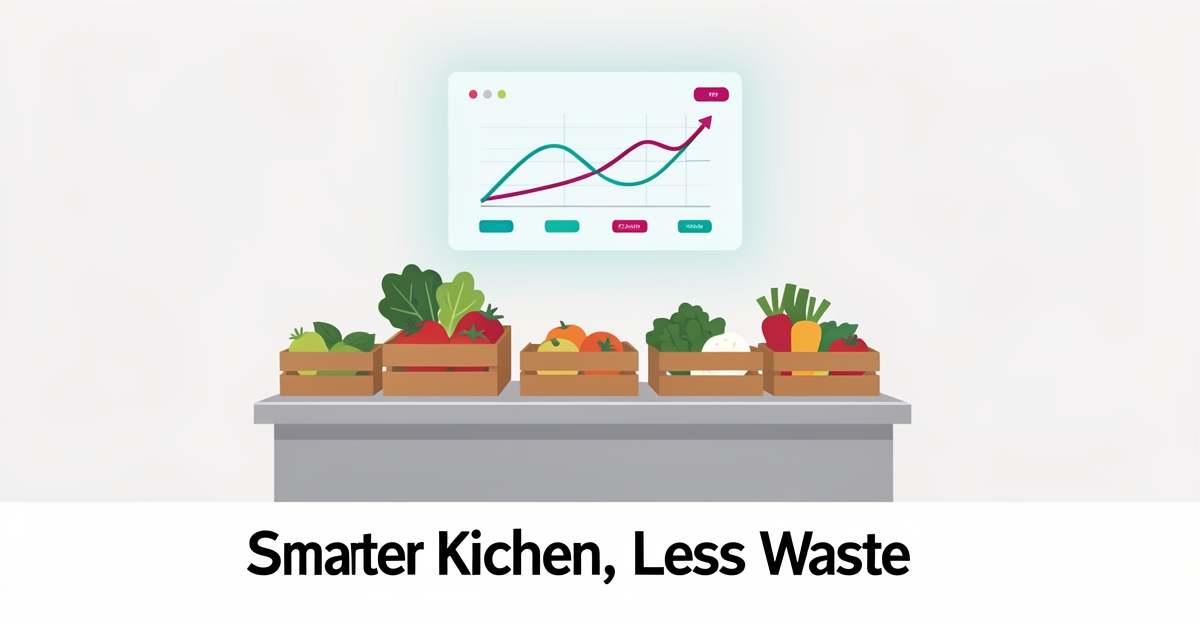
How AI Can Reduce Food Waste in Family-Owned Diners
Key Facts
- Restaurants and food services account for 12% of food waste in the EU according to European Parliament research
- 30-40% of the food supply is wasted in the United States annually per FDA estimates
- The EU generated 130 kg of food waste per inhabitant in 2023 per Eurostat data
- Global food waste reaches 931 million tonnes annually per widely cited UN-backed estimates
- Poor demand forecasting is the primary driver of spoilage in family diners, over-prepping for a rush that never comes
- Overstocking ties up cash that could fund marketing or staffing improvements
Hire a team member that works 24/7 — for less than a part-time wage.
AI receptionists, SDRs, dispatchers and 99+ roles. Trained on your business, fully managed.
Not sure where to start? Ask our AI planner
The Hidden Cost of Overstocking in Family Diners
Every extra tray of prepped food that never reaches a plate is money walking out the back door. For family-owned diners operating on thin margins, that waste compounds daily and quietly erodes profitability.
In the EU, an estimated 130 kg of food waste per inhabitant was generated in 2023, totaling around 60 million tonnes of food wasted each year. Restaurants and food services account for 12% of the food waste in the EU, a share that sits behind households but ahead of retail and distribution.
The scale is even starker in the United States, where 30-40% of the food supply is wasted. Globally, the problem reaches 931 million tonnes of food waste annually, with food service operations repeatedly cited as a high-impact source.
Poor demand forecasting is the primary driver of spoilage in family diners. When covers are overestimated, staff prep more than needed. When local events, weather, or seasonality shift, menus stay static and ingredients expire. The result is a double loss: cost of goods written off and lost opportunity to serve paying guests.
Overstocking creates hidden costs that go beyond the invoice:
- Spoilage and disposal fees for perishable proteins, produce, and dairy
- Labor hours spent prepping, storing, and then discarding unused food
- Cash tied up in excess inventory that could fund marketing or staffing
- Inconsistent quality and menu availability that erodes repeat visits
Family-owned diners often rely on intuition and experience to forecast demand, which works until patterns change. AI changes that equation by analyzing customer orders and traffic patterns to optimize inventory. By learning from historical sales, day-of-week trends, and real-time signals, systems can predict demand more accurately and reduce spoilage.
AIQ Labs builds custom systems that help diners predict demand and reduce spoilage by turning order history into actionable inventory guidance, typically through an AI Workflow Build that rebuilds the one workflow costing you the most, at a fixed price and in phases.
When forecasting improves, diners can move toward just-in-time prep without sacrificing service speed. Fewer waste bins, tighter food costs, and more consistent guest experience follow naturally from better visibility into what will actually be sold.
AI-Powered Demand Forecasting: Beyond Gut Instinct
AI-powered demand forecasting transforms how family-owned diners manage inventory by analyzing customer orders and traffic patterns with precision. Traditional methods rely on gut instinct and manual tracking, which often lead to overstocking or shortages. AI systems process historical data, seasonal trends, and real-time foot traffic to predict daily demand with far greater accuracy. This data-driven approach reduces spoilage by aligning food preparation closely with actual customer needs. Diners that adopt AI forecasting commonly report meaningful reductions in waste, along with more consistent menu availability that keeps regulars coming back.
- Analyze historical sales data to identify daily and weekly ordering patterns
- Incorporate weather, local events, and seasonal trends into demand models
- Adjust forecasts in real time based on actual customer traffic and order volume
By replacing guesswork with predictive analytics, diners minimize labor costs associated with manual inventory counts and reduce errors that contribute to waste. AI-powered forecasting also supports just-in-time ordering, ensuring ingredients arrive fresh and are used before spoilage. This approach not only cuts waste but also improves cash flow by reducing excess inventory holding costs. For family-owned diners operating on tight margins, these efficiencies translate directly into sustainable operations and stronger community trust. AIQ Labs designs custom systems that integrate with existing diner workflows, turning data into actionable insights without disrupting daily service. The result is a smarter, more resilient operation where every ingredient serves its purpose, feeding customers, not landfills.
Implementing Smart Inventory: A Practical Roadmap
Implementing smart inventory systems in family-owned diners begins with deploying AI-powered demand forecasting to optimize inventory and reduce waste. This approach analyzes historical sales data, seasonality, and real-time customer orders to predict future demand with greater accuracy than manual methods. By aligning stock levels with actual consumption patterns, diners can significantly cut spoilage and over-ordering, directly addressing the 30-40% of food supply wasted annually in the US and the 130 kg of food waste per inhabitant generated in the EU in 2023.
Next, analyzing customer orders and traffic patterns helps identify trends that drive waste. AI systems process data from point-of-sale systems, reservation logs, and even weather or local event schedules to forecast peak dining times and popular menu items. This insight allows diners to adjust prep schedules and ingredient procurement, minimizing waste during slow periods while ensuring availability during rushes. Such data-driven adjustments are essential for tackling the 12% of EU food waste attributed to restaurants and food services.
The third step involves using data analytics to pinpoint specific areas of waste, such as over-prepped ingredients or frequently spoiled items. By highlighting these inefficiencies, AI enables targeted interventions, like adjusting portion sizes or revising prep timelines, that reduce waste without compromising service quality. This analytical foundation supports the shift to a just-in-time inventory system, which orders ingredients only as needed, further reducing spoilage and improving cash flow.
Finally, training staff on AI-powered tools ensures smooth adoption and sustained results. Employees learn to interpret forecasts, update inventory logs, and respond to system alerts, turning technology into a daily operational asset. While challenges like upfront costs and the need for data analytics expertise exist, a phased implementation, starting with forecasting and scaling gradually, mitigates risk and builds confidence. AIQ Labs supports this journey with fixed-price, milestone-based builds that let diners optimize incrementally and own their systems outright. Over time, this roadmap turns inventory management from a source of waste into a lever for efficiency and sustainability.
Custom AI Systems for Independent Restaurants
Family-owned diners often struggle with food waste due to unpredictable demand and manual inventory tracking, leading to spoilage and lost profits. AI-powered demand forecasting offers a practical solution by analyzing historical order data, seasonal trends, and daily traffic patterns to predict customer needs with greater accuracy. According to European Parliament research, restaurants and food services account for 12% of food waste in the EU, highlighting the sector's significant opportunity for improvement. By shifting from reactive to predictive inventory management, diners can reduce over-purchasing and minimize spoilage of perishable ingredients.
AIQ Labs develops custom AI systems that give independent restaurants full ownership of their demand forecasting tools, eliminating reliance on generic software subscriptions that create vendor lock-in. These tailored solutions integrate directly with existing point-of-sale and inventory systems, using multi-agent architectures to continuously learn from real-time sales data and adjust predictions accordingly. Unlike off-the-shelf platforms, custom-built systems evolve with the diner's unique menu, customer base, and operational rhythms, ensuring long-term relevance and control. With the Own It Outright model, clients retain full intellectual property and code rights upon completion, no ongoing licensing fees or vendor dependency.
The benefits of AI-driven forecasting extend beyond waste reduction to include improved cash flow and operational efficiency. Better forecasting typically reduces both excess stock and stockouts, directly impacting sustainability and profitability. For family-owned businesses operating on thin margins, these gains translate into measurable cost savings and more consistent service quality. By grounding AI implementation in the diner's specific data and workflows, the system becomes a sustainable asset rather than a temporary fix.
- Analyze historical sales and customer traffic patterns
- Predict daily ingredient needs with seasonal adjustments
- Trigger automated reorder alerts based on forecasted demand
- Reduce over-purchasing of perishable items like produce and dairy
- Improve menu planning through data-informed forecasting
For diners ready to take control of their inventory, AIQ Labs offers a clear path forward. Whether starting with a single workflow build or moving toward a full AI Operating System for the whole business, the process begins with a two-minute Fit Check followed by a free 30-minute strategy call to identify high-impact opportunities. This ensures the solution is not only technically sound but also aligned with the diner's goals for waste reduction, cost control, and long-term resilience. Ownership of the forecasting tool means the diner can adapt, scale, and refine the system indefinitely, without ongoing licensing fees or dependency on external vendors.
Still paying for 10+ subscriptions that don’t talk to each other?
We build custom AI systems you own outright. No vendor lock-in. Full control.
Not sure where to start? Ask our AI planner
Frequently Asked Questions
How much food waste is generated per person in the EU each year?
What percentage of food waste in the EU comes from restaurants and food services?
Can AI really reduce food waste in small diners, or is it just for big chains?
What are the main benefits of using AI for inventory in a family diner?
Is implementing AI in a diner too expensive or complicated for a small business?
How does AI know what food to prepare each day in a diner?
From Waste Bins to Better Margins
Family-owned diners lose money every time intuition beats data. Over-prepping for a rush that never comes, missing a local event spike, or letting perishables expire quietly erodes the thin margins that keep these kitchens alive, especially when restaurants and food services already account for a significant share of food waste. AI changes that by turning order history and traffic patterns into clear, daily guidance on what to prep and when, moving from gut instinct to just-in-time prep without slowing service.
The payoff is practical: less spoilage, tighter food costs, fewer labor hours wasted on discard, and a more consistent menu guests can rely on. If you want to test where the biggest waste leak is in your operation, start by mapping your POS data against day-of-week trends, weather, and local events, then pilot forecasting for your top 10 perishable items. AIQ Labs builds custom demand forecasting systems diners own outright, so the tool evolves with your menu and stays integrated with your existing workflows. Take the two-minute Fit Check at aiqlabs.ai/apply, then book your free 30-minute strategy call at aiqlabs.ai/book to map your bottleneck. You can also reach the team directly at [email protected].
Make AI your competitive advantage — not just another tool.
Strategy, implementation and ongoing optimization. One partner, end to end.
Not sure where to start? Ask our AI planner