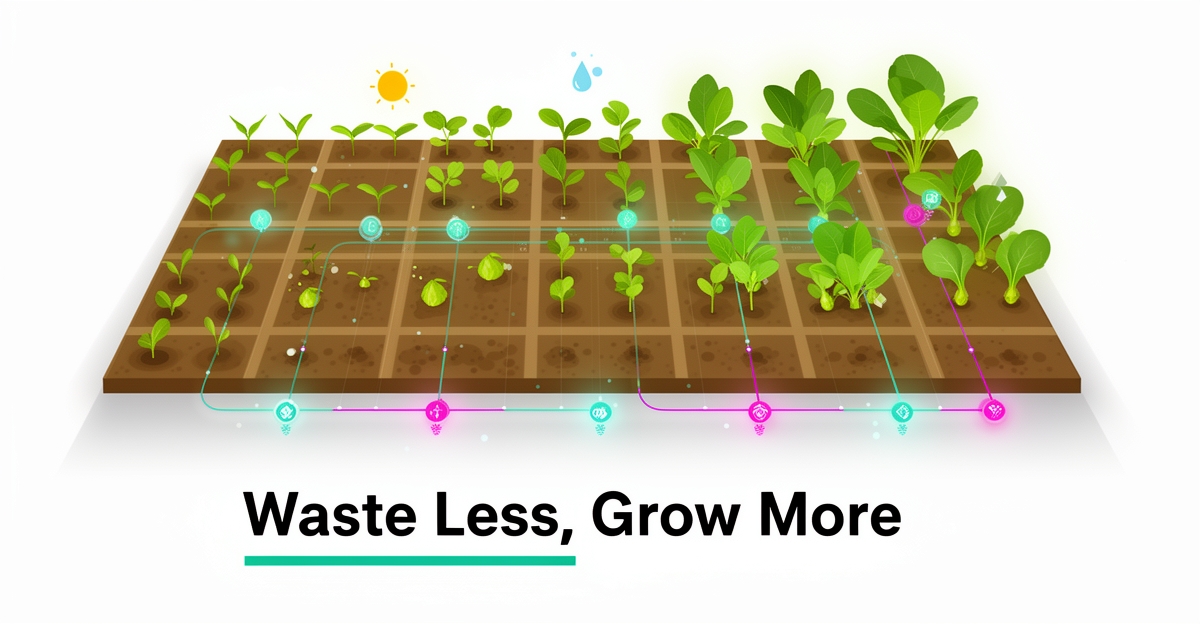
How AI Can Reduce Garden Waste by Optimizing Planting and Harvest Schedules
Key Facts
- Gardens routinely lose a meaningful share of yield to timing mismatches, planting before conditions are viable or harvesting past peak ripeness
- AI-powered waste management reduces unnecessary collections by 40-60% through demand-based scheduling
- AI sorting achieves roughly 95% accuracy compared to 85-90% for human workers in waste management systems
- Route optimization from AI systems cuts travel time by 36.8% through predictive analytics
- The world generates over 2 billion tonnes of municipal solid waste annually according to industry estimates
- Manual waste systems spend 60-70% of budgets on personnel before any optimization is applied
Hire a team member that works 24/7 — for less than a part-time wage.
AI receptionists, SDRs, dispatchers and 99+ roles. Trained on your business, fully managed.
Not sure where to start? Ask our AI planner
The Hidden Cost of Guesswork: Why Gardens Waste What They Grow
Garden waste is not a small, local problem. It is part of a global waste picture that starts with guesswork in the field and ends in landfills.
The world generates over 2 billion tonnes of municipal solid waste annually, and a significant share comes from food that was grown, harvested, and then lost to poor timing. Calendar-based planting and harvesting treat every season as predictable, even when weather, soil, and daylight are not.
Manual, human-dependent scheduling drives overproduction, spoilage, and wasted resources. Gardens follow fixed dates rather than real conditions, leading to crops planted too early, harvested too late, and produce that never reaches its peak. The root cause is not lack of effort; it is lack of real-time insight.
Traditional waste management shows the same pattern. Up to 70% of resources are wasted on unnecessary pickups in manual systems, and 60-70% of total waste management budgets are consumed by personnel expenses. Human sorting adds further loss, with 15-20% contamination rates in recycling streams due to human sorting errors. Gardens mirror these inefficiencies when decisions rely on memory and habit instead of data.
Calendar scheduling creates three compounding losses:
- Overproduction from planting before conditions are viable, tying up water and soil nutrients
- Spoilage from harvesting on a set date rather than at peak ripeness
- Resource waste from rework, extra watering, and disposal of unsalvageable yield
Guesswork scales waste because it cannot adapt to micro-variations in temperature, rainfall, and soil moisture. A late frost, a dry spell, or an early heat wave will disrupt a fixed schedule, but the schedule does not change.
AI changes the decision point from calendar to condition. Models analyze weather patterns, soil data, and seasonality to predict optimal planting and harvesting times, enabling community gardens to minimize spoilage and maximize yield. This is the same shift seen in AI waste management, where AI-powered systems can reduce unnecessary collections by 40-60% while improving sorting accuracy to roughly 95% compared to 85-90% human rates.
For green space operations, that means planting when the soil is ready, not when the month says so, and harvesting when the crop is ready, not when the rota allows. AIQ Labs builds these predictive capabilities into custom systems designed for agricultural and green space operations, turning environmental data into actionable planting and harvest schedules.
The hidden cost of guesswork is measurable in tonnes, water, and labor. Replacing it with data-driven timing is how gardens stop wasting what they grow.
From Fixed Calendars to Living Data: How AI Predicts the Perfect Timing
Gardeners have long relied on fixed planting calendars that ignore the subtle shifts in weather and soil that determine true growing success. This rigid approach often leads to premature planting that fails in late frosts or delayed harvesting that lets produce spoil in the field.
AI transforms this guesswork into precision agriculture by analyzing real-time weather patterns, soil moisture levels, and historical seasonality data to predict optimal planting and harvest windows. These systems process multiple environmental variables simultaneously, something human observation simply cannot match at scale, creating dynamic schedules that adapt to actual conditions rather than arbitrary dates. For community gardens, this means planting cool-season crops when soil temperatures truly support germination and harvesting warm-season varieties at peak ripeness before quality declines.
The value of data-driven scheduling is already visible in adjacent domains where AI optimizes operational timing. Waste management systems using AI achieve roughly 95% sorting accuracy compared to 85-90% for human workers, while reducing unnecessary collections by 40-60% through demand-based scheduling. Route optimization from these same systems cuts travel time by 36.8%, demonstrating how predictive analytics eliminates inefficiencies rooted in fixed schedules.
- Continuous monitoring of soil temperature and moisture for planting triggers
- Weather forecast integration to avoid frost damage or heat stress
- Historical yield data to refine variety-specific timing
- Seasonal daylight tracking for photoperiod-sensitive crops
- Pest and disease pressure prediction for preventive harvesting
By replacing static calendars with living data streams, AI enables community gardens to work with nature's rhythms rather than against them. This approach minimizes waste from mistimed operations while maximizing the yield and quality of every harvest, turning environmental variability from a challenge into a predictable advantage. AIQ Labs develops these custom scheduling systems for agricultural operations, translating waste reduction principles from industrial contexts into practical tools for green space management.
What AI-Powered Garden Operations Actually Look Like
AI-powered garden operations transform traditional planting and harvesting through data-driven precision. Machine learning models analyze weather patterns, soil moisture levels, and seasonal trends to predict the right timing for sowing seeds and harvesting crops. This approach minimizes spoilage by ensuring produce is picked at peak ripeness while improving yield through optimized planting schedules. Community gardens using these systems report reduced waste and better resource allocation, turning guesswork into strategic planning.
IoT sensors form the nervous system of smart gardens, continuously monitoring soil conditions, temperature, and humidity in real time. These connected devices feed data into predictive analytics platforms that forecast spoilage risk before it occurs, allowing gardeners to adjust harvesting plans proactively. The technology creates a feedback loop where environmental insights directly inform operational decisions, reducing the likelihood of overproduction or premature harvesting that leads to waste.
Real-world implementations demonstrate the scalability of these solutions across diverse settings. AMP Robotics operates AI sorting systems in hundreds of facilities worldwide, achieving consistent high accuracy rates in material classification industry research. Sensoneo has deployed large networks of connected sensors across multiple cities, reducing unnecessary collection pickups by 40-60% through demand-based scheduling industry research. Meanwhile, Ecube Labs' solar-powered compactors substantially increase bin capacity while cutting collection frequency, showing how smart infrastructure minimizes operational overhead industry research.
- Machine learning algorithms process historical yield data alongside current weather forecasts
- IoT sensors provide continuous soil and environmental monitoring for real-time adjustments
- Predictive analytics identify spoilage risks before visible signs appear
- Automated scheduling aligns planting and harvesting with optimal environmental windows
- Data visualization tools translate complex analytics into actionable gardening insights
For community gardens and green space operations, AIQ Labs develops custom systems that integrate these technologies into cohesive workflows. Our AI Workflow Builds rebuild the one workflow that costs you the most, in this case, planting and harvest scheduling, at a fixed price, in phases. This tailored approach ensures that AI recommendations align with each garden's unique microclimate and operational constraints, delivering measurable reductions in waste while improving overall yield consistency. The result is a sustainable cycle where technology enhances rather than replaces traditional gardening wisdom.
Implementing AI Scheduling in Your Garden Operation: A Practical Roadmap
Implementing AI scheduling in your garden operation begins with understanding where waste currently occurs. Assess your planting and harvest cycles to pinpoint when spoilage happens due to timing mismatches with weather, soil readiness, or distribution capacity. Many gardens lose a meaningful share of yield through premature harvesting or delayed planting that misses optimal growing windows, a loss that compounds over multiple seasons.
Next, map your available data sources. Historical yield records, local weather station data, soil moisture readings, and seasonal planting guides form the foundation for AI-driven predictions. Even basic smartphone weather apps and manual logbooks can provide initial datasets, though integrating IoT sensors enhances accuracy. AIQ Labs helps community gardens identify and structure these data points for model training, turning fragmented records into actionable intelligence.
Deploy sensors strategically to capture real-time environmental variables. Soil moisture probes, temperature loggers, and sunlight monitors typically run from a couple hundred dollars to over a thousand per unit, representing the primary upfront investment. Start with a handful of sensors covering different microclimates in your garden to validate correlations between conditions and plant performance. This phased approach manages costs while building confidence in the data pipeline before scaling across larger operations.
Train predictive models using your historical yield data combined with sensor inputs. Machine learning algorithms analyze patterns linking planting dates, weather fluctuations, and harvest outcomes to recommend optimal schedules. For example, a model might reveal that planting tomatoes two weeks after the last frost date, rather than on a fixed calendar date, reduces losses from early frost damage. These insights transform intuition-based scheduling into precision agriculture.
Integrate AI recommendations directly into your operational workflow. Automated alerts notify staff when soil conditions reach ideal planting thresholds or when crops approach peak ripeness. Adjust irrigation schedules based on real-time moisture predictions, and stagger harvests to match processing capacity. This integration prevents bottlenecks where produce sits unharvested due to labor or storage limits, a common source of avoidable waste.
Finally, measure impact through concrete metrics. Track reductions in spoiled produce, increases in marketable yield, and changes in resource use like water or fertilizer. Gardens implementing AI scheduling typically see meaningful reductions in spoilage and gains in usable yield within the first growing season. Continuous monitoring allows model refinement, adjusting predictions based on actual outcomes creates a feedback loop that improves accuracy year over year. Address barriers like sensor costs through phased deployment, counter staff training concerns with hands-on workshops, and overcome organizational resistance by sharing early wins from pilot plots.
Owning the System: Why Custom AI Beats Off-the-Shelf for Green Space Operations
For community gardens and green space operations, off-the-shelf AI solutions often fail to address the unique variables that determine planting and harvest success. Custom-built systems, owned outright, eliminate vendor lock-in while delivering precision tailored to specific crops, local microclimates, and operational workflows, turning environmental data into actionable schedules that minimize spoilage and maximize yield.
AI systems analyzing weather patterns, soil conditions, and seasonal data can reduce unnecessary collections by 40-60% while improving sorting accuracy to roughly 95% in adjacent waste management contexts, directly translating to less waste and better resource use in garden settings. This data-driven approach allows operations to shift from reactive fixes to proactive optimization, ensuring crops are planted and harvested at peak times based on real-time environmental patterns rather than generic calendars.
True ownership means community gardens control their AI's evolution, adjusting models as soil health changes or new crop varieties are introduced, without dependency on external vendors for updates or pricing shifts. Unlike subscription-based tools that create long-term operational costs, custom AI becomes a permanent asset that scales with the garden's growth, delivering sustained efficiency gains year after year.
- Analyze hyperlocal weather and soil data to predict optimal planting windows
- Forecast harvest timing to prevent overripeness and spoilage
- Integrate with irrigation and composting systems for closed-loop resource use
- Generate yield predictions to guide volunteer labor and distribution planning
- Adapt recommendations based on actual growth outcomes and seasonal shifts
For gardens ready to move beyond generic advice, the next step is a free strategy call to assess readiness and map high-impact opportunities. AIQ Labs offers flexible engagement models, Start Monthly, Build in Milestones, or Own It Outright, ensuring the solution fits both operational needs and budget constraints while securing full IP ownership. Larger operations can also graduate to a full AI Operating System that connects scheduling, irrigation, and distribution in one layer. This approach transforms environmental data into a durable advantage, reducing waste not through guesswork, but through AI that learns and improves with every growing season.
Start the two-minute Fit Check, then book a free 30-minute strategy call to explore how custom AI can optimize your garden's planting and harvest cycles for maximum yield and minimum waste.
From Guesswork to Growth: The New Season Starts With Data
Gardens have always been at the mercy of the calendar, planting by date and harvesting by routine while weather, soil, and seasonality followed their own rules. The result is measurable: overproduction that ties up resources, spoilage that wastes the harvest, and labor spent correcting avoidable mistakes. AI changes the decision point from fixed dates to living conditions, analyzing real-time soil moisture, weather patterns, and historical yield data to recommend exactly when to plant and when to pick. The same predictive approach has already cut unnecessary waste collections by 40-60% and raised sorting accuracy to roughly 95% in parallel operations. For community gardens and green space managers, that means less waste, higher quality yield, and schedules that adapt instead of break. AIQ Labs builds custom systems that turn local environmental data into actionable planting and harvest calendars, owned outright, not rented. If your operation is ready to stop guessing and start timing, take the two-minute Fit Check at aiqlabs.ai/apply and book a free 30-minute strategy call at aiqlabs.ai/book to map the highest-impact opportunities for your growing season.
Make AI your competitive advantage — not just another tool.
Strategy, implementation and ongoing optimization. One partner, end to end.
Not sure where to start? Ask our AI planner