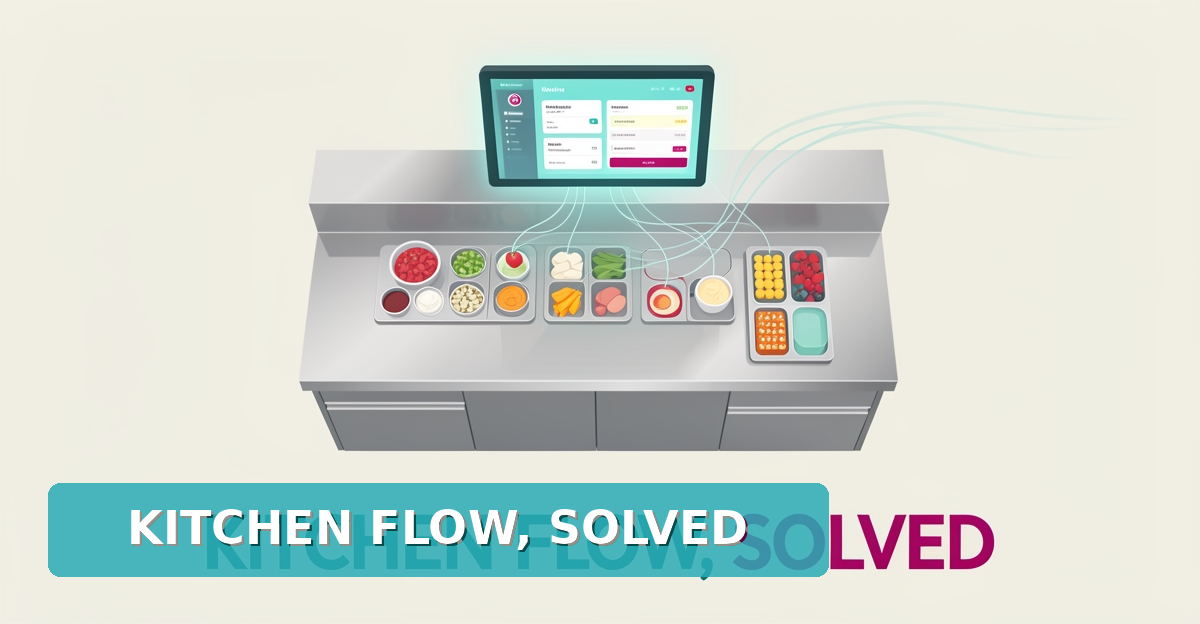
How AI Can Reduce Kitchen Backlogs and Improve Order Accuracy
Key Facts
- Industry analyses suggest only about 28% of restaurants have adopted kitchen display optimization, leaving most kitchens reliant on paper tickets and shouting according to industry research.
- Predictive prep is typically associated with 20-30% improvement in food waste reduction and 15-20% improvement in ticket times according to recent analysis.
- Kitchen display optimization alone is often credited with roughly 15% faster ticket times industry data shows.
- AI-powered demand-based scheduling is often reported to save 2-5% in labor costs while improving service levels according to operational studies.
- AI-driven inventory management is typically associated with 4-8% food cost reduction for restaurants recent research found.
- AI-powered upselling often achieves 15-25% higher attachment rates than static suggestions industry research shows.
Hire a team member that works 24/7 — for less than a part-time wage.
AI receptionists, SDRs, dispatchers and 99+ roles. Trained on your business, fully managed.
Not sure where to start? Ask our AI planner
The Hidden Cost of Kitchen Inefficiency: Backlogs and Errors
Pizza kitchens don’t slow down because the team isn’t working hard. They slow down because the system forces them to guess.
Poor order tracking, manual prep estimation, and disjointed workflows create a cascade of backups, waste, and inaccurate orders that erode margins every service. Labor pressure and margin pressure make these inefficiencies expensive, as restaurants face staffing shortages while guest expectations rise.
Manual tracking means tickets get lost between front of house and line cooks. Without real-time visibility, stations overproduce or underproduce, and managers only discover bottlenecks after guests complain. Industry research suggests only about 28% adoption for kitchen display optimization, leaving most kitchens reliant on paper and shouting.
Prep estimation is still guesswork in many operations. Cooks rely on habit and last night’s volume instead of demand signals. That leads to excess waste during slow periods and stockouts during rushes. A recent analysis found predictive prep can drive 20-30% improvement in food waste reduction and 15-20% improvement in ticket times.
Disjointed workflows compound the problem. POS, kitchen display, and inventory systems rarely talk to each other, so changes at the pass never reach prep. Staff spend time re-entering orders, clarifying modifications, and remaking items. The result is longer ticket times, inconsistent quality, and frustrated teams.
The hidden costs show up across the operation:
- Backlogs from orders queued without smart routing or load balancing
- Waste from manual prep estimates that miss real-time demand
- Errors from poor handoffs and lack of order confirmation
- Labor strain from constant firefighting instead of flow
When kitchens can’t see bottlenecks in real time, small delays become service failures. AI workflow and task automation addresses this by monitoring kitchen performance in real time and suggesting improvements, rather than waiting for end-of-shift reviews.
AIQ Labs builds systems that detect bottlenecks, reassign tasks, and ensure accurate order execution, reducing errors and improving throughput. The approach mirrors how restaurants are already using AI to augment staff, not replace them, freeing teams from routine tracking so they can focus on execution. If you’d rather start with the one workflow that costs you the most, AIQ Labs’ AI Workflow Builds rebuild it at a fixed price, in phases.
The cost of inaction is measurable. Industry data suggests kitchen display optimization alone can deliver roughly 15% faster ticket times, while demand-based scheduling is often reported to save 2-5% in labor costs while improving service levels.
How AI Fixes Kitchen Workflows: From Prediction to Real-Time Optimization
AI is transforming kitchen workflows by turning reactive chaos into proactive precision. Rather than waiting for backlogs to form, AI systems anticipate demand and optimize every step of food preparation and order execution. This shift from guesswork to data-driven coordination is already delivering measurable results for restaurants adopting these technologies.
Predictive prep uses historical sales patterns, reservation data, local events, weather, and real-time order velocity to forecast exactly what needs to be prepared and when. By generating precise prep quantities, par levels, and production schedules, AI is typically associated with reducing food waste by 20-30% while improving ticket times by 15-20%. These improvements come from eliminating over-preparation and ensuring ingredients are ready exactly when needed, cutting idle time and rush-hour scramble.
Smart kitchen display systems go beyond basic order queuing to actively manage workflow. Using AI-powered smart routing, orders are distributed based on real-time station capacity, with priority given to time-sensitive items and load balanced across teams. Timing intelligence predicts cooking times under current load, alerts chefs when to fire items, and coordinates courses to arrive together at the table. Quality monitoring continuously tracks ticket times against targets, identifies bottlenecks as they emerge, and suggests workflow improvements, kitchen display optimization alone has been credited with improving ticket times by roughly 15%.
Computer vision adds another layer of operational intelligence by using cameras and AI to monitor food quality and safety in real time. Systems verify portion sizes, check doneness and color, detect missing items before service, and ensure plate presentation consistency. Beyond quality control, computer vision tracks station utilization, analyzes movement patterns, monitors equipment usage, and analyzes waste, providing the granular insights needed to continuously refine kitchen efficiency.
AIQ Labs builds systems that integrate these capabilities, predictive prep, smart routing, and computer vision, into a unified workflow that adapts to your kitchen’s unique rhythm. By connecting directly to your POS, inventory, and scheduling tools, these systems eliminate manual coordination and provide real-time optimization suggestions that keep orders moving accurately and efficiently. For kitchens that want everything connected, ordering, prep, routing, and reporting in one layer, AIQ Labs’ AI Operating Systems are built in phases and owned outright. The result is a kitchen that runs smoother, wastes less, and delivers orders right the first time, every time.
Implementing AI in Your Kitchen: A Practical, Phased Approach
Kitchen backlogs rarely come from one bad night. They come from prep that missed the rush, tickets that pile at one station, and orders that change after they’re fired.
A phased rollout reduces risk and lets the team learn the system as it learns the kitchen. Industry research suggests only about 28% adoption for kitchen display optimization, yet operators using it often see roughly 15% faster ticket times.
Start with scheduling and inventory because they’re low disruption and high signal. AI-powered scheduling creates demand-based rosters matched to predicted covers, while inventory tracking links POS depletion to real-time par levels. Recent analysis notes 38% adoption for staff scheduling and 42% for inventory management, with 2-5% labor cost reduction and 4-8% food cost reduction reported.
Phase one builds the data foundation. Connect POS, scheduling, and inventory so the system sees actual vs predicted demand. This is where milestone-based delivery matters: approve and pay per phase, keep what ships, and stop anytime. AIQ Labs’ payment models, Start Monthly, Build in Milestones, Own It Outright, are designed exactly for this kind of low-risk rollout.
Phase two adds predictive prep and smart routing. Feed historical sales by hour and day, reservations, local events, weather, and real-time order velocity into forecasting. The output is prep quantities by station, recommended par levels, and production schedules. Industry analysis documents 20-30% improvement in food waste reduction and 15-20% improvement in ticket times from predictive prep.
Phase three integrates kitchen display optimization with POS. Smart routing distributes orders by station capacity and time sensitivity, timing intelligence predicts cook times and coordinates courses, and quality monitoring tracks ticket times against targets to flag bottlenecks in real time.
A practical, low-risk path looks like this:
- Weeks 1-2: AI-powered scheduling from existing POS forecasting
- Month 1: Inventory management starting with top 20 items by volume and cost
- Months 2-3: Kitchen display optimization with smart routing and timing intelligence
- Ongoing: Predictive prep, voice ordering, and computer vision for quality control
AIQ Labs designs systems that monitor kitchen performance in real time and suggest improvements, aligning with this phased approach for pizza kitchens facing poor order tracking. And if the bottleneck is really at the front of house, missed calls, unbooked catering leads, an AI Employee like an AI receptionist or dispatcher can handle that layer at a fraction of the cost of a human hire. The goal is augmentation, not replacement.
Operational studies emphasize starting with the problem, not the tool, and using specialized solutions for specialized jobs. When the workflow is clear, the technology follows.
Still paying for 10+ subscriptions that don’t talk to each other?
We build custom AI systems you own outright. No vendor lock-in. Full control.
Not sure where to start? Ask our AI planner
Frequently Asked Questions
How does AI actually reduce kitchen backlogs?
Will AI replace my kitchen staff?
What's the ROI for kitchen display and inventory systems?
How do I implement AI in my kitchen without disrupting service?
Does AI really improve order accuracy?
Why is my current kitchen workflow creating so many errors?
From Kitchen Chaos to Consistent Service: Your Next Steps
AI transforms pizza kitchens by turning guesswork into precision, predictive prep is typically associated with 20-30% waste reduction while smart routing is often credited with roughly 15% faster ticket times, directly addressing the hidden costs of backlogs and errors. These gains come from integrating AI with your existing POS, inventory, and scheduling tools to create a unified workflow that adapts to your kitchen’s rhythm. The result is smoother service, less waste, and orders delivered right the first time, freeing your team to focus on hospitality instead of firefighting. To start seeing these improvements, begin with a focused assessment of your biggest operational bottleneck. Take AIQ Labs’ 2-minute Fit Check, then book a free 30-minute strategy call to map your workflow and identify high-ROI automation opportunities tailored to your pizza kitchen’s specific challenges. Industry research suggests kitchens using AI-driven display optimization alone often see roughly 15% faster ticket times, proof that targeted, practical AI implementation delivers measurable results without disruption. Take the first step toward a more efficient, accurate kitchen today.
Make AI your competitive advantage — not just another tool.
Strategy, implementation and ongoing optimization. One partner, end to end.
Not sure where to start? Ask our AI planner