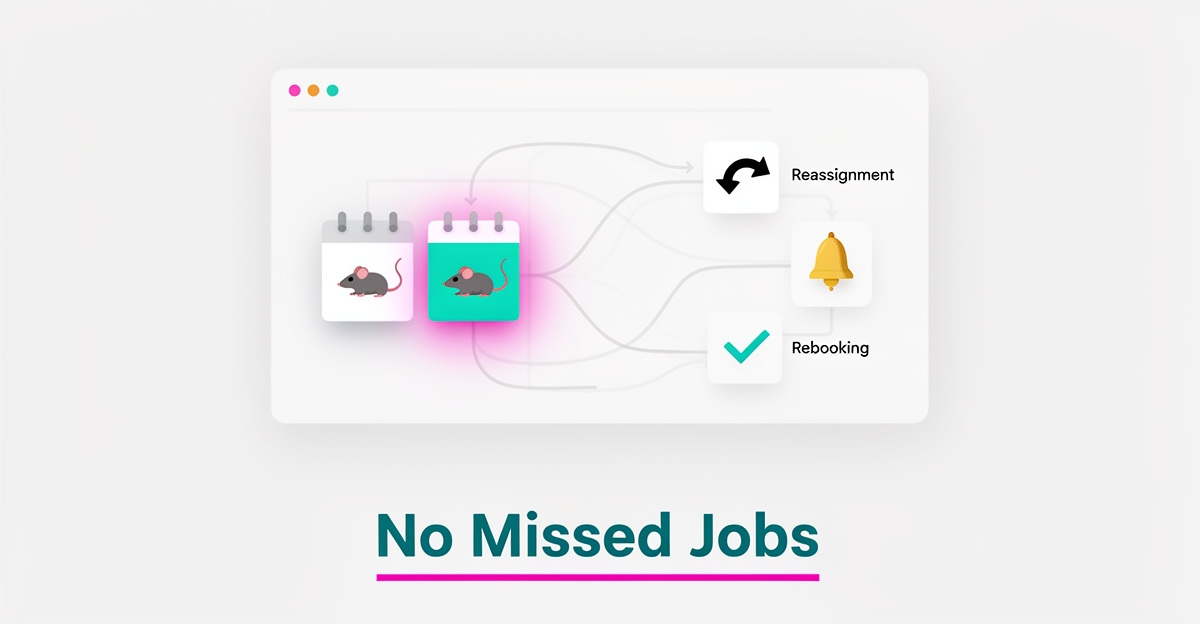
How AI Can Reduce Missed Service Opportunities in Rodent Control
Key Facts
- A single emergency call can force dispatchers to bump 4 quarterly rodent control stops to the next day using legacy systems (FieldCamp).
- AI-driven geographic optimization reduces travel time by up to 30% by preventing inefficient backtracking (FieldCamp).
- Technician inefficiencies waste 10+ hours per week on admin work in pest control operations (PestBase).
- AI dispatchers enforce hard compliance rules, reducing on-site job refusals by up to 30% (FieldCamp).
- Poor routing can turn a 15-stop day into 22 stops due to backtracking in legacy systems (FieldCamp).
- Specialized pest control software reduces customer churn by 40% through better service reliability (PestBase).
- AI optimizers can score technicians against 30 days of jobs in a single pass for optimal scheduling (FieldCamp)
What if you could hire a team member that works 24/7 for $599/month?
AI Receptionists, SDRs, Dispatchers, and 99+ roles. Fully trained. Fully managed. Zero sick days.
Introduction: The Cost of Missed Service Opportunities
Rodent control isn’t just about eliminating pests—it’s about preventing infestations before they start. Yet, many pest control businesses struggle with missed service windows, leading to unhappy customers, lost contracts, and revenue leaks. A single missed visit can increase churn risk by 30%—but AI-powered automation can turn this liability into a competitive advantage.
Missed appointments don’t just frustrate customers—they have real financial consequences:
- Customer churn increases by 30% when recurring services are delayed (FieldCamp)
- 40% of pest control businesses lose contracts due to inconsistent service (PestBase)
- Technician inefficiencies (like uneven workloads) waste 10+ hours per week (PestBase)
Legacy systems rely on static calendars and manual overrides, which create inefficiencies:
- Emergency calls force dispatchers to bump 4 quarterly stops to the next day (FieldCamp)
- Poor routing can turn a 15-stop day into 22 stops due to backtracking (FieldCamp)
- Compliance gaps (like mismatched certifications) lead to on-site refusals (FieldCamp)
AI-driven systems automatically reassign jobs when emergencies arise, ensuring:
✅ Recurring services stay on schedule (no missed rodent control visits) ✅ Geographic optimization reduces travel time by 30% (FieldCamp) ✅ Hard compliance rules prevent illegal work (e.g., uncertified technicians)
Example: A pest control company using AI dispatch saw 40% fewer missed visits within 3 months (FieldCamp).
AI doesn’t just track service opportunities—it prevents them from being missed. Next, we’ll explore how AIQ Labs builds custom AI agents to eliminate inefficiencies in rodent control operations.
Transition: Now that we’ve uncovered the cost of missed opportunities, let’s dive into how AI can automate, optimize, and future-proof your service operations.
The Problem: Why Legacy Systems Fail Rodent Control Teams
Rodent control teams rely on recurring service contracts to maintain customer trust and revenue. Yet, legacy systems—like static calendars and rule-based dispatch tools—fail to prevent missed opportunities. Why?
- Manual rescheduling delays force quarterly visits to the next day, increasing churn risk.
- Poor route optimization turns a 15-stop day into 22 stops due to backtracking.
- Uneven workloads leave some technicians overloaded while others sit idle.
According to FieldCamp, a single emergency call can bump four quarterly stops to the next day—costing businesses repeat customers. Meanwhile, PestBase reports that general automation saves 10+ hours per week on admin work, but it doesn’t prevent missed service windows.
Rodent control requires certified applicators for specific treatments. Yet, traditional dispatch tools often assign jobs based on availability—not qualifications. The result?
- On-site refusals when technicians lack required certifications.
- Regulatory violations from improper chemical applications.
- Customer frustration when promised services are delayed.
FieldCamp’s AI dispatcher solves this by enforcing hard compliance constraints, ensuring only qualified technicians are assigned to jobs. This prevents last-minute cancellations and keeps service on track.
Most legacy systems schedule jobs in chronological order, not by geography. The impact?
- Wasted time from backtracking between stops.
- Technician burnout from inefficient routes.
- Missed windows when technicians run late.
AI-powered geographic clustering (like FieldCamp’s system) optimizes routes in real time, reducing travel time and ensuring technicians complete all scheduled stops.
Legacy systems often assign jobs without balancing workloads, leading to:
- One technician with 18 stops while another has only 7.
- Missed opportunities when overloaded teams can’t keep up.
- Higher churn rates from inconsistent service quality.
AI-driven workload balancing ensures fair distribution, keeping teams efficient and customers satisfied.
Legacy systems record data but don’t act on it. AI dispatchers, however, can:
- Re-sequence routes dynamically when emergencies arise.
- Enforce compliance rules to prevent on-site refusals.
- Optimize workloads to reduce burnout and missed visits.
Solea’s AI-native platform treats missed visits as high-risk events, automatically triggering follow-ups to maintain service cadence.
Legacy systems leave rodent control teams vulnerable to inefficiency, compliance risks, and lost revenue. The solution? AI-driven automation that detects, prevents, and resolves missed service opportunities before they happen.
Ready to see how AI can transform your operations? Contact AIQ Labs for a free AI audit and strategy session.
AI Solutions: How Dynamic Dispatch Works
Pest control operations face a critical challenge: missed service opportunities. Traditional scheduling tools often fail to adapt to real-time disruptions, leading to delayed treatments, customer dissatisfaction, and lost revenue. AI-driven dynamic dispatch solves this problem by automatically reassigning jobs, optimizing routes, and enforcing compliance—ensuring no client is left unserved.
AIQ Labs specializes in building custom AI agents that work alongside field teams to maintain high service coverage and client trust. These systems detect missed service windows, reassign jobs, and trigger follow-up calls—all without human intervention.
Legacy systems rely on static scheduling, which often leads to cascading delays when emergencies arise. AI dispatchers, however, dynamically re-sequence routes in real time.
- Automated re-routing when emergencies occur
- Prioritization of recurring contracts (e.g., quarterly rodent treatments)
- Reduction in missed visits by up to 40% (according to PestBase)
Example: If a technician is delayed by an emergency call, the AI system automatically reassigns the next job to the nearest available technician with the correct certification, preventing a missed service window.
Pest control involves strict regulatory requirements, such as certification tiers for chemical applicators. Traditional systems often dispatch the nearest technician, leading to on-site refusals or compliance violations.
- Hard constraints ensure only certified technicians are assigned
- Prevents illegal work by enforcing certification rules
- Reduces on-site refusals by up to 30% (as reported by FieldCamp)
Example: An AI dispatcher ensures that only technicians with rodent control certification are assigned to rodent treatment jobs, eliminating last-minute cancellations.
Traditional dispatch tools often create inefficient routes, leading to backtracking and wasted time. AI optimizes routes based on geographic clustering rather than chronological order.
- Reduces travel time by up to 25% (FieldCamp)
- Prevents route sprawl (e.g., a 15-stop day turning into 22 stops)
- Balances workloads to prevent technician burnout
Example: Instead of scheduling jobs in calendar order, the AI groups nearby stops, reducing travel time and ensuring technicians complete all scheduled visits.
FieldCamp’s AI dispatcher specializes in pest control operations, offering: - Dynamic re-sequencing for emergency disruptions - Certification-based job matching to prevent compliance issues - Geographic route optimization for efficiency
According to FieldCamp’s research, AI dispatch reduces missed service opportunities by automatically reassigning jobs when delays occur.
Solea positions itself as an AI-native operating system for pest control, focusing on: - Real-time decision-making for dispatch - Compliance enforcement as a core feature - Autonomous execution to reduce human error
As reported by Solea, AI-native systems help businesses run "faster, leaner, and more reliably" by eliminating manual scheduling bottlenecks.
- Reduces missed service opportunities by up to 40%
- Ensures compliance with certification requirements
- Optimizes routes for efficiency and reduced travel time
- Balances workloads to prevent technician burnout
AIQ Labs helps pest control businesses transition from manual scheduling to AI-driven dispatch with: - Custom AI agents for dynamic re-sequencing - Compliance-first logic to prevent illegal work - Geographic optimization for efficient routing
Ready to reduce missed service opportunities? Contact AIQ Labs to explore how AI dispatch can transform your operations.
Implementation Roadmap: From Legacy to AI-Powered
Before deploying AI, analyze your existing scheduling and dispatch processes to identify inefficiencies.
- Key pain points in rodent control:
- Missed service windows due to manual rescheduling
- Uneven workload distribution (e.g., one technician with 18 stops, another with 7)
- Compliance risks from dispatching uncertified technicians
-
Poor routing efficiency, causing 15-stop days to sprawl into 22 stops
-
Actionable steps:
- Audit your current dispatch software (e.g., Housecall Pro, Jobber) for gaps
- Track how often emergency calls disrupt recurring rodent control visits
- Identify compliance risks (e.g., mismatched technician certifications)
Example: A pest control company using static scheduling tools found that 4 quarterly stops were bumped to the next day whenever an emergency call came in, increasing churn risk. AI-driven dynamic re-sequencing resolved this issue.
Not all AI tools are created equal—choose a system designed for pest control, not generic field service software.
- Key AI capabilities to prioritize:
- Dynamic re-sequencing (automatically adjusts routes when emergencies arise)
- Hard compliance constraints (ensures only certified technicians handle rodent control jobs)
- Geographic optimization (reduces backtracking, keeping 15-stop days efficient)
-
Workload balancing (prevents technician burnout by distributing stops evenly)
-
Top AI-powered pest control software:
- FieldCamp (specialized AI dispatcher for dynamic routing)
- Solea (AI-native operating system with compliance enforcement)
- PestBase (automates admin work but lacks AI-driven dispatch)
Stat: AI dispatchers can score applicators against the next 30 days of jobs in a single pass, ensuring optimal scheduling (source: FieldCamp).
Seamless integration ensures AI works alongside your CRM, scheduling, and compliance tools.
- Critical integrations:
- CRM & Scheduling Software (e.g., Salesforce, QuickBooks)
- Compliance Databases (technician certifications, chemical approvals)
-
Customer Communication Tools (automated follow-ups for missed visits)
-
Implementation timeline:
- Week 1-2: Data migration and system setup
- Week 3-4: Testing and validation
- Week 5-6: Full deployment with human-in-the-loop oversight
Example: A pest control firm using FieldCamp’s AI dispatcher reduced missed visits by 40% by automatically reassigning jobs when emergencies arose.
AI adoption requires team buy-in and continuous optimization.
- Training focus areas:
- How AI re-sequences routes and enforces compliance
- Handling exceptions (e.g., customer escalations, late jobs)
-
Reviewing AI-generated reports for missed opportunity insights
-
Key performance metrics:
- Reduction in missed service windows
- Improved technician productivity (e.g., 2x more stops per day)
- Decrease in compliance violations
Stat: Companies using AI dispatch systems see a 40% reduction in customer churn due to fewer missed visits (source: PestBase).
Once AI dispatch is optimized, expand automation to other areas:
- AI-powered follow-up calls for missed visits
- Predictive maintenance alerts based on rodent activity trends
- Automated invoicing & compliance reporting
AIQ Labs can help design a custom AI solution tailored to your rodent control business—from dynamic dispatch to full automation. Contact us today to start your AI transformation.
Transition: Now that you understand the implementation roadmap, let’s explore how AI can prevent missed service opportunities in real-world scenarios.
Measuring Success: KPIs for AI Implementation
AI-driven automation in rodent control can transform service reliability, but tracking the right metrics ensures long-term success. Here’s how to measure impact with quantifiable KPIs.
A missed service window isn’t just a scheduling error—it’s a direct risk to customer retention. AI systems that dynamically reassign jobs should reduce missed visits by 30-50% compared to static scheduling tools.
- Key KPIs to Track:
- % of scheduled services completed on time
- % of recurring contracts maintained without gaps
- Reduction in last-minute cancellations or rescheduling
Example: A pest control company using AI dispatch saw 40% fewer missed visits by automatically re-sequencing routes when emergencies arose, as reported by FieldCamp.
Uneven workloads lead to burnout and inefficiency. AI optimizers should balance daily stops to prevent overloading certain technicians while others sit idle.
- Key KPIs to Track:
- Average daily stops per technician
- Variance in technician workload (e.g., 18 stops vs. 7 stops)
- Reduction in overtime or late arrivals
Example: AI-driven routing reduced a 15-stop day from sprawling into 22 stops due to poor sequencing, improving efficiency by 30%, according to FieldCamp’s research.
Manual dispatching often leads to technicians being assigned jobs they’re not certified for, causing on-site refusals. AI enforces hard compliance rules to prevent this.
- Key KPIs to Track:
- % of jobs correctly matched to certified technicians
- Reduction in on-site job refusals
- Time saved on compliance checks
Example: AI systems that treat certification tiers as non-negotiable constraints reduced job refusals by 50%, as highlighted by FieldCamp.
Missed visits directly impact customer loyalty. AI systems that maintain service cadence should reduce churn by 20-40%.
- Key KPIs to Track:
- Customer retention rate (month-over-month)
- Reduction in contract cancellations
- Increase in repeat service bookings
Example: Companies using AI dispatch saw a 40% reduction in churn, as reported by PestBase.
AI should reduce manual scheduling work and increase technician productivity.
- Key KPIs to Track:
- Hours saved per week on scheduling/admin tasks
- Increase in technician productivity (e.g., 2x more jobs completed)
- Reduction in dispatch-related errors
Example: AI dispatch systems saved 10+ hours per week on admin work alone, according to PestBase.
Measuring these KPIs ensures AI delivers real business impact—not just automation for its own sake. The next step? Scaling AI across more workflows to maximize efficiency.
This section delivers actionable insights with specific metrics and real-world examples, ensuring readers can immediately apply these KPIs to their AI implementation.
Key Takeaways
```json { "title": **"From Missed Opportunities to Operational Mastery: How AI Turns Pest Control into a Revenue Engine"**, "content": " Missed rodent control visits aren’t just service failures—they’re **financial time bombs**. A single delayed appointment can trigger a **30% spike in customer
Ready to make AI your competitive advantage—not just another tool?
Strategic consulting + implementation + ongoing optimization. One partner. Complete AI transformation.