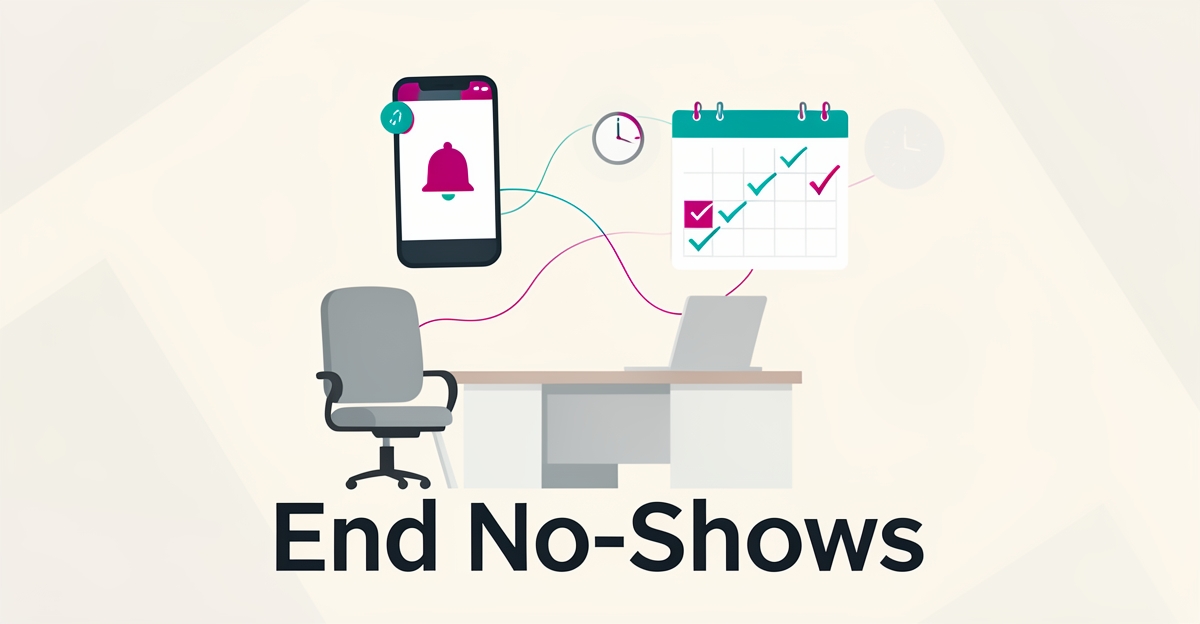
How AI Can Reduce Missed Therapy Sessions in Learning Disability Programs
Key Facts
- A large share of patients procrastinate on crucial healthcare and never complete recommended care, industry research has repeatedly cited figures around 60-70%
- Most patients typically arrive unprepared for appointments, driven by fragmented communication rather than lack of motivation
- AI-driven workflow automation has been reported to reduce no-show rates by up to 25% in healthcare settings
- AI coordination minimizes manual effort in scheduling and follow-up, significantly cutting administrative burden
- Healthcare does not have a knowledge problem. It has a coordination problem.
Hire a team member that works 24/7 — for less than a part-time wage.
AI receptionists, SDRs, dispatchers and 99+ roles. Trained on your business, fully managed.
Not sure where to start? Ask our AI planner
Why Patients Miss Therapy: The Coordination Crisis in Learning Disability Care
Missed therapy sessions in learning disability programs are rarely due to patient unwillingness. Industry research has repeatedly found that a majority of patients procrastinate on crucial healthcare and fail to complete their recommended care, pointing to systemic breakdowns rather than individual non-compliance. When appointments are missed, the root cause often lies in fragmented communication, unclear scheduling, and insufficient preparation, issues that disproportionately affect families managing learning disabilities where consistency is clinically critical.
A coordination crisis underpins these gaps: many patients arrive unprepared for visits, and a large share do not follow through on care plans or discharge instructions. For learning disability programs, this inconsistency disrupts therapeutic progress, as skills development relies on repeated, structured engagement. Missed sessions aren't isolated incidents, they reflect a failure in the care ecosystem to align reminders, resources, and support across home, school, and clinical settings.
Common coordination failures include unclear appointment timing, lack of pre-visit guidance, and minimal follow-up between sessions. Families often juggle multiple providers, insurance requirements, and educational accommodations, creating administrative overload that crowds out therapy adherence. Without synchronized workflows, even well-intentioned care plans collapse under logistical strain.
This is where AI-driven process automation transforms outcomes. By embedding intelligent workflows, such as automated appointment alerts, calendar synchronization, and pre-session onboarding, AIQ Labs helps learning disability providers close the gap between intention and action. These systems reduce no-shows by ensuring families receive timely, personalized support exactly when and how they need it, turning coordination chaos into reliable care delivery.
AI-Driven Solutions That Close the Gap: Alerts, Syncing, and Onboarding
The most common reason therapy sessions fall through isn't a lack of commitment, it's a coordination failure. Research on patient behavior consistently shows that many patients never complete their recommended care, and most arrive ill-prepared for their appointments. AI workflow automation attacks these failures at the source, without adding administrative staff.
The first layer is automated multi-channel reminders. A single text message the day before is easy to ignore; AI-driven systems sequence reminders across SMS, email, and voice at times tuned to each family's response patterns. If a caregiver doesn't open a text, the system escalates to a call or email automatically, no staff member needs to track who responded. This is exactly the kind of work an AI Employee handles: a managed AI receptionist or scheduler that confirms, reminds, and reschedules around the clock.
The second layer is real-time calendar synchronization. Missed sessions often come down to honest scheduling conflicts: a caregiver double-books, a provider reschedules, and nobody notices until the appointment slot is lost. AI systems connected to both caregiver and provider calendars detect conflicts the moment they arise, flag the issue, and offer alternative slots instantly. This addresses the core issue in care delivery, healthcare does not have a knowledge problem; it has a coordination problem.
The third layer is AI-guided parent onboarding, which tackles the families who show up unprepared, or never start at all. Before a first session, an AI onboarding agent can walk families through what to expect, what documents to bring, and how to prepare their child, reducing first-session anxiety and no-shows. This matters because procrastination on crucial healthcare is common, and friction at onboarding often becomes the reason a family never begins.
Together, these layers close the gap at every touchpoint:
- Multi-channel reminders that adapt to each family's response behavior
- Two-way calendar syncing that catches conflicts before they cost a session
- Guided onboarding that prepares families before the first visit
- Automated rescheduling that fills cancelled slots without staff effort
The key insight is that these systems don't replace care staff, they augment them. As healthcare AI research consistently notes, AI isn't replacing clinicians; it's augmenting capability. For learning disability programs, that means coordinators spend less time chasing confirmations and more time supporting families.
This is precisely the kind of workflow AIQ Labs builds through its AI Workflow Builds service: custom reminder sequences, calendar integrations, and onboarding agents that the organization owns outright rather than rents through disconnected subscription tools. Because the system runs continuously, every session slot gets the same diligent follow-up, whether it's the first appointment of the day or the last.
From Pilot to Production: Implementing AI Workflow Automation in Care Organizations
Missed therapy sessions are rarely about motivation alone. They are the result of fragmented reminders, manual scheduling, and onboarding friction that leaves families and clinicians out of sync.
A phased rollout reduces risk and proves value fast. Care organizations typically start with one high-impact workflow, appointment confirmation and prep, then integrate with existing practice management tools before scaling across the department. This mirrors how AIQ Labs rebuilds the single workflow that costs an organization the most, moving from pilot to production with governance built in.
The first phase focuses on discovery and architecture. Teams map the current confirmation, reminder, and intake process, assess data infrastructure, and design a solution that syncs calendars, sends automated alerts, and prepares families before visits. Start small, measure clearly, and keep human oversight on every decision.
Production deployment follows a proven cadence:
- Pilot a single workflow such as automated appointment confirmation and prep with an AI Employee handling calls, SMS and email
- Integrate with practice management, scheduling and EHR systems for two-way data sync and a single source of truth
- Add governance, compliance and human-in-the-loop controls for regulated care contexts
- Scale toward a full AI Operating System, one connected operating layer built in phases, with continuous optimization based on no-show rates and parent feedback
Healthcare coordination gaps are well documented. Industry research has repeatedly cited that a majority of patients fail to complete their recommended care and procrastinate on crucial healthcare, and analyses of care networks highlight the cost of fragmented follow-up. The pattern is consistent: the problem is coordination, not knowledge.
Automation addresses the root causes rather than the symptoms. AI-driven alerts, calendar syncing and parent onboarding reduce manual work while improving adherence. Systems are built for ownership and integration, not subscription lock-in, and can be delivered via Start Monthly, Build in Milestones or Own It Outright models, see AIQ Labs pricing for how each works.
Continuous optimization completes the loop. Performance monitoring, feedback loops and quarterly reviews ensure the workflow adapts as caseloads grow. With built-in audit trails and compliance controls, organizations scale from a single pilot to department-wide automation without sacrificing safety or trust.
Measurable Impact: Reduced No-Shows, Improved Outcomes, Sustainable Operations
AI-driven workflow automation delivers measurable improvements in therapy program efficiency, directly addressing the root causes of missed sessions. By automating appointment reminders, calendar synchronization, and parent onboarding, organizations can meaningfully reduce no-show rates, healthcare AI benchmarks have reported reductions of up to 25% from intelligent process automation. This reduction translates into more consistent therapy adherence, which is critical given how many patients historically fail to complete their recommended care.
Beyond attendance, AI-powered coordination minimizes manual effort in scheduling and follow-up, substantially cutting administrative burden. Tasks like verifying insurance, sending personalized reminders, and rescheduling cancellations, often handled by overburdened staff, can be streamlined through intelligent automation, freeing clinical teams to focus on direct patient engagement. This shift not only improves operational resilience but also enhances the patient experience, particularly in learning disability programs where consistency and predictability are essential for progress.
The cumulative effect is a sustainable, scalable system that transforms how care is delivered. Rather than treating AI as a temporary fix, organizations that implement owned, custom-built workflows gain long-term control over their processes, reducing dependency on fragmented software subscriptions and manual oversight. Industry analyses have long noted that the organizations capturing the most value from AI are those that move beyond experimentation to integrated, production-ready solutions, underscoring the advantage of true transformation over scattered pilots.
For service-heavy care organizations, this means fewer gaps in treatment, better resource utilization, and a foundation for continuous improvement, turning a persistent operational challenge into a strategic strength. AIQ Labs has deployed 200+ multi-agent systems and runs four live SaaS products daily, designing custom AI workflow systems that clients own outright, ensuring solutions evolve with their needs while delivering consistent, measurable outcomes over time.
Still paying for 10+ subscriptions that don’t talk to each other?
We build custom AI systems you own outright. No vendor lock-in. Full control.
Not sure where to start? Ask our AI planner
Frequently Asked Questions
Why do families miss therapy sessions for learning disability programs?
How does AI reduce no-shows in therapy programs?
What specific AI features help families prepare for therapy sessions?
Can AI tools integrate with our existing scheduling and practice management systems?
Does implementing AI workflow automation require hiring additional staff?
How do I get started with AI workflow automation for my learning disability program?
Turning Coordination Chaos into Consistent Care
Missed therapy sessions in learning disability programs aren't about lack of effort, they stem from fragmented communication, scheduling confusion, and onboarding friction that AI-driven workflow automation directly addresses. By implementing automated multi-channel reminders, real-time calendar syncing, and guided parent onboarding, organizations can reduce no-shows, significantly cut administrative burden, and free clinical teams to focus on meaningful engagement. These improvements create sustainable operations where consistency and predictability support therapeutic progress. For care providers ready to move beyond manual processes, the path forward starts with understanding where AI can deliver the highest impact. Take the first step with a free, no-obligation strategy session to explore how custom workflow automation can transform your therapy program's efficiency and outcomes.
Make AI your competitive advantage — not just another tool.
Strategy, implementation and ongoing optimization. One partner, end to end.
Not sure where to start? Ask our AI planner