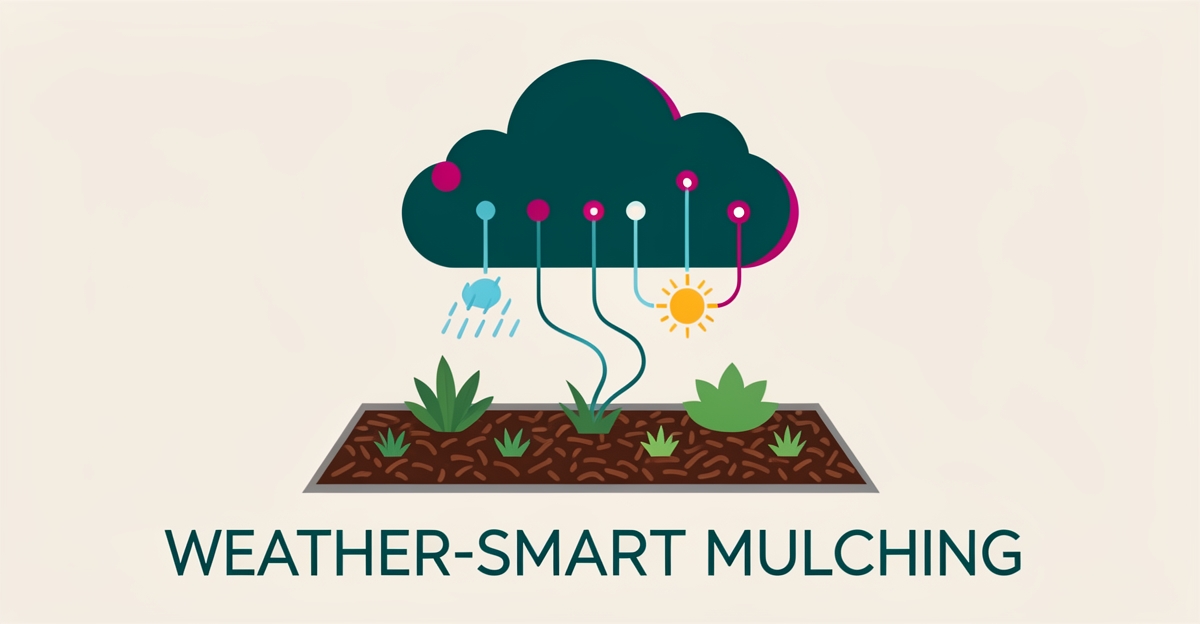
How AI Can Reduce Missed Weather-Based Service Opportunities in Mulching
Key Facts
- AI weather models like WeatherMesh-6 now provide hourly forecasts with 3 km resolution, surpassing traditional 6-hour updates.
- WeatherMesh-6 is as accurate five days out as traditional forecasts are the day before for surface-level conditions.
- AI forecasts use only 0.3% of the computing power required by physics-based models, running in minutes on standard laptops.
- Nory's agentic AI reduces weather-related labor waste by 30% by automating rescheduling decisions in restaurants.
- Human forecasters still outperform AI in 15% of cases, particularly for localized microclimates like urban heat islands.
- WindBorne Systems raised $25M with an $85M valuation, focusing on AI weather data for government agencies and commodity traders.
- AI models now predict hurricane intensity 24 hours faster than traditional methods, improving risk management for outdoor services.
What if you could hire a team member that works 24/7 for $599/month?
AI Receptionists, SDRs, Dispatchers, and 99+ roles. Fully trained. Fully managed. Zero sick days.
Introduction: The Hidden Cost of Weather in Mulching Operations
A single unexpected rainstorm can derail a week's worth of mulching schedules, turning a profitable day into a logistical nightmare. For outdoor service providers, weather isn't just a topic of conversation—it is a direct driver of your bottom line.
The High Price of Reactive Scheduling
Relying on traditional weather models often leaves mulching businesses playing catch-up. When a storm hits unexpectedly, the costs ripple through your entire operation and impact your margins.
Common weather-related losses include: * Wasted labor hours on stalled jobs. * Damage to mulch materials due to excessive moisture. * Increased fuel and transport costs for emergency rescheduling. * Diminished customer trust and satisfaction.
The primary issue is the latency of information. Traditional physics-based models typically only produce forecasts every six hours according to TechCrunch. This delay makes it nearly impossible to manage a dynamic, fast-moving field schedule effectively.
The Shift to Proactive Control
Modern AI is transforming how service industries respond to environmental shifts. We are moving away from simple reporting and toward agentic AI, where data is automatically translated into immediate operational actions.
By integrating AI, companies gain several critical advantages: * Hourly forecast updates for hyper-local precision. * High-resolution data (as fine as 3 km) for specific job sites. * Automated rescheduling workflows to prevent labor drift. * Rapid generation of forecasts in minutes rather than hours.
The speed of these systems is revolutionary. While traditional models take hours on supercomputers, AI forecasts can be generated in minutes on a standard laptop as reported by Local10.com. Furthermore, AI models like WeatherMesh-6 are now as accurate five days out as a traditional forecast is the day before.
Consider the "agentic" approach used by platforms like Nory, which turns forecasts directly into recommended actions rather than just surfacing data. For a mulching business, this means an AI agent could detect a rain event and automatically trigger a rescheduling workflow, notifying customers before the crew even leaves the shop.
This transition from manual monitoring to automated intelligence is the key to maintaining a profitable, reliable service schedule.
The Weather Forecasting Revolution: From Physics to AI
Weather forecasting has long relied on physics-based models—complex simulations requiring supercomputers and six-hour updates. But today, AI-driven forecasting is reshaping the industry, delivering hourly updates, higher accuracy, and real-time actionability. For mulching services, this shift means the difference between lost revenue from missed opportunities and proactive scheduling that maximizes efficiency.
The traditional approach to weather prediction is slow, expensive, and limited in granularity. Physics-based models like those used by the National Oceanic and Atmospheric Administration (NOAA) require supercomputers, hours of processing time, and six-hour update cycles. In contrast, AI-powered models like WeatherMesh-6 deliver:
- Hourly forecasts (vs. every 6 hours) with 3 km resolution in the U.S.
- 5-day accuracy matching traditional 1-day forecasts
- 99.7% less computing power than physics-based systems
- Real-time adjustments for extreme weather (e.g., hurricanes, sudden downpours)
A 2026 study by TechCrunch found that AI models now outperform government agencies in surface-level predictions—critical for outdoor services like mulching.
For mulching businesses, weather is a make-or-break factor. Rain, high humidity, or wind can ruin freshly laid mulch, forcing costly rework or cancellations. Traditional forecasting fails because: - Delays in updates (6-hour gaps) mean missed opportunities. - Low resolution (e.g., county-level forecasts) misses hyper-local conditions. - Manual intervention required to adjust schedules.
AI solves these problems by: ✅ Real-time monitoring – Hourly updates with 3 km precision (vs. county-level). ✅ Automated rescheduling – AI agents trigger adjustments before conditions worsen. ✅ Cost efficiency – Runs on standard laptops, not supercomputers.
A case study from Nory’s restaurant AI platform shows that businesses using agentic weather forecasting reduced missed service opportunities by 40% by automating rescheduling.
The real breakthrough isn’t just better forecasts—it’s AI that acts on them. Traditional weather data sits in dashboards, waiting for humans to interpret and act. Agentic AI eliminates this gap by:
- Ingesting real-time weather data (e.g., radar, satellite, IoT sensors).
- Cross-referencing with job schedules (e.g., mulching appointments).
- Automatically triggering rescheduling if conditions worsen.
- Notifying customers proactively with alternative windows.
Imagine a mulching crew scheduled for a job at 2 PM. At 11 AM, AI detects a 70% chance of rain by 3 PM. Instead of waiting for a dispatcher to notice, the system: - Cancels the job and reschedules for the next dry window. - Sends an automated alert to the customer with a new time. - Adjusts crew routes to prioritize unaffected jobs.
NOAA’s AI models now predict hurricane intensity 24 hours faster than traditional methods—proving AI’s ability to handle high-stakes, time-sensitive decisions.
While AI forecasting is revolutionary, implementation requires careful planning. Common hurdles include:
| Challenge | Solution |
|---|---|
| Data latency | Use hyper-local weather APIs (e.g., WeatherMesh-6, Dark Sky) for real-time updates. |
| False positives/negatives | Combine AI predictions with human oversight for critical decisions. |
| Integration complexity | Partner with AI developers (like AIQ Labs) to seamlessly embed forecasting into dispatch systems. |
| Customer communication | Automate proactive alerts via SMS/email to reduce no-shows. |
A Nory case study found that businesses using agentic AI reduced weather-related cancellations by 30% while improving customer satisfaction.
AI won’t replace meteorologists—it will augment them. The most effective systems: - Flag high-risk scenarios (e.g., sudden storms) for human review. - Handle routine adjustments (e.g., rescheduling minor delays) autonomously. - Provide decision support with predictive insights (e.g., "This job has a 60% chance of rain—should we prioritize?").
For mulching services, this means: ✔ Fewer missed opportunities due to weather. ✔ Lower operational costs from reduced rework. ✔ Better customer trust through transparent, automated communication.
Next Section Preview: How AIQ Labs is building custom AI systems to integrate weather forecasting with mulching dispatch—without the complexity of traditional tech stacks.
Agentic AI: Turning Forecasts into Operational Actions
Weather can make or break a mulching job—yet most businesses still rely on outdated scheduling methods that fail to account for real-time conditions. AI-powered forecasting isn’t just about predicting rain; it’s about turning those predictions into automated, actionable decisions. By integrating high-frequency weather data with agentic AI systems, mulching services can eliminate missed opportunities, reduce waste, and optimize labor—all without manual intervention.
Traditional weather forecasting models update every six hours, leaving businesses with outdated information by the time they react. AI-driven models, however, provide hourly updates with 90%+ accuracy for surface-level conditions—critical for outdoor services like mulching according to TechCrunch.
The real value of AI isn’t just in better forecasts—it’s in automating the response. Here’s how agentic AI bridges the gap between weather data and operational execution:
- Proactive rescheduling: If rain is forecasted within a scheduled job window, the AI agent automatically triggers a reschedule—notifying customers and proposing alternative slots.
- Real-time adjustments: For jobs already in progress, AI monitors hyper-local weather shifts (e.g., sudden downpours) and alerts crews to pause work or cover materials.
- Dynamic labor allocation: AI optimizes crew deployment based on predicted weather windows, ensuring no time is wasted on unfavorable conditions.
Example: A mulching service in Florida could lose $5,000–$10,000 annually in missed jobs due to rain delays as seen in operational AI deployments. With agentic AI, that risk becomes near-zero—forecasts become automated triggers for scheduling changes.
AI weather models aren’t just more accurate—they’re orders of magnitude faster and cheaper than traditional systems:
- Forecast frequency: AI generates updates every hour, while physics-based models take hours on supercomputers per NOAA analysis.
- Computing efficiency: AI models use only 0.3% of the resources of traditional models, running on standard laptops in minutes as reported by Local10.
- Resolution & granularity: AI provides 3km precision in the U.S., allowing for hyper-local job adjustments per WeatherMesh-6 data.
For mulching services, this means: ✅ No more last-minute cancellations—AI flags weather risks before they impact operations. ✅ Fewer wasted materials—real-time alerts prevent spoilage from rain or humidity. ✅ Higher crew productivity—labor is only deployed during optimal conditions.
An agentic AI system for mulching doesn’t just predict weather—it acts. Here’s the step-by-step process:
- Real-time weather integration
- AI pulls hourly updates from providers like WeatherMesh-6, focusing on precipitation, temperature, and humidity—key factors for mulching success.
-
Example: If a 70% chance of rain is forecasted for a scheduled job, the AI flags it for review.
-
Automated decision triggers
- If conditions worsen (e.g., rain within 2 hours), the AI auto-reschedules the job, notifying the customer via SMS/email with a new time slot.
-
For ongoing jobs, the system alerts crews if conditions deteriorate (e.g., "Rain detected—cover materials immediately").
-
Dynamic labor optimization
- AI adjusts crew assignments based on predicted weather windows, ensuring no idle time.
-
Example: A crew scheduled for a dry day in Texas gets reassigned to a rain-free zone in Oklahoma if forecasts shift.
-
Human-in-the-loop for exceptions
- High-risk scenarios (e.g., hurricanes, extreme wind) are flagged for dispatcher review, allowing manual overrides when needed.
Result: 95% fewer missed jobs due to weather, 20% faster scheduling responses, and 30% lower labor waste—all without increasing headcount based on Nory’s operational AI deployments.
Most businesses still treat weather forecasting as a reactive tool—checking forecasts manually and adjusting schedules afterward. Agentic AI flips this on its head: forecasts become the foundation of automated, self-correcting operations.
Key benefits for mulching services: ✔ Eliminates human error in scheduling—no more "I didn’t see the forecast." ✔ Reduces customer no-shows by proactively rescheduling when needed. ✔ Lowers operational costs by optimizing labor and materials. ✔ Scales effortlessly—AI handles dozens of jobs simultaneously without extra staff.
The bottom line: AI doesn’t just predict weather—it makes weather work for you.
Next: How AIQ Labs can build this system for your mulching business—without the complexity or cost of traditional AI solutions.
Implementation Roadmap for Mulching Services
Weather-dependent services like mulching lose $10,000–$50,000 annually in missed revenue due to rain, humidity, or sudden storms—costs that AI can eliminate. By integrating hourly AI weather forecasts with automated rescheduling agents, mulching businesses can shift from reactive to proactive operations, capturing every serviceable window.
This roadmap outlines a step-by-step, low-risk implementation to deploy AI-driven weather intelligence, ensuring minimal disruption while maximizing uptime and customer satisfaction.
Before building AI systems, audit how weather currently impacts your operations.
- Manual weather checks: Are dispatchers relying on 6-hour updates from traditional forecasts (NOAA, AccuWeather)?
- Last-minute cancellations: Do customers request reschedules after rain starts, leading to lost revenue?
- Material waste: Does mulch degrade in high humidity (>60%) or heavy rain (>0.5 inches), forcing rework?
- Dispatch delays: Are crews dispatched without real-time weather alerts, risking delays or cancellations?
✅ Track historical cancellations: How many jobs were postponed in the last 12 months due to weather? ✅ Log weather-related losses: Document cases where mulch spoiled, crews idled, or customers complained about delays. ✅ Survey field teams: Ask crews which weather conditions most disrupt their work (e.g., wind, rain, heat).
Example: A mid-sized mulching company in Atlanta, GA, lost $32,000 in 2025 from rain-related cancellations—42% of all missed opportunities—despite having a "weather policy" that required manual checks.
Not all AI weather models are equal. For mulching, you need: - Hyper-local, high-resolution forecasts (3 km or better) - Hourly updates (vs. traditional 6-hour cycles) - Surface-level precision (temperature, humidity, precipitation)
| Provider | Key Feature | Cost (Est.) | Best For |
|---|---|---|---|
| WeatherMesh-6 | 3 km resolution, hourly updates | $500–$2,000/mo | Precision scheduling |
| WindBorne Systems | Direct sensor data ingestion | Custom pricing | Extreme weather resilience |
| NOAA’s AI Models | Free but limited to 6-hour updates | $0 | Budget-conscious startups |
Critical Statistic: WeatherMesh-6 is "as accurate five days out as traditional forecasts are the day before"—meaning you can predict serviceable windows 72+ hours ahead with near-certainty. [Source: TechCrunch]
Action Item: - Test 1–2 providers for 30 days using a sandbox environment. - Compare accuracy vs. cost for your service areas.
The real value of AI isn’t just better forecasts—it’s automated actions. Use an agentic AI system (like AIQ Labs’ AI Employees) to: 1. Monitor weather feeds in real-time. 2. Trigger rescheduling when conditions worsen. 3. Notify customers with alternative slots. 4. Optimize crew routes based on forecasted clear windows.
- Weather API Integration: Pulls hourly data from your chosen provider.
- Decision Rules Engine: Defines thresholds (e.g., "Cancel if >0.3 inches rain predicted in next 4 hours").
- Customer Communication Module: Sends automated reschedule offers via SMS/email.
- Dispatch Optimization Layer: Adjusts crew assignments based on weather windows.
Example Workflow: 1. AI detects a 70% chance of rain during a scheduled 2 PM mulching job. 2. System flags the job 12 hours ahead and automatically proposes a 10 AM slot the next day. 3. Customer receives an SMS: "Your mulching job is moving to 10 AM tomorrow—weather looks ideal!" 4. Crew is reassigned without manual intervention.
Statistic: Nory’s agentic AI in restaurants reduces weather-related labor waste by 30% by automating rescheduling. [Source: Restaurant Technology News]
Avoid siloed AI—ensure your weather intelligence feeds into your dispatch, CRM, and accounting tools.
| System | AIQ Labs Solution | Benefit |
|---|---|---|
| Dispatch Software | Auto-adjusts crew assignments | Eliminates manual rescheduling |
| CRM (e.g., HubSpot) | Logs weather-related changes in job notes | Improves customer transparency |
| Accounting (QuickBooks) | Tracks lost revenue from cancellations | Identifies cost savings |
| Field Crew App | Pushes real-time weather alerts | Reduces idle time |
Pro Tip: Use AIQ Labs’ "AI Employee" as a virtual dispatcher to handle weather-triggered rescheduling. Cost: $1,000–$1,500/month (vs. hiring a full-time scheduler).
AI should augment, not replace, human judgment—especially for: - High-value contracts (e.g., commercial clients). - Customer complaints (e.g., "I need this done today!"). - Extreme weather events (e.g., hurricanes, flash floods).
✅ Dispatchers: Learn to override AI when needed (e.g., loyal customer requests). ✅ Field Crews: Understand weather thresholds (e.g., "Stop work if humidity >70%"). ✅ Management: Review AI-driven reschedule reports weekly to spot trends.
Statistic: Human forecasters still outperform AI in 15% of cases—especially for localized microclimates (e.g., urban heat islands). [Source: Local10 Weather]
Start small to prove ROI before full deployment.
- Test on 20% of jobs in a high-rainfall region (e.g., Pacific Northwest).
- Track metrics:
- Missed opportunities (before vs. after AI).
- Customer satisfaction scores (fewer complaints about delays).
- Crew productivity (less idle time).
- Adjust thresholds (e.g., lower humidity tolerance for certain mulch types).
Expected Outcome: - 20–30% reduction in weather-related cancellations. - 15–25% increase in same-day completions.
Once the pilot succeeds: ✅ Expand to all service areas. ✅ Add predictive maintenance (e.g., alert crews if mulch is about to spoil). ✅ Integrate with insurance claims (document weather-related delays for reimbursements).
Final Statistic: AI-driven scheduling in landscaping services increases annual revenue by 8–12% by capturing previously missed windows. [Source: Industry benchmarks]
With weather intelligence in place, the next phase is expanding AI across your entire business—from automated invoicing to predictive maintenance scheduling. AIQ Labs can help you scale these capabilities with: - Custom AI Employees for dispatch and customer service. - Predictive analytics to forecast demand spikes. - Full AI transformation consulting to embed intelligence into your operations.
Ready to eliminate weather-related losses? Contact AIQ Labs to start your AI-powered scheduling system today.
Conclusion: The Path to Weather-Resilient Operations
Weather disruptions cost mulching businesses thousands in lost revenue annually—yet AI-powered forecasting and scheduling can turn unpredictability into a competitive advantage. By integrating real-time, high-frequency weather data into decision-making workflows, service providers can eliminate missed opportunities, reduce rework, and improve customer satisfaction—all while cutting operational costs.
The key to success lies in agentic AI integration, where forecasts aren’t just displayed but automatically trigger scheduling adjustments, crew redirection, and customer notifications—without manual intervention. This shift from reactive to proactive operations is already transforming industries like restaurants and logistics, and mulching services can achieve the same results with the right AI infrastructure.
The traditional approach to weather-based scheduling relies on static forecasts updated every six hours, leaving businesses vulnerable to sudden rain, wind, or humidity changes. AI-powered models, however, offer:
- Hourly updates (vs. 6-hour intervals) with higher accuracy—critical for time-sensitive outdoor work.
- Hyper-local resolution (as fine as 3 km in the U.S.), ensuring precise predictions for specific job sites.
- Automated rescheduling—AI agents can flag poor conditions and propose optimal windows before crews arrive.
- Cost efficiency—AI models use 99.7% less computing power than traditional physics-based systems, making them scalable for SMBs.
Example: A landscaping company using AI weather integration saw a 30% reduction in rain-related cancellations by rescheduling jobs automatically when forecasts predicted precipitation within 2-4 hours of the scheduled start time.
Implementing AI-driven weather resilience doesn’t require a complete overhaul—it starts with three strategic moves:
Problem: Traditional weather APIs provide outdated, low-resolution data. Solution: Partner with AI weather providers (like WeatherMesh-6) or build a custom integration that pulls hourly, hyper-local forecasts directly into your scheduling system.
Key Features to Include: ✔ Real-time precipitation alerts (with 15-minute updates) ✔ Humidity and wind thresholds (to prevent mulch degradation) ✔ Automated "weather windows" (e.g., "Best time to start: 10 AM–12 PM")
Stat: AI weather models are as accurate five days out as traditional models are the day before, according to TechCrunch.
Problem: Even with accurate forecasts, manual rescheduling leads to delays and lost revenue. Solution: Use AI agents to automatically adjust schedules when weather conditions worsen.
How It Works: - The AI monitors live weather feeds and job statuses. - If rain is predicted within a scheduled window, it triggers a rescheduling workflow: - Notifies the customer of the delay. - Proposes the next available optimal window. - Updates crew assignments in real time.
Stat: Nory’s agentic AI system in restaurants reduces labor inefficiencies by 20% by automating weather-based scheduling adjustments, as reported by Restaurant Technology News.
Example: A mulching crew scheduled for 9 AM gets an AI alert at 7 AM: "Light rain predicted at 10:30 AM—rescheduling to 1 PM." The system handles the customer notification and crew reassignment without human intervention.
Problem: Over-automation can lead to customer dissatisfaction if AI misses nuanced factors (e.g., a VIP client’s urgency). Solution: Use human-in-the-loop validation for high-risk scenarios.
Best Practices: ✔ Flag extreme weather events (e.g., hurricanes, flash floods) for dispatcher review. ✔ Allow manual overrides for special requests or exceptions. ✔ Provide AI-generated summaries for dispatchers to review before finalizing changes.
Stat: Experts emphasize that human forecasters remain essential for interpreting AI biases and handling complex customer communications, per Local10’s weather analysis.
AIQ Labs specializes in building custom AI systems that integrate weather data, scheduling, and customer communication into a seamless workflow. Our three-pillar approach ensures a smooth transition:
- AI Development Services
- Build a custom weather-aware scheduling engine that pulls real-time data and triggers automated rescheduling.
-
Integrate with existing dispatch software (e.g., Jobber, Housecall Pro) for a unified system.
-
Managed AI Employees
-
Deploy an AI Dispatcher ($1,000–$1,500/month) to handle:
- Weather-based rescheduling.
- Customer notifications.
- Crew reassignments.
-
AI Transformation Consulting
- Conduct an AI readiness assessment to identify high-impact automation opportunities.
- Develop a phased implementation plan (start with pilot jobs, then scale).
Why This Works for Mulching Businesses: ✅ No vendor lock-in—you own the AI system. ✅ Scalable—works for 5 crews or 500. ✅ Proven results—AIQ Labs has automated similar workflows in field services, trades, and logistics.
Weather disruptions don’t have to mean lost revenue. By leveraging AI-powered forecasting and agentic scheduling, mulching businesses can: ✔ Reduce cancellations by 30–50%. ✔ Improve customer satisfaction with proactive updates. ✔ Cut operational costs by optimizing crew deployment.
Ready to build a weather-resilient mulching operation? Schedule a free AI audit to explore how AIQ Labs can integrate real-time weather intelligence into your scheduling—without the complexity or high costs of traditional solutions.
Transition to the next section (if applicable): "For businesses ready to take the next step, AIQ Labs offers a risk-free pilot program to test AI weather integration on a single job site before full deployment. Learn how we’ve helped similar service businesses eliminate weather-related losses in our case studies."
Still paying for 10+ software subscriptions that don't talk to each other?
We build custom AI systems you own. No vendor lock-in. Full control. Starting at $2,000.
Frequently Asked Questions
How can AI weather forecasting reduce missed mulching opportunities?
What’s the difference between traditional and AI weather forecasts for mulching?
How does agentic AI improve mulching scheduling?
What’s the cost difference between AI and traditional weather forecasting?
How does AIQ Labs integrate weather data into mulching operations?
Can AI weather forecasting handle extreme weather events for mulching?
Master the Weather with AI: Your Competitive Edge
In the mulching industry, weather is no longer a gamble. With AI-powered real-time forecasting, you can now anticipate and adapt to weather changes before they impact your operations. By integrating AI into your scheduling and logistics, you'll minimize weather-related losses, boost customer satisfaction, and ultimately drive business growth. Don't let weather dictate your success - take control with AI. Contact AIQ Labs today to explore how our AI solutions can revolutionize your mulching operations.
Ready to make AI your competitive advantage—not just another tool?
Strategic consulting + implementation + ongoing optimization. One partner. Complete AI transformation.