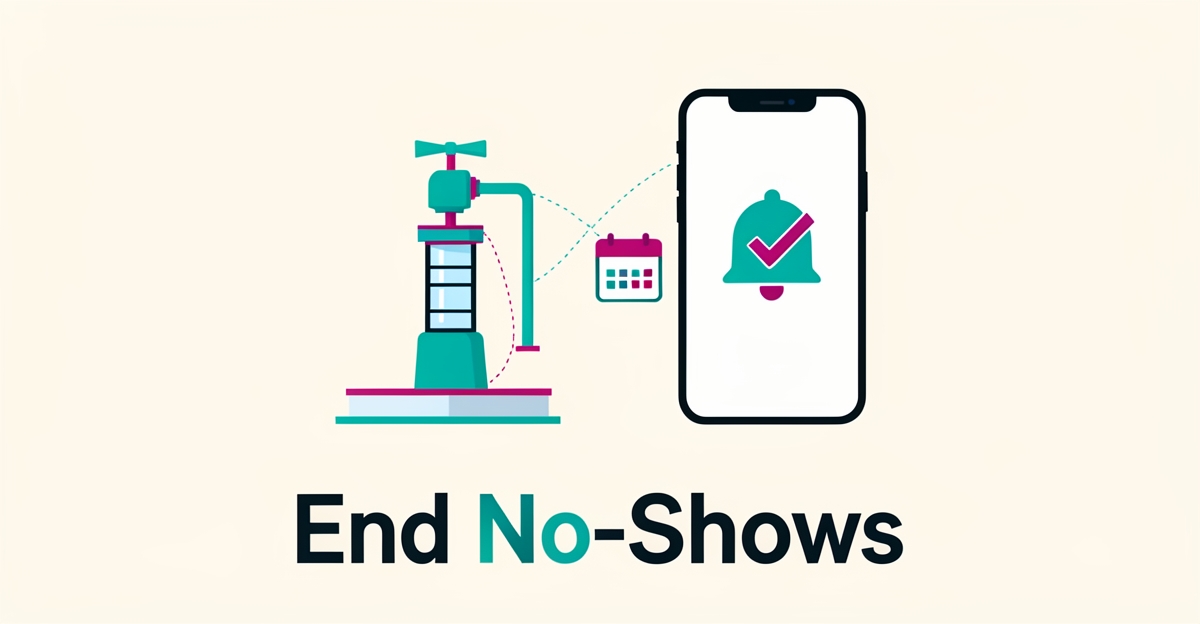
How AI Can Reduce No-Show Appointments in Well Pump Repair Businesses
Key Facts
- No-shows can consume a meaningful share of scheduled appointments in service industries, with some estimates putting missed-appointment losses in the tens of billions of dollars annually according to industry research.
- A large majority of appointments are still booked by phone, creating hold times and errors per scheduling data.
- AI-powered reminders have been shown in some studies to reduce no-shows substantially and improve attendance meaningfully according to optimization research.
- AI-assisted dispatching can cut response times and reduce over an hour of daily drive time in field service settings per field service research.
- A growing majority of customers prefer online booking over phone calls according to preference data.
- Predictive analytics can flag likely no-shows with high accuracy in scheduling research per industry studies.
- Intelligent slot utilization can increase usable appointment capacity by up to roughly 20% according to scheduling optimization studies.
Hire a team member that works 24/7 — for less than a part-time wage.
AI receptionists, SDRs, dispatchers and 99+ roles. Trained on your business, fully managed.
Not sure where to start? Ask our AI planner
The True Cost of No-Shows in Well Pump Repair
A missed well pump call doesn't just mean an empty slot, it means a truck rolling with no job, a homeowner left without water, and revenue that never materializes.
No-shows are a core revenue leak for well pump repair shops. Industry research suggests a significant share of appointments across service industries end in no-shows, and the same pattern holds in field service, where technician time is the most expensive asset on the books.
The booking process itself adds friction. Scheduling studies find most appointments are still booked by phone, leading to long hold times and mistakes. Phone-first scheduling creates double-booking errors, incomplete notes, and confirmation gaps that directly feed missed visits.
When a customer doesn't show, the ripple effects are immediate and measurable:
- Technician utilization drops as crews sit idle or drive to empty appointments
- Drive time compounds, with field service research showing AI-optimized schedules can cut over an hour of drive time per day
- Response times suffer, while AI-powered dispatching can meaningfully reduce response times
- Revenue stability erodes as same-day backfill is difficult for emergency well work
The cost is not just the lost hour on site. It is the fuel, the dispatch coordination, the opportunity cost of a job that could have been booked, and the customer frustration that damages repeat business.
Manual reminders and phone confirmations rarely scale with route density. Shops that rely on office staff for follow-ups face bottlenecks during peak seasons, and notes are often lost between the call and the truck.
This is where inbound call management AI changes the equation for well pump repair. AI-powered reminders and call follow-ups address the phone-heavy booking reality directly, cutting no-shows without adding headcount.
AIQ Labs approaches this through AI Employees, managed AI staff that handle inbound scheduling, confirmations, and same-day rescheduling 24/7, at a fraction of the cost of a human hire. The result is tighter technician utilization, shorter drive loops, and more predictable revenue from the same crew.
How AI Predicts and Prevents Missed Appointments
No-show appointments drain resources and disrupt workflows in well pump repair businesses, but AI offers a proactive solution. By analyzing historical scheduling data, customer behavior patterns, and external factors like weather or local events, AI systems can predict which appointments are at high risk of being missed. This allows teams to intervene early with personalized outreach, turning potential losses into confirmed visits. According to industry research, predictive analytics can flag likely no-shows with high accuracy, enabling targeted follow-up that recovers otherwise lost slots.
Automated, multi-channel reminders further strengthen attendance by reaching customers through their preferred channels, whether SMS, email, or voice calls, at optimal times before the appointment. These timely nudges significantly reduce forgetfulness and scheduling conflicts, two of the most common causes of no-shows. Scheduling research shows AI-powered reminders can meaningfully improve appointment attendance, directly translating to more completed jobs and better technician utilization. For well pump repair shops, where each missed appointment means wasted travel time and idle labor, this improvement has an immediate impact on daily efficiency and revenue predictability.
Beyond reminders, AI optimizes how appointment slots are filled by dynamically adjusting schedules based on real-time cancellations, technician availability, and job duration estimates. This intelligent slot utilization ensures that when a cancellation does occur, the system quickly identifies and offers the open time to another customer, often through automated outreach, minimizing downtime. As a result, businesses can increase their use of available appointment slots by up to roughly 20%, turning idle time into billable hours. AIQ Labs helps well pump repair businesses implement these capabilities through tailored AI Employee solutions that manage scheduling, follow-ups, and dispatching, working 24/7 to reduce no-shows without adding overhead. By combining prediction, prevention, and smart rescheduling, AI transforms appointment reliability from a hope into a measurable outcome.
Beyond Reminders: AI Dispatching and Route Optimization
Beyond basic reminders, AI transforms field service operations through intelligent dispatching and route optimization, directly tackling the hidden costs of no-shows by maximizing technician availability and minimizing wasted drive time. AI-powered dispatching systems analyze real-time job urgency, technician location, and skill matching to assign the right person to each well pump repair call, reducing response times by roughly half an hour on average. This faster mobilization means technicians spend less time waiting between jobs and more time completing billable work, directly improving utilization rates that suffer when appointments are missed.
Further gains come from AI-driven schedule optimization, which dynamically sequences jobs to minimize backtracking and idle travel. By clustering geographically proximate appointments and accounting for traffic patterns, these tools can cut over an hour of daily drive time per technician, time that can be reallocated to additional service calls or preventive maintenance follow-ups. For well pump repair businesses operating across dispersed rural or suburban service areas, this efficiency gain translates to more completed jobs per day without adding headcount or overtime costs.
Leading field service platforms offer varying strengths in these capabilities:
- ServiceTitan provides advanced AI-powered dispatching with predictive ETAs and automated technician routing, ideal for larger operations seeking end-to-end workflow automation.
- Jobber focuses on intuitive scheduling and reminders with basic route optimization, suited for smaller shops prioritizing ease of use.
- Housecall Pro balances AI-driven scheduling with customer communication tools, offering strong mid-market value for businesses needing reliable appointment adherence.
Pricing structures differ, ServiceTitan uses custom quotes, while Jobber and Housecall Pro use tiered monthly plans (check each vendor's current pricing as of late 2026), but the core operational benefits remain consistent: reduced response times, optimized routes, and higher technician productivity. These improvements compound the impact of AI reminders by ensuring that when appointments are kept, teams operate at peak efficiency. For well pump repair contractors looking to stabilize revenue streams, integrating AI dispatching isn't just about saving time, it's about reclaiming capacity lost to no-shows and turning idle moments into billable opportunities. To explore how AI-powered field service tools can align with your specific scheduling challenges, start the 2-minute Fit Check to connect with an AIQ Labs engineer for a free 30-minute strategy call.
A 5-Step Implementation Plan for Your Repair Business
Implementing AI to reduce no-show appointments requires a structured approach tailored to your well pump repair business. Begin by auditing your current scheduling process to identify gaps where reminders fail or scheduling inefficiencies occur. Since most appointments are still scheduled by phone, leading to long hold times and mistakes, evaluate how your team handles call volume, confirmation steps, and follow-up timing. This baseline assessment reveals where AI can have the most immediate impact, such as automating confirmation calls or syncing technician availability with real-time scheduling.
Next, select and integrate an AI scheduling or reminder tool that works with your existing systems, such as your CRM or dispatch software. Look for solutions offering automated voice or SMS reminders, predictive no-show risk scoring, and two-way communication so customers can reschedule easily. AI-powered dispatching can reduce response times, and AI can optimize daily schedules to cut drive time, benefits that compound when reminders prevent wasted trips. Ensure the tool integrates smoothly without disrupting workflows, and prioritize platforms with appropriate data-handling compliance if you serve municipal or other regulated contracts.
Train your staff thoroughly on the new system, emphasizing how AI augments rather than replaces their roles. Focus on practical skills like monitoring AI-generated reminder logs, handling exceptions when customers respond to automated messages, and using insights from predictive analytics to prioritize high-risk appointments. Effective change management includes clear communication about goals, such as meaningfully reducing no-shows and improving attendance, and celebrating early wins to build team buy-in. AIQ Labs supports this phase through managed AI Employees that handle reminder workflows while your team focuses on complex customer interactions.
Finally, track key metrics like no-show rate, technician utilization, and revenue per scheduled slot before and after implementation. Compare these against your own baseline, missed appointments typically represent a significant share of scheduled work in field service, and adjust reminder timing, message tone, or escalation protocols based on what the data shows. Iteration is critical: refine your approach monthly using actual outcome data to improve prediction accuracy. This continuous loop of measure, learn, and adapt ensures the system evolves with your business, turning appointment reliability into a sustained competitive advantage.
Getting Started with AI Employees for Scheduling and Follow-Up
Many well pump repair businesses struggle with no-show appointments, which waste technician time and erode revenue stability. The problem is compounded by the fact that most appointments are scheduled by phone, leading to long hold times and booking errors that frustrate customers and increase the likelihood of missed visits. AI voice agents and schedulers offer a low-investment way to capture customers who want easier booking while eliminating missed calls entirely.
With AIQ Labs' Start Monthly model, businesses can deploy an AI Employee for scheduling and follow-up that includes build, training on your specific workflows, tool integrations, monitoring, and continuous improvements, all for a flat monthly cost far below a typical human hire. This AI Employee handles inbound calls 24/7, books appointments directly into your calendar, and sends automated reminders that measurably improve attendance. Unlike generic chatbots, this AI Employee performs real job tasks end-to-end, communicates naturally via phone, email, or chat, and learns from interactions to reduce no-shows over time.
- Answers calls, routes inquiries, and schedules appointments without hold times
- Sends personalized reminders via voice, SMS, or email to reduce no-shows
- Integrates with your existing CRM, calendar, and scheduling tools
- Works 24/7/365 with zero missed calls or scheduling gaps
- Includes ongoing optimization and performance monitoring
Businesses can start with a single AI Employee focused on scheduling and follow-up, prove the concept with minimal risk, and later build in milestones or own the system outright. As your needs grow, AIQ Labs can also rebuild the one workflow that costs you the most through Workflow Builds, or connect everything into a single operating layer with AI Operating Systems. This approach transforms a reactive scheduling process into a proactive, AI-driven system that improves technician utilization and revenue predictability, without the complexity or upfront investment of traditional software. To explore how this fits your specific operations, start with the free strategy call to map your biggest bottleneck and identify high-ROI automation opportunities.
Still paying for 10+ subscriptions that don’t talk to each other?
We build custom AI systems you own outright. No vendor lock-in. Full control.
Not sure where to start? Ask our AI planner
Frequently Asked Questions
How much can AI reduce no-show appointments in well pump repair businesses?
Why are well pump repair businesses particularly affected by no-shows?
How does AI improve scheduling beyond just sending reminders?
What's the difference between an AI Employee and a regular chatbot for appointment scheduling?
Is AI scheduling too complex or expensive for a small well pump repair shop?
Can AI help reduce drive time and response times for well pump technicians?
Turn Missed Appointments Into Predictable Revenue
No-shows cost well pump repair shops more than a lost hour, they waste drive time, idle crews, and erode trust with homeowners left without water. Phone-heavy booking creates friction, while AI closes the gap with predictive risk scoring, multi-channel reminders that measurably improve attendance, and intelligent dispatch that cuts response times and daily drive time. Together these capabilities tighten technician utilization and make revenue more stable without adding headcount. For shops ready to act, start with a clear baseline of current no-show rates and confirmation gaps, then pilot AI-powered reminders and call follow-ups that work with your existing CRM and calendar. AIQ Labs supports this through managed AI Employees for inbound scheduling and follow-up that handle calls 24/7, book directly, and learn from each interaction. If you want a practical roadmap for your routes and systems, start the 2-minute Fit Check at aiqlabs.ai/apply, then book a free 30-minute strategy call to map your biggest bottleneck and identify high-ROI automation opportunities.
Make AI your competitive advantage — not just another tool.
Strategy, implementation and ongoing optimization. One partner, end to end.
Not sure where to start? Ask our AI planner