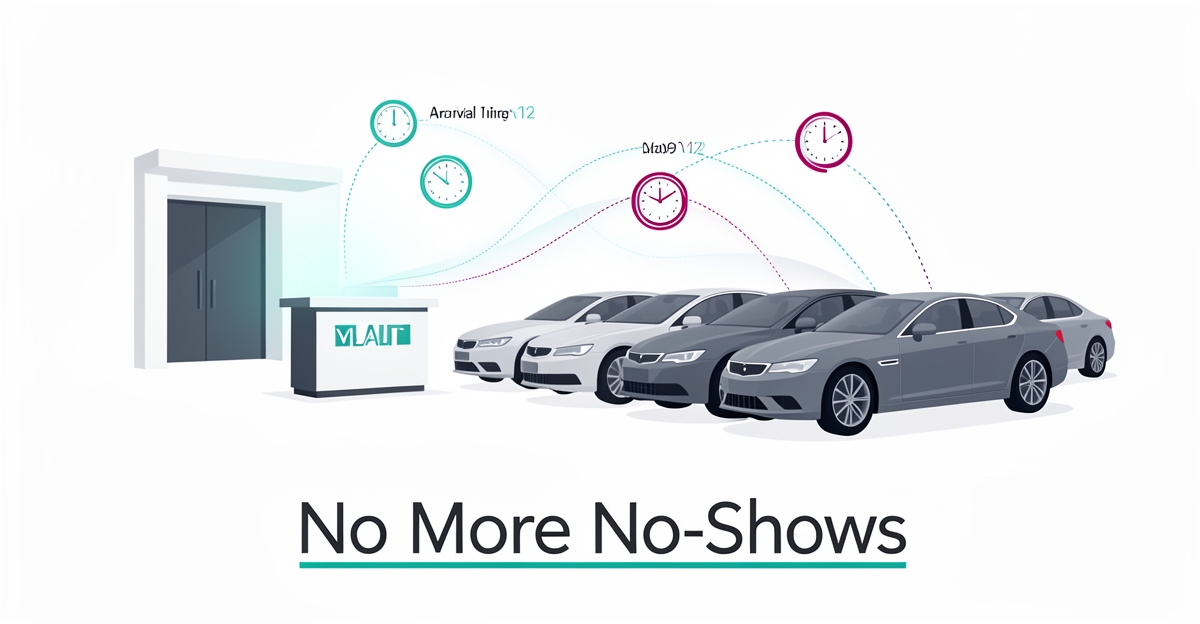
How AI Can Reduce No-Shows and Late Arrivals in Event Valet Services
Key Facts
- AI systems can analyze RSVP timing, historical attendance, and real-time signals to forecast no-shows and late arrivals before guests arrive
- Predictive analytics is widely used across service industries to anticipate demand and prevent problems before they occur
- Guests who RSVP late tend to arrive later than those who confirm early, a pattern AI can detect from historical attendance data
- Dynamic attendance forecasts can be updated hourly as an event approaches, using RSVP and real-time signals
- AIQ Labs has deployed 200+ multi-agent systems and runs 4 live SaaS products daily
- AI Employees typically cost around 80% less than an equivalent human hire
Hire a team member that works 24/7 — for less than a part-time wage.
AI receptionists, SDRs, dispatchers and 99+ roles. Trained on your business, fully managed.
Not sure where to start? Ask our AI planner
The Cost of No-Shows and Late Arrivals in Event Valet Operations
Event valet services face significant operational and financial strain when guests fail to arrive as scheduled or show up late. These disruptions ripple through staffing, vehicle management, and overall event flow, creating inefficiencies that directly impact revenue and guest experience. When a reserved valet spot goes unused due to a no-show, that time and labor capacity is lost, staff remain idle or are misallocated, while vehicles that do arrive late create bottlenecks during peak arrival windows. This misalignment between expected and actual demand forces valet teams into reactive mode, constantly adjusting to unpredictable volumes rather than operating with planned precision.
Late arrivals compound these challenges by concentrating demand into shorter timeframes, overwhelming available staff and parking infrastructure. Instead of a steady flow of vehicles throughout the event window, valets face sudden surges that require rapid repositioning of attendants, delayed vehicle retrieval, and increased risk of misplaced or lost cars. Staff may be pulled from other duties to manage the influx, leading to fatigue and errors, while guests experience longer wait times at both drop-off and pickup points. The result is a degraded service experience that can harm the reputation of both the valet provider and the event host.
Financially, these inefficiencies translate into measurable losses. Underutilized labor during expected no-show periods represents wasted payroll, while overtime or rush labor costs spike during late-arrival surges. Additionally, the inability to accurately forecast vehicle volume hampers optimal staff scheduling and lot allocation, often leading to either overstaffing (increasing costs) or understaffing (reducing service quality). Predictive analytics offers a path forward by transforming historical RSVP and arrival data into actionable foresight, enabling valet teams to anticipate attendance patterns, adjust staffing dynamically, and communicate proactively with guests to smooth arrival flows. The same predictive techniques used across service industries to anticipate demand and prevent problems before they occur apply directly to valet workforce and parking asset utilization. By aligning operations with predicted demand, AI-driven insights help convert uncertainty into operational stability, laying the foundation for smarter, more responsive event valet services.
How AI Predicts Guest Arrival Behavior Using RSVP and Historical Data
AI is transforming how event valet services anticipate guest behavior by analyzing patterns that humans often miss. By examining RSVP data, historical attendance, and real-time signals, AI systems can forecast no-shows and late arrivals with increasing accuracy. This predictive capability allows valet teams to adjust staffing and vehicle allocation before guests even arrive, reducing wasted resources and improving service flow.
Modern AI systems are increasingly capable of processing complex behavioral datasets over time, identifying subtle trends in guest punctuality. For example, AI can detect that guests who RSVP late tend to arrive later than those who confirm early, or that certain attendee groups consistently arrive later than predicted based on historical attendance patterns.
These insights are powered by predictive analytics, which analyzes historical and real-time data to uncover hidden patterns and prevent problems before they occur. In valet operations, this translates to fewer idle staff during low-arrival windows and better preparation for unexpected surges.
- Analyzing RSVP timing and response consistency to flag high-risk no-shows
- Cross-referencing past event attendance with weather, time of day, and event type
- Monitoring real-time check-in signals from affiliated apps or transportation services
- Generating dynamic attendance forecasts updated hourly as the event approaches
- Triggering automated reminders or valet dispatch adjustments based on predicted arrival clusters
By integrating these AI-driven forecasts into pre-event workflows, valet services shift from reactive to proactive operations. AIQ Labs supports this shift through AI Workflow Builds that rebuild the one workflow costing you the most, like arrival forecasting and guest communication, at a fixed price and in clear phases. This approach doesn't just reduce no-shows, it creates a smoother, more reliable experience for guests and staff alike.
Proactive Guest Engagement: AI-Driven Notifications and Workflow Optimization
Proactive guest engagement transforms event valet logistics from reactive to anticipatory. By leveraging AI to analyze RSVP patterns, valet services can forecast arrival windows with precision, identifying guests likely to arrive late or not at all. This predictive capability allows for timely, personalized reminders sent via preferred channels, email, SMS, or app notifications, reducing uncertainty and improving attendance. AI systems continuously refine these predictions using real-time data, ensuring communications remain relevant and actionable as event dynamics shift.
These AI-driven notifications are most effective when paired with workflow optimization for valet staff. Forecasted demand insights enable dynamic resource allocation, positioning teams where and when they're needed most. For example, if AI predicts a surge in arrivals based on historical RSVP-to-arrival conversion rates, valet managers can pre-position attendants and prepare lanes accordingly. This alignment between guest communication and staff readiness minimizes wait times and maximizes throughput.
The impact extends beyond convenience to measurable operational gains. Proactive engagement reduces the incidence of lost vehicles and last-minute scrambling, directly addressing costly inefficiencies in event logistics. By integrating AI into the pre-event communication flow, valet providers not only improve guest experience but also create a more resilient, responsive service model. AIQ Labs supports this transformation with AI Employees, managed AI staff like dispatchers and receptionists that handle outreach and coordination at a fraction of the cost of a human hire, turning predictive insights into consistent, scalable results.
Implementing AI in Event Valet: From Pilot to Full Integration with AIQ Labs
Event venues and valet providers can successfully implement AI solutions by starting with a focused pilot and scaling strategically. Begin by gathering historical RSVP data, arrival times, and weather patterns, key inputs that AI uses to predict late arrivals with growing accuracy. Modern AI is well-suited for analyzing complex event timelines and guest behavior patterns, and its capabilities continue to improve year over year.
Integrate the AI system with existing event management platforms, CRM tools, and communication channels to enable seamless data flow and automated notifications. AIQ Labs supports this transition through its three entry points: AI Employees for managed AI staff, AI Workflow Builds for rebuilding a single high-cost workflow at a fixed price, and AI Operating Systems for a fully connected operating layer built in phases and owned outright. With payment models that let you start monthly, build in milestones, or own it outright, you can scale at the pace that fits your business, directly translating to fewer stranded vehicles and smoother valet operations.
- Assess data readiness: Ensure RSVP, timing, and contextual data are clean and accessible
- Run a 4–6 week pilot: Test predictions on one event type before scaling
- Train staff on AI-assisted workflows: Combine human oversight with automated alerts
- Monitor and refine: Use performance feedback to improve prediction accuracy over time
As the system proves value, expand its use across event types and integrate with payment or loyalty systems for deeper personalization. AIQ Labs has deployed 200+ multi-agent systems and runs 4 live SaaS products daily, so venues can reallocate staff to high-touch guest interactions while automation handles forecasting and notifications. This phased approach ensures sustainable adoption, turning AI from a pilot experiment into a core capability that continuously improves event outcomes.
Still paying for 10+ subscriptions that don’t talk to each other?
We build custom AI systems you own outright. No vendor lock-in. Full control.
Not sure where to start? Ask our AI planner
Frequently Asked Questions
How does AI actually predict which guests will be late or not show up for event valet services?
What kind of results can valet services expect from using AI to reduce no-shows and late arrivals?
Is AI difficult to implement for small valet companies without technical teams?
Can AI really save money on labor costs in valet operations, or is it just another expense?
What happens if the AI prediction is wrong, will it cause more problems than it solves?
How do AI-driven guest notifications actually improve attendance and reduce lost vehicles?
Turning Uncertainty into Seamless Event Flow
AI transforms event valet operations by turning unpredictable guest behavior into actionable foresight. By analyzing RSVP patterns, historical attendance, and real-time signals, AI forecasts no-shows and late arrivals with growing accuracy, enabling proactive guest notifications, dynamic staff allocation, and optimized parking flow. This shift from reactive to proactive reduces idle labor, prevents bottlenecks during peak arrivals, and minimizes lost vehicles, directly improving both guest experience and operational efficiency. For venues and valet providers ready to move beyond guesswork, the path forward starts with assessing data readiness and running a focused pilot. To explore how AI can be tailored to your event workflow, start with a free two-minute Fit Check to identify high-ROI opportunities, then book a free 30-minute strategy call to map a strategic implementation plan.
Make AI your competitive advantage — not just another tool.
Strategy, implementation and ongoing optimization. One partner, end to end.
Not sure where to start? Ask our AI planner