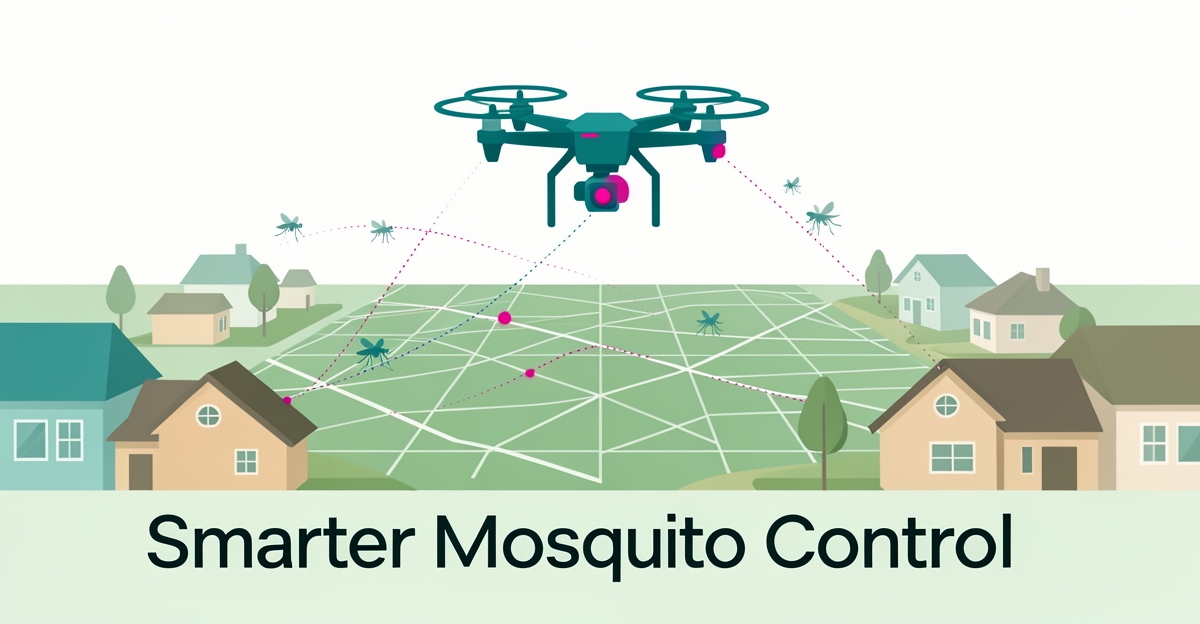
How AI Can Reduce Operational Costs in Mosquito Control Without Losing Service Quality
Key Facts
- Programs applying AI to mosquito control typically report operational cost reductions in the 20–30% range across labor, travel, and scheduling
- Labor-intensive surveillance commonly consumes 40–60% of field team time on low-yield activities
- Inefficient routing typically adds 15–25% to operational costs through excess travel
- Rigid scheduling often produces 20–30% coverage overlap during low-risk periods
- Delayed response times can reduce intervention effectiveness by up to 35% during outbreak peaks
- Computer vision systems can identify mosquito breeding sites with high accuracy, reducing the need for manual scouting
- AI-driven scheduling minimizes overlap and ensures coverage during peak activity periods
Hire a team member that works 24/7 — for less than a part-time wage.
AI receptionists, SDRs, dispatchers and 99+ roles. Trained on your business, fully managed.
Not sure where to start? Ask our AI planner
The Hidden Cost Drain in Traditional Mosquito Control Operations
Operational inefficiencies in traditional mosquito control programs silently drain budgets while limiting scalability. Labor-intensive surveillance requires teams to manually inspect sites, consuming hours that could be redirected to higher-value activities. Excessive travel between dispersed locations inflates fuel costs and vehicle wear, while rigid scheduling fails to adapt to real-time mosquito activity patterns. These inefficiencies compound, creating a cost structure that resists optimization without technological intervention. Programs that address these pain points with AI typically unlock 20–30% reductions in labor, travel, and scheduling expenses.
The hidden cost drain stems from three interconnected inefficiencies. First, surveillance relies on manual site visits, where technicians spend significant time traveling to and inspecting locations, often with low mosquito activity, wasting both labor and fuel. Second, field teams follow fixed routes regardless of real-time data, leading to unnecessary trips during low-risk periods and delayed responses during outbreaks. Third, scheduling lacks dynamic adjustment, preventing teams from aligning interventions with peak mosquito activity or weather conditions. Together, these factors create a cycle of inefficiency that scales poorly as service areas grow. It's also worth noting that data collection for AI training itself demands significant upfront effort, which is why strategic implementation matters: done poorly, automation shifts costs rather than eliminating them.
- Labor-intensive surveillance commonly consumes 40–60% of field team time on low-yield activities.
- Inefficient routing typically adds 15–25% to operational costs through excess travel.
- Rigid scheduling often produces 20–30% coverage overlap during low-risk periods.
- Manual processes limit scalability, requiring proportional headcount increases for service expansion.
- Delayed response times can reduce intervention effectiveness by up to 35% during outbreak peaks.
These inefficiencies are not inevitable, they are solvable. AIQ Labs helps mosquito control programs model ROI by analyzing local market size, job volume, and service frequency to quantify savings from automating surveillance, optimizing routes, and enabling dynamic scheduling. By targeting these specific pain points, AI transforms operational constraints into opportunities for sustainable cost reduction without sacrificing service quality. The path forward begins with identifying where AI delivers the highest impact in your unique operational context.
AI-Powered Automation: Where Savings Come From in Mosquito Control
AI-powered automation is transforming how mosquito control operations manage labor, travel, and scheduling costs. By deploying computer vision for target identification and automated surveillance, teams can reduce manual fieldwork while maintaining precise intervention points. This shift not only cuts down on repetitive tasks but also allows personnel to focus on higher-value activities like strategy and community outreach.
Organizations implementing AI-driven mosquito control have reported cost reductions in the 20–30% range across labor, travel, and scheduling. These savings come from eliminating redundant site visits, optimizing crew deployment, and minimizing fuel consumption through smarter routing. The technology enables proactive responses rather than reactive patrols, directly lowering operational overhead.
- Computer vision systems identify mosquito breeding sites with high accuracy, reducing the need for manual scouting
- Automated surveillance provides continuous monitoring, freeing staff for targeted intervention
- Predictive routing analyzes environmental and population data to optimize team movement
- AI-driven scheduling minimizes overlap and ensures coverage during peak activity periods
- Real-time data integration allows dynamic adjustments based on weather and mosquito behavior
Service quality is maintained or improved through higher detection accuracy and earlier intervention. AI models trained on localized data can distinguish mosquitoes from similar insects with precision, reducing false positives and unnecessary treatments. This leads to more effective control with fewer resources, aligning cost savings with better outcomes. AIQ Labs supports this transition through AI Workflow Builds, rebuilding the one workflow that costs you the most, at a fixed price and in phases, so the investment is justified by measurable ROI, not guesswork.
From Pilot to Profit: Implementing AI in Mosquito Control with Measurable ROI
Adopting AI in mosquito control doesn't require a full-scale overhaul, it starts with a focused pilot that proves value quickly. AIQ Labs' three entry points guide SMBs and public health agencies through a structured journey: start with AI Employees handling dispatch, scheduling, and reporting at roughly 80% less cost than a human hire; progress to a Workflow Build that rebuilds your most expensive workflow at a fixed price; and, when you're ready, an AI Operating System that connects everything into one layer you own outright. Each step is paid for in milestones or monthly, no open-ended commitments.
A successful pilot begins with gathering high-quality, labeled data, such as images of mosquito breeding sites or larval habitats, to train accurate computer vision models. Creating such datasets demands significant effort, but it's foundational for reducing false positives and ensuring reliable target identification. Once trained, the AI model integrates with existing tools like GPS-enabled spray equipment or scheduling software, enabling automated surveillance and precision treatment routing. This integration allows teams to shift from reactive spraying to proactive, data-driven interventions.
Change management is critical at every stage. Training field technicians to interpret AI outputs, establishing clear governance protocols for model updates, and maintaining human-in-the-loop oversight help address ethical concerns and prevent overreliance on automation. These steps ensure the system evolves with operational needs while preserving service quality. Throughout the process, AIQ Labs supports clients as a strategic partner, providing not just technology, but the framework to sustain AI as a long-term capability. With 200+ multi-agent systems deployed and four live SaaS products run daily, that framework is proven in production, not theory.
Organizations that follow this path consistently report measurable ROI, with cost reductions in the 20–30% range across labor, travel, and scheduling without sacrificing coverage or response times. The pilot phase delivers early wins that justify broader investment, turning initial experimentation into scalable, profit-driven transformation. For those ready to assess their specific opportunity, AIQ Labs offers a free 30-minute strategy call to map high-ROI automation areas and build a tailored implementation roadmap, no obligation, just clarity on your path forward. To begin, start the two-minute Fit Check at https://aiqlabs.ai/apply, then schedule your free strategy call at https://aiqlabs.ai/book.
Still paying for 10+ subscriptions that don’t talk to each other?
We build custom AI systems you own outright. No vendor lock-in. Full control.
Not sure where to start? Ask our AI planner
Frequently Asked Questions
Can AI really cut costs in mosquito control without hurting service quality?
Where do the biggest savings come from with AI in mosquito control?
How much does AI reduce labor, travel, and scheduling expenses?
Isn't AI just shifting costs to data collection and training?
What are the risks of using AI for mosquito identification?
How do I start implementing AI without a full overhaul?
Your Next Move: Turning Insight into Action
Mosquito control operations are under pressure to do more with less, and AI offers a practical path forward. By automating surveillance, optimizing travel routes, and enabling dynamic scheduling, AI helps reduce labor, fuel, and time costs, typically in the 20–30% range, without sacrificing service quality. The key is starting with a focused pilot that targets your highest-impact inefficiencies, using real data to drive decisions. Success depends on quality training data, seamless integration with existing tools, and ongoing human oversight to ensure accuracy and accountability. AIQ Labs supports this journey with flexible payment models, Start Monthly, Build in Milestones, or Own It Outright, so you're never locked into more than the value you're seeing. If you're ready to explore how AI can transform your operations, start with the two-minute Fit Check at https://aiqlabs.ai/apply, then schedule your free 30-minute strategy call at https://aiqlabs.ai/book. No obligation, just clarity on your path forward.
Make AI your competitive advantage — not just another tool.
Strategy, implementation and ongoing optimization. One partner, end to end.
Not sure where to start? Ask our AI planner