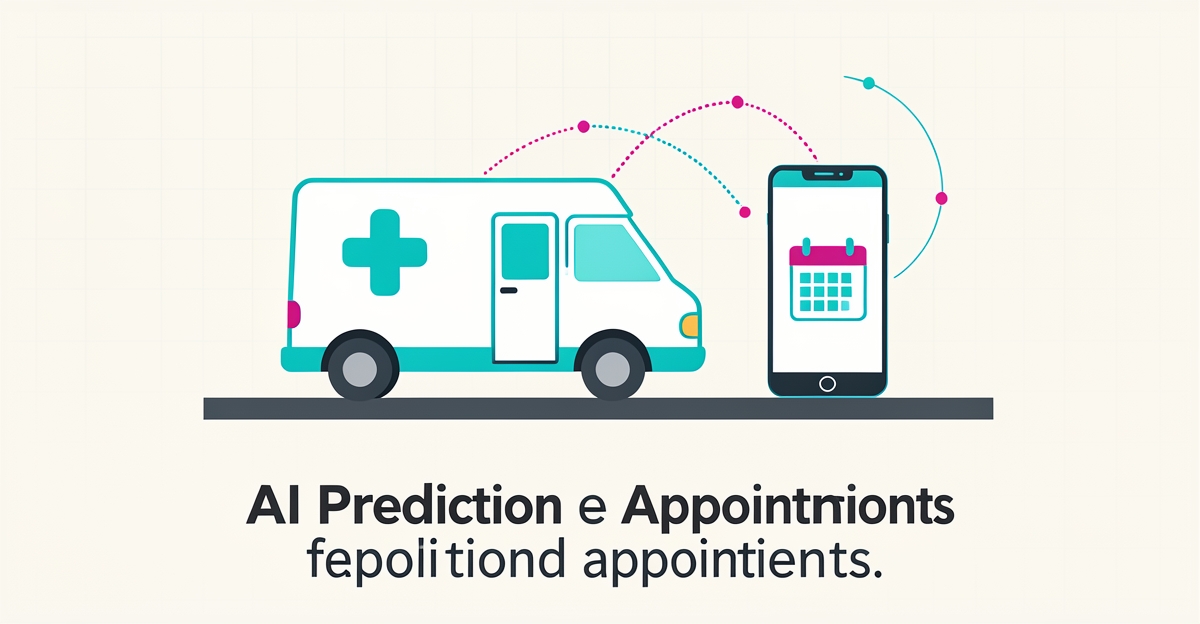
How AI Can Reduce Patient No-Shows in Mobile Dentistry Practices
Key Facts
- Patient no-shows drain $150 billion annually from the U.S. healthcare system, crippling mobile dentistry operations.
- Dental practices lose between $20,000 and $50,000 yearly from missed appointments alone.
- AI-powered reminders slash no-show rates by up to 32%, vastly outperforming manual methods that achieve only 10%.
- Outpatient clinics face 15% to 30% no-show rates, turning mobile dental routes into costly empty trips.
- Healthcare AI spending hit $1.4 billion this year, nearly tripling 2024 investment levels.
- Twenty-two percent of healthcare organizations now use domain-specific AI tools, marking a 7x increase over 2024.
- AI reminder systems cut staff time spent on manual outreach by 40% while boosting patient engagement.
Hire a team member that works 24/7 — for less than a part-time wage.
AI receptionists, SDRs, dispatchers and 99+ roles. Trained on your business, fully managed.
Not sure where to start? Ask our AI planner
The True Cost of No-Shows in Mobile Dentistry
Patient no-shows are more than just an inconvenience, they represent a systemic drain on healthcare resources. The U.S. healthcare system loses an estimated $150 billion annually due to missed appointments, a figure that reflects not only lost revenue but also wasted staff time, underutilized equipment, and disrupted care coordination. For mobile dentistry practices, this burden is amplified by the logistical complexity of traveling to patients’ locations, where every no-show means fuel, vehicle wear, and clinician hours that can never be reclaimed.
Dental practices, in particular, feel this strain acutely, with research showing they lose between $20,000 and $50,000 per year from no-shows alone. Unlike fixed clinics, mobile units cannot easily reassign a missed appointment slot to another patient on short notice, geographic constraints and scheduling rigidity turn each absence into a pure operational loss. The financial impact is compounded by the fact that mobile dentistry often serves underserved or high-need populations, where patient retention and trust are already more challenging to build and maintain.
- Each missed appointment represents immediate, unrecoverable revenue loss
- Mobile units incur travel and setup costs regardless of patient attendance
- Staff time spent preparing for no-shows cannot be redirected to other productive tasks
- Frequent no-shows erode patient-provider relationships and reduce long-term engagement
- Operational inefficiencies from no-shows limit the number of patients a mobile unit can serve daily
These losses are not inevitable. AIQ Labs helps mobile dentistry practices implement intelligent retention systems that proactively identify at-risk patients and automate personalized outreach, turning reactive scheduling into a strategic advantage for patient retention and practice sustainability. AI Employees like Patient Coordinators handle reminders, rescheduling, and follow-ups, while AI Workflow Builds target the most costly processes for optimization.
Why Manual Reminder Systems Fall Short
It's a familiar scene in healthcare administration: a staff member spends hours each week dialing patients, leaving voicemails, and mailing postcards, only to watch appointment slots go empty anyway. For mobile dentistry practices, where every missed visit means lost revenue and wasted travel time, manual reminder systems are a costly habit that's hard to break.
The core problem is that these workflows depend entirely on human effort. Each call, text, or postcard requires staff time to prepare, execute, and document. According to industry research, traditional manual reminder systems demand significant staff time, yet they often fail to reach patients effectively. When your team is already stretched thin managing a mobile practice, this administrative burden compounds quickly.
Beyond the time drain, manual systems are error-prone by nature. A mistyped phone number, a forgotten follow-up, or a reminder sent to the wrong address can mean the difference between a completed appointment and a no-show. And even when reminders do reach patients, they're easy to ignore or forget. A voicemail left during work hours or a postcard buried in the mail rarely prompts action. The result? Patients who genuinely intended to show up simply don't, and practices absorb the cost.
The numbers tell a stark story. A head-to-head comparison found that manual reminder methods reduce no-shows by only up to 10%, while AI-powered systems achieve reductions of up to 32%. That gap represents real revenue for practices already losing an estimated $20,000 to $50,000 annually to no-shows alone, according to dental industry data.
Here's where manual workflows consistently fall short:
- Significant staff time is consumed by repetitive calling and mailing tasks that pull team members away from patient care.
- Error-prone execution leads to missed connections, incorrect contact information, and inconsistent follow-up.
- Low patient engagement results from generic, easily ignored messages that don't adapt to individual preferences or behaviors.
AI-powered reminder systems address these failure points directly. By automating outreach, personalizing communication timing and channels, and integrating seamlessly with practice management software, these tools reduce no-shows while freeing staff to focus on higher-value work. At AIQ Labs, we've seen how custom AI systems can transform patient retention workflows, embedding intelligent reminders directly into daily operations without adding complexity.
For mobile dentistry practices operating on tight margins, the choice between manual and AI-driven reminders isn't just about efficiency, it's about protecting revenue that's already walking out the door.
How AI Predicts and Prevents Missed Appointments
Missed appointments quietly drain mobile dentistry practices. AI turns that leakage into retention by spotting risk before the chair is empty and acting automatically.
Predictive models learn from historical attendance, demographics, appointment history, and engagement signals to flag patients most likely to no-show. The system assigns a risk score prior to the visit, allowing staff to prioritize outreach where it matters most. This predictive risk scoring replaces guesswork with data-driven triage.
Once risk is identified, the AI triggers personalized multi-channel reminders via SMS, email, and voice. Messages adapt to patient preferences, timing, and language, and can offer easy rescheduling links. Automation reduces staff time while improving reach and response.
Integration is seamless with existing operations. The solution connects to EHRs and practice management software through secure APIs, ensuring reminders and scheduling updates flow without manual re-entry. According to industry research, patient no-shows cost the U.S. healthcare system $150 billion every year, with average no-show rates for outpatient clinics ranging from 15% to 30%.
Adoption is accelerating. A recent healthcare AI analysis reports 22% of healthcare organizations have implemented domain-specific AI tools, a 7x increase over 2024 and 10x over 2023. Healthcare AI spending hit $1.4 billion this year, nearly tripling 2024's investment.
AI-powered reminders outperform manual outreach. A head-to-head comparison found AI reminder systems reduce no-show rates by up to 32% compared to manual methods. For dental practices, that translates to avoiding an estimated $20,000 to $50,000 in annual losses from missed appointments.
In practice, the workflow looks like this:
- Risk model scores each booked patient nightly using EHR and scheduling data
- High-risk patients receive personalized SMS, email, and voice reminders with one-tap confirm/reschedule
- Engagement signals feed back into the model to improve future predictions
- Staff see a prioritized retention dashboard inside their existing practice management software
This approach aligns with AI Customer Retention & Loyalty principles by proactively protecting revenue and patient relationships. AIQ Labs builds custom AI systems that embed these insights into daily practice operations, so retention becomes automated rather than reactive.
Implementing AI No-Show Prevention: A Four-Step Roadmap
A four-step roadmap turns AI no-show prevention from an abstract concept into an operational reality. For mobile dentistry practices losing an estimated $20,000 to $50,000 annually from missed appointments, a structured implementation approach matters more than the technology itself. The good news: the path is well-established.
Step 1: Assess your no-show patterns and choose the right model. Start by evaluating your practice's specific challenges, which days, time slots, and patient segments generate the most missed visits. With outpatient no-show rates running between 15% and 30%, understanding your own patterns is the foundation for selecting a predictive AI approach that fits, rather than a generic tool that doesn't.
Step 2: Integrate the model into your scheduling system. Once selected, the AI must connect directly to your existing setup, linking to your EHR and scheduling software through secure APIs. This integration is what enables automated reminders and proactive outreach to at-risk patients without adding manual work for your front desk. In fact, head-to-head comparisons show AI reminder systems reduce no-show rates by up to 32% compared to manual methods, which typically achieve only 10%, while cutting staff time spent on reminders by 40%.
Step 3: Optimize with feedback loops. Prediction quality improves with use. As new appointment data flows in, the model should be retrained on emerging patterns, seasonal shifts, changing patient behaviors, new service areas for your mobile unit. Practices that treat deployment as a one-time event miss this compounding value; those that build in regular refinement cycles see predictions sharpen over time.
Step 4: Scale across locations and mobile units. For mobile dentistry, where multiple vans or service territories operate on different schedules, the system must scale without fragmenting. A unified setup ensures every unit benefits from shared learning while maintaining consistent patient communication.
Throughout implementation, three considerations deserve attention:
- Data quality and accuracy, AI systems require clean, accurate patient and scheduling data to function effectively.
- Patient consent and communication, patients must provide consent for AI-powered reminders, and messaging must remain clear and transparent.
- Interoperability, seamless integration with existing EHRs and practice management software is essential for coordinated workflows.
The timing for this roadmap is favorable. Healthcare AI spending hit $1.4 billion this year, nearly tripling 2024's investment, and 22% of healthcare organizations have now implemented domain-specific AI tools, a 7x increase over 2024. Practices that move now build institutional advantage before their competitors catch up.
This is where custom implementation matters. Off-the-shelf tools rarely account for the realities of mobile dentistry, variable locations, tight routes, on-the-day cancellations. Teams like AIQ Labs build custom AI systems that embed predictive insights directly into daily practice operations, ensuring the technology fits the workflow rather than forcing the workflow to fit the technology. AI Operating Systems provide a connected layer for long-term scalability.
Turning Retained Appointments Into Long-Term Patient Loyalty
A recovered appointment is more than a filled chair, it's a patient who stays in care. In mobile dentistry, where the practice travels to the patient, continuity matters even more: a missed visit often means the next touchpoint is months away, or never. Reducing no-shows is really a retention strategy in disguise.
The financial stakes reinforce the relational ones. Dental practices lose an estimated $20,000 to $50,000 annually from no-shows alone, and each missed appointment represents immediate revenue that cannot be recovered. But the longer-term cost, a patient drifting out of preventive care entirely, compounds quietly over years.
This is where AI shifts from a scheduling tool to a loyalty engine. AI reminder systems reduce no-show rates by up to 32% compared to manual methods, and that consistency of contact builds the kind of reliable, personalized experience patients remember. When reminders arrive on time, through the right channel, with the right tone, patients feel looked after, not processed.
For mobile dentistry practices, the retention impact multiplies when AI handles the full coordination loop, not just the reminder. AIQ Labs builds AI Employees in roles like Patient Coordinator and Reminder Agent that manage real workflows end-to-end: booking, confirming, rescheduling, and following up across phone, SMS, and email, around the clock. Because these systems are custom-built, practices own them outright, no vendor lock-in, no rented platform dependencies, so the patient relationships and the data behind them stay in-house.
The track record behind this approach matters, too. AIQ Labs operates voice AI in regulated industries daily, where compliance, empathy, and accuracy are non-negotiable, the same standards healthcare demands. That production-tested experience translates directly into patient-facing systems that communicate naturally and reliably.
What retained appointments ultimately create:
- Consistent preventive care, since patients stay on their recall schedule instead of falling through the gaps
- Higher lifetime value, as recovered visits compound into long-term relationships rather than one-off revenue
- Stronger referrals, because patients who feel consistently cared for recommend the practice to others
- Reduced administrative strain, freeing staff to focus on patient experience instead of chasing confirmations
No-show reduction isn't an isolated operational fix, it's the front door to durable patient loyalty. If you want to see where that opportunity sits in your practice, start with the two-minute Fit Check at aiqlabs.ai/apply, then book a free 30-minute strategy call at aiqlabs.ai/book. It's a real working session with an AI engineer to map your biggest bottleneck, and if there isn't a clear win, we'll tell you that too.
ctaText
Curious what a 32% no-show reduction would mean for your practice's revenue? With AI reminder systems reducing no-show rates by up to 32% compared to manual methods, the impact is immediate and measurable for mobile dentistry teams.
Patient no-shows cost the U.S. healthcare system $150 billion every year, and outpatient clinics see average no-show rates of 15% to 30%. For dental practices, that translates to an estimated $20,000 to $50,000 lost annually from no-shows alone, with each missed appointment representing revenue that cannot be recovered.
AI-powered appointment adherence fits squarely in AI Customer Relationship Management > AI Customer Retention & Loyalty. It proactively identifies at-risk patients, sends personalized reminders, and improves appointment adherence, directly increasing patient retention for mobile operations.
Start the two-minute Fit Check at aiqlabs.ai/apply, then book a free 30-minute strategy call at aiqlabs.ai/book. This is a working session with an AI engineer to map your biggest scheduling bottleneck. If there isn't a clear win, we'll tell you that too.
What happens in the session:
- We review your current reminder workflow and no-show patterns
- We map how proactive at-risk patient identification could integrate with your practice management
- We outline a custom AI system option built for ownership, not subscription lock-in
AIQ Labs builds custom AI systems to embed these retention insights into daily practice operations, with true ownership of the code, agents, and data. The Fit Check is free, no-obligation, and designed to give you clarity on ROI before any commitment.
Ready to see what a 32% reduction looks like on your books?
socialProofText
Talk is cheap in the AI space. Plenty of vendors will promise you the moon, but when it comes to regulated industries like healthcare, you need a partner who has actually been in the trenches. At AIQ Labs, we don't just consult on AI theory, we build and operate production-grade AI systems every single day.
Our team runs more than 70 production AI agents across our own live platforms, handling everything from multi-channel marketing automation to complex conversational workflows. This isn't theoretical capability; it's demonstrated expertise that processes thousands of data points daily in real-world conditions.
We've delivered end-to-end automation for healthcare providers, counselling services, and field-service businesses, industries where compliance and reliability aren't optional. Our work includes building compliant voice AI for regulated sectors, automating patient intake and scheduling for counselling practices, and creating custom AI employees that handle sensitive communications with the nuance and care healthcare demands.
When we say AI can reduce no-shows by up to 32%, we speak from experience building these exact systems. According to recent analysis, AI-powered reminder systems significantly outperform manual methods, reducing no-show rates by up to 32% compared to traditional approaches. We've seen firsthand how intelligent scheduling and personalized communication transform patient adherence.
Unlike subscription-based software that locks you into someone else's platform, we build custom AI systems that you own outright. Whether you need an AI Patient Coordinator to manage appointment reminders or a complete practice automation system, you retain full control over the code, data, and future development.
Our production portfolio includes:
- Compliant voice AI platforms for regulated financial and healthcare communications
- Multi-agent scheduling and intake systems for counselling and healthcare providers
- Large-scale automation suites running 70+ specialized agents simultaneously
- Custom AI employees for medical reception, patient coordination, and appointment setting
The healthcare AI market is exploding, with healthcare AI spending reaching $1.4 billion this year, nearly triple 2024's investment. As adoption accelerates, practices need partners who understand both the technical complexity and the regulatory landscape. We build systems that meet strict compliance standards while delivering the seamless patient experience that keeps appointment books full.
Ready to see how production-tested AI can eliminate no-shows in your mobile dentistry practice? Start with our two-minute Fit Check, then book a free 30-minute strategy call with our engineering team. We'll map your specific workflow challenges and identify the highest-ROI automation opportunities, no sales pitch, just a practical working session with AI engineers who build these systems daily.
Still paying for 10+ subscriptions that don’t talk to each other?
We build custom AI systems you own outright. No vendor lock-in. Full control.
Not sure where to start? Ask our AI planner
Frequently Asked Questions
How much money do mobile dentistry practices actually lose from patient no-shows each year?
Do AI reminder systems actually work better than having staff call patients manually?
What makes no-shows so much worse for mobile dentistry than for a regular clinic?
How does AI predict which patients are likely to no-show before the appointment?
Will implementing AI reminders require us to switch practice management software or change our workflow?
Is patient consent required for AI-powered appointment reminders, and how is that handled?
Every Empty Chair Is a Choice, Make Yours Count
No-shows don't have to be the cost of doing business. As we've seen, mobile dentistry practices lose an estimated $20,000 to $50,000 annually to missed appointments, while manual reminder systems cap out at roughly 10% improvement. AI-driven systems change that math entirely, reducing no-show rates by up to 32% through predictive risk scoring, personalized multi-channel outreach, and seamless integration with your existing scheduling software. More importantly, every recovered appointment compounds into something bigger: patients who stay on recall schedules, refer others, and build lasting relationships with your practice. With healthcare AI adoption accelerating rapidly, the practices that act now will lock in an operational advantage their competitors will spend years chasing. The next step is simple: start with the two-minute Fit Check at aiqlabs.ai/apply, then book a free 30-minute strategy call. It's a real working session with an AI engineer to map your biggest scheduling bottleneck, and if there isn't a clear win, we'll tell you that too.
Make AI your competitive advantage — not just another tool.
Strategy, implementation and ongoing optimization. One partner, end to end.
Not sure where to start? Ask our AI planner