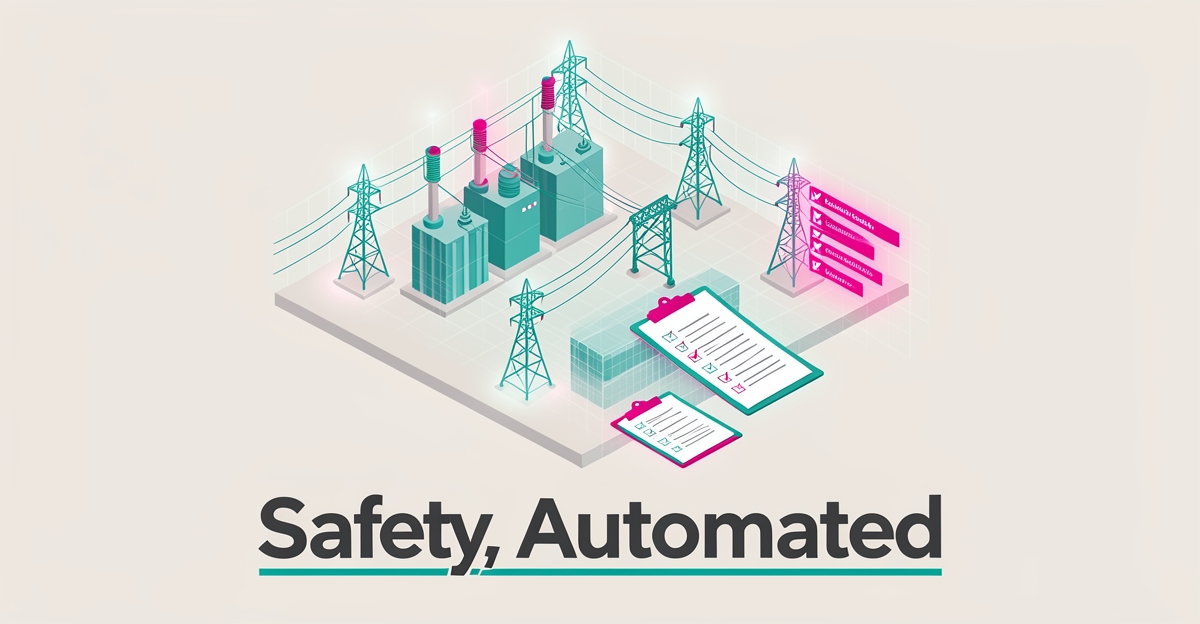
How AI Can Reduce Safety Compliance Risks in Substation Construction Sites
Key Facts
- Roughly 15 workers die every day in the US from occupational injuries, according to industry research
- Over 94,000 recordable incidents analyzed between 2017–2021 included more than 20,000 Serious Injury and Fatality cases per ISN data
- US fatal work injuries have held roughly steady at around 5,000+ annually for the better part of a decade, per workplace safety analyses (as of late 2026)
- A significant share of occupational tasks, particularly text-heavy, administrative, and analytical work, can already be performed, supported, or transformed by current AI systems per National Bank research
- AI document scanning enables continuous compliance monitoring instead of periodic audits per industry insights on smart safety management
- AIQ Labs has deployed 200+ multi-agent systems across document-heavy, compliance-sensitive workflows
Hire a team member that works 24/7 — for less than a part-time wage.
AI receptionists, SDRs, dispatchers and 99+ roles. Trained on your business, fully managed.
Not sure where to start? Ask our AI planner
Why Substation Safety Compliance Still Fails on Paper
Substation construction safety compliance still fails on paper because it relies on manual review of daily logs, checklists, and inspection reports, a process that is inherently reactive and prone to human error. Safety teams spend hours sifting through paperwork after shifts end, trying to spot gaps in protocol that may have already contributed to near-misses or worse. This lagging approach means problems are only identified after they've occurred, offering little chance for real-time intervention. As a result, critical deviations, like missed lockout/tagout procedures or inadequate fall protection, can go unnoticed until an incident happens.
The limitations of this system are reflected in stagnant safety outcomes across high-risk industries. In the United States, fatal work injuries have remained roughly flat for the better part of a decade, with thousands of lives lost annually despite ongoing safety initiatives. More troubling, an analysis of over 94,000 recordable incidents by ISN between 2017 and 2021 revealed more than 20,000 Serious Injury and Fatality (SIF) cases, indicating that while minor injuries may be declining, the most severe outcomes are not improving. These numbers suggest that traditional lagging indicators like Lost Time Injuries fail to prevent harm, they only document it after the fact.
This reliance on retrospective data creates a dangerous illusion of compliance. Paper-based systems can show that forms were filled out and checklists signed, but they cannot confirm whether safety procedures were actually followed in the moment or whether emerging risks were being monitored continuously. Without automated analysis of safety documentation, subtle patterns, such as recurring checklist omissions in specific weather conditions or repeated delays in equipment inspections, remain hidden in the noise of manual reporting. AIQ Labs addresses this gap with AI Workflow Builds that scan daily logs, safety checklists, and inspection reports in real time, automatically flagging deviations from compliance protocols and generating alerts before risks escalate. By transforming safety management from a backward-looking audit into a forward-looking safeguard, AI enables substation construction sites to move beyond compliance theater and toward genuine risk prevention.
How AI Document Scanning Turns Compliance from Reactive to Proactive
Substation construction lives or dies on paperwork that no one has time to read. Daily logs pile up, safety checklists get signed without review, and inspection reports sit in folders until an auditor asks for them. That lag turns compliance into a scramble.
AI document scanning closes the gap by treating compliance as a continuous process, not a quarterly event. Systems continuously ingest daily logs, safety checklists, and inspection reports, then automatically flag deviations from established protocols in real time. Alerts surface immediately and audit-ready reports are generated without manual collation, shifting the model from reactive incident management to proactive risk prevention.
This matters because safety exposure is persistent. Industry research notes roughly 15 workers die every day in the US from occupational injuries, with annual fatal work injuries holding steady for years. Traditional lagging indicators like Lost Time Injuries show what went wrong, not what is about to go wrong.
The shift is enabled by where AI is most effective today. Research from the Czech National Bank finds a meaningful share of occupational tasks can already be performed, supported, or transformed by current AI systems, with exposure concentrated in text-heavy, administrative, and analytical work. Documentation processing is a prime candidate for automation.
In substation construction, that translates to continuous compliance monitoring instead of periodic audits. Continuous monitoring means protocols are checked every time a form is filed, not once a month when a supervisor reviews a sample. The system learns the site's specific standards and compares each entry against them.
AIQ Labs develops custom AI systems that scan these documents and automatically generate alerts and reports to ensure regulatory adherence and reduce audit risks. The approach mirrors how modern safety management is evolving toward Smart Safety Management, embedding checks into every workflow and decision point.
How the mechanism works on site:
- Continuous ingestion of logs, checklists, and inspection reports as they are created
- Automated deviation detection against site-specific protocols and regulatory requirements
- Real-time alerts to supervisors when non-conformance is identified
- Audit-ready report generation with traceable evidence trails
The result is faster correction, fewer missed items, and a defensible compliance record. Instead of discovering gaps during an audit, teams see them while work is still in progress and can intervene before risk escalates.
From Alerts to Action: Integrating AI with Site Safety Operations
Detection means nothing if the alert dies in an inbox. The real value of AI in substation construction safety emerges when document intelligence connects directly to the broader safety ecosystem, where a flagged anomaly in a morning inspection report triggers the same urgency as a sensor detecting a worker near live equipment.
Modern sites already deploy intelligent safety monitoring solutions that combine computer vision, smart sensors, and geofencing to catch hazards in real time. Digital shields create virtual perimeters around operational zones, and when machinery approaches a boundary, an active rail line, an energized busbar, systems can alert operators or halt equipment automatically. Document intelligence plugs into this same layer: when AI scanning daily logs identifies a skipped lockout-tagout verification, that finding can escalate instantly to supervisors before the next shift energizes the equipment.
The stakes justify this integration. According to workplace safety analyses, US fatal work injuries have held roughly steady for years, and over 94,000 recordable incidents analyzed between 2017 and 2021 included more than 20,000 serious injury and fatality cases. Traditional lagging indicators, lost time injuries, accident-free days, document failure after the fact rather than preventing it.
A connected safety architecture typically operates across four layers:
- Detection layer, AI scans checklists, logs, and sensor feeds for deviations and physical hazards
- Escalation layer, findings route instantly to supervisors with full context and severity ranking
- Intervention layer, automated responses trigger alerts, geofence breaches, or equipment shutdowns
- Documentation layer, every event feeds the compliance record for audit readiness
Yet automation has a hard boundary. Guidance from Germany's BSI and France's ANSSI is explicit: fully autonomous AI systems without human oversight constitute a security risk and should be avoided. Critical safety decisions, whether to re-energize a circuit or clear a crew for confined-space entry, must remain under human control.
This is why AIQ Labs builds human-in-the-loop controls into every compliance system: AI serves as the detection and escalation layer, surfacing risks with speed no manual review can match, while certified personnel retain final authority over consequential decisions. The result is a safety operation that moves at machine speed but answers to human judgment, exactly the balance regulators and site safety officers demand.
Implementing AI Compliance Monitoring on Your Construction Sites
Implementing AI compliance monitoring on substation construction sites begins with a thorough risk assessment to identify critical safety documentation workflows. As noted in construction safety research, conducting detailed hazard analysis before project start is essential for establishing effective protective measures according to industry best practices. This foundational step ensures AI deployment targets high-impact areas like daily log reviews and safety checklist validations where deviations from protocols can be automatically flagged.
Prioritizing human supervision of AI-flagged issues remains crucial, especially as generative AI adoption accelerates while enterprises increasingly recognize the need for oversight of autonomous systems. AIQ Labs builds custom systems with human-in-the-loop controls, ensuring safety officers review and validate alerts before action is taken, aligning with expert guidance that fully autonomous AI poses security risks in enterprise environments. Safeguarding data pipelines through secure model development and continuous monitoring further protects against vulnerabilities in training data or integrations.
Starting with a single high-value workflow like daily log review allows teams to validate AI accuracy and build trust before scaling to inspection reports or equipment monitoring. This maps directly to how AIQ Labs works: an AI Workflow Build rebuilds the one compliance workflow that costs you the most, at a fixed price and in phases, so you can prove value before committing further. Sites that later want document intelligence, alerts, and audit trails connected across every crew and subcontractor can graduate to an AI Operating System, one connected layer, built in phases and owned outright. Payment follows the same logic: Start Monthly, Build in Milestones, or Own It Outright, with no invented prices. By anchoring implementation in documented safety practices and incremental validation, construction teams can leverage AI to shift from reactive incident tracking to proactive compliance verification, reducing audit risks while maintaining human oversight of critical safety decisions.
Still paying for 10+ subscriptions that don’t talk to each other?
We build custom AI systems you own outright. No vendor lock-in. Full control.
Not sure where to start? Ask our AI planner
Frequently Asked Questions
How does AI actually reduce safety compliance risks on substation construction sites?
What kind of safety documentation does AI analyze to detect compliance issues?
Can AI make safety decisions on its own, or does it still need human oversight?
Why are traditional safety metrics like Lost Time Injuries not enough to prevent serious harm?
What is the first step in implementing AI compliance monitoring on a construction site?
How does AIQ Labs price and deliver AI compliance systems?
The Shift from Paper Trails to Proactive Protection Starts Now
Substation construction safety no longer needs to rely on retrospective audits and hope. AI-driven document scanning transforms compliance from a reactive scramble into a continuous safeguard, flagging deviations in daily logs and checklists before they escalate into incidents. With roughly 15 workers dying daily from occupational injuries in the US, the stakes demand more than paper trails. By integrating AI as a detection and escalation layer, while keeping human judgment at the helm for critical decisions, sites can maintain rigorous oversight without sacrificing operational control. Ready to move beyond compliance theater? Start with the two-minute Fit Check to identify your highest-impact automation opportunity, or book a free 30-minute strategy call to map out a phased implementation that keeps your team safe and your audits effortless.
Make AI your competitive advantage — not just another tool.
Strategy, implementation and ongoing optimization. One partner, end to end.
Not sure where to start? Ask our AI planner