How AI Can Reduce Safety Inspection Errors in PPE Distributor Operations
Key Facts
- AI safety inspection tools can save organizations hundreds of man-hours annually by automating data capture and report generation, according to SafetyCulture's implementation data.
- Unlike human inspectors, whose accuracy drops with fatigue, AI maintains consistent 24/7 precision by continuously learning from inspection data, quality inspection research shows.
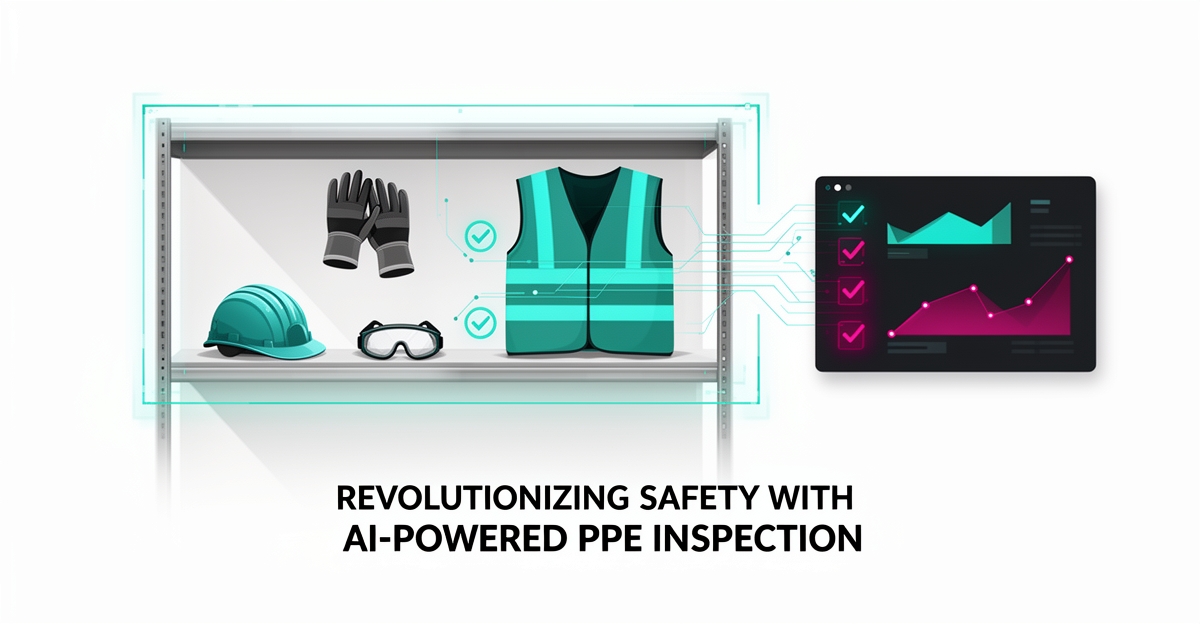
- Computer vision AI can detect PPE compliance issues in real time, flagging missing helmets, gloves, or vests before products leave the warehouse, industry analysis reveals.
- Modern visual inspection AI can typically be commissioned with a small set of good sample images—no defective samples needed, Siemens' industrial AI research demonstrates.
- The hybrid inspection model combines AI's speed for high-volume checks with human judgment for complex decisions, creating more reliable safety processes than either approach alone, experts confirm.
- AI-powered inspection systems can automatically generate audit-ready reports immediately after checks, eliminating manual documentation errors and providing real-time compliance visibility, safety management research shows.
- Predictive analytics in AI safety systems can forecast potential risks based on historical patterns, enabling distributors to address high-risk areas before incidents occur, safety technology analysis indicates.
Hire a team member that works 24/7 — for less than a part-time wage.
AI receptionists, SDRs, dispatchers and 99+ roles. Trained on your business, fully managed.
Not sure where to start? Ask our AI planner
The Hidden Cost of Manual PPE Inspections
Manual PPE inspections in distribution centers often create more risk than they prevent. Human-led checks are prone to inconsistent data capture, fatigue-driven errors, and delayed reporting—especially during long shifts or high-volume periods. These gaps can lead to non-compliant products slipping through, increasing audit exposure and liability risks for distributors.
Research shows human inspection accuracy varies significantly based on factors like fatigue and subjective judgment, while AI systems deliver consistent precision by continuously refining performance through data analysis. Unlike humans, AI maintains peak performance 24/7 without breaks, eliminating fatigue as a variable in safety checks. This consistency is critical in PPE distribution, where missed items like damaged gloves or incorrect labeling can have downstream safety consequences.
The cost of these errors extends beyond immediate safety concerns. Manual processes rely on paper-based logging or disconnected digital forms, limiting analytics and delaying corrective actions. In contrast, AI-powered systems provide automated, audit-ready reporting that ensures leadership has real-time visibility into compliance status. Organizations using AI-integrated safety tools have reported savings of hundreds of man-hours in the first year, with individual audits dropping from lengthy manual processes to just a few minutes per inspection. That efficiency gain allows teams to focus on prevention rather than paperwork.
- Inconsistent data capture across shifts and inspectors
- Fatigue-driven errors during extended operations
- Delayed reporting that hinders timely corrective actions
- Increased audit risk due to incomplete or inaccurate records
- Missed PPE defects that compromise worker safety downstream
For warehouse and fulfillment teams, these hidden costs erode trust in inspection outcomes and create blind spots in regulatory adherence. Addressing them requires shifting from reactive, manual checks to proactive, AI-augmented workflows that catch inconsistencies before products leave the facility—turning safety inspections from a liability into a controlled, data-driven process. AIQ Labs supports this transition through AI Workflow Builds that rebuild the one inspection workflow costing you the most, at a fixed price and in phases, so nothing about your established procedures gets disrupted.
How AI Augments Safety Inspections Without Replacing Inspectors
AI-powered safety inspections are transforming how PPE distributors ensure compliance and reduce errors before products leave the warehouse. Rather than replacing human expertise, AI augments inspector capabilities by handling high-volume, repetitive tasks while humans focus on complex judgment calls. This hybrid approach combines speed and consistency with contextual understanding, creating a more reliable inspection process overall. According to industry research, AI significantly improves operational workflows by reducing manual, repetitive tasks and digitizing inspection processes, allowing safety teams to focus more on hazard prevention rather than paperwork.
Computer vision enables real-time PPE verification by analyzing camera footage to detect missing or improperly worn gear such as helmets, gloves, or vests—flagging compliance issues instantly. Machine learning models continuously improve defect detection accuracy by learning from new inspection data, identifying subtle flaws that might be missed during manual checks. Predictive analytics further enhances safety by forecasting potential risks based on historical patterns, helping distributors prioritize high-risk areas before incidents occur. These technologies work together to create a proactive inspection system that catches inconsistencies early in the workflow.
AI also streamlines post-inspection activities through automated audit-ready reporting, compiling findings, risk scores, and corrective actions into structured documentation instantly. This reduces human error in reporting and ensures leadership has real-time visibility into safety performance. Additionally, AI systems can adapt to regulatory changes by mapping new requirements to existing frameworks, minimizing compliance risks. As noted by quality inspection experts, the future lies in intelligent collaboration where AI handles precision and volume, allowing human experts to focus on complex problem-solving and strategic oversight.
- Computer vision detects PPE compliance and anomalies from visual data in real time
- Predictive analytics forecasts safety issues based on historical data and operational behaviors
- Automated reporting generates audit-ready documentation instantly after inspections
- Natural language processing identifies trends in safety logs and incident reports
- Machine learning enables continuous improvement in defect detection accuracy
By integrating AI into safety inspection workflows, PPE distributors achieve faster, more consistent checks while maintaining the critical human element for nuanced decisions. AIQ Labs supports this transformation with production-ready systems built to your operational needs—whether that starts with a single workflow or grows into a full AI Operating System connecting inspections, inventory, and compliance in one layer you own outright. This balanced approach maximizes efficiency without compromising safety or compliance standards.
From Checklist to Closed Loop: Implementing AI Inspection Workflows
A five-step inspection workflow that never closes the loop is just a faster way to generate paperwork. The distributors seeing real results from AI inspection are the ones that treat implementation as a phased rollout—starting narrow, proving value, and scaling only what works.
Start with one or two high-value use cases. Map where inspections happen today and where photos are already part of the process. For PPE distributors, the strongest candidates are pre-ship verification and incoming goods inspection—both proven applications where AI visual inspection detects missing parts, misalignments, incorrect labels, and cosmetic defects before products move further down the chain, according to Siemens' industrial AI research. Not every inspection type needs AI from day one.
Match the AI architecture to your environment. If inspectors work in warehouse corners, docks, or areas with poor signal, on-device AI is essential—photos get analyzed in seconds without uploading. Cloud-based AI works fine for desk reviews and areas with reliable connectivity. The key is matching capability to where the inspection actually happens, as Inspectly360's implementation guidance emphasizes.
Pilot with one team, one site. Run a short pilot with a small group of inspectors and compare AI-flagged items against what they would have recorded manually. This tunes expectations—the guiding principle being that "AI assists; it doesn't replace judgment"—and confirms findings actually flow into your corrective action workflow rather than sitting in a disconnected dashboard.
Tie every AI finding to a corrective action. This is where most implementations fail. AI-flagged items need owners and due dates, and reports need to show what was flagged and how it was resolved. That closed loop is what provides proof for audits and safety reviews. It's also where generic off-the-shelf tools often break down—many AI safety products operate as standalone apps without deep integration into corrective action systems, a gap SafetyCulture's analysis of AI inspection identifies as a core reason implementations stall. This is precisely the integration challenge AIQ Labs addresses with custom workflow builds: inspection systems that connect directly to your existing operational tools, built in milestones so you pay for proven value, with you owning the system outright rather than renting another subscription.
Scale with feedback. After the pilot, roll out to more sites or inspection types. Collect feedback on false positives and missed items so you can adjust thresholds and checklist design. Revisit use cases periodically as both your safety program and the technology evolve.
The payoff for getting this sequence right is measurable. Organizations using AI-enabled safety inspection have reported saving hundreds of man-hours in the first year, with individual audits dropping to just a few minutes per report. The hybrid model—AI handling high-volume, repetitive checks while human inspectors review flagged items—delivers consistency no manual process can match while keeping experienced judgment where it matters most.
Why Custom-Built AI Beats Off-the-Shelf Tools for Compliance
Generic inspection apps solve generic problems. PPE distribution is not a generic problem. Your compliance obligations, warehouse layout, product catalog, and corrective action processes are specific to your operation—and an off-the-shelf tool that can't be adapted to them becomes another disconnected dashboard your team learns to ignore.
Custom-built AI inspection systems offer three advantages that matter for compliance. First, they integrate: findings flow directly into your existing inventory, quality, and corrective action tools instead of a separate silo. Second, they adapt: when regulations change or your product lines shift, the system is yours to update—you're not waiting on a vendor's roadmap. Third, they're owned outright: with AIQ Labs' Own It Outright model, there's no per-seat subscription inflating your costs as you scale across sites, and no risk of a vendor sunsetting the tool your audit trail depends on.
That ownership question is bigger than it looks. Every audit-ready report your system generates becomes part of your compliance record. If that record lives in a rented platform you don't control, your audit trail is only as durable as the vendor's business. A system you own outright, built in phases with pricing you agreed to up front, removes that risk entirely.
Still paying for 10+ subscriptions that don’t talk to each other?
We build custom AI systems you own outright. No vendor lock-in. Full control.
Not sure where to start? Ask our AI planner
Frequently Asked Questions
How does AI improve accuracy in PPE safety inspections compared to manual checks?
Can AI replace human inspectors in PPE distribution centers?
What time savings can PPE distributors expect from implementing AI-powered safety inspections?
How does AI help with audit readiness and compliance reporting in PPE distribution?
What is the recommended approach for implementing AI in PPE inspection workflows?
What are the key AI technologies used in safety inspections for PPE distributors?
Turn Inspections Into a Competitive Advantage
Manual PPE inspections create hidden risk for distributors: inconsistent data capture, fatigue-driven errors, delayed reporting, and audit exposure that compounds over time. AI changes that equation by augmenting inspectors with computer vision for real-time verification, machine learning that improves defect detection with every check, and automated audit-ready reporting that gives leadership instant visibility. The result is a hybrid workflow where AI handles high-volume, repetitive checks and humans focus on judgment, closing the loop from flag to corrective action instead of generating more paperwork. Organizations that have adopted AI-enabled safety inspection have reported saving hundreds of man-hours in the first year, with individual audits dropping to just a few minutes per report. If you want to see where AI fits in your operation without committing to a generic tool, start with one high-value use case like pre-ship verification, pilot it with a single team, and tie every finding to an owner and due date. AIQ Labs can help map that path—take the 2-minute Fit Check at aiqlabs.ai/apply, then book a free 30-minute strategy call to identify the inspection workflow worth automating first. With 200+ multi-agent systems deployed and four live SaaS products we run daily, we build inspection systems you own outright—not another subscription.
Make AI your competitive advantage — not just another tool.
Strategy, implementation and ongoing optimization. One partner, end to end.
Not sure where to start? Ask our AI planner