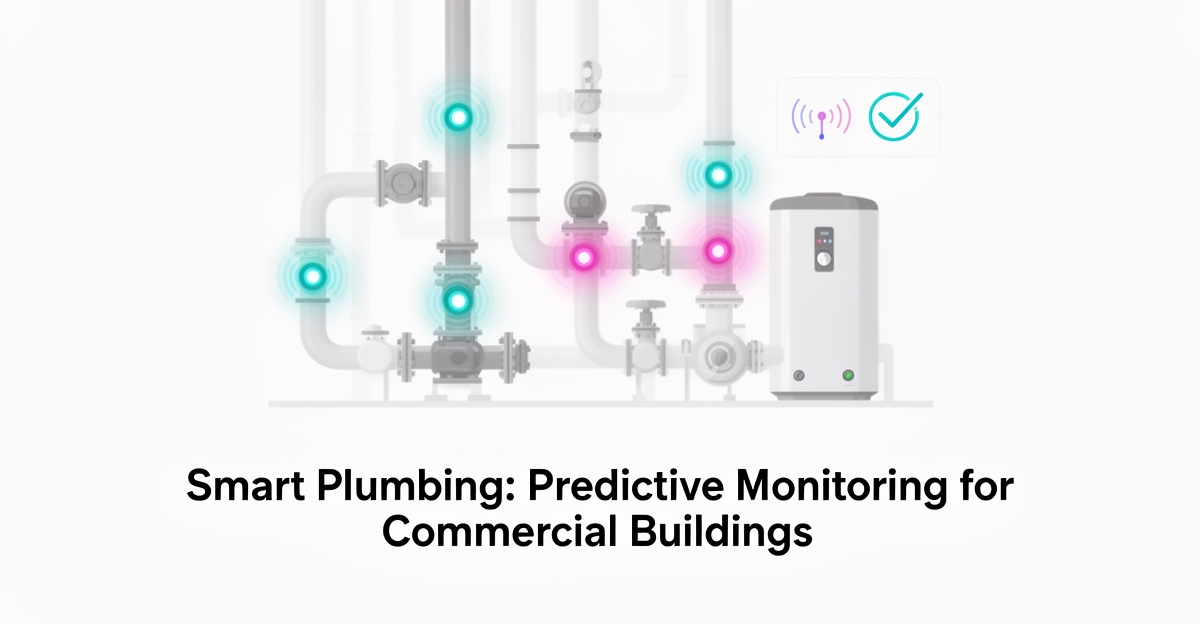
How AI Can Reduce Service Downtime in Commercial Plumbing with Predictive Maintenance Alerts
Key Facts
- Industry research reports AI predictive maintenance can reduce machine downtime by 30-50% according to published analyses
- Reported findings suggest AI predictive maintenance can extend machine life by 20-40% per the same research
- Unplanned downtime has been reported to cost manufacturers roughly $260,000 per hour based on industry data
- Businesses using AI predictive maintenance have reported returns in the range of 8-12x on investment per research analysis
- Continuous monitoring reduces the risk of missed failures between service cycles as noted in implementation guides
- Sensor data collection for vibration, temperature, pressure, and current enables failure prediction per technical specifications
- AIQ Labs builds predictive models that learn from historical repair data to forecast equipment failures as part of its workflow build and AI operating system engagements
Hire a team member that works 24/7 — for less than a part-time wage.
AI receptionists, SDRs, dispatchers and 99+ roles. Trained on your business, fully managed.
Not sure where to start? Ask our AI planner
The Hidden Cost of Unplanned Downtime in Commercial Plumbing
A single plumbing failure in a commercial building can cascade into lost revenue, tenant complaints, and emergency callouts that strain teams and budgets.
For facility managers and plumbing operators, unplanned downtime is not an inconvenience. It is a direct hit to operations, safety, and service level agreements. Reactive repairs force teams into firefighting mode, where every incident drives overtime, expedited parts, and disruptive shutdowns.
According to industry research, unplanned downtime has been reported to cost manufacturers an average of roughly $260,000 per hour. While that figure is manufacturing-specific, the principle translates directly to commercial plumbing, where water service loss, HVAC dependency, and sanitation risk create similar cost exposure across hospitals, schools, and office towers.
Reactive maintenance also accelerates asset wear. Repairs made after failure often damage adjacent components, shorten equipment life, and create repeat callouts. Without early warning, teams replace parts with life left and miss failures that occur between scheduled service cycles.
Predictive maintenance changes the trigger from calendar to condition. AI monitors historical repair data and real-time sensor readings to identify failure patterns before they become critical. This approach is especially useful in facilities where equipment downtime carries high operational risk.
The financial case is clear. Published analysis reports AI predictive maintenance can reduce machine downtime by 30-50%. The same research notes machine life can extend by 20-40% when failures are prevented rather than repaired.
Commercial plumbing systems generate the signals needed for prediction. With the right data pipeline, operators can move from reactive to proactive:
- Sensor data collection for vibration, temperature, pressure, and current on pumps, boilers, and treatment units
- Cleaning and storage of data tied back to specific machines and components
- Machine learning analysis of historical failure patterns to generate risk scores
- Alerts to maintenance teams when failure probability crosses threshold
Continuous monitoring lowers the risk of missed failures compared with interval-based servicing. It also reduces over-servicing, since parts are serviced based on actual wear rather than assumptions.
AIQ Labs applies this predictive analytics approach to commercial plumbing systems, building models that learn from historical repair data to forecast equipment failures before they happen, typically as a fixed-price workflow build or as part of a broader AI operating system. The goal is to prevent costly breakdowns, extend service life, and give facility teams time to schedule work with minimal disruption.
When machines are watched closely enough, warnings become visible. Predictive maintenance closes the gap between early signals and action.
How AI Predictive Alerts Spot Failures Before They Happen
Machines rarely fail without warning. The signals are in vibration, temperature and current readings, they just disappear into noise until a breakdown forces attention.
AI predictive maintenance closes that gap by turning sensor streams into early warnings. The system builds a data pipeline from sensor collection through cleaning and storage to model analysis and maintenance alerts. Real-time readings are combined with historical failure records so patterns that precede a fault become visible before damage occurs.
Sensor data collection is the foundation. Equipment is instrumented with vibration, temperature, pressure and current sensors that capture how assets behave under load. That raw data is cleaned and stored tied to specific machines and components, creating a labeled history that models can learn from. AIQ Labs builds predictive models for commercial plumbing systems using this same approach, using historical repair data to forecast failures in commercial facilities.
Machine learning models identify complex failure signatures. Gradient boosting and LSTM networks are commonly used to analyze time-series sensor data and predict failure probability. Industry research reports AI predictive maintenance can reduce machine downtime by 30-50%, while extending machine life by 20-40%. The models output a risk score rather than a binary alarm, letting teams prioritize interventions by actual condition.
Predictive maintenance differs sharply from traditional preventive approaches:
- Trigger is real-time condition and ML risk score, not calendar or usage interval
- Risk of over-servicing is low because parts are serviced based on actual wear
- Continuous monitoring reduces risk of missed failures between service cycles
- Total cost over asset life is typically lowest with predictive versus preventive
The business impact compounds over time. Research analysis reports businesses using AI predictive maintenance typically see returns in the 8-12x range. With unplanned downtime reported to cost manufacturers roughly $260,000 per hour, avoiding even a few events can fund the program. Extended equipment life of 20-40% also delays capital replacement and improves reliability.
Accuracy improves with feedback. When an alert fires, technicians inspect, confirm or rule out the issue, and log the finding back into the model. That closed loop reduces false positives and builds technician trust. High-quality labeled failure data remains critical, and models require continuous retraining to stay sharp as operating conditions change.
In commercial plumbing, where a single failure can disrupt operations and damage property, predictive alerts shift work from reactive emergency calls to planned interventions. The result is fewer service disruptions, lower maintenance costs, and longer asset life across pumps, valves and water systems.
From Data Pipeline to Dispatch: Building Predictive Maintenance for Plumbing Systems
Plumbing failures rarely announce themselves politely. They show up as burst pumps, seized valves, or boiler lockouts that flood a facility and halt operations. Predictive maintenance closes the gap by watching equipment continuously instead of waiting for the next service interval.
Start with high-cost-of-failure assets, not a plant-wide rollout. Implementation guides recommend beginning with 5-10 of the highest-cost-of-failure machines to prove value quickly. Commercial plumbing systems map cleanly to this approach: booster pumps, heating boilers, cooling towers, and critical control valves are the assets where downtime hurts most.
Sensor coverage creates the data pipeline. For pumps and valves, vibration, temperature, pressure, and current sensors capture the early signatures of wear. Boilers benefit from flue gas temperature, combustion efficiency, and flow rate readings. The data must be cleaned and stored tied back to specific machines and components so patterns are traceable.
Machine learning models then analyze historical patterns and real-time readings to estimate failure probability. Common approaches include gradient boosting and LSTM networks for time-series sensor data. Accuracy depends on quality and quantity of labeled failure data, and models improve only with continuous feedback from inspections.
Alert-to-inspection workflows protect technician trust. When the model predicts a potential failure, maintenance receives a prioritized alert with context, not just a threshold breach. The team inspects, confirms or rules out the issue, and logs the finding back into the model. This feedback loop reduces false positives, the primary cause of system disuse.
The business case is clear. Industry research reports unplanned downtime costs manufacturers an average of roughly $260,000 per hour, and AI predictive maintenance can reduce machine downtime by 30-50%. Equipment life also reportedly extends by 20-40% with condition-based care.
In commercial plumbing, that translates to fewer emergency callouts, longer service life for expensive assets, and predictable maintenance windows. AIQ Labs builds predictive models into commercial plumbing systems as an owned system, the data pipeline, model, and alert workflow, not a subscription widget. This is the kind of high-cost workflow we rebuild under a fixed-price, phased workflow build.
A practical rollout follows the proven steps:
- Identify 5-10 high-cost-of-failure pumps, valves, or boilers
- Install vibration, temperature, pressure, and current sensors
- Clean and store data tied to specific machines and components
- Train models on historical failure data and run real-time scoring
- Route alerts to inspection, log outcomes, and retrain the model
This approach keeps risk low while building trust. Teams see fewer false alarms, service is based on actual wear, and predictive maintenance reduces unplanned downtime where it matters most.
Why Ownership and Integration Matter for SMB Plumbing Operations
A predictive maintenance model is only as valuable as the systems it talks to. An alert that lands in a standalone dashboard nobody checks is just noise, but an alert that automatically creates a work order, assigns a technician, and updates the customer record turns a prediction into prevented downtime.
This is where many off-the-shelf predictive tools fall short for plumbing SMBs. They're built as closed platforms: your equipment data goes in, but it lives on the vendor's servers, in their format, behind their subscription. Cancel the subscription, and you lose the model, the historical data, and every improvement it made along the way. Given that industry research reports businesses using AI predictive maintenance typically see returns in the 8-12x range, that's a significant asset to rent rather than own.
A custom-built, owned system works differently. Because the model is architected around your operation from day one, it integrates directly into the tools your team already uses:
- Dispatch software, failure predictions auto-generate service calls routed by urgency and technician availability
- CRM platforms, customer records update automatically, enabling proactive outreach before equipment fails
- Work order systems, alerts become scheduled jobs with parts lists and service history attached
This integration matters because predictive maintenance only works when insights reach the field fast. Research reports AI predictive maintenance can reduce unplanned downtime by 30-50%, but only when the alert-to-repair pipeline is tight. If a technician has to manually copy an alert from one system into another, that window shrinks.
Ownership also protects the model's improving accuracy. Predictive systems get smarter with every confirmed or ruled-out alert, learning the specific failure patterns of the equipment you service. When you own the code and the data, that intelligence compounds as a business asset rather than evaporating if you switch vendors.
AIQ Labs structures engagements around this ownership principle, with three payment models that fit SMB budgets and risk tolerance. Start Monthly lets a plumbing operation deploy predictive monitoring on a flat monthly plan, build, integrations, and ongoing improvements included, with the freedom to pause anytime. Build in Milestones splits a larger system into phases, so you approve and pay for each stage and keep everything built so far. Own It Outright delivers the complete system with full ownership of code, agents, and data. For operations ready to connect this to everything else, dispatch, CRM, invoicing, an AI operating system ties it into one layer you own outright.
Because unplanned downtime has been reported to cost industrial operations an average of roughly $260,000 per hour, even a single prevented failure at a client facility can justify the investment. The question isn't whether predictive maintenance pays off, it's whether you build that capability as an asset you control, or rent it on someone else's terms.
Still paying for 10+ subscriptions that don’t talk to each other?
We build custom AI systems you own outright. No vendor lock-in. Full control.
Not sure where to start? Ask our AI planner
Frequently Asked Questions
How does AI predictive maintenance actually work for commercial plumbing systems?
What's the real ROI of implementing predictive maintenance for plumbing equipment?
How is predictive maintenance different from the preventive maintenance schedule we already follow?
What plumbing equipment should we monitor first with predictive maintenance?
Won't predictive maintenance alert fatigue make my technicians stop trusting the system?
How does AIQ Labs' approach differ from off-the-shelf predictive maintenance software?
Stop Firefighting, Start Forecasting
Every plumbing failure you've read about in this article shares one trait: it announced itself before it happened. Vibration shifted, temperatures drifted, pressure changed, the signals were there, waiting for someone to watch. AI predictive maintenance closes that gap, and the reported numbers back it up: research reports downtime reductions of 30-50% and returns in the 8-12x range for businesses that make the shift. The path forward is practical, not experimental: start with your five highest-cost-of-failure assets, instrument them with sensors, train models on your failure history, and route alerts into the dispatch and work order systems your team already uses. Just as important, own the system you build, the model, the data, and the improving accuracy should compound as your asset, not evaporate with a subscription. AIQ Labs builds these predictive systems for commercial plumbing operations as owned infrastructure, with payment models, Start Monthly, Build in Milestones, Own It Outright, that match your budget and risk tolerance. Curious whether predictive maintenance makes sense for your operation? Take the two-minute Fit Check at aiqlabs.ai/apply, then book a free 30-minute strategy call, a real working session with an engineer, and an honest answer either way.
Make AI your competitive advantage — not just another tool.
Strategy, implementation and ongoing optimization. One partner, end to end.
Not sure where to start? Ask our AI planner