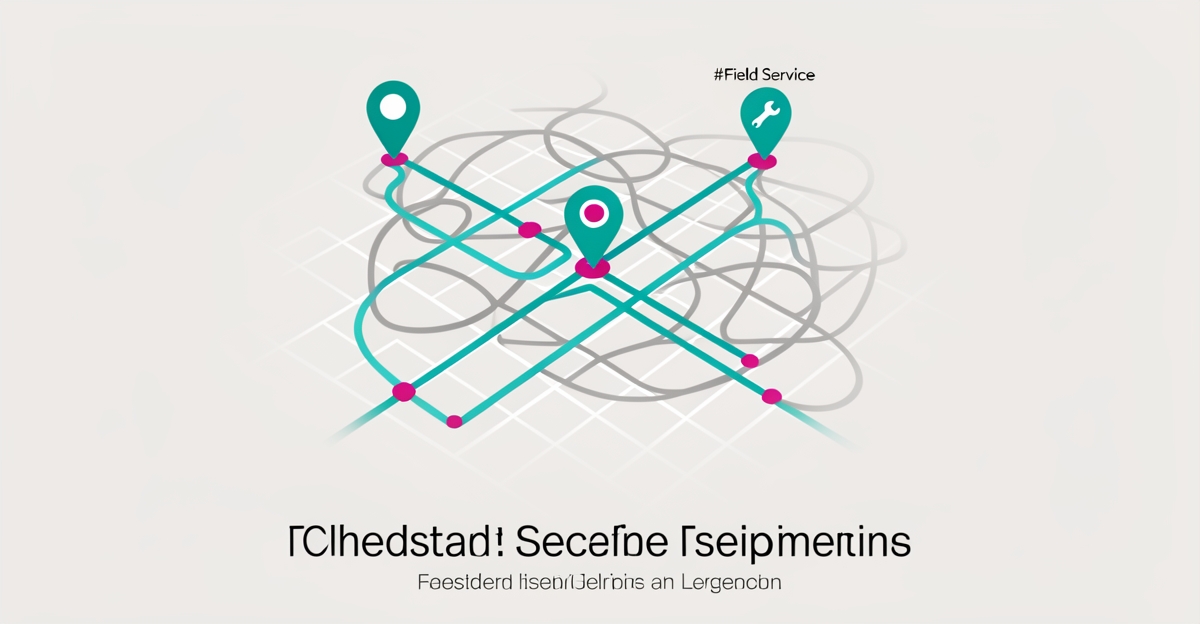
How AI Can Reduce Technician Travel Time and Increase Profit Margins
Key Facts
- Field technicians can spend up to 30-40% of their workday in transit without optimization according to Serfy research
- Ten technicians saving 30 minutes daily creates 25 extra labor hours weekly per Serfy analysis
- Smart route optimization typically achieves a 15-20% reduction in fuel expenses shows Serfy data
- Travel time can be reduced by around 20% with route optimization according to Aiventic research
- First-time fix rates can improve by 15-25% with AI assistance Aiventic reports
- Modern FSM solutions can cut service costs by up to 20% through AI-driven scheduling IFS states
- Teams report 40% lower admin time when using modern FSM platforms per IFS comparison
Hire a team member that works 24/7 — for less than a part-time wage.
AI receptionists, SDRs, dispatchers and 99+ roles. Trained on your business, fully managed.
Not sure where to start? Ask our AI planner
Windshield Time: The Silent Profit Killer in Field Service
Windshield time is the hidden profit drain in field service operations, where technicians can spend up to 30-40% of their workday in transit without optimization. This unproductive travel erodes margins through fuel costs, lost billable hours, and missed service level agreements.
Industry data shows that if a team of 10 technicians each saves just 30 minutes of daily travel time, that creates 25 extra labor hours available weekly for revenue-generating work. Smart route optimization addresses this by using real-time traffic data, technician skill sets, and job priorities to determine the most efficient sequence of service stops, typically reducing travel time by 20-30%.
AI-driven dispatch optimization transforms field service from reactive scheduling to proactive planning, ensuring routes follow logical geographic flow rather than random sequences. This approach not only cuts fuel expenses by 15-20% but also improves first-time fix rates through skills-based dispatching. Companies adopting modern field service management with AI optimization report doubled productivity and 10-20% lower operating costs.
- Reduced travel time through dynamic route adjustments
- Increased job density via geographic clustering
- Improved technician utilization and SLA compliance
AIQ Labs builds these optimization capabilities into custom field service workflow builds, helping businesses convert windshield time into billable hours while keeping human oversight for complex dispatch decisions. The result is a measurable impact on both operational efficiency and profit margins.
How AI Route Optimization and Job Clustering Work
AI route optimization transforms technician scheduling by solving a complex routing problem at scale using real-time traffic, skill matching, job priority, and geocoded proximity. Unlike static planning, AI-powered dispatch systems continuously analyze live conditions to generate the most efficient sequence of stops, ensuring routes follow logical geographic flow rather than random sequences. This eliminates the inefficiencies of manual coordination, where technicians often zigzag across service areas, wasting time and fuel while reducing daily job capacity.
Industry research shows field technicians can spend up to 30-40% of their workday in transit without optimization, a significant drain on profitability. AI-driven systems directly address this windshield time by integrating multiple data points: historical repair patterns, technician certifications, live traffic feeds, and customer access windows. When an emergency call arises, the system instantly identifies the closest qualified technician and pushes a revised route to their mobile device, maintaining schedule integrity without manual intervention.
Skills-based dispatching further enhances efficiency by ensuring the right technician arrives prepared for each job. By filtering assignments based on both location and expertise, AI optimization improves first-time fix rates while minimizing repeat visits, a critical factor in reducing costly callbacks. Geographic clustering of non-emergency jobs amplifies these gains; one commercial plumbing company reduced average daily travel time from 180 to 110 minutes by holding non-urgent jobs for 24 hours to group them by neighborhood, creating denser, more logical routes.
- Dynamic rerouting adjusts for traffic delays, weather changes, or last-minute cancellations in real time
- Skills-based matching increases first-time fix rates by assigning only qualified technicians to complex jobs
- Geographic clustering of non-emergency work creates higher job density per route, reducing deadhead miles
For field service businesses, these mechanics translate directly to improved technician utilization and lower operating costs. When route optimization is implemented as part of an AI workflow build, the system continuously learns from completed jobs, refining duration predictions, parts requirements, and ideal sequencing to drive ongoing efficiency gains. The result is not just shorter drives, but more billable hours per technician, reduced fuel consumption, and higher customer satisfaction through reliable, on-time arrivals.
The Financial Case: From Fuel Savings to Margin Gains
The financial impact of reducing technician travel time extends far beyond fuel savings, it transforms operational efficiency into measurable profit gains. Companies implementing AI-driven route optimization typically report travel time reductions of 20-30%, directly cutting fuel expenses by 15-20% and unlocking significant labor capacity. For example, if a team of 10 technicians each saves 30 minutes of travel daily, that creates 25 extra hours of billable labor every week, time that can be redirected toward additional service jobs or skill development. These efficiencies compound when combined with geographic job clustering, which one commercial plumbing company used to reduce daily travel time from 180 to 110 minutes, demonstrating how proximity-based scheduling minimizes windshield time and maximizes technician utilization.
Beyond travel savings, AI-powered field service management delivers broader cost reductions across the service lifecycle. Modern FSM platforms using AI-driven scheduling can cut service costs by up to 20% while reducing administrative time by 40%, freeing dispatchers and coordinators from manual routing tasks. First-time fix rates also improve by 15-25% when AI matches jobs to technician skills and location, decreasing costly repeat visits and parts returns. These improvements directly impact margins: organizations report doubled productivity and 10-20% lower operating costs when integrating AI optimization into field operations, turning previously idle transit time into revenue-generating activity.
The distinction between basic and intelligent automation clarifies why AI investment yields superior returns. Rule-based automation typically reduces operational costs by 20-30%, but intelligent AI systems, those incorporating real-time traffic, skill-based dispatching, and predictive rescheduling, can achieve substantially larger reductions. This leap comes from adaptive learning: AI continuously refines routes using historical data, weather patterns, and emergency job priorities, whereas static rules cannot respond to dynamic field conditions. For SMBs in trades and field services, this means AI doesn't just optimize today's schedule, it builds resilience against disruptions while systematically lowering cost per job. An AI Dispatcher from AIQ Labs' AI Employees lineup embodies this intelligence, automating complex routing decisions that once required constant human oversight, at roughly 80% less cost than a human hire, so every mile driven contributes directly to profitable service delivery.
Implementation Roadmap: Deploying AI Dispatch in Your Business
Deploying AI dispatch doesn't require ripping out your existing systems, it requires a disciplined, phased rollout that starts with knowing your numbers. The first step is establishing a baseline: track your current average travel time per job, monthly fuel spend, and jobs completed per technician per day. Without these figures, you cannot measure the ROI of optimization, and given that unoptimized technicians can spend up to 30-40% of their workday in transit, the baseline often reveals more waste than owners expect.
Next comes data hygiene. Smart routing is only as good as the addresses feeding it, if your records say "Main Street" with no zip code or building number, the algorithm will struggle. Geocode every customer address in your FSM or CRM and standardize historical job records so past repairs connect to parts used, time spent, and resolution. As field service research puts it, without accurate and comprehensive data, AI algorithms can't function effectively.
Then define your constraints explicitly:
- Technician working hours, break times, and current skill certifications
- Vehicle capacity and specialized equipment availability
- Customer-specific access windows and contract priority levels
- Maximum travel time and safety limits per assignment
With rules in place, pilot the system with a small team, a handful of technicians and one dispatcher, rather than the whole fleet. Track on-time completions, repeat visits, travel time, and parts accuracy, then use structured feedback to refine prediction logic before scaling. This mirrors the approach of one commercial plumbing company that held non-emergency jobs for 24 hours to cluster them geographically, cutting average daily travel from 180 minutes to 110 minutes.
Keep humans in the loop throughout. Require dispatcher approval for assignments that risk violating certifications, exceed travel limits, or rely on low-confidence predictions, and train staff to review, override, and flag systematic errors. AI doesn't always get it right, and the pilot phase exists precisely to catch those misses safely.
Finally, iterate. Review Planned vs. Actual reports weekly, if a route consistently runs long, investigate whether it's a traffic bottleneck or an underestimated job duration, and tune your parameters accordingly. This cycle of monitoring and retraining is what separates teams that see sustained gains from those that stall after go-live.
The payoff justifies the discipline: teams report 40% lower admin time and 10-20% lower operating costs with modern FSM optimization, and basic automation alone typically reduces operational costs by 20-30%. For businesses that want the rollout handled end to end, AIQ Labs rebuilds dispatch as a fixed-price, phased workflow build that integrates with your existing CRM, scheduling, and FSM tools, and because clients own the system outright, there's no vendor lock-in as your routing evolves. If you want to map where this fits in your operation, start with the two-minute Fit Check at aiqlabs.ai/apply, then book a free 30-minute strategy call at aiqlabs.ai/book, a working session with an AI engineer, not a sales pitch.
Overcoming Adoption Barriers: Data, Trust, and Change Management
Even the most advanced AI route optimization stumbles when data quality is poor. As Aiventic notes, without accurate and comprehensive data, AI algorithms can't function effectively, missing zip codes or building numbers severely degrade routing accuracy. Technician resistance also runs deep: many perceive GPS tracking as micromanagement, fearing constant surveillance rather than recognizing it as a tool to reduce frustrating windshield time and ensure they arrive prepared with the right parts. Prediction errors further complicate adoption; even sophisticated models can misestimate job duration or parts needs, so dispatcher oversight is needed to catch risky assignments before they lead to missed SLAs or repeat visits. Integration complexity adds another layer, as connecting AI routing to legacy CRM, accounting, or dispatch systems demands careful planning to avoid data silos and workflow disruptions. Success hinges on transparency and human-in-the-loop design: involving technicians early, explaining how optimization reduces their daily travel burden, and requiring dispatcher approval for high-risk changes builds trust and accountability. When teams see AI as a collaborator that handles repetitive sequencing while humans manage exceptions, adoption shifts from resistance to ownership. To navigate these barriers with a partner who prioritizes data integrity, change management, and practical implementation, start the two-minute Fit Check at aiqlabs.ai/apply, then schedule your free 30-minute strategy call at aiqlabs.ai/book.
Still paying for 10+ subscriptions that don’t talk to each other?
We build custom AI systems you own outright. No vendor lock-in. Full control.
Not sure where to start? Ask our AI planner
Frequently Asked Questions
How much time do field technicians typically spend in transit without optimization?
What financial impact does reducing technician travel time have on a team of 10 technicians saving 30 minutes daily?
How much can AI route optimization reduce fuel expenses and operating costs?
What is geographic job clustering and how does it improve technician efficiency?
Why is data quality critical for AI route optimization to work effectively?
How does AI-powered dispatch improve first-time fix rates and reduce repeat visits?
Turning Windshield Time Into Profit: How Smarter Routes Build Stronger Margins
The journey from reactive dispatching to AI-powered optimization isn't just about saving fuel or shaving minutes off a route, it's about reclaiming time that directly fuels growth. By reducing windshield time through intelligent routing, skills-based dispatching, and geographic clustering, field service teams unlock billable hours, improve first-time fix rates, and lower operating costs without adding headcount. The math is clear: saving just 30 minutes per technician daily creates 25 extra labor hours weekly for a team of ten, time that can be reinvested into more jobs, training, or proactive maintenance. When AI continuously learns from real-world data, these gains compound, turning transit inefficiency into a scalable advantage. If you're ready to see where your operation stands and what's possible, start with the two-minute Fit Check at aiqlabs.ai/apply, then book a free 30-minute strategy call to map your highest-impact opportunity, no pitch, just clarity.
Make AI your competitive advantage — not just another tool.
Strategy, implementation and ongoing optimization. One partner, end to end.
Not sure where to start? Ask our AI planner