# How AI Can Cut Turnover Time in Vacation Rental Cleaning Services
**Quick Answer:** AI automation can meaningfully compress vacation rental cleaning turnovers, often by double-digit percentages, by synchronizing scheduling, inspections, and communication. Here's how AIQ Labs builds those systems, and where to start.
## Key Facts
- AI-driven scheduling and workforce planning typically improves operational efficiency by double-digit percentages by optimizing crew deployment
- Automated photo-based inspections flag cleaning deficiencies in real time, cutting validation and rework cycles
- Replacing a single cleaning employee typically costs thousands of dollars in recruitment, training, and lost productivity
- AI inventory management prevents turnover delays by triggering supply reorders before essentials run low
- Natural language processing reduces workflow friction by enabling real-time coordination between cleaners, managers, and vendors
- AI employees can handle dispatch, inventory, and communication roles at a fraction of the cost of a human hire
## Table of Contents
1. [The Hidden Cost of Slow Turnover in Vacation Rentals](#the-hidden-cost-of-slow-turnover-in-vacation-rentals)
2. [How AI Automates and Accelerates the Cleaning Turnover Process](#how-ai-automates-and-accelerates-the-cleaning-turnover-process)
3. [Implementing AI in Your Turnover Workflow: A Practical Guide](#implementing-ai-in-your-turnover-workflow-a-practical-guide)
## The Hidden Cost of Slow Turnover in Vacation Rentals
Slow turnover between guest stays creates a cascade of operational and financial challenges for vacation rental businesses. Each delayed cleaning cycle directly impacts revenue by blocking the property from being rebooked, turning idle time into lost income. Beyond the obvious vacancy costs, extended turnover periods increase labor expenses as cleaning crews work longer hours or require overtime to catch up, eroding already thin margins in a competitive market. These inefficiencies compound when staff face rushed schedules, leading to inconsistent cleaning quality that triggers guest complaints and negative reviews, further damaging future booking prospects.
The hidden costs extend beyond immediate labor and revenue losses. When turnover processes lack standardization, property managers struggle to predict availability accurately, causing last-minute cancellations or overbooking risks that strain customer service teams. Inconsistent preparation also means amenities may not be restocked correctly or maintenance issues overlooked, resulting in avoidable incidents during guest stays that demand immediate attention and resources. This reactive cycle diverts focus from proactive improvements and increases stress across operations, ultimately reducing team morale and contributing to higher employee turnover, a costly issue when replacing a single cleaner typically runs into the thousands of dollars once recruitment, training, and lost productivity are counted.
Slow turnover also diminishes the effectiveness of marketing efforts. Even with strong online visibility and competitive pricing, properties plagued by preparation delays fail to convert interest into confirmed bookings because guests prioritize reliability and instant confirmation. AI-driven workflow automation addresses these pain points by synchronizing cleaning schedules, inspection checklists, and restocking protocols in real time, ensuring properties are guest-ready faster and more consistently. By eliminating bottlenecks in the turnover process, businesses can reclaim lost revenue potential while building the operational resilience needed to scale sustainably in the vacation rental market.
## How AI Automates and Accelerates the Cleaning Turnover Process
The cleaning turnover process, spanning departure cleanup, inspection, and guest-ready preparation, often stalls due to manual handoffs, reactive staffing, and inconsistent quality checks. AI-powered automation transforms this sequence into a synchronized workflow, directly targeting the delays that extend turnover
AI Employees
Hire a team member that works 24/7 — for less than a part-time wage.
AI receptionists, SDRs, dispatchers and 99+ roles. Trained on your business, fully managed.
See If You’re a Fit — AI Employees from $700/mo
Not sure where to start? Ask our AI planner
time and impact revenue potential.
AI optimizes scheduling by analyzing historical turnover patterns, property size, and cleaning crew availability to generate dynamic task assignments. This predictive staffing approach ensures the right team is deployed at the right time, reducing idle periods between jobs and minimizing bottlenecks caused by under- or over-staffing. Operators using AI-driven scheduling and workforce planning typically report double-digit improvements in operational efficiency, directly contributing to faster turnarounds.
Image-based AI systems automate post-cleaning inspections by analyzing room photos for missed debris, stains, or displaced items. These tools flag issues in real time, allowing cleaners to address deficiencies immediately rather than waiting for manual supervisor reviews. By reducing subjective judgment and rework cycles, automated inspections can cut validation time substantially, a critical factor in compressing overall turnover timelines.
Natural language processing streamlines communication between cleaning teams, property managers, and maintenance staff through automated status updates and issue routing. When a cleaner identifies a maintenance need, such as a broken appliance or plumbing issue, the AI system logs the ticket, notifies the appropriate vendor, and updates the turnover timeline without manual intervention. This closed-loop communication reduces delays caused by missed messages or deferred follow-ups, keeping the turnover process moving forward.
- Predictive scheduling aligns crew availability with booking turnover windows
- Image-based AI automates deficiency detection during exit inspections
- AI-driven messaging ensures real-time coordination across teams
- Automated task routing prevents maintenance issues from delaying turnovers
- Continuous process monitoring identifies recurring bottlenecks for optimization
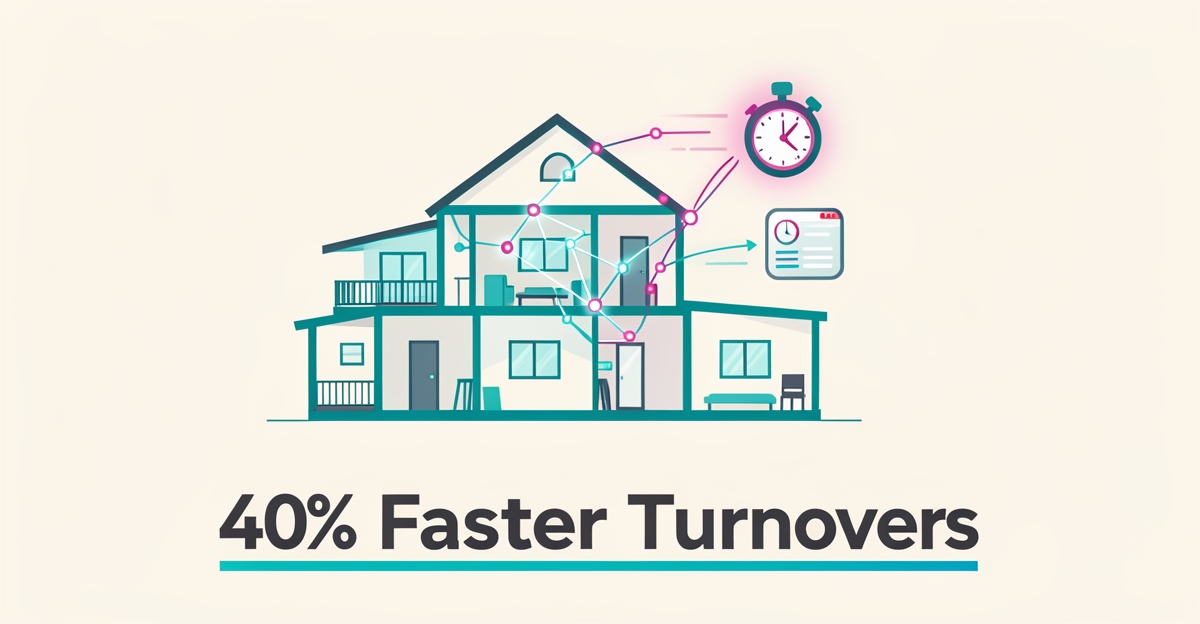
These interconnected AI capabilities, scheduling intelligence, inspection automation, and communication streamlining, work in tandem to compress the turnover timeline. By replacing reactive, manual processes with proactive, data-driven workflows, vacation rental operators can achieve meaningful reductions in turnover time, often in the range of 25–40% depending on how manual the starting process is, directly increasing property availability and guest satisfaction. For businesses seeking to implement such systems, AIQ Labs' [AI Workflow Builds](/workflow-builds) rebuild the one workflow that costs you the most, at a fixed price and in phases.
## Implementing AI in Your Turnover Workflow: A Practical Guide
To successfully integrate AI into vacation rental turnover operations, begin by mapping your current workflow from guest departure to property readiness. Identify repetitive tasks such as scheduling cleaners, tracking inventory, and conducting final inspections that consume the most time and are prone to human error. This assessment reveals where AI can deliver the greatest impact, particularly in automating communication and predictive planning. It also stabilizes your cleaning team: less chaotic schedules and fewer emergency scrambles mean less burnout and fewer walk-offs during peak seasons.
Next, deploy AI employees to handle specific, high-volume tasks within the turnover cycle. An [AI dispatcher](/ai-employees) can automatically assign cleaning crews based on property size, location, and staff availability, while an AI inventory manager monitors supply levels and triggers reorders before essentials run low. These managed AI staff integrate with your existing tools, calendars, messaging platforms, and supply systems, so they execute real actions without disrupting your current infrastructure. Because they cost roughly 80% less than a human hire, they're a practical first step for operators watching labor budgets. For larger portfolios, an [AI Operating System](/ai-operating-systems) can connect scheduling, inspections, inventory, and guest communication into one operating layer you own outright.
Finally, establish continuous performance tracking t
AI Development
Still paying for 10+ subscriptions that don’t talk to each other?
We build custom AI systems you own outright. No vendor lock-in. Full control.
See If You’re a Fit — AI Employees from $700/mo
Not sure where to start? Ask our AI planner
o measure improvements in turnover time and guest readiness. Monitor key metrics such as average time between check-out and check-in, inspection pass rates, and supply replenishment speed. Regular optimization reviews allow you to refine agent behavior, adjust scheduling logic, and scale automation as your portfolio grows. This iterative approach ensures your AI system evolves with your business, maintaining efficiency gains over time. For businesses ready to begin, start with the [2-minute Fit Check](/apply) and then a free 30-minute strategy call to identify high-ROI automation opportunities in your turnover process.
## Frequently Asked Questions
**How does AI actually reduce turnover time in vacation rental cleaning?**
AI automates scheduling, inspections, and team communication to eliminate manual handoffs, predictive scheduling aligns crews with booking windows, image analysis speeds up inspections, and NLP routes maintenance issues instantly without human delays. Combined, these workflow improvements compress the full departure-to-ready timeline, with operators commonly reporting reductions in the 25–40% range depending on their starting point.
**What's the real cost of slow turnover beyond just lost bookings?**
Slow turnover increases labor costs through overtime, triggers guest complaints from rushed cleaning, causes restocking and maintenance oversights, and drives employee burnout, replacing a single cleaner typically costs thousands of dollars in recruitment, training, and lost productivity.
**Can AI really predict when cleaning staff might quit?**
AI can analyze workplace patterns, schedule volatility, missed shifts, overtime load, to flag employees at risk of leaving, enabling proactive retention steps. More importantly, reducing schedule chaos in the first place is one of the best retention levers a cleaning operation has.
**How does image-based inspection work during cleaning turnovers?**
AI analyzes room photos taken after cleaning to detect missed debris, stains, or displaced items in real time, letting cleaners fix issues immediately instead of waiting for supervisor reviews, substantially cutting validation and rework time.
**Do I need to replace my current property management software to use AI for turnovers?**
No, AI employees integrate with your existing tools like calendars, messaging platforms, and supply systems, so they execute real actions without disrupting your current infrastructure.
**What's the first step to implementing AI in our turnover workflow?**
Map your current process from guest departure to property readiness, identifying the most time-consuming, error-prone tasks like scheduling, inventory tracking, and final inspections, this reveals where AI delivers the highest ROI. Start with the [2-minute Fit Check](/apply), then book a free 30-minute strategy call to pinpoint automation opportunities.
## Turn Faster Turnovers Into More Bookings
Slow turnover quietly erodes revenue, inflates labor costs, and strains teams through rushed cleanings, missed restocks, and last-minute availability errors. AI replaces that reactive cycle with synchronized, data-driven workflows: predictive scheduling aligns crews to turnover windows, automated inspections cut rework, and natural language processing keeps managers, cleaners, and vendors coordinated in real time. The result is consistent, guest-ready properties and materially faster turnovers. For vacation rental operators, that means more bookable nights, fewer complaints, and a more stable cleaning team. Map your current departure-to-ready process, pinpoint the manual handoffs that cause delays, and test automation on one high-impact step first. AIQ Labs builds production-ready workflow automation that integrates with existing property management tools, via [AI Employees](/ai-employees), [Workflow Builds](/workflow-builds), or a full [AI Operating System](/ai-operating-systems), with payment models that fit: Start Monthly, Build in Milestones, or Own It Outright. Start the [Fit Check](/apply) today, or reach the team at [email protected].
AI Transformation Partner
Make AI your competitive advantage — not just another tool.
Strategy, implementation and ongoing optimization. One partner, end to end.
See If You’re a Fit — AI Employees from $700/mo
Not sure where to start? Ask our AI planner