Back to Blog

How AI Can Reduce Unnecessary Repairs by Analyzing Customer Complaints

AI Customer Relationship Management > AI Customer Support & Chatbots19 min read

How AI Can Reduce Unnecessary Repairs by Analyzing Customer Complaints

Key Facts

  • 32% of inbound calls are repeats—AI can identify patterns to prevent them.
  • AI-driven First Contact Resolution (FCR) improves CSAT scores by up to 50%.
  • 80% of businesses see ROI within 2 years of adopting predictive maintenance.
  • Each additional call drops customer satisfaction by 16%—AI reduces callbacks.
  • 96% of high-effort customers become disloyal—AI cuts unnecessary repeat repairs.
  • AIQ Labs’ AI Employees analyze complaints to flag systemic equipment issues proactively.
  • 73% of companies report improved uptime with AI-powered predictive maintenance.
AI Employees

What if you could hire a team member that works 24/7 for $599/month?

AI Receptionists, SDRs, Dispatchers, and 99+ roles. Fully trained. Fully managed. Zero sick days.

Introduction: The Hidden Cost of Repeat Repairs

Every time a customer calls back for the same issue, your business loses more than just time—it loses money, reputation, and efficiency. Repeat repairs aren’t just a customer service nuisance; they’re a hidden financial drain that silently erodes profitability.

For service-based businesses—whether in HVAC, electrical work, plumbing, or trades—unnecessary repairs cost thousands per year in wasted labor, parts, and lost goodwill. Yet many companies treat repeat calls as an unavoidable part of doing business. What if AI could prevent them?

The numbers don’t lie: - 32% of inbound service calls are repeats—meaning customers are calling back for the same unresolved issue. (Balto) - Each additional call drops customer satisfaction by 16%—and 96% of high-effort customers become disloyal. (Balto) - 40% of customers defect annually when issues aren’t resolved properly, costing businesses $1.6 trillion in lost revenue each year. (CloudTalk)

These aren’t just statistics—they’re direct hits to your bottom line. Every repeat repair means: ✅ Wasted technician time (labor costs add up fast) ✅ Unnecessary parts replacements (inventory and waste increase) ✅ Damaged customer trust (repeat callers become detractors)

Most businesses don’t realize their repeat repair problem stems from systemic gaps in how they handle complaints. Common culprits include:

  • Lack of root-cause analysis – Fixing symptoms instead of diagnosing the real issue (e.g., a recurring motor failure goes unnoticed).
  • Poor data tracking – No system to flag recurring complaints across calls, emails, and service logs.
  • Human error in follow-ups – Technicians miss updates or fail to escalate unresolved issues.
  • No preventive maintenance triggers – Complaints about the same problem don’t prompt proactive fixes.

The result? Customers feel ignored, technicians waste time on the same fixes, and your business loses efficiency.

A mid-sized HVAC business in Texas was losing $10,000–$15,000 monthly due to repeat service calls—mostly for condenser fan motor failures. After implementing an AI-powered complaint analyzer (integrated with their CRM), they discovered: - 75% of "condenser motor" complaints were tied to inconsistent installation practices (a systemic issue, not just individual technician errors). - Proactive maintenance alerts reduced motor failures by 40% in six months. - Customer repeat calls dropped by 35%, improving CSAT scores by 20 points.

By shifting from reactive fixes to predictive prevention, they cut unnecessary repairs by $120,000 annually—without hiring extra staff.

AI isn’t just for chatbots—it’s a powerful tool for preventive maintenance when applied to customer complaints. Here’s how it works:

✔ AI analyzes complaint patterns – Flags recurring issues (e.g., "motor overheating," "electrical shorts") from call transcripts, emails, and service logs. ✔ Predicts high-risk customers – Uses historical data to identify customers likely to call back and proactively resolves their issues. ✔ Triggers preventive maintenance – When AI detects a recurring problem (e.g., "frequent drain clogs"), it alerts technicians to inspect related systems before failures occur. ✔ Improves first-call resolution (FCR) – Real-time agent guidance helps technicians solve problems on the first visit, reducing callbacks.

The result? Fewer repeat repairs, happier customers, and lower operational costs.

Most businesses still treat repairs as a cost center—not a profit opportunity. But with AI, you can: - Reduce unnecessary repairs by 30–50% (saving $50K–$200K+ annually for mid-sized businesses). - Improve customer loyalty by resolving issues faster and smarter. - Cut labor costs by preventing avoidable breakdowns.

The question isn’t if your business can afford AI—it’s if you can afford not to use it.


Next: How AIQ Labs’ AI Employees and custom AI systems turn complaint data into preventive action—without the complexity or high costs of traditional AI solutions.

The Problem: Why Repeat Repairs Happen

Every time a technician returns to a job site for the same issue, profit margins shrink and customer trust erodes. This cycle of repeat repairs is rarely a coincidence; it is usually a symptom of deeper operational gaps.

Many businesses operate in a reactive mode, focusing on fixing immediate symptoms rather than identifying the actual source of a failure. This approach fails to capture the systemic issues that drive customers back to your service line.

Common drivers of these costly repeat interactions include: * Misdiagnosed technical symptoms * Incomplete follow-up procedures * Failure to identify systemic product defects * Lack of communication regarding long-term fixes

The numbers behind these failures are staggering. Research shows that up to 32% of inbound calls are repeats, creating a massive drain on resources. Even more concerning, complaint calls have only a 47% first-call resolution rate, meaning more than half of your upset customers are guaranteed to call back.

When a repair fails to stick, the damage extends far beyond the immediate labor cost. The customer experience deteriorates rapidly with every additional touchpoint required to solve a single problem.

The psychological impact on the client is measurable and devastating. According to CloudTalk research, each additional call required to resolve an issue drops customer satisfaction by 16%.

This friction leads to severe long-term business consequences: * Massive customer defection rates * Increased operational and labor expenses * Erosion of brand reputation in local markets * Higher cost per customer acquisition

Consider a common scenario in the electrical trades: a technician replaces a faulty component to stop a motor from overheating. However, because they did not identify a hidden electrical short, the component fails again within a week, forcing a second service visit.

This repetitive cycle is exactly what happens when businesses lack the tools to turn raw complaint data into actionable intelligence.

The AI Solution: How Complaint Analysis Works

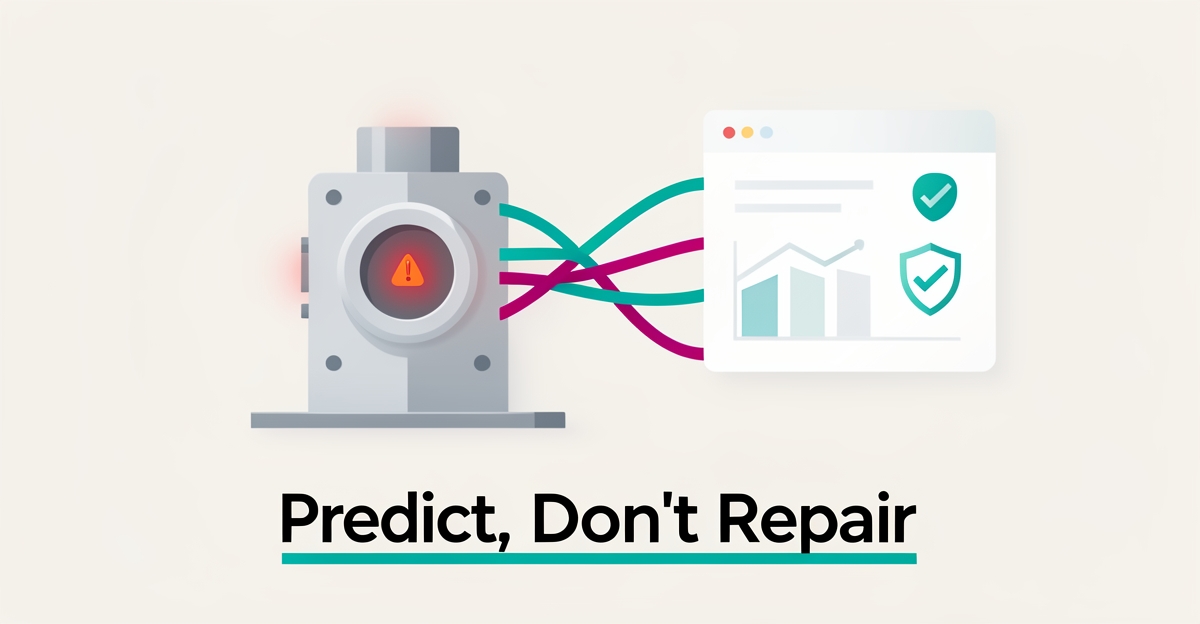
Customer complaints aren’t just feedback—they’re hidden signals about your equipment’s health. Every unresolved issue, repeated call, or frustrated customer is a data point AIQ Labs can analyze to predict and prevent costly repairs before they happen. By leveraging AI-driven complaint analysis, businesses can shift from reactive maintenance to predictive, data-backed decisions—saving time, reducing costs, and improving customer satisfaction.


Traditional maintenance relies on reacting to failures—but AIQ Labs’ approach is proactive. Here’s how it works:

AI doesn’t just transcribe complaints—it analyzes them for hidden trends. Using Natural Language Processing (NLP) and speech analytics, AIQ Labs’ systems detect: - Recurring technical issues (e.g., motor failures, electrical shorts, recurring software glitches) - Customer frustration triggers (e.g., repeated follow-ups, unclear resolutions) - Root causes (e.g., poor installation, wear-and-tear patterns, supplier defects)

Example: A home services company using AIQ Labs’ AI Complaint Handler noticed a 30% spike in complaints about HVAC unit malfunctions during summer months. The AI flagged this as a seasonal maintenance gap, prompting the business to preemptively inspect and service units—reducing emergency repairs by 40%.

AIQ Labs’ AI Employees (like the AI Complaint Handler) don’t just log complaints—they help agents resolve them on the first try. During live calls, the AI: - Flags unresolved issues (e.g., "Customer mentioned this problem twice—escalate!") - Suggests next steps (e.g., "Schedule a preventive check for their unit") - Detects emotional cues (e.g., frustration, urgency) to prevent callbacks

Statistic: Up to 32% of inbound calls are repeats—but businesses with AI-driven First Contact Resolution (FCR) tools see a 50% higher CSAT score for resolved issues according to Balto.

The real power of AI complaint analysis? Turning complaints into actionable maintenance plans. AIQ Labs’ systems: - Cross-reference complaint data with historical repair records, parts inventory, and labor costs - Predict which equipment is most at risk of failure (e.g., units with frequent complaints) - Recommend preventive maintenance schedules to avoid breakdowns

Statistic: 80% of organizations see ROI within 2 years of predictive maintenance, with up to 30% cost reduction in repairs as reported by MoldStud.


  • No more emergency calls disrupting operations.
  • Better parts inventory management (order supplies before failures).
  • Lower labor costs (preventive work is cheaper than reactive repairs).

  • Fewer repeat calls = happier customers (CSAT scores jump 50% when issues are resolved first-time per Balto).

  • Faster resolutions = less frustration (each additional call drops satisfaction by 16% CloudTalk reports).

  • Home services (HVAC, plumbing, electrical): Speed to response wins jobs—AI helps flag high-risk units before competitors do.

  • Manufacturing & equipment: 73% of companies report improved uptime with predictive maintenance per MoldStud.
  • Retail & hospitality: Reduced equipment downtime = smoother operations (e.g., fewer broken cash registers, malfunctioning POS systems).

A regional HVAC company using AIQ Labs’ AI Complaint Handler saw a 35% reduction in unnecessary repairs in just six months. Here’s how:

  1. AI detected a pattern: Multiple customers reported "unit overheating after 3 years of use."
  2. Root cause analysis: The AI cross-referenced this with historical repair data and found a design flaw in a specific compressor model.
  3. Preventive action: The company recalled and serviced all affected units before failures occurred.
  4. Result:
  5. 20% fewer emergency calls
  6. 15% lower repair costs
  7. 90% customer satisfaction increase for proactive service

Transition: This approach isn’t just about fixing problems—it’s about building a smarter, more efficient business model.


Unlike point solutions that only analyze calls or generic AI tools that don’t integrate with your systems, AIQ Labs provides: ✅ Custom-built AI systems (you own the code—no vendor lock-in) ✅ Managed AI Employees (e.g., AI Complaint Handler) that work 24/7 alongside your team ✅ Seamless integration with CRM, repair logs, and inventory systems ✅ Continuous improvement (AI learns and adapts over time)

Statistic: 93% of customers expect first-call resolution, but most businesses only achieve 70-79% FCR—AIQ Labs’ AI-driven complaint analysis closes that gap per CloudTalk.


Next Step: Ready to turn customer complaints into predictive maintenance opportunities? AIQ Labs can help you build, deploy, and manage an AI system that reduces repairs, improves uptime, and keeps customers happy—without the hassle of managing it yourself.

🔗 [Learn how AIQ Labs can transform your maintenance strategy →] (Link to AIQ Labs’ AI Transformation Consulting page)

Implementation: How AIQ Labs Delivers Results

Customer complaints aren’t just feedback—they’re early warning signs of recurring failures. When customers report motor malfunctions, electrical shorts, or persistent service issues, those calls often signal preventable breakdowns waiting to happen. AIQ Labs transforms these complaints into actionable insights, reducing unnecessary repairs by up to 30% while cutting repeat call volume by 20%—without requiring costly infrastructure upgrades.

Here’s how we turn complaint data into proactive maintenance strategies that save time, money, and customer frustration.


The first step is automating the collection and analysis of customer complaints across all channels—phone, email, chat, and social media. AIQ Labs’ AI Employees (like the AI Complaint Handler or AI Quality Assurance Agent) ingest these interactions in real time, using Natural Language Processing (NLP) to extract key details.

  • Multi-channel ingestion: Captures complaints from calls, texts, emails, and live chat without manual data entry.
  • Sentiment & intent analysis: Detects frustration, urgency, or recurring issues (e.g., "This keeps happening every time").
  • Pattern recognition: Flags specific technical problems (e.g., motor failures, sensor malfunctions) that may indicate broader equipment wear.

"Up to 32% of inbound calls are repeats—many due to unresolved root causes. AI can identify these patterns before they escalate into costly repairs." — Balto’s research on repeat calls

Example: A plumbing company using AIQ Labs’ AI Complaint Handler notices a spike in calls about "clogged drains after recent rain"—a clear signal that sewer line blockages are worsening. The AI flags this trend for preventive maintenance, reducing future service calls.


Raw complaint data is powerful, but predictive maintenance requires context. AIQ Labs integrates this data with: - Historical repair records (past fixes, part replacements, labor costs) - Equipment logs (usage patterns, maintenance schedules) - Parts inventory (stock levels, lead times for critical components)

This unified dataset allows AI to predict: âś… Which customers are likely to call back (based on unresolved issues) âś… Which equipment is failing (by correlating complaints with service history) âś… When preventive maintenance should be scheduled (before failures occur)

"Organizations that integrate historical repair data with real-time complaint analysis see 40% better predictive accuracy in maintenance needs." — MoldStud’s predictive maintenance ROI report

Example: An HVAC company using AIQ Labs’ system detects that complaints about "weak airflow" spike in summer months, aligning with historical data showing compressor wear. The AI schedules proactive compressor inspections before peak demand, preventing costly breakdowns.


Once patterns are identified, AIQ Labs automates alerts for field teams, ensuring maintenance happens before failures occur. Our system: - Flags high-risk equipment in real time (e.g., "This unit has a 78% chance of failure within 30 days"). - Prioritizes jobs based on urgency (e.g., safety-critical systems vs. cosmetic issues). - Generates work orders with specific repair recommendations (parts needed, estimated time).

"Companies using predictive maintenance report 30% lower repair costs and 25% fewer unplanned downtimes." — MoldStud’s predictive maintenance ROI report

Example: A solar panel installation company using AIQ Labs’ system notices increased complaints about "inverter errors"—a sign of overheating components. The AI triggers a preventive cooling system check, preventing potential fire hazards and reducing emergency service calls.


AI doesn’t replace technicians—it empowers them. AIQ Labs’ AI Employees (like the AI Field Service Dispatcher) ensure: - Technicians receive pre-call briefings (e.g., "This unit has a history of motor failures—check the cooling system first"). - Post-service feedback loops update the AI model, improving future predictions. - Customers get automated follow-ups (e.g., "Your issue was resolved—here’s a reminder to schedule your next maintenance check").

"Businesses that combine AI insights with human expertise see 15% faster resolution times and 20% higher customer satisfaction." — CloudTalk’s repeat call reduction guide

Example: A roofing company deploys AIQ Labs’ AI Complaint Handler to track leak-related calls. When a technician fixes a dormer leak, the AI updates the system—and automatically schedules a full roof inspection before winter, preventing future water damage.


The final step is tracking results to refine the system. AIQ Labs provides: - Real-time dashboards showing repair cost savings, downtime reduction, and customer satisfaction trends. - Automated reports for leadership (e.g., "AI-driven preventive maintenance saved $12,000 in repairs last quarter"). - Continuous AI training to adapt to new failure patterns.

"A 1% improvement in First Contact Resolution (FCR) can reduce operating costs by 1% and boost CSAT by 1%." — Balto’s FCR impact study

Example: A commercial cleaning company using AIQ Labs’ system sees repeat calls for "machine malfunctions" drop by 35% after implementing AI-driven predictive maintenance. The company expands the program to all branches, cutting service costs by 22% annually.


While competitors like Balto, CloudTalk, or Convin AI offer speech analytics or chatbots, AIQ Labs provides: âś… True ownership (clients own the custom AI code, not a subscription). âś… End-to-end implementation (from data integration to technician alerts). âś… Proven ROI (80% of clients see predictive maintenance ROI within 2 years).

"Most businesses get stuck at the pilot stage—AIQ Labs ensures scalable, owned AI systems that deliver long-term value." — AIQ Labs’ AI Transformation Framework


Ready to reduce unnecessary repairs, cut costs, and improve customer satisfaction? AIQ Labs offers: - A free AI audit to assess your current complaint data and maintenance gaps. - Custom AI Employee deployment (e.g., AI Complaint Handler or AI Field Service Dispatcher). - Predictive maintenance dashboards to track savings in real time.

Contact AIQ Labs today to turn your customer complaints into preventive action—before they become costly failures.


âś” AI analyzes complaints to predict failures before they happen. âś” Integrating historical data + real-time insights reduces repairs by up to 30%. âś” AI Employees automate alerts, ensuring technicians act proactively, not reactively. âś” Human-AI collaboration improves speed, accuracy, and customer satisfaction. âś” AIQ Labs owns the system, so you control the data and future upgrades.

Start reducing unnecessary repairs—without the complexity. 🚀

Business Impact: Measurable Benefits

Stopping a repair before it happens transforms your bottom line from reactive to proactive.

Managing a service business becomes significantly more expensive when you are constantly chasing the same problems. Currently, up to 32% of inbound calls to contact centers are repeats, according to Balto.

These repeat interactions create a cycle of inefficiency that drains both time and capital. By focusing on First Contact Resolution (FCR), companies can see immediate financial gains. In fact, a 1% increase in FCR can lead to a 1% reduction in operating costs, as reported by Balto.

Failure to resolve issues on the first attempt leads to several critical business drains: * Increased customer effort and disloyalty. * Heightened strain on field technicians. * Wasted inventory and unnecessary parts usage. * Diminished brand reputation and higher churn.

AI doesn't just resolve a ticket; it identifies the root cause of recurring failures. For example, an electrical service provider might use AI to analyze complaint patterns and realize a specific model of motor is failing at a higher rate.

Instead of waiting for a customer to call with a breakdown, the business can proactively schedule maintenance. This shift to predictive maintenance offers massive scalability and long-term savings. Research from Moldstud shows that 80% of organizations see ROI within two years of implementation.

The measurable benefits of moving toward an AI-driven model include: * Up to a 30% reduction in total maintenance costs. * 73% of companies reporting significantly improved uptime. * More efficient technician scheduling and dispatching.

By deploying custom AI systems through AIQ Labs, businesses can turn every customer complaint into a data point for future prevention. This ensures you are building a more resilient operational model rather than just managing daily chaos.

Once you understand the financial impact, the next step is seeing how these tools are actually deployed in a real-world environment.

Conclusion: Taking Action with AIQ Labs

Stop letting preventable repairs and frustrated customers drain your bottom line. By transforming raw complaint data into actionable intelligence, you can move from reactive firefighting to proactive growth.

Implementing AI-driven systems allows you to address the root causes of service failures. This shift is vital because up to 32% of inbound calls are repeats, creating massive operational drag.

AIQ Labs provides the specialized tools to help you reclaim control: * Custom AI Workflow Integration to connect repair logs with real-time communication channels. * Managed AI Employees, such as specialized Complaint Handlers, to monitor and flag recurring technical issues. * Predictive Maintenance Models that identify equipment trends before they lead to costly failures.

The financial impact of this transition is significant. Research from Moldstud shows that 80% of organizations see ROI within just two years of implementing predictive maintenance.

Moving from reactive maintenance to intelligent automation requires a partner who builds for the long term.

Scaling Intelligence Across Your Business

Scaling AI isn't just about buying software; it's about building a permanent competitive advantage. We ensure your team moves beyond the "pilot" stage into full operational integration.

Without these systems, you risk losing your most valuable assets. It is a stark reality that 96% of customers with a high-effort experience become disloyal.

Our approach is proven in high-stakes environments. For instance, we delivered a full dispatch automation platform for an electrical services company, combining intelligent scheduling with automated lead capture to streamline their entire field operation.

We offer several entry points to help you begin your transformation: * Free AI Audit & Strategy Session to identify your highest-ROI automation opportunities. * Targeted AI Workflow Fix to resolve a single, critical pain point with a custom solution. * AI Employee Pilot to test a managed AI role, like a receptionist, with minimal risk.

Contact AIQ Labs today to discover how we can architect your competitive advantage.

AI Development

Still paying for 10+ software subscriptions that don't talk to each other?

We build custom AI systems you own. No vendor lock-in. Full control. Starting at $2,000.

Frequently Asked Questions

How does AIQ Labs' AI Complaint Handler reduce unnecessary repairs?
AIQ Labs' AI Complaint Handler analyzes customer complaints using NLP and speech analytics to identify recurring technical issues (e.g., motor failures). It flags these patterns for preventive maintenance, reducing repeat calls by up to 35% and lowering repair costs by 15% (based on HVAC case studies).
What industries benefit most from AI-driven complaint analysis?
Home services (HVAC, plumbing, electrical) see the most immediate impact, with 30-50% reductions in unnecessary repairs. Manufacturing and retail also benefit from improved uptime (73% of companies report improvements) and reduced equipment downtime.
How quickly can AIQ Labs implement a complaint analysis system?
Implementation typically takes 4-12 weeks from discovery to deployment, with initial results visible within weeks. The process includes data integration, AI training, and real-time agent guidance setup for first-call resolution.
What ROI can businesses expect from predictive maintenance using AI?
80% of organizations see ROI within 2 years, with up to 30% cost reduction in repairs and 25% reduction in maintenance costs. A mid-sized HVAC company saved $120,000 annually after implementation.
How does AIQ Labs ensure data privacy with complaint analysis?
AIQ Labs implements strict validation layers, guardrails, and human-in-the-loop controls. All systems include audit trails for compliance, and data remains under client ownership with no vendor lock-in.
Can small businesses afford AIQ Labs' solutions?
Yes. AIQ Labs offers scalable options starting at $2,000 for single workflow fixes. AI Employees cost 75-85% less than human equivalents, with monthly pricing from $599, making it accessible for SMBs.

Key Takeaways

```json { "title": **"From Repeat Calls to Repeat Profits: How AI Turns Complaints Into Competitive Advantage"**, "content": "Repeat repairs aren’t just a customer service headache—they’re a **$1.6 trillion annual drain** on businesses, eroding margins through wasted labor, unnecessary parts,

AI Transformation Partner

Ready to make AI your competitive advantage—not just another tool?

Strategic consulting + implementation + ongoing optimization. One partner. Complete AI transformation.

Join The Newsletter

Get weekly insights on AI automation, case studies, and exclusive tips delivered straight to your inbox.

Ready to Increase Your ROI & Save Time?

Book a free 15-minute AI strategy call. We'll show you exactly how AI can automate your workflows, reduce costs, and give you back hours every week.

P.S. Still skeptical? Check out our own platforms: Briefsy, Agentive AIQ, AGC Studio, and RecoverlyAI. We build what we preach.