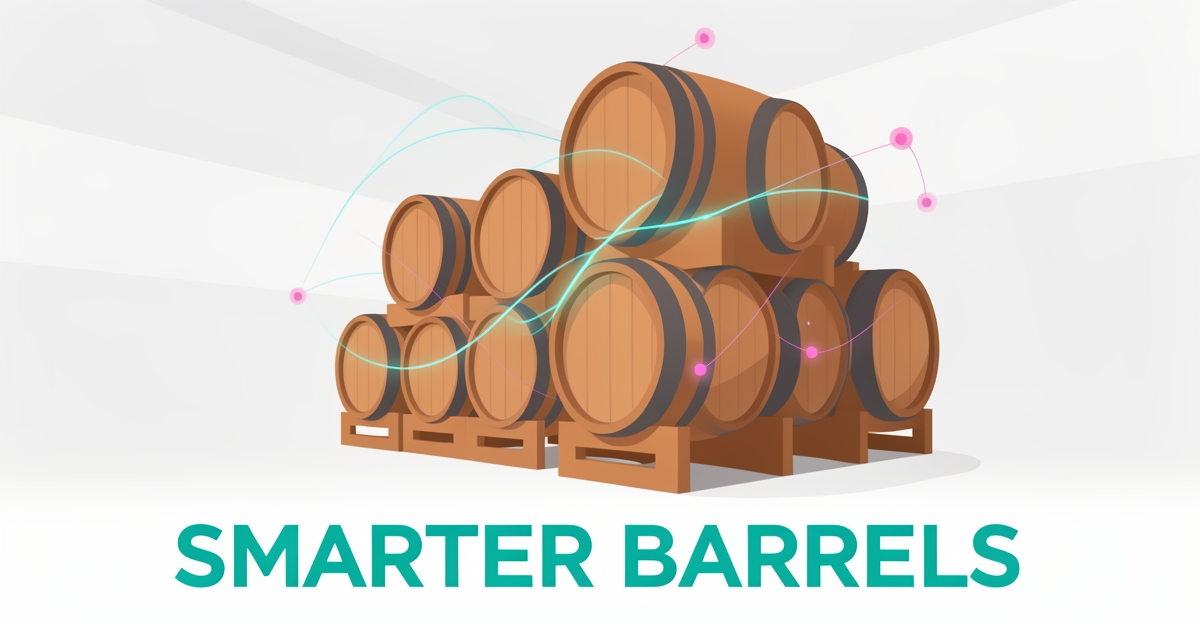
How AI Can Reduce Waste in Distillery Barrel Management
Key Facts
- Angel's share losses typically run several percent of barrel inventory per year, and warehouse microclimate variation means some barrels lose far more than others.
- AI-driven microclimate monitoring lets distilleries identify high-loss zones and rotate stock proactively rather than reactively.
- Predictive maturation models can help distillers pull barrels at peak character, reducing both over-aging and premature dumping.
- AI demand forecasting aligns new-make production with real market signals instead of last year's numbers, reducing overproduction of aged spirit.
- Because barrel aging is the longest and most capital-intensive phase of production, even small percentage improvements compound into substantial savings.
Hire a team member that works 24/7 — for less than a part-time wage.
AI receptionists, SDRs, dispatchers and 99+ roles. Trained on your business, fully managed.
Not sure where to start? Ask our AI planner
The Hidden Cost of Barrel Aging: Why Traditional Management Leads to Waste
Every year, thousands of gallons of premium spirit evaporate into the air while distilleries watch helplessly. This invisible drain is just one facet of the waste problem facing modern barrel aging operations.
Barrel aging is the longest and most capital-intensive phase of spirit production, tying up millions in inventory while offering little visibility into actual maturation progress. Traditional management approaches leave producers exposed to significant product loss and inefficient capital allocation, because decisions rest on fixed timelines and intuition rather than data.
The angel's share alone typically costs distilleries several percent of their barrel inventory each year through evaporation. Without predictive modeling, managers can't identify which barrels sit in warehouse hot spots or dry zones that accelerate this loss. That environmental variability means some barrels lose far more than others, creating uneven inventory value and unpredictable yields.
Beyond evaporation, traditional barrel rotation relies heavily on feel rather than evidence. Distillers often hold to fixed aging timelines regardless of actual flavor development, leading to two costly outcomes: over-aging that wastes warehouse space and capital, or premature dumping of barrels that never reached their potential. This guesswork also feeds overproduction, filling barrels based on last year's numbers rather than current market signals.
The financial impact extends to the cooperage as well. Manual tracking of wood grain quality and stave integrity frequently misses inefficiencies that generate excessive offcut waste, waste that better data analysis of cutting patterns and material usage can meaningfully reduce.
Key operational blind spots in traditional barrel management include:
- Inability to predict individual barrel evaporation rates based on microclimate conditions
- Lack of real-time visibility into flavor maturation trajectories across warehouse zones
- Reactive rather than proactive barrel rotation schedules
- Disconnected inventory data that obscures which barrels need immediate attention
- Historical demand forecasting based on last year's numbers rather than current market signals
These inefficiencies compound over the years-long aging process. When AIQ Labs works with distilleries through its AI Workflow Builds, the goal is turning these hidden costs into visible, manageable metrics, rebuilding the one workflow that costs the most, at a fixed price and in phases. By monitoring temperature, humidity, and barometric pressure across every warehouse zone, producers can finally see which specific barrels face the highest risk of excessive loss.
The capital intensity of barrel aging means even small percentage improvements translate to substantial savings. For a mid-sized distillery, preventable process inefficiencies across evaporation, rotation, and overproduction can add up to one of the largest untapped opportunities for operational improvement in the spirits industry.
How AI Predicts and Minimizes Angel's Share and Optimizes Maturation
Every year, a portion of whisky silently disappears through the oak staves, the famous "angel's share." For distilleries, this invisible loss is one of the most stubborn costs of barrel aging. AI is changing that equation, turning what was once accepted as inevitable into a manageable, measurable variable.
The key lies in environmental intelligence. AI systems monitor temperature, humidity, and barometric pressure across every warehouse zone, building a microclimate map that identifies hot spots and dry areas where evaporation accelerates. Predictive models can forecast angel's share loss for individual barrels, letting managers rotate stock strategically to minimize evaporation before it happens rather than accept it after the fact.
Beyond preventing evaporation, AI changes how distilleries time the aging process itself. Rather than relying on fixed timelines and intuition alone, predictive models forecast flavor maturation trajectories based on seasonal weather patterns and each barrel's history. This lets distillers pull barrels at the moment they reach peak character, avoiding both over-aging and the capital lockup of barrels sitting longer than necessary.
Dynamic barrel rotation and placement play a central role too. Because AI integrates with warehouse management, distilleries can ensure high-value single barrels receive the conditions that maximize their potential and minimize the risk of spoilage or uneven aging. In practice, this means:
- Continuous microclimate monitoring across every warehouse zone, not just sampled locations
- Per-barrel evaporation forecasts that guide rotation decisions before loss occurs
- Flavor maturation predictions tied to seasonal weather patterns, so barrels are pulled at peak character
- Optimized barrel placement that protects high-value stock in the most favorable conditions
Getting to this level of precision follows a phased path. It starts with deploying IoT sensors in barrel warehouses, then building a digital twin, a virtual replica of the operation calibrated with months of historical aging, sales, and environmental data. Machine learning models are trained on a distillery's specific conditions and validated against blind batches before real-time optimization begins. This is the kind of custom, production-grade modeling AIQ Labs builds: systems trained on your aging data and market trends, not generic templates, and owned outright once delivered.
The financial case is straightforward. For operations where every percentage point of angel's share represents thousands of dollars of finished spirit, that precision pays for itself, and because AIQ Labs builds in milestones with fixed pricing, you can see results from the first phase before committing further.
Aligning Barrel Inventory with Demand to Prevent Overproduction Waste
Overproducing aged spirit is one of the most expensive mistakes a distillery can make, because every extra barrel ties up warehouse space, capital, and time for years.
AI-driven demand forecasting aligns barrel inventory with real market pull instead of guesswork, preventing waste of aged inventory that never sells. Modern models pull in dozens of data signals, historical sales, local weather forecasts, event calendars, and social media buzz, to predict demand with far more accuracy than a spreadsheet of last year's numbers.
The shift moves production scheduling from intuition to precision. AI inventory systems predict when ingredients or finished goods will run out based on the upcoming production schedule, which is especially valuable for distilleries managing barrel inventory across multiple vintages and expressions. Knowing exactly which barrels are ready, which need more time, and which need attention saves hours of manual tracking.
Production calendars become dynamic. AI can build optimized production calendars that consider tank availability, fermentation timelines, ingredient lead times, and demand forecasts simultaneously. This ensures production is efficient and aligned with sales, reducing the waste of aged inventory that doesn't sell.
In practice, aligning barrel inventory with demand means:
- Forecasting pull dates per barrel class using historical sales and seasonal signals
- Matching aging capacity to forecasted sell-through, not maximum warehouse capacity
- Rotating inventory to prioritize barrels nearing peak character for upcoming demand windows
- Adjusting new make spirit production to fill anticipated gaps 18-36 months out
Barrel aging is the longest and most capital-intensive phase of spirit production, so improving inventory turns without sacrificing quality directly protects margin. For distilleries ready to connect forecasting, barrel tracking, and sales data into one layer, AIQ Labs' AI Operating Systems service builds that connected foundation in phases, owned outright, not rented.
The result is fewer barrels sitting past peak, less risk of over-aging, and capital freed to produce what the market will actually buy.
Implementation Roadmap: From Sensors to ROI in Barrel Management AI
Distilleries can transform barrel management from a cost center into a strategic advantage by following a phased implementation approach. The process begins with deploying IoT sensors across barrel warehouses to capture real-time temperature, humidity, and barometric pressure data, forming the foundation for AI-driven insights. This phase integrates sensor data with existing PLC and SCADA systems to ensure a seamless flow into analytics platforms.
Once sensor data is flowing, the next step is creating a digital twin of barrel operations, a virtual replica calibrated with months of historical aging, sales, and environmental data. The digital twin lets distillers test barrel rotation strategies or warehouse layout adjustments risk-free before touching real inventory. Machine learning models are then trained on grain varieties, yeast strains, and warehouse microclimates, and validated against blind batches to ensure reliability in predicting angel's share loss and flavor maturation.
With models trained, AI begins issuing real-time recommendations for barrel placement, rotation schedules, and optimal pull times based on predictive analytics. Process engineers receive alerts for anomalies, such as unexpected evaporation spikes, and regular performance reports tracking key metrics. Distilleries that follow this roadmap typically see the fastest payback from automation-focused modules like inventory forecasting, with deeper optimization compounding from there. AIQ Labs structures this work in fixed-price milestones, so each phase proves its value before the next begins, and if the numbers don't justify continuing, you'll hear that too.
Still paying for 10+ subscriptions that don’t talk to each other?
We build custom AI systems you own outright. No vendor lock-in. Full control.
Not sure where to start? Ask our AI planner
Frequently Asked Questions
How much can AI actually reduce the angel's share loss in barrel aging?
Can AI really shorten whiskey aging times without hurting quality?
What kind of savings can a mid-sized distillery expect from implementing AI in barrel management?
How does AI help prevent overproduction of aged spirits that might never sell?
Can AI reduce waste in barrel production itself, not just aging?
What's the first step in implementing AI for barrel management?
The Angel's Share Doesn't Have to Take Your Profits With It
Every barrel you lose to evaporation, over-aging, or overproduction is capital you can never recover, but the tools to stop the bleed already exist. Microclimate monitoring shows you exactly where loss is happening, predictive maturation models tell you when barrels hit peak character, and demand forecasting keeps your aging inventory aligned with what the market will actually buy. The distilleries winning the next decade won't be the ones aging the most barrels, they'll be the ones aging them smarter. The path forward starts small: map your warehouse microclimates, identify your highest-loss zones, and build from there. AIQ Labs builds custom AI systems trained on your aging data and market trends, built in fixed-price milestones and owned outright, not rented templates. Take the two-minute Fit Check at aiqlabs.ai/apply, then book a free 30-minute strategy call to see whether barrel management AI is a clear win for your operation, and if it isn't, we'll tell you that too.
Make AI your competitive advantage — not just another tool.
Strategy, implementation and ongoing optimization. One partner, end to end.
Not sure where to start? Ask our AI planner