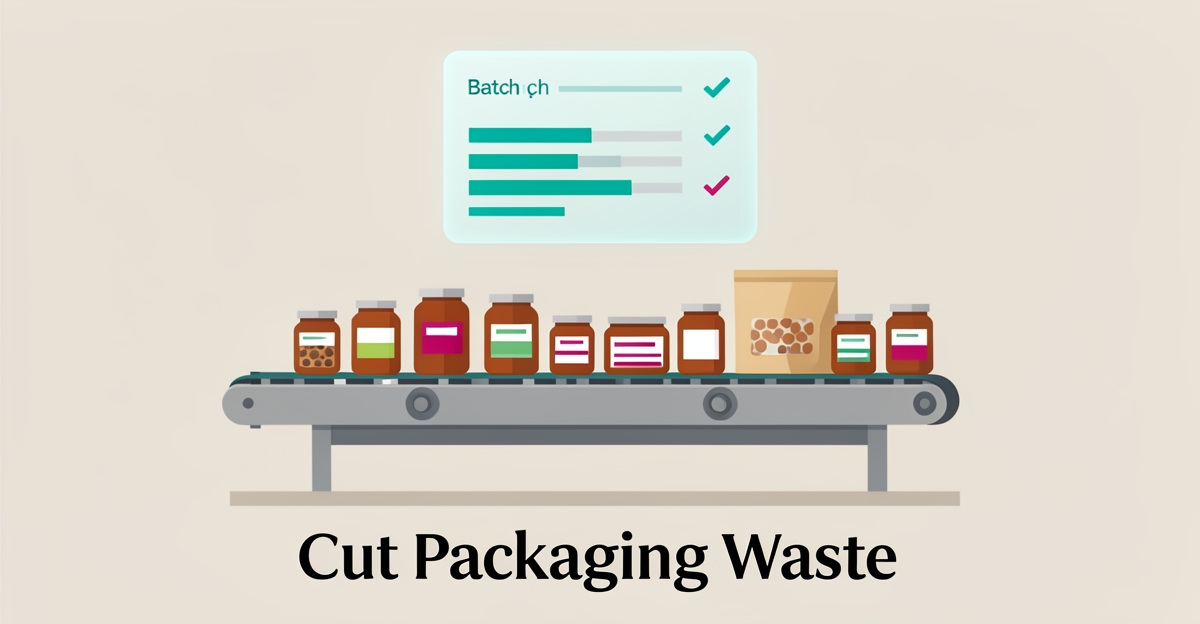
How AI Can Reduce Waste in Specialty Food Packaging and Labeling with Real-Time Batch Tracking
Key Facts
- American grocery stores throw away roughly 30% of their food annually, representing an estimated $18.2 billion in lost value, according to CNBC reporting.
- AI-powered dynamic pricing on perishables approaching expiration has been linked to 30-40% reductions in waste in grocery chain deployments.
- Machine learning optimization can typically cut excess inventory by 20-50% by tuning reorder points and safety stock levels, according to Gartner research.
- AI-powered demand forecasting has been associated with stockout reductions averaging around 35%, minimizing lost sales and write-offs, per McKinsey research.
- Automated replenishment systems generate purchase orders from real-time inventory data, with published research noting roughly 28% lower carrying costs on such deployments.
- AI interventions across food production and retail are projected to save up to 700 tonnes of food from being discarded per European food industry coverage.
- Real-time AI batch tracking flags overproduction, mislabeling, and mismatched packaging the moment they happen, not after the pallet is wrapped.
Hire a team member that works 24/7 — for less than a part-time wage.
AI receptionists, SDRs, dispatchers and 99+ roles. Trained on your business, fully managed.
Not sure where to start? Ask our AI planner
The Hidden Cost of Waste in Specialty Food Production
Every year, American grocery stores discard roughly 30% of their food, representing an estimated $18.2 billion in lost value. For specialty food producers, the problem starts even earlier, on the production floor, where small errors in packaging and labeling quietly compound into significant losses.
The waste rarely announces itself. A batch produced beyond what demand justifies, a label printed with the wrong allergen or expiry date, or packaging that doesn't match the product inside, each of these mistakes can render an entire run unsellable. In specialty food, where margins are already tight and ingredients are often premium-priced, a single mislabeled batch can cost thousands in lost inventory.
What makes this waste especially frustrating is that much of it is preventable. The errors tend to follow predictable patterns:
- Overproduction driven by outdated forecasts rather than actual demand signals
- Incorrect labeling caught only after the product is packaged and ready to ship
- Mismatched packaging discovered late in the process, when correction is most expensive
- Excess inventory sitting in storage, tying up working capital as shelf life ticks away
The scale of the opportunity is well documented. According to reporting on AI in grocery operations, major chains using AI-powered systems have achieved 30-40% reductions in waste, evidence that intelligent monitoring can solve problems the industry has wrestled with for decades. Meanwhile, Gartner research indicates machine learning optimization can cut excess inventory by 20-50%, directly addressing the overproduction problem at its source.
The common thread in these failures is timing. By the time a human catches an overproduced batch or a mislabeled run, the damage is done, materials spent, labor invested, product unsellable. The gap between when an error occurs and when someone notices it is where the money disappears.
This is exactly the gap that real-time batch tracking with AI is designed to close. By monitoring production batches as they move through the line, AI systems can flag overproduction, incorrect labeling, or mismatched packaging the moment they happen, not after the pallet is wrapped. At AIQ Labs, we've seen how this kind of real-time monitoring transforms what was once a post-mortem exercise into an active intervention, catching problems while they're still cheap to fix.
Understanding where waste hides is the first step. The next is putting systems in place that see it before it costs you.
How Real-Time Batch Tracking with AI Prevents Waste at the Source
In a specialty food operation, the most expensive waste is the kind you don't notice until it's already happened, a batch overproduced by 200 units, labels printed with the wrong allergen information, or packaging sealed around the wrong product size. By the time a human catches these errors at final inspection, the inventory is already committed. Real-time batch tracking with AI flips that dynamic entirely.
Instead of reviewing production data after the fact, AI systems monitor every batch as it moves through production, flagging anomalies the moment they appear. When a run exceeds its forecast quantity, when label data doesn't match the batch specification, or when packaging dimensions diverge from the product on the line, the system alerts operators immediately, while correction still costs minutes instead of entire production runs.
The financial stakes are significant. Roughly 30% of food in American grocery stores is thrown away each year, representing an estimated $18.2 billion in lost value, according to reporting on AI-driven waste reduction in grocery. For specialty producers operating on thin margins, preventing even a fraction of that loss at the packaging and labeling stage can save thousands of dollars in lost inventory annually.
What real-time batch tracking catches as it happens:
- Overproduction, output exceeding demand forecasts, flagged before excess inventory ties up working capital and cold-chain capacity.
- Incorrect labeling, mismatched batch data, dates, or allergen declarations caught before products ship, reducing recall risk.
- Mismatched packaging, wrong container sizes or materials identified mid-run rather than at distribution.
- Inventory drift, batch counts that don't reconcile with planned production, signaling upstream process issues.
The downstream impact compounds quickly. Once batch-level data flows into forecasting, machine learning can optimize reorder points and safety stock levels, typically cutting excess inventory by 20-50% according to industry analysis of inventory optimization. Meanwhile, AI-powered demand forecasting has been associated with stockout reductions averaging around 35%, per McKinsey research, meaning fewer emergency runs, fewer write-offs, and more predictable margins.
The broader industry signal supports the approach: AI interventions across food production and retail are projected to save up to 700 tonnes of food from being discarded, as reported by European food industry coverage.
For specialty food businesses, the practical question isn't whether this monitoring is possible, it's how to integrate batch tracking with existing production, labeling, and inventory systems without disrupting operations. That's precisely the kind of workflow challenge AIQ Labs addresses through AI Workflow Builds, rebuilding the one workflow that costs you the most, fixed price, delivered in phases, so production data flows into a unified system the business owns outright. The result: errors caught in seconds, waste prevented at the source, and inventory decisions grounded in real-time truth rather than yesterday's reports.
Integrating AI Workflow Automation for Sustainable Packaging Operations
Specialty food producers lose margin to overproduction and mislabeled batches long before products reach the shelf. Real-time batch tracking with AI closes that gap by catching errors at the line, not after spoilage.
Implementation starts with connecting production, packaging and labeling systems into a single workflow that AI can monitor continuously. AI Workflow Builds target the single workflow that costs your business the most, at a fixed price, delivered in phases, while AI Operating Systems connect an entire operation into one operating layer, also built in phases and owned outright. Both approaches replace subscription chaos with scalable automation you own.
AI-driven inventory forecasting can reduce excess inventory by 20-50% with machine learning optimization, according to industry analysis. Models ingest historical sales, seasonality and supplier lead times to set dynamic reorder points and safety stock, freeing working capital and limiting waste.
Automated replenishment builds on those forecasts. Systems automatically generate purchase orders from real-time inventory levels and demand signals, cutting manual intervention and improving supply chain efficiency. Published research notes roughly 28% lower carrying costs with automated replenishment, while AI-powered demand forecasting has been linked to stockout reductions averaging around 35%.
Dynamic pricing complements forecasting for perishable SKUs. AI can automatically adjust prices as items approach expiration, a tactic linked to a 30-40% reduction in waste for perishables in grocery chain deployments. For specialty producers, the same logic applies to short-run batches and seasonal ingredients.
A practical rollout for sustainable packaging operations typically includes:
- Real-time batch monitoring that flags overproduction, incorrect labeling or mismatched packaging before release
- AI inventory forecasting tuned to batch sizes, shelf life and channel demand
- Automated replenishment rules tied to real-time inventory and production capacity
- Dynamic pricing and promotion triggers for near-expiry inventory
AIQ Labs architects these workflows as owned digital assets, not rented tools. Custom integration between ERP, MES, labeling equipment and e-commerce ensures data flows without manual re-entry, while validation layers and human-in-the-loop controls keep decisions safe for regulated food production. With 200+ multi-agent systems deployed, this is work we do every day.
The outcome is a closed-loop system where production, packaging and labeling learn from each other. Waste drops, forecasting accuracy improves and teams focus on product quality instead of firefighting inventory.
Still paying for 10+ subscriptions that don’t talk to each other?
We build custom AI systems you own outright. No vendor lock-in. Full control.
Not sure where to start? Ask our AI planner
Frequently Asked Questions
How much waste can AI actually reduce in specialty food packaging and labeling?
What specific packaging and labeling errors does real-time batch tracking catch?
Will integrating AI batch tracking disrupt our current production line?
How does AI-powered demand forecasting help reduce stockouts and overproduction?
What's the financial impact of food waste on specialty producers specifically?
Do we need to replace our current software subscriptions to implement this?
Turning Waste into Worth: Your Next Step Toward Smarter Food Waste Reduction
Specialty food producers face a silent drain on margins: overproduction, mislabeled batches, and packaging mismatches that go unnoticed until it's too late. Real-time batch tracking with AI closes this costly gap by flagging errors the moment they happen, preventing waste before it ties up working capital or risks recalls. The data is consistent: AI-driven interventions can typically cut excess inventory by 20-50% and have been linked to stockout reductions averaging around 35%, directly protecting thin margins in specialty production. For businesses ready to move beyond reactive fixes, the path forward starts with understanding where your specific bottlenecks lie. Take the 2-minute Fit Check, then book a free 30-minute strategy call to map your highest-ROI automation opportunities, because preventing waste isn't just about saving product, it's about reclaiming predictable profitability.
Make AI your competitive advantage — not just another tool.
Strategy, implementation and ongoing optimization. One partner, end to end.
Not sure where to start? Ask our AI planner