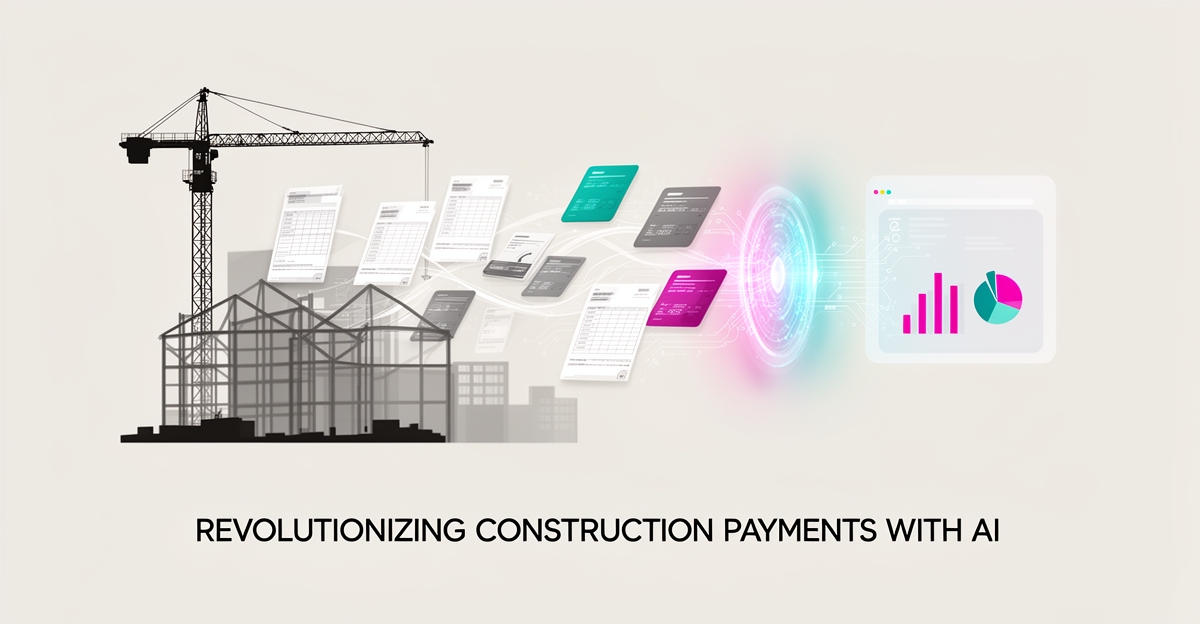
How AI Can Replace 80% of Routine Invoices and Payment Tracking in Construction
Key Facts
- AI can typically automate up to 80% of routine invoices and payment tracking for construction firms.
- Manual invoice processing typically costs somewhere in the range of $10–$20 per invoice once labor, handling, and error correction are counted.
- Industry benchmarks as of late 2026 suggest AI-powered processing can reduce per-invoice costs by 70% or more compared to manual methods.
- Automated processing can save the large majority of time spent on accounts payable tasks—often cited at 90% or more for standardized invoices.
- Modern AI document processing typically achieves 95%+ extraction accuracy on clear, standardized invoice formats.
- Manual invoice cycles commonly stretch to two weeks or more from receipt to payment, creating real cash flow drag.
Hire a team member that works 24/7 — for less than a part-time wage.
AI receptionists, SDRs, dispatchers and 99+ roles. Trained on your business, fully managed.
Not sure where to start? Ask our AI planner
The Invoice Bottleneck Costing Construction Firms Cash Flow
The manual invoice bottleneck drains construction firms' cash flow, with every paper trail adding cost and delay. Industry analyses as of late 2026 typically put fully loaded manual invoice processing somewhere between $10 and $20 per invoice—a figure that balloons when multiplied across hundreds of monthly transactions, directly eroding project profitability. This expense isn't just financial—it's operational, pulling skilled staff from high-value project work into repetitive data entry that could be automated.
The time cost compounds the financial drain: manual invoice cycles commonly run two weeks or more from receipt to payment, creating significant lag in the cash flow cycles that construction firms rely on to fund ongoing work and pay subcontractors. During this extended window, early payment discounts vanish and the risk of late fees increases, further squeezing margins already tight in a competitive industry.
Beyond time and money, manual processing introduces avoidable errors through human fatigue and inconsistent data entry—mistakes that trigger payment disputes, require costly rework, and damage client relationships. Each error represents not just a correction task but a potential delay in revenue recognition and a drain on team morale.
Consider the hidden labor cost: a data-entry-heavy employee represents tens of thousands of dollars per year in salary, benefits, and overhead—funds tied up in routine tasks that AI can now handle with high accuracy. When staff are freed from invoice chasing, they can redirect their expertise toward project oversight, client engagement, and strategic planning—activities that directly contribute to margin improvement and competitive advantage.
This bottleneck isn't inevitable. AIQ Labs helps construction firms replace manual invoice workflows with intelligent automation that accelerates billing cycles, reduces errors, and returns valuable human capacity to the work that builds value. By targeting the invoice process first—typically through a focused AI Workflow Build—firms can unlock immediate cash flow improvements while laying the foundation for broader operational transformation.
How AI Automates 80% of Invoices and Payment Tracking
Construction invoice processing remains one of the most labor-intensive tasks in project management, with teams spending countless hours on manual data entry and payment tracking. AI-powered automation transforms this workflow by intelligently extracting, validating, and routing invoice data with minimal human intervention.
Using computer vision to scan and interpret invoice layouts, natural language processing to understand vendor terms and project references, and machine learning models to validate data against purchase orders and contracts, modern AI systems typically achieve 95%+ extraction accuracy on clear, standardized formats. This technology stack enables construction firms to automate up to 80% of routine invoices and payment tracking, directly reducing manual work and accelerating billing cycles.
The impact is measurable: industry benchmarks as of late 2026 suggest AI-powered invoice processing reduces costs by 70% or more compared to manual methods, with well-implemented automated systems bringing the cost per invoice down to a few dollars versus the $10–$20 range typical of manual handling. Time savings are equally significant, with automated systems often eliminating the large majority of hours spent on accounts payable tasks—cutting invoice cycles from weeks to a fraction of that duration.
- Extracts data from diverse invoice formats using computer vision and OCR
- Validates amounts, dates, and project codes against contract milestones
- Routes invoices for approval based on predefined business rules
- Triggers automated payment reminders tied to project completion stages
- Syncs with accounting platforms to eliminate double data entry
For construction management firms, this means milestone-based billing becomes seamless—AI automatically generates invoices when project phases are complete, sends timely payment reminders, and flags discrepancies before they delay payments. By reducing manual effort and lowering error rates, AI not only cuts operational costs but also improves cash flow predictability, allowing firms to reinvest savings into growth initiatives rather than administrative overhead. AIQ Labs implements these capabilities through custom AI workflow integration, ensuring systems align with existing project management and accounting tools while delivering measurable ROI within months.
From Pilot to Production: A Phased Implementation Roadmap
Most construction firms fail at AI adoption because they try to automate everything at once. A phased approach reduces risk while proving value quickly.
Begin by auditing your current document workflow end-to-end. Map exactly how invoices move from receipt to payment, noting where manual entry creates bottlenecks. With manual processing typically costing $10–$20 per invoice, this audit becomes your baseline for measuring future savings.
Next, select an AI-ready ERP or integration platform that connects with your existing accounting software. The system must support two-way data synchronization to prevent information silos. AIQ Labs builds these custom integrations to ensure seamless data flow between construction management tools and financial systems without vendor lock-in.
Start with a single high-volume document type rather than overhauling your entire AP process. Vendor invoices typically offer the clearest ROI because AI document processing achieves its highest accuracy on standardized formats. This focused pilot lets you validate performance before scaling.
Build your business rules before adding complexity. Define approval thresholds, exception handling, and payment terms that the AI must enforce. Establishing these guardrails early prevents costly errors and ensures the system aligns with your cash flow requirements.
Key implementation steps include:
- Map current invoice cycle times and error rates
- Select one document type for initial automation
- Configure approval workflows and business rules
- Run parallel processing for 30 days to verify accuracy
- Expand to additional document types after validation
Pilot first, then expand methodically. Test the system with a small batch of real invoices while maintaining your existing manual process as backup. Automated invoice processing can eliminate most processing time, but only after the AI learns your specific vendor formats and coding requirements.
Structure your rollout to match your risk tolerance. AIQ Labs offers a Build in Milestones approach where you approve and pay for each phase as it ships, stopping anytime while keeping everything built. Alternatively, the Start Monthly model provides a managed AI Employee to handle invoice processing at a fraction of the cost of a human hire, without upfront capital investment. You can compare both models on the pricing page.
Monitor extraction accuracy and cycle times weekly during the first quarter. Once the system consistently hits your accuracy targets, expand to payment tracking and client billing. This disciplined scaling transforms AI from an experimental expense into a reliable operational asset that accelerates cash flow.
Manual vs AI Processing: Cost, Speed and Error Comparison
For construction firms drowning in paperwork, the contrast between manual and AI-powered invoice processing reveals a stark efficiency gap that directly impacts the bottom line. Manual invoice processing demands significant human effort, with data-entry-heavy roles representing tens of thousands of dollars annually per worker. This approach is not only labor-intensive but also slow, with invoice cycles commonly stretching two weeks or more from receipt to payment—creating bottlenecks that delay cash flow and strain vendor relationships.
Error rates further compound the inefficiencies of manual systems. Human data entry is prone to mistakes, leading to discrepancies that require time-consuming corrections and can result in overpayments or missed early payment discounts. In contrast, AI-powered processing leverages computer vision and machine learning to typically achieve 95%+ extraction accuracy on clear formats, dramatically reducing the need for manual intervention and minimizing costly errors. Well-implemented automated systems bring the cost per invoice down to a few dollars—a fraction of the $10–$20 range typical for manual handling.
The speed and cost advantages of AI automation translate into tangible operational benefits. Automated invoice processing can save businesses the large majority of time spent on accounts payable tasks, freeing skilled staff to focus on higher-value activities like project forecasting or client relationship management. For construction firms managing complex billing cycles tied to project milestones, this acceleration means faster payment collection and improved liquidity. AIQ Labs' custom AI systems are designed to integrate seamlessly with existing accounting and ERP platforms, ensuring that automated workflows enhance rather than disrupt current operations while maintaining data integrity across systems.
- Reduce manual effort by eliminating repetitive data entry and validation tasks
- Cut processing time from weeks to hours through intelligent automation
- Lower invoice processing costs by 70% or more compared to manual methods
- Achieve 95%+ data extraction accuracy using AI-powered document understanding
- Enable seamless integration with accounting software and ERP systems for end-to-end workflow continuity
Successful implementation hinges on two critical factors: the quality of training data and system integration. AI models require high-quality, diverse datasets to learn the variations in invoice formats, terminology, and layout common in construction billing. Without robust training, even advanced systems may struggle with accuracy, particularly when handling non-standard or poorly scanned documents. Equally important is deep integration with accounting platforms like QuickBooks or Xero and the ERP systems used for project management. This connectivity allows AI to not only extract and validate invoice data but also trigger approvals, schedule payments, and update financial records in real time—creating a closed-loop automation that delivers sustained efficiency gains. Firms that address these considerations upfront position themselves to capture the full value of AI-driven invoice automation, transforming a traditionally cumbersome process into a streamlined, reliable operation.
Still paying for 10+ subscriptions that don’t talk to each other?
We build custom AI systems you own outright. No vendor lock-in. Full control.
Not sure where to start? Ask our AI planner
Frequently Asked Questions
How much can AI reduce the cost of processing invoices in construction?
How long does manual invoice processing take in construction, and how much faster is AI?
What percentage of routine invoices and payment tracking can AI automate in construction?
How accurate is AI at extracting data from construction invoices?
What are the hidden costs of manual invoice processing beyond just labor?
How does AIQ Labs help construction firms implement invoice automation without disrupting existing systems?
From Bottleneck to Breakthrough: Turning Invoice Automation into Real Business Momentum
Construction firms lose real money and momentum to manual invoice processing—often $10–$20 per invoice and cycles stretching two weeks or more—tying up skilled staff in repetitive work that drains cash flow and delays project funding. AI-powered automation changes that equation, handling up to 80% of routine invoices with high accuracy, cutting costs substantially, and freeing teams to focus on higher-value work like client engagement and project oversight. The result isn't just efficiency—it's faster payments, fewer errors, and stronger liquidity that fuels growth. If you're ready to see where AI can unlock immediate value in your workflow, start with the 2-minute Fit Check or book a free 30-minute strategy call to map your biggest bottleneck and explore a phased, low-risk path forward. Book your 30-minute strategy session to see how AIQ Labs helps construction firms turn invoice automation into measurable cash flow gains—without overhaul or guesswork.
Make AI your competitive advantage — not just another tool.
Strategy, implementation and ongoing optimization. One partner, end to end.
Not sure where to start? Ask our AI planner