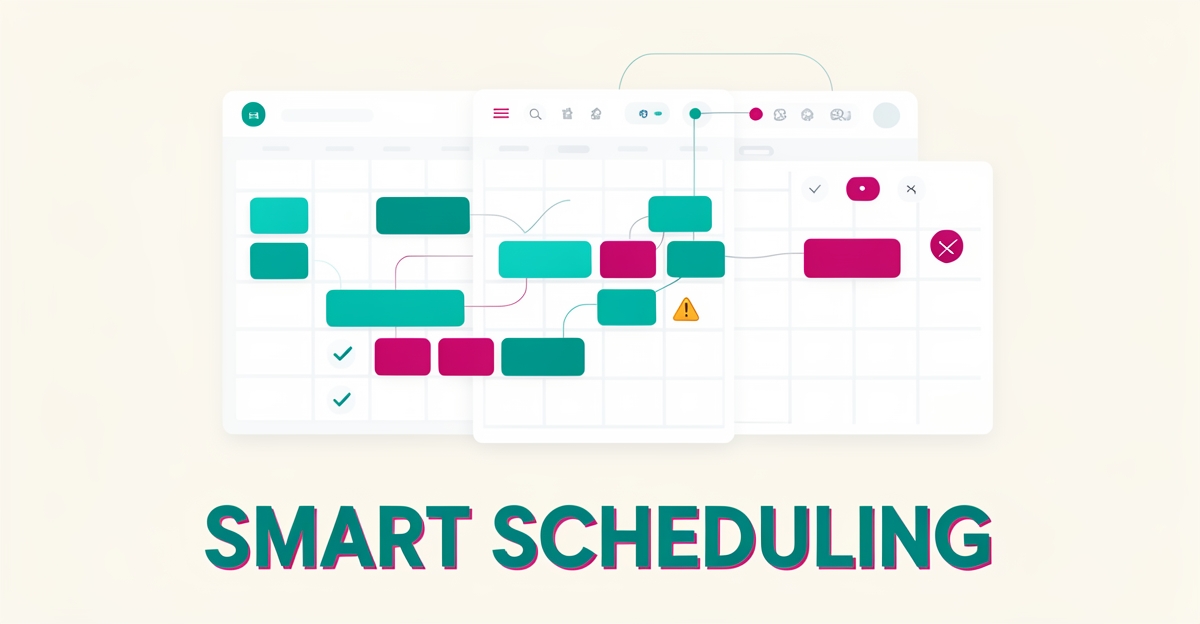
How AI Can Streamline Nanny Availability Tracking Across Multiple Families
Key Facts
- Automated planning and scheduling, a branch of AI focused on generating action sequences for intelligent agents, provides the foundation for conflict-free nanny scheduling, per established research
- Probabilistic planning in AI helps proactively manage uncertainties like last-minute nanny cancellations
- AI-driven scheduling enables real-time calendar syncing to prevent double-booking across multiple families
- Domain-independent planning allows AI systems to adapt to diverse household structures and shift patterns
- AIQ Labs offers three entry points, AI Employees, Workflow Builds, and AI Operating Systems, with systems owned outright, eliminating vendor lock-in
- AI Employees work around the clock at roughly 80% less cost than an equivalent human hire
Hire a team member that works 24/7 — for less than a part-time wage.
AI receptionists, SDRs, dispatchers and 99+ roles. Trained on your business, fully managed.
Not sure where to start? Ask our AI planner
The Operational Chaos of Manual Nanny Scheduling
Managing nanny availability across multiple households often descends into operational chaos when relying on manual systems like spreadsheets, text messages, or shared calendars. Families and agencies face frequent missed shifts, double bookings, and last-minute cancellations that disrupt childcare reliability and erode trust. The administrative burden of coordinating availability, tracking preferences, shift changes, and backup options, consumes hours every week, pulling focus from core caregiving responsibilities. These pain points intensify at scale, where even small scheduling errors cascade into systemic failures across dozens of nannies and families.
The ripple effects extend beyond inconvenience, directly impacting family stability and caregiver satisfaction. When a nanny cancels unexpectedly, parents scramble for last-minute alternatives, often compromising work commitments or child safety. Agencies absorb the cost of reactive rescheduling, damaging their reputation for dependability. Manual tracking lacks the agility to respond to real-time changes, leaving gaps that automated systems could prevent. This fragility undermines the very purpose of professional nanny services: consistent, reliable support for modern households.
Automated planning and scheduling, a branch of AI focused on realizing action sequences for intelligent agents, offers a structured approach to overcoming these challenges according to established research. By modeling shift patterns, availability constraints, and family preferences as solvable planning problems, AI can generate optimized schedules that minimize conflicts and maximize coverage. Unlike static spreadsheets, AI-driven systems continuously adapt to changes, such as a nanny's sudden unavailability or a family's shifting needs, without requiring manual intervention. This dynamic responsiveness reduces the likelihood of gaps and overbooking, creating a more resilient childcare ecosystem.
Probabilistic planning further strengthens this approach by accounting for uncertainties inherent in nanny availability, such as illness or transportation delays. By incorporating the likelihood of last-minute changes into scheduling logic, AI can proactively build buffers, like identifying backup nannies or suggesting shift swaps, before disruptions occur. This foresight transforms reactive crisis management into preventive operational stability, reducing stress for both families and caregivers. Domain-independent planning ensures these solutions remain flexible across diverse household structures, cultural preferences, and varying shift patterns.
For agencies managing dozens of nannies, the administrative overload of manual tracking becomes unsustainable. Coordinating availability across multiple calendars, verifying credentials, and handling substitution requests creates a bottleneck that limits growth and increases error rates. AI streamlines these workflows by centralizing data, automating conflict detection, and enabling self-service updates through intuitive interfaces. Nannies can input their availability directly, families can view real-time openings, and the system flags potential issues before they escalate. This shift from reactive patchwork to proactive orchestration frees up agency staff to focus on relationship-building and quality assurance rather than firefighting scheduling conflicts.
Ultimately, the operational chaos of manual nanny scheduling isn't just an inconvenience, it's a barrier to scaling reliable childcare services. As families increasingly seek flexible, trustworthy support, the limitations of spreadsheets and sticky notes become glaringly apparent. AI doesn't just replace manual tracking; it redefines what's possible by turning availability management from a liability into a strategic advantage. For agencies ready to move beyond crisis-driven operations, the path forward lies in intelligent systems that anticipate change, optimize resources, and deliver consistency at scale. AIQ Labs helps businesses architect such solutions, transforming fragmented workflows into unified, intelligent operations that scale with confidence.
How AI Enables Dynamic, Real-Time Availability Coordination
Imagine a system that can predict and adapt to the ever-changing schedules of nannies and families, ensuring seamless coordination and minimizing last-minute scrambles. This is the promise of AI-driven nanny availability tracking, which leverages domain-independent planning to dynamically manage shifts and sync calendars in real time. According to research on automated planning and scheduling, this branch of AI focuses on creating strategies or action sequences for intelligent agents, making it well suited to complex scheduling tasks.
One of the key benefits of AI in this context is its ability to handle probabilistic planning, which accounts for uncertainties like last-minute cancellations or changes in availability. This capability is crucial for nanny availability tracking, where unpredictability is the norm. By weighing preferences, constraints, and probabilistic changes, AI systems can proactively resolve conflicts and optimize schedules, turning reactive scheduling into proactive orchestration.
AIQ Labs builds such systems, which can:
- Dynamically track nanny shifts across multiple families
- Sync calendars in real time to avoid double-booking
- Alert staff of changes instantly, reducing administrative burdens
- Adapt to last-minute changes using probabilistic planning
The result is a scalable solution that improves operational efficiency and reduces errors. For instance, a nanny agency managing dozens of caregivers can use AI to ensure that every family's needs are met without overburdening staff. This approach not only saves time but also enhances decision-making by providing a clear, real-time overview of availability.
While the upfront investment in planning and scheduling software can be significant, the long-term benefits, such as reduced administrative costs and improved service quality, typically make it worthwhile. As automated planning and scheduling continues to evolve, its applications in industries like nanny services will only grow, offering even greater efficiency and reliability.
AIQ Labs' expertise in AI workflow and task automation, through [AI Workflow Builds](/workflow-builds) that rebuild the one workflow costing you the most, ensures businesses can implement these systems seamlessly, transforming their operations and staying ahead in a competitive market.
Building a Scalable AI Solution with AIQ Labs
Scaling a nanny operation from a handful of caregivers to dozens requires more than spreadsheets and good intentions, it demands an architecture that treats availability tracking as a dynamic, real-time system. AIQ Labs offers three entry points that transform scheduling from a manual bottleneck into an automated, self-optimizing workflow, each matched to a clear payment model: Start Monthly, Build in Milestones, or Own It Outright.
For agencies needing immediate operational relief, [AI Employees](/ai-employees) provide managed AI schedulers and dispatchers that function as 24/7 team members rather than passive tools. These AI staff members handle the entire availability lifecycle: updating calendars the moment a nanny confirms a shift, alerting families to schedule changes, and coordinating coverage without human intervention, at roughly 80% less cost than a human hire. They integrate directly with your existing tech stack, from Google Calendar to payroll systems, ensuring availability data triggers real-time updates across all platforms rather than creating isolated information silos.
When the scheduling workflow itself is the bottleneck, an [AI Workflow Build](/workflow-builds) rebuilds that one workflow at a fixed price, in phases. These systems leverage automated planning and scheduling techniques, a branch of AI that generates strategies for intelligent agents, to dynamically track shifts across multiple families while accounting for variables like location, preferences, and last-minute changes. According to research on automated planning, this approach enables the realization of complex action sequences that adapt as conditions change, ensuring your availability data flows seamlessly into calendars, communication tools, and payment systems.
For agencies that want the whole operation connected, an [AI Operating System](/ai-operating-systems) builds one connected operating layer, constructed in phases and owned outright. Rather than delivering a static product and disappearing, the system evolves alongside your business, continuously refining scheduling logic based on actual usage patterns. This addresses the core challenge of probabilistic planning in uncertain environments, where last-minute cancellations and shifting family needs require systems that learn and adjust rather than simply execute static rules.
Key components of this scalable architecture include:
- Domain-independent planning algorithms that adapt to your specific business rules and constraints
- Real-time synchronization across calendars, SMS, email, and payment processing systems
- Probabilistic modeling to handle uncertainty and last-minute availability changes
- Continuous monitoring and adjustment protocols that improve accuracy over time
- Full ownership of the underlying code and data, eliminating vendor lock-in
This integrated approach eliminates the administrative chaos of manual coordination while providing the flexibility to scale. Whether managing five nannies or fifty, the system maintains real-time operational efficiency by treating availability tracking not as a series of isolated calendar entries, but as a unified, intelligent workflow that anticipates needs before they become emergencies.
Still paying for 10+ subscriptions that don’t talk to each other?
We build custom AI systems you own outright. No vendor lock-in. Full control.
Not sure where to start? Ask our AI planner
Frequently Asked Questions
How does AI prevent double bookings when managing nanny availability across multiple families?
Can AI handle last-minute nanny cancellations or availability changes?
Is AI-driven nanny scheduling only useful for large agencies, or can small operations benefit too?
What is domain-independent planning, and why does it matter for nanny availability tracking?
Does implementing AI for nanny scheduling require giving up control of our data or systems?
What does it cost to get started with AI nanny scheduling?
Turning Scheduling Chaos into Strategic Advantage
Managing nanny availability across multiple families doesn't have to mean constant firefighting, AI transforms this operational burden into a streamlined, intelligent workflow. By dynamically tracking shifts, syncing calendars in real time, and using probabilistic planning to anticipate last-minute changes, agencies can eliminate double bookings, reduce administrative strain, and ensure consistent care without scaling headcount. AIQ Labs builds these systems as owned, production-ready solutions, not rented tools, so businesses maintain full control while gaining the reliability and scalability needed to grow. The result is less chaos, more confidence, and a childcare service that runs like clockwork. Ready to see how AI can solve your specific scheduling pain points? Take the 2-minute Fit Check to see if AIQ Labs is a match, then book a free 30-minute strategy call to map your biggest bottleneck, no obligation, just clarity.
Make AI your competitive advantage — not just another tool.
Strategy, implementation and ongoing optimization. One partner, end to end.
Not sure where to start? Ask our AI planner