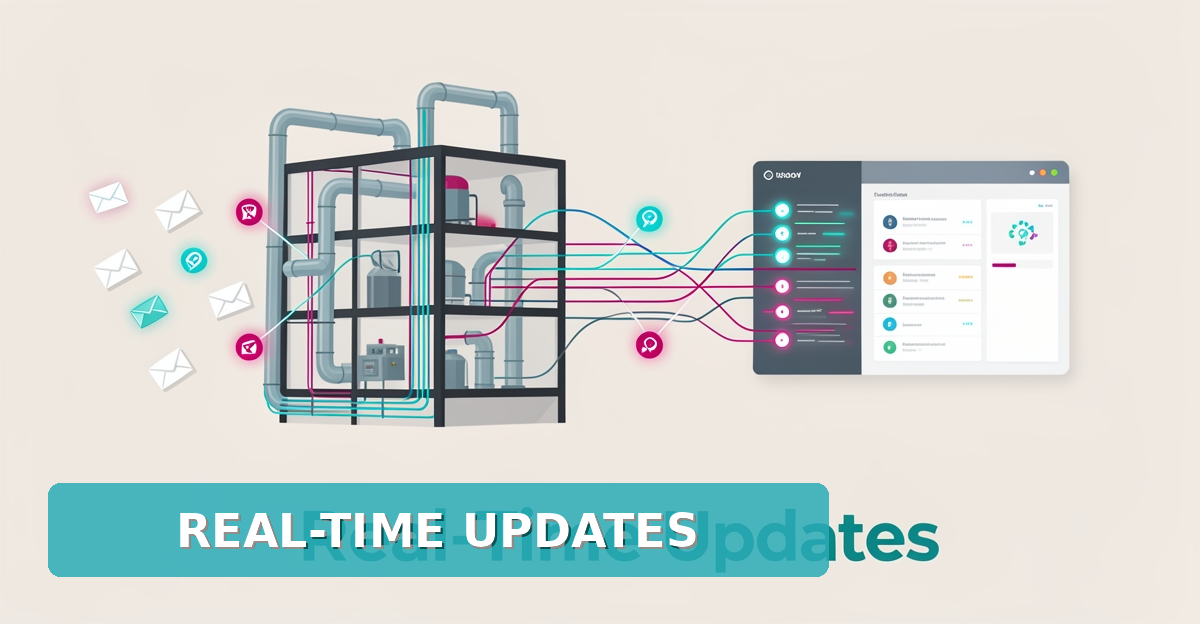
How AI Can Transform Client Communication in MEP Projects — From Emails to Real-Time Updates
Key Facts
- The global AI in construction market has been projected to reach the multi-billion-dollar range by 2026 according to market analysis.
- McKinsey research suggests AI can boost construction productivity by up to 20% in industry studies.
- AI-powered tools are typically credited with a 15-30% reduction in costs in MEP projects per MEP industry coverage.
- A majority of customers report a better experience when contacted proactively, per customer experience research in CX studies.
- Most organizations still rate their data as average, poor, or very poor for AI readiness per automation research.
- A large share of business processes in construction remain paper-based according to industry data.
Hire a team member that works 24/7 — for less than a part-time wage.
AI receptionists, SDRs, dispatchers and 99+ roles. Trained on your business, fully managed.
Not sure where to start? Ask our AI planner
The MEP Communication Bottleneck
The MEP communication bottleneck isn't just an inconvenience—it's a silent drain on project velocity and client trust. Engineers and project managers routinely lose hours each day to reactive email chains, manual status updates, and answering the same client questions about timelines, change orders, or site access. This constant firefighting pulls focus from critical technical work, especially amid rising project complexity and a persistent skilled labor shortage that leaves teams stretched thin. As a result, delays in communication often translate directly into schedule slips and costly rework, eroding the very trust firms work hard to build.
Industry research suggests a large share of business processes in construction remain paper-based, and only a minority of firms have integrated systems or workflow automation in place. This reliance on outdated methods means status updates are frequently generated from memory or scattered documents, leading to inconsistencies that require further clarification. When clients don't receive timely, accurate information, they resort to follow-up calls and emails, creating a cycle of responsiveness that consumes valuable engineering bandwidth. The situation is exacerbated by data readiness challenges—most organizations rate their data as average, poor, or very poor for AI use, and the majority encounter data quality issues during implementation, undermining the reliability of any automated communication effort.
Without intervention, this reactive cycle strains client relationships and increases operational friction. Proactive communication, however, has been shown to significantly improve perception—a majority of customers report a better experience when contacted proactively, transforming how they view the company. By shifting from manual, error-prone updates to AI-driven systems that provide real-time progress tracking, automated documentation, and intelligent query handling, MEP firms can reclaim lost hours, reduce costly miscommunications, and lay the foundation for transparency that strengthens client partnerships throughout the project lifecycle. AIQ Labs helps MEP firms navigate this shift with [AI Employees](/ai-employees) — managed AI staff such as coordinators and client-communication agents that understand engineering context, integrate with existing project data, and deliver accurate, timely updates at roughly 80% less cost than a human hire.
From Reactive Emails to Proactive Real-Time Updates
MEP project managers are drowning in status requests, RFIs and follow-up emails while site reality moves faster than manual reporting can keep up. AI flips that dynamic by turning communication from a reactive chore into a proactive, trust-building system.
Instead of waiting for a client to ask, firms can push real-time, evidence-based updates that are generated from site data and project records. Customer experience research consistently finds that customers who are contacted proactively report a better experience that changes their perception of the company for the better. That shift from "please send an update" to "here's what happened today" reduces friction and protects margins.
Real-time progress tracking is the foundation. Tools like OpenSpace and Buildots use computer vision to automatically capture site progress and compare it against BIM models, creating a visual record that can be shared with clients instantly. Construction technology analysis documents cases of significantly reduced project delays with this approach. AI-driven tools have also been credited with meaningfully less downtime annually by analyzing real-time data, according to MEP industry coverage.
Proactive transparency is enabled by three converging capabilities:
- Real-time progress tracking with computer vision that compares site capture to BIM and pushes visual proof of completion
- Automated documentation and summarization that turns meeting transcripts and project data into consistent status reports
- Intelligent query handling with RAG that answers routine client questions from project specs, RFIs and past decisions with citations
Automated documentation removes the manual bottleneck of report writing. AI tools can automatically generate meeting minutes, summarize design decisions, and create status reports from project data, ensuring clients receive consistent, accurate and timely updates without manual effort from engineers. This frees senior staff for judgment work while keeping clients informed.
Intelligent query handling addresses the hours MEP firms spend responding to client queries. Retrieval-Augmented Generation allows an AI to access a firm's specific knowledge base — project specs, codes, past decisions — to answer client questions with context and citations. That reduces interruptions and improves responsiveness.
The business impact is measurable. MEP-focused research notes AI-powered tools are typically credited with a 15-30% reduction in costs in MEP projects, while McKinsey research cited in industry analysis suggests AI can boost construction productivity by up to 20%. For MEP firms under pressure from tighter timelines and skilled labor shortages, that productivity gain translates directly to better client experience.
AIQ Labs builds AI agents that understand engineering jargon and deliver accurate, context-aware responses, helping firms maintain transparency without adding headcount. The goal is augmentation, not replacement: proactive real-time updates handle routine communication so project managers can focus on complex issues that require human empathy and strategic thinking.
Data, Trust, and Human Oversight for MEP AI
MEP firms can't scale client communication on manual updates alone, and AI only delivers trust when the foundation is solid. The promise of real-time transparency runs into a hard reality about data, governance, and human judgment.
The readiness paradox is stark. Recent automation research finds most organizations rate their data as average, poor, or very poor for AI readiness, even as adoption accelerates. The same research shows the majority of organizations faced data challenges during AI implementation, with a substantial share encountering issues related to internal data quality. For MEP communication, that means BIM models, schedules, and RFI logs must be clean, consistent, and connected before any chatbot or status agent can be trusted.
Data quality is not a technical nicety; it is a client trust issue. Customer experience analysis notes a majority of consumers have lost trust due to lack of transparency in how businesses handle their data. When an AI-powered update cites a schedule variance or RFI closure, the client expects accuracy, not hallucination. Poor or chaotic data can lead to wrong results and erode credibility faster than manual delays ever did.
Human oversight remains non-negotiable. AI is an assistant, not a replacement for engineering judgment, and all outputs must be checked for accuracy. In client-facing workflows, that translates to human-in-the-loop review for summaries, change explanations, and risk communications. AI can draft, retrieve, and personalize, but a project manager must validate before a client sees it.
A practical governance approach for MEP communication includes:
- Scope data hygiene to specific communication datasets first, such as a single project's BIM, schedule, and RFI log, rather than attempting wholesale change
- Require validation layers and audit trails for any AI-generated client update, with clear escalation rules for delays, change orders, or safety issues
- Train teams to interpret AI insights and maintain ownership of client relationships, emphasizing augmentation not replacement
This augmentation model protects trust and efficiency. Proactive, data-driven updates are valued by clients, with a majority reporting a better experience when contacted proactively. AIQ Labs builds AI agents that understand engineering jargon and deliver accurate, context-aware responses, but those agents are designed to work alongside project teams with governance, privacy controls, and human review built in.
When data is ready, oversight is clear, and the human element leads, AI shifts MEP client communication from reactive email chains to transparent, real-time partnership.
A Practical Roadmap to AI-Powered Client Communication
MEP teams lose hours each week to reactive emails, status calls, and manual reports while clients wait for clarity. Shifting to proactive, data-driven communication is the fastest way to rebuild trust and free engineers for real problem-solving.
A practical roadmap starts with visibility, not software. Audit current client touchpoints to quantify where time disappears: status updates, repetitive RFIs, meeting minutes, and change-order explanations. Firms that map high-volume, repetitive analysis first see the clearest ROI when automating. For many firms, the fastest entry point is an [AI Workflow Build](/workflow-builds) — rebuild the one workflow that costs the most, at a fixed price, in phases.
Clean focused datasets before any pilot. AI is only as reliable as the data it ingests, and industry research shows most organizations rate their data as average, poor, or very poor for AI readiness. Start with one project's BIM models, schedule, and RFI log, improve structure and accuracy, and expand from there.
Pilot tools for updates and reporting on a single project. Computer-vision site capture can push visual progress against BIM automatically, while LLMs can draft meeting summaries and status reports from project data. Construction analysis notes AI can boost construction productivity by up to 20%, and MEP-specific research documents 15-30% cost reduction in projects using AI-powered tools.
Train teams to treat AI as an assistant, not a replacement. Engineers must review every client-facing output for accuracy and code compliance. Human oversight preserves judgment and builds client confidence, especially when communicating delays or changes.
Establish governance early. Define what data is shared, how updates are approved, and where human-in-the-loop review is mandatory. Transparency about AI use supports trust, as a majority of consumers have lost trust due to lack of transparency in how businesses handle data.
Scale with discipline after measurable wins.
- Audit workflows and time spent on repetitive client queries
- Clean and focus a single dataset tied to client communication
- Pilot real-time updates and automated reporting on one project
- Train teams and set governance for review, privacy, and escalation
- Scale to additional projects once time and cost savings are proven
When implemented this way, AI handles routine status delivery and query handling so project managers can focus on complex conversations. For firms ready to go further, an [AI Operating System](/ai-operating-systems) connects communication, scheduling, and project data into one operating layer built in phases and owned outright. AIQ Labs has deployed 200+ multi-agent systems and runs four live SaaS products daily, so the approach is proven in production — not just in theory.
Still paying for 10+ subscriptions that don’t talk to each other?
We build custom AI systems you own outright. No vendor lock-in. Full control.
Not sure where to start? Ask our AI planner
Frequently Asked Questions
How much time do MEP teams typically lose to reactive client communication like emails and status updates?
Do clients actually value proactive communication?
Can AI really reduce project delays in MEP work?
Is my project data ready for AI, and what are the common data challenges MEP firms face?
Do I need to worry about AI replacing my engineering team or making decisions without oversight?
What kind of cost savings can MEP firms expect from using AI in client communication and project management?
Turn Communication Into Your Competitive Edge
The shift from reactive email chains to proactive, real-time client communication isn't just about adopting new technology—it's about reclaiming the hours your team loses to status updates and repetitive queries while building the transparency that turns clients into long-term partners. By starting with clean data, piloting AI tools on a single project, and maintaining human oversight for critical communications, MEP firms can deliver the responsive, evidence-based updates that clients increasingly expect. The firms that thrive won't be those with the largest teams, but those that leverage intelligent automation to focus engineering talent where it matters most. AIQ Labs builds AI employees and custom agents that understand engineering context and integrate with your existing project data, delivering accurate client communication without adding headcount — with payment models that fit how you buy: Start Monthly, Build in Milestones, or Own It Outright. Ready to explore how AI can transform your client relationships? [Start with a 2-minute Fit Check](/apply) to identify your highest-ROI automation opportunity, or [book a free 30-minute strategy call](/book) to map your path forward with an AI engineer who understands MEP workflows. Questions first? Reach us at [email protected].
Make AI your competitive advantage — not just another tool.
Strategy, implementation and ongoing optimization. One partner, end to end.
Not sure where to start? Ask our AI planner