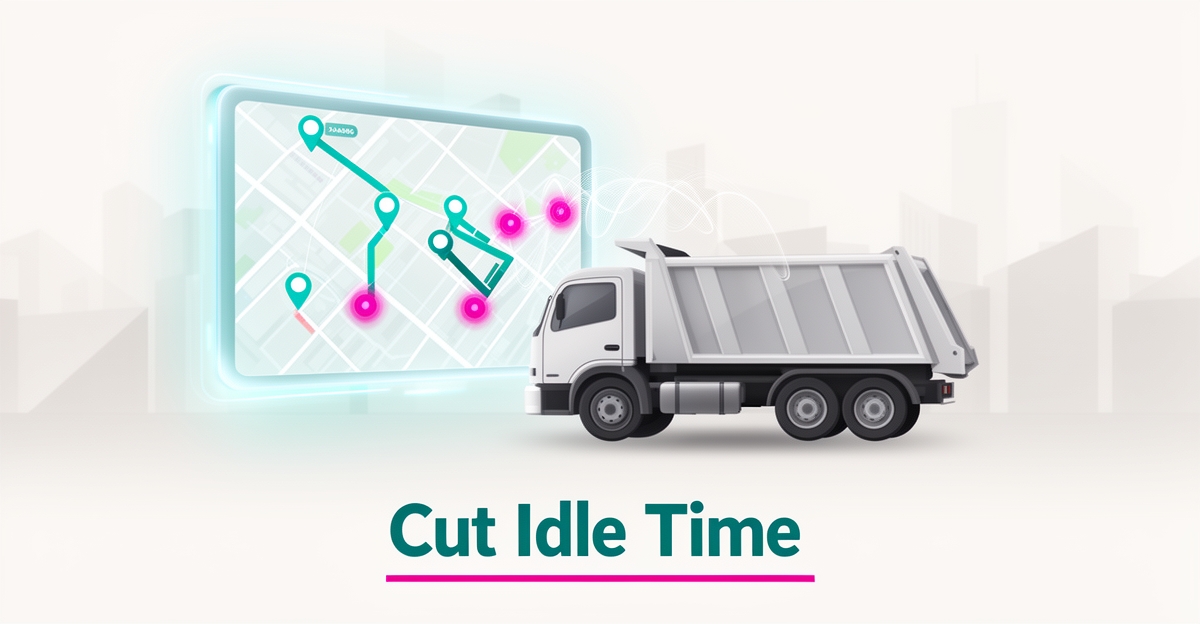
How AI Employees Can Reduce Driver Idle Time in Junk Removal
Key Facts
- A diesel engine burns roughly 0.8 gallons of fuel per idle hour, fuel spent with zero productive miles
- Each hour of idling consumes fuel equivalent to about 2 miles of driving
- Most idle time in junk removal originates at the communication layer: unconfirmed jobs, late reschedules, and missing access details
- Driver behavior and coordination decisions account for a meaningful share of avoidable fuel expense on commercial fleets
- AI employees offer 24/7 availability with lower marginal cost and rapid scalability compared with adding headcount
- Proactive confirmation and real-time updates reduce idle triggers before they ever reach the driver
Hire a team member that works 24/7 — for less than a part-time wage.
AI receptionists, SDRs, dispatchers and 99+ roles. Trained on your business, fully managed.
Not sure where to start? Ask our AI planner
The Hidden Cost of Driver Idle Time in Junk Removal
Driver idle time represents a silent profit drain in junk removal operations, with each hour of unnecessary idling directly eroding fleet margins. A diesel engine burning roughly 0.8 gallons of fuel per idle hour translates to thousands of dollars in wasted fuel annually per vehicle, and across a fleet, that compounds fast. This isn't just about fuel. It's about gallons burned with zero productive miles, accelerating engine wear while generating no revenue.
- A diesel engine burns roughly 0.8 gallons of fuel per idle hour
- Each hour of idling equals about 2 miles of driving in fuel consumption
- Idle hours accelerate engine wear and maintenance intervals while producing no revenue
Beyond fuel waste, prolonged idling increases maintenance costs and elevates risk, with driver behavior and coordination decisions contributing a meaningful share of avoidable fuel expenses and a disproportionate share of liability. AIQ Labs addresses this through [AI Employees](/ai-employees) like the Job Coordinator and Field Liaison, which proactively confirm schedules, manage follow-ups, and deliver real-time updates, minimizing the delays that force drivers to idle waiting for job details or customer availability. By reducing idle time through smarter coordination, fleets not only cut fuel costs but also extend asset life and improve driver utilization, turning wasted hours into productive revenue-generating activity.
Why Idle Time Persists and Where AI Can Intervene
Idle time in junk removal rarely comes from a single breakdown. It accumulates in the gaps between jobs where drivers wait for confirmations, updated addresses, or the next dispatch.
Late confirmations and missed pickups are the most common triggers. Customers request changes by phone or text after hours, and manual follow-up does not happen until the next business day. Drivers arrive to find the job cancelled, rescheduled, or missing access instructions, then sit with the engine running.
Poor dispatch coordination compounds the problem. Dispatchers juggle calls, texts, and spreadsheets while trying to sequence routes in real time. A single delay ripples across the day, leaving trucks parked between stops. Manual follow-ups add more friction, with repeated calls to confirm windows and chase paperwork.
Human teams face natural limits. Availability is capped at 40 hours per week, cost scales linearly with headcount, and responsiveness drops after hours. AI employees offer 24/7 availability with lower marginal cost and rapid scalability with minimal friction, AIQ Labs' managed AI staff typically run at a fraction of the cost of equivalent human coordination roles.
AI employees change the intervention points. Instead of waiting for a human to return a call, an AI voice agent confirms pickup times, collects access details, and sends real-time updates the moment a change occurs. This reduces the idle triggers before they reach the driver.
In practice, the reduction is measurable. A diesel engine idling for one hour burns roughly 0.8 gallons of fuel, fuel spent with zero miles gained. Shaving even a fraction of idle hours across a fleet produces corresponding drops in fuel spend and engine wear, which is why structured idle reduction programs are a standing priority in fleet management.
AIQ Labs deploys AI employees like the Job Coordinator and Field Liaison for exactly these repetitive, high-volume follow-ups. The system handles scheduling, confirmation, and real-time updates 24/7 without adding headcount.
Where AI employees intervene in the idle cycle:
- Proactive confirmation calls and SMS before the route starts to verify windows and access
- Instant rescheduling and customer updates when a job changes, preventing a wasted arrival
- Real-time dispatch nudges and ETA notifications to keep drivers moving between stops
- Automated post-job follow-up for signatures, photos, and invoicing to close the loop
The result is consistent coverage without coverage gaps. AI voice and communication agents are built for this kind of proactive outreach, and when applied to operations they keep trucks productive instead of waiting.
Availability, cost, and scalability shift together. AI employees work 24/7/365, never call in sick, and scale instantly with demand. Human teams remain essential for complex problem-solving and on-site judgment, while AI handles the repetitive coordination that creates idle time in the first place.
AI Employees as Job Coordinator and Field Liaison
Most idle time in junk removal doesn't come from bad drivers, it comes from bad information. When a driver arrives to a job that was never confirmed, or waits on a customer who rescheduled without telling dispatch, the truck sits burning fuel for nothing. AI employees attack this problem at the communication layer, where most idle time actually originates.
The Job Coordinator role handles the proactive outreach that keeps schedules accurate. Instead of dispatchers chasing confirmations between other tasks, an AI Job Coordinator confirms pickup times the day before, sends morning-of reminders, and reschedules jobs the moment a customer calls to change plans. Because it works 24/7, a customer calling at 9 p.m. to move a pickup gets handled instantly, before the driver is already en route the next morning. This kind of structured, consistent follow-up is what fleet idle reduction strategies are built on: removing idle triggers before they reach the driver.
The Field Liaison role manages the other half of the equation: driver communication and status changes. When a job finishes early, runs long, or a customer isn't home, the driver updates the AI Liaison, and the system immediately adjusts downstream jobs, notifies the next customer, and keeps the route moving. No more drivers idling in a driveway waiting for someone to answer a phone at the office. This kind of real-time status management matters because driver behavior and coordination decisions account for a meaningful share of avoidable fuel cost on commercial fleets, and better coordination directly improves those decisions.
The payoff compounds across a fleet. A diesel engine idling for one hour burns roughly 0.8 gallons of fuel, and across dozens of vehicles those idle hours add up to thousands of gallons annually. Shaving even a fifth of that through better job coordination changes the economics of an operation.
What this coordination layer looks like in practice:
- Proactive pickup confirmations the day before, eliminating no-show waits
- Instant rescheduling that reroutes drivers before they leave the yard
- Real-time status updates pushed to customers when jobs shift
- Driver check-ins captured and routed without phone tag with dispatch
AIQ Labs deploys AI Employees like the Job Coordinator and Field Liaison as managed roles, trained on a company's specific processes, integrated with scheduling and dispatch tools, and monitored continuously. The result is a coordination layer that never takes a day off, keeping trucks moving and drivers productive instead of parked.
Implementation Roadmap for Idle Reduction with AI
Reducing driver idle time in junk removal isn't just about saving fuel, it's about reclaiming thousands of hours of lost productivity annually. With diesel engines burning fuel every idle hour, the financial impact is significant, but the solution is surprisingly accessible.
The first step is identifying which follow-up tasks consume the most administrative time. AI employees excel at high-volume repetitive tasks like customer confirmations, scheduling, and data entry, freeing human staff for complex problem-solving. For junk removal operations, this means mapping every touchpoint where drivers wait for confirmation, updates, or instructions.
Once you've identified these bottlenecks, integration becomes critical. AI employees must connect seamlessly with your existing dispatch and CRM systems to access real-time job data. This integration enables the AI to proactively confirm pickup times, send arrival notifications, and update job statuses without human intervention. The result? Drivers spend less time waiting and more time hauling.
Real-time tracking forms the backbone of effective idle reduction. Fleet idle reduction strategies consistently emphasize structured programs: logging idle events, analyzing patterns, and triggering alerts when drivers exceed thresholds. AI employees enhance this by automating the coordination side, so the idle events never happen in the first place, and the ones that do get flagged and addressed.
Training your team to work alongside AI is equally important. Drivers and dispatchers need to understand that AI handles routine communications while they focus on complex customer interactions and route optimization. This isn't about replacement, it's about augmentation. Active coaching combined with AI monitoring is widely associated with improved fuel efficiency and reduced accident frequency on commercial fleets.
Continuous monitoring ensures your AI employees deliver sustained value. Track metrics like average idle time per job, fuel consumption trends, and customer satisfaction scores. AIQ Labs builds this monitoring directly into every deployment, with dashboards that show exactly how much time and money you're saving. Our Start Monthly model lets you deploy a single AI employee, like a Job Coordinator or Field Liaison, with setup, training, and ongoing optimization included in one flat monthly plan.
For operations ready to scale, our Build in Milestones approach breaks implementation into phases, letting you approve and pay for each stage as it ships. And for businesses seeking complete control, the Own It Outright model transfers full ownership of code, agents, and data upon completion. Whichever path you choose, the goal remains the same: turning idle time into productive time.
- Audit current workflows to identify automation opportunities
- Integrate AI employees with dispatch and CRM systems
- Enable real-time tracking and automated alerts
- Train teams on AI collaboration and escalation protocols
- Monitor performance metrics and optimize continuously
The path to reduced idle time starts with a single step. Whether you begin with one AI employee or a comprehensive system, the key is starting now, before another tank of fuel burns away while your trucks sit still.
Still paying for 10+ subscriptions that don’t talk to each other?
We build custom AI systems you own outright. No vendor lock-in. Full control.
Not sure where to start? Ask our AI planner
Frequently Asked Questions
How much fuel does a single truck waste from idling each hour?
What is the annual fuel cost of idling for a junk removal fleet?
How much can idle time be reduced with AI employees in junk removal operations?
What share of avoidable fuel costs is linked to driver behavior in commercial fleets?
Can AI employees work outside regular business hours to prevent driver idle time?
How do I start with AI employees for my junk removal fleet?
Turning Idle Time into Your Next Competitive Edge
Driver idle time isn't just a fuel cost, it's a drain on productivity, asset life, and customer satisfaction in junk removal operations. This article showed how AI Employees like the Job Coordinator and Field Liaison attack idle time at its source: communication gaps that leave trucks waiting for confirmations, updates, or instructions. By proactively confirming schedules, managing real-time changes, and keeping drivers moving between jobs, these AI roles remove the idle triggers before they reach the driver, translating directly to fuel savings, reduced wear, and more revenue-generating hours. With a diesel engine burning roughly 0.8 gallons per idle hour, even modest improvements reshape the bottom line. The path forward starts with identifying where your team spends time on repetitive follow-ups that AI can handle 24/7. To see how this applies to your specific operations, start with the free Fit Check and strategy call, where we'll identify your highest-ROI automation opportunity or tell you plainly if there isn't one. You can [meet the AI Employees](/ai-employees) or [apply for a Fit Check](/apply) to get started.
Make AI your competitive advantage — not just another tool.
Strategy, implementation and ongoing optimization. One partner, end to end.
Not sure where to start? Ask our AI planner