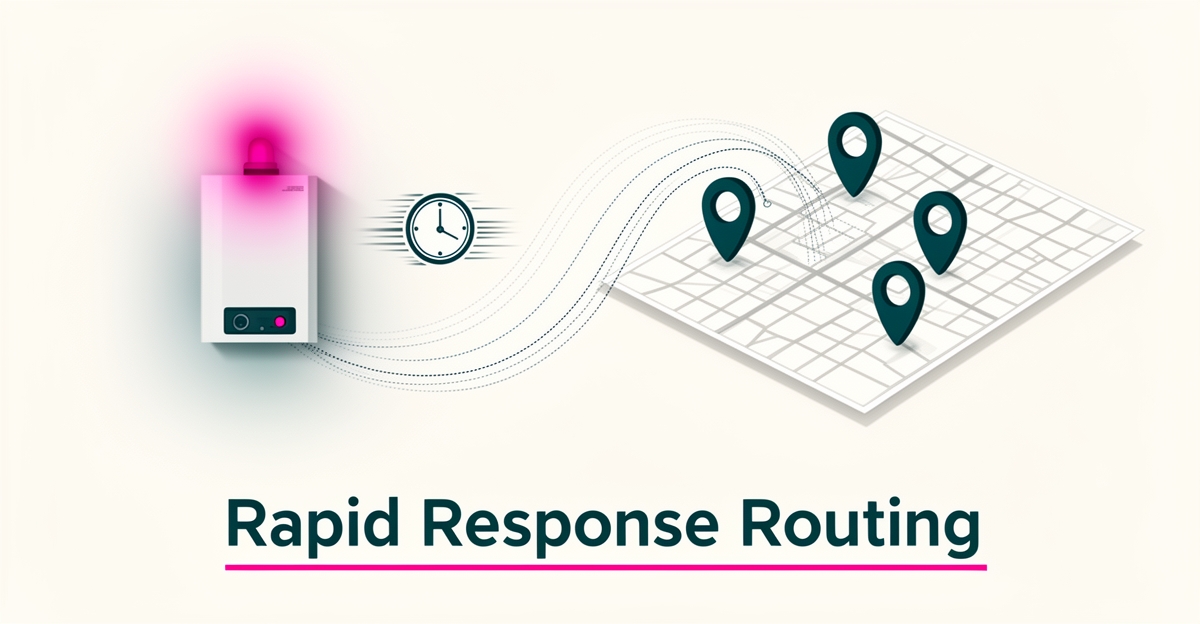
How AI-Powered Dispatching Reduces Response Time for Emergency Boiler Repairs
Key Facts
- Industry-reported figures suggest AI-powered dispatch can reduce emergency response times by double-digit percentages, with some deployments reporting reductions approaching 40% according to industry research
- Intelligent dispatch automation is typically reported to reduce dispatcher call-handling time by 15-40% per industry analysis
- Field-service organizations commonly see 10-25% uplift in first-time-fix rates with AI dispatch based on operational data
- AI-powered technician scheduling is typically reported to reduce miles driven per job by 8-20% per field service reports
- Emergency response times have been reported to drop 12-35% with AI dispatch for emergency services per industry benchmarks
- Real-time data integration enables dynamic rerouting during traffic disruptions or new emergencies as described in system capabilities
- Predictive staging can position technicians in high-demand zones before calls arrive using weather and historical patterns
Hire a team member that works 24/7 — for less than a part-time wage.
AI receptionists, SDRs, dispatchers and 99+ roles. Trained on your business, fully managed.
Not sure where to start? Ask our AI planner
The Cost of Slow Emergency Boiler Response
When a boiler fails during winter, every minute of delay compounds risk, for the customer facing frozen pipes and unsafe conditions, and for the service provider whose reputation and revenue hinge on rapid response. Traditional rule-based dispatch systems, reliant on manual call handling and static technician routing, struggle to meet these urgent demands. Dispatchers often juggle multiple systems, phone logs, spreadsheets, and basic GPS tools, leading to delayed technician assignment and inconsistent prioritization of true emergencies. This reactive approach frequently results in missed service-level agreements (SLAs), as technicians are dispatched based on rigid rules like shift rotation or alphabetical queues rather than real-time proximity, skill matching, or job urgency. The consequence is not just longer wait times but tangible business costs: organizations using intelligent dispatch automation typically report 15-40% reductions in dispatcher call-handling time, yet many still operate with legacy workflows that inflate operational overhead and erode customer trust.
For HVAC and field service firms, slow emergency response directly impacts both revenue and reputation. Delayed arrivals increase the likelihood of secondary damage, such as water leaks from ruptured boiler pipes, which can transform a simple repair into a costly restoration job, reducing first-time-fix rates and increasing repeat visits. Field-service organizations commonly report 10-25% uplift in first-time-fix rates when using intelligent dispatch, highlighting how traditional methods leave performance on the table. Beyond immediate job costs, slow response damages customer satisfaction and referral potential; in an industry where emergency trust is paramount, a single negative experience can deter future contracts and harm online reviews. AIQ Labs addresses this gap by rebuilding the dispatch workflow that costs you the most, integrating with your existing CRM and GPS tools to enable dynamic prioritization of emergencies based on location, technician availability, and real-time traffic data. By transforming dispatch from a manual bottleneck into an intelligent, adaptive layer, these systems can cut emergency response times by double-digit percentages, turning a critical vulnerability into a competitive advantage. See how we approach this with our AI Workflow Builds.
How AI-Powered Dispatch Prioritizes and Assigns Faster
When a boiler fails at 2 AM in the dead of winter, the difference between a minor inconvenience and a catastrophic property emergency often comes down to how quickly a technician arrives. AI-powered dispatch systems transform this critical moment by replacing human guesswork with intelligent, data-driven decision-making that gets the right technician to the right location faster.
Traditional dispatch operates on a first-come, first-served basis with manual coordination that wastes precious minutes. AI dispatch systems instead analyze multiple variables simultaneously, technician location, skill certifications, parts inventory, traffic conditions, and emergency severity, to make optimal assignments in seconds. According to industry research, AI-powered dispatch systems for emergency services have demonstrated 12-35% reductions in response times while improving first-time-fix rates by 10-25%.
The technology works through three interconnected capabilities. First, real-time data ingestion pulls information from GPS trackers, traffic APIs, and IoT sensors to create a live operational picture. Second, predictive analytics analyze historical patterns to anticipate demand spikes and pre-position resources. Third, multi-constraint optimization algorithms weigh competing factors, urgency, proximity, expertise, and equipment, to make assignments that human dispatchers simply cannot calculate at speed.
Here's how AI prioritization transforms emergency boiler repair dispatch:
- Emergency severity scoring that distinguishes between "no heat" calls requiring immediate response and routine maintenance requests
- Skill-based matching that pairs boiler-specific certifications and experience levels with the technical requirements of each job
- Dynamic rerouting that adjusts assignments mid-route when traffic, cancellations, or new emergencies emerge
- Predictive staging that positions technicians in high-demand zones before calls arrive based on weather patterns and historical data
The operational impact extends beyond speed. Organizations deploying intelligent dispatch automation typically report 15-40% reductions in call-handling time, freeing dispatchers to focus on complex cases requiring human judgment. Field-service organizations also commonly see 8-20% reductions in miles driven per job, cutting fuel costs while improving response times.
AIQ Labs builds custom dispatch workflows that integrate with existing CRM and GPS tools, creating a unified system where AI handles routine optimization while human dispatchers maintain oversight. The technology works continuously in the background, learning from each completed job, refining its models, and adapting to seasonal patterns specific to boiler repair demand.
The result is a dispatch operation that doesn't just react faster but anticipates needs, optimizes resources, and delivers measurable improvements in both customer satisfaction and operational efficiency.
Integration and Real-Time Visibility for Customers and Teams
Emergency boiler failures don’t wait for business hours, and dispatchers can’t afford blind spots when a building loses heat. AI-powered dispatch turns fragmented tools into a single, responsive control layer that sees the whole operation in real time.
Integration starts by connecting existing CRM, GPS, and field service platforms into one unified operational view. Modern cloud-native AI dispatch platforms unify data from enterprise systems including ERP, CRM, fleet management software, and emergency call systems, eliminating silos and providing a single source of operational truth. This approach preserves legacy investments while adding intelligence on top.
Real-time feeds make the difference between reactive and proactive response. GPS location, IoT sensor alerts from boilers, traffic APIs, and weather data stream into the dispatch engine continuously. The system can respond instantly to disruptions such as road closures, equipment failures, or sudden demand spikes. Predictive analytics for call volume allows dispatch systems to anticipate demand before it materializes.
A unified view enables automated, context-rich customer and team updates without manual calls. Customers receive live ETA updates, technician name and photo, and status changes as conditions shift. Teams see skill-matched assignments, prioritized emergencies, and dynamic routing in one interface. According to industry research, organizations deploying intelligent dispatch automation typically report 15-40% reduction in dispatcher call-handling time.
Custom workflows built around this integration deliver measurable gains for emergency boiler repair. AIQ Labs builds custom dispatch workflows that integrate with existing CRM and GPS tools, cutting emergency response times without ripping out legacy systems. The design focuses on real-time visibility for customers and teams and practical automation.
Core integration capabilities include:
- CRM and GPS tool sync for unified customer, asset, and technician records
- Live ingestion of GPS/IoT/traffic/weather feeds for dynamic routing
- Automated real-time updates to customers via SMS, email, and app notifications
- Skill and SLA-based technician assignment with proximity and availability matching
Field-service organizations commonly report 8-20% reductions in miles driven per job through AI-powered technician scheduling and dispatch, while AI-powered dispatch systems for emergency services have demonstrated 12-35% reductions in response times. These improvements compound into faster repairs, fewer repeat visits, and higher customer satisfaction.
By keeping existing systems in place and adding an intelligent orchestration layer, businesses gain enterprise-grade dispatch without disruption.
From Pilot to Production: A Practical Implementation Path
AIQ Labs helps field service teams move from pilot to production with a lean implementation path that targets real dispatch bottlenecks first. Start by mapping your current workflow to find where delays happen, whether it's manual technician assignment, slow call routing, or lack of real-time location data. Then, launch a single AI dispatch workflow focused on emergency boiler repairs, integrating it with your existing CRM and GPS tools to automate priority-based assignments. This phased approach lets you validate impact quickly while keeping disruption low, aligning with our Build in Milestones model where you approve and pay for each phase as it ships.
Next, connect real-time data streams like live GPS feeds, traffic APIs, and weather inputs to enable dynamic resource allocation, critical for reducing response times during urgent calls. Train your dispatchers and technicians on the new system using role-specific sessions that emphasize how AI supports, rather than replaces, their expertise. Finally, measure KPIs such as response time, first-time-fix rate, and cost per job to track progress; organizations using intelligent dispatch automation typically report 15-40% reductions in dispatcher call-handling time and 10-25% uplift in first-time-fix rates. Industry research suggests these systems can cut emergency response times by double-digit percentages when properly integrated, giving you clear benchmarks for success.
- Identify dispatch bottlenecks through workflow mapping
- Launch one AI workflow for emergency assignments
- Integrate real-time GPS, traffic, and CRM data
- Train staff with role-based change management
- Measure response time, first-time-fix, and cost per job
This implementation path ensures you build confidence early, scale intelligently, and own your AI dispatch system outright, turning a pilot into a permanent operational advantage without vendor lock-in.
Still paying for 10+ subscriptions that don’t talk to each other?
We build custom AI systems you own outright. No vendor lock-in. Full control.
Not sure where to start? Ask our AI planner
Frequently Asked Questions
How much faster can AI dispatching make emergency boiler repairs?
Do I have to replace my existing CRM or GPS software to use AI dispatching?
How does AI decide which emergency calls get prioritized first?
Will AI dispatching replace my human dispatchers?
What measurable ROI can I expect from AI-powered dispatch?
How should a small service business start implementing AI dispatch?
Turning Emergency Response into Your Competitive Edge
When boilers fail in the dead of winter, every minute of delay risks customer trust, revenue, and reputation. AI-powered dispatch transforms this vulnerability into strength by intelligently matching the right technician to the right emergency, using real-time location data, skill-based assignments, and dynamic rerouting to cut response times while boosting first-time-fix rates. The result isn’t just faster repairs; it’s fewer repeat visits, lower fuel costs from reduced mileage, and dispatchers freed to focus on complex cases instead of manual coordination. For field service teams ready to move beyond legacy workflows, the path forward is clear: map your current bottlenecks, launch a focused AI workflow for emergency assignments, and integrate real-time GPS, traffic, and CRM data to measure impact on response time and job efficiency. Take the first step with a free, no-obligation strategy session to see where AI can unlock your biggest operational win, Start the Fit Check → https://aiqlabs.ai/apply.
Make AI your competitive advantage — not just another tool.
Strategy, implementation and ongoing optimization. One partner, end to end.
Not sure where to start? Ask our AI planner