How AI-Powered Site Mapping Reduces Installation Errors in Off-Grid Solar Battery Projects
Key Facts
- AI-powered site mapping analyzes terrain, shading, and grid access to generate optimal solar battery placement recommendations
- Manual site assessment in rural or complex terrain is slow and error-prone, driving rework and repeat site visits
- Custom AI mapping systems can integrate with existing site planning tools through API connections
- Owning your AI mapping system outright eliminates vendor lock-in and preserves long-term control of code, agents, and data
Hire a team member that works 24/7 — for less than a part-time wage.
AI receptionists, SDRs, dispatchers and 99+ roles. Trained on your business, fully managed.
Not sure where to start? Ask our AI planner
Why Off-Grid Solar Installations Fail: The Hidden Costs of Poor Site Planning
Off-grid solar battery installations face unique challenges that traditional site planning methods often fail to address, leading to costly setbacks. Rural and remote locations frequently involve uneven terrain, unpredictable shading patterns from vegetation or structures, and limited grid access, all of which can severely impact system performance if not accurately assessed. Without precise data, installers may misjudge optimal panel placement, resulting in underperforming arrays and avoidable rework.
These oversights translate directly into financial and operational strain. Projects in off-grid settings often experience delays due to incorrect site evaluations, requiring teams to return for corrections that inflate labor costs and extend timelines. In some cases, poorly positioned batteries or inverters suffer from reduced efficiency or premature wear, undermining the system's long-term viability. For businesses operating in remote areas, such errors are not just inconvenient, they erode trust and increase the total cost of ownership.
AI-powered site mapping directly addresses these gaps by analyzing terrain, shading, and grid access to generate precise placement recommendations. By integrating with site planning software, these tools deliver actionable maps that minimize guesswork and enhance accuracy from the outset. AIQ Labs builds custom AI systems that automate this process, ensuring off-grid solar battery projects are grounded in data-driven insights rather than assumptions. This approach reduces installation errors and rework costs, particularly in complex or rural environments where traditional methods fall short. As renewable energy demand grows, accurate site planning becomes not just a technical necessity but a business imperative for sustainable off-grid solar deployment.
How AI Site Mapping Works: Terrain, Shading, and Grid Analysis
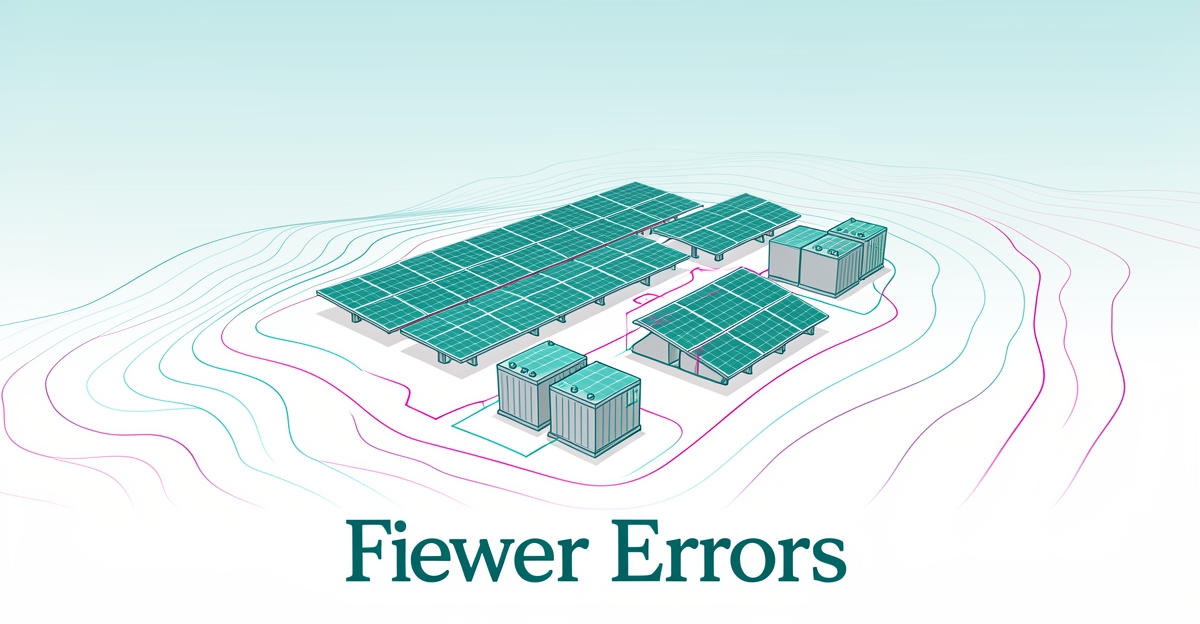
Off-grid solar battery projects fail most often not in the hardware, but in placement decisions made from incomplete site knowledge. AI-powered site mapping changes that by turning terrain, sun, and access data into actionable placement recommendations before the first trench is dug.
These systems ingest multiple geospatial layers at once and process them in parallel. Terrain topography is modeled for slope, drainage, and equipment access. Shading patterns are predicted across hours, seasons, and vegetation growth. Grid access or battery placement options are evaluated against load profiles and transport constraints. The result is an integrated map that highlights optimal locations and flags high-risk zones.
The strength of this approach is most visible in rural or complex off-grid sites where manual assessment is slow and error-prone. AI-powered site mapping tools analyze terrain, shading, and grid access to generate optimal solar battery placement, which reduces installation errors and rework costs, especially in rural or complex off-grid sites. By automating routine analysis, teams avoid the manual work that slows remote project execution and creates bottlenecks.
AIQ Labs builds custom AI systems that integrate with site planning software and deliver actionable maps automatically. This kind of build fits our AI Workflow Builds approach: rebuild the one workflow that costs the most, at a fixed price, delivered in phases. The workflow typically combines:
- Terrain modeling from elevation and soil data to identify stable, accessible mounting areas
- Dynamic shading simulation for day and seasonal sun paths, including tree and structure occlusion
- Grid and battery placement scoring based on distance, cable loss, and maintenance access
- Automated map generation that syncs directly with site planning tools for immediate use
This multi-layer processing reduces subjective judgment and rework. AI-driven decision support is widely credited with improving consistency in field operations, and similar gains transfer to site planning, where real-time guidance can close performance gaps for less experienced teams.
The market context underscores the need for precision. Off-grid solar products and distributed installations continue to expand across remote locations as of late 2026, and competition in rural markets is intensifying. Accurate first-time placement matters when every site visit adds cost and delay.
By processing terrain, shading, and access together, AI site mapping replaces guesswork with data-driven placement recommendations that lower installation errors and protect project margins in the most challenging environments.
From Data to Deployment: Reducing Errors and Rework Costs
AI-powered site mapping transforms raw geospatial and environmental data into precise installation blueprints for off-grid solar battery systems. By integrating terrain analysis, shading patterns, and grid accessibility metrics, these tools generate optimized placement recommendations that eliminate guesswork in complex rural environments. This automated approach replaces manual site assessments prone to oversight with data-driven precision that directly addresses common installation pitfalls.
The workflow begins with collecting essential site data: topographical surveys, solar irradiance maps, vegetation density reports, and existing infrastructure layouts. AIQ Labs' custom systems ingest these inputs through API connections with popular site planning software such as Aurora Solar or Helioscope, requiring minimal disruption to established engineering workflows. Once integrated, the AI processes large volumes of data in parallel, analyzing slope gradients, shadow trajectories from seasonal sun paths, and soil composition, to identify optimal battery enclosure locations that minimize wiring complexity and maximize energy harvest.
Installation teams receive actionable outputs: color-coded site maps showing recommended battery placement zones, conduit routing paths with length calculations, and foundation preparation guides tailored to local soil conditions. Some teams pair these maps with tablet-based overlays that project virtual equipment onto the physical site, which can meaningfully reduce measurement errors compared to traditional tape-and-stake methods. Crucially, the system flags potential conflicts, such as underground utilities or unstable ground, before crews mobilize, preventing costly mid-project discoveries.
This proactive error prevention delivers tangible financial benefits. Teams using AI-guided mapping typically see fewer return visits for corrections and less rework, which cuts field labor hours while maintaining installation quality. The resulting cost savings extend beyond direct labor: fewer site visits mean reduced vehicle emissions, lower accommodation expenses for remote crews, and diminished risk of weather-related delays that plague off-grid projects.
For implementation, the required data inputs are straightforward yet comprehensive: LiDAR or photogrammetry-derived elevation models, hourly shading simulations based on geographic coordinates, and utility access points within a defined radius. AIQ Labs' architecture ensures these inputs flow automatically from existing GIS platforms into the mapping engine, with validation checks that alert engineers to data gaps before processing begins. The output isn't just a static PDF, it's a living document that updates as site conditions change, ensuring installation teams always work from the most current, accurate plan available. This end-to-end automation turns what was once a reactive, error-prone process into a streamlined, predictable phase of project delivery.
Building Your AI Site Mapping System: Integration and Ownership
AI-powered site mapping delivers measurable gains in off-grid solar installations by analyzing terrain, shading, and grid access to generate optimal battery placement, directly reducing errors and rework costs in rural or complex sites. For solar companies ready to adopt this technology, building a custom AI mapping system begins with assessing data requirements, high-resolution topographic maps, historical solar irradiance data, and site-specific grid access patterns form the foundation for accurate predictions. Integration with existing planning tools like PVWatts or Helioscope ensures seamless workflow adoption, allowing teams to receive actionable maps directly within their current design software without disrupting established processes.
Successful implementation depends on preparing your team to interpret and act on AI-generated insights. Training should focus on understanding map outputs, validating AI recommendations against site conditions, and incorporating feedback loops to continuously improve model accuracy. Companies pursuing long-term advantage often choose to own their AI infrastructure rather than rely on subscription services, eliminating vendor lock-in and enabling full control over customization, data privacy, and future enhancements. This aligns with AIQ Labs' Own It Outright model, where clients receive complete control over custom-built systems, including code, agents, and data. Depending on budget and timeline, you can also start monthly or build in milestones, the same system, structured around how you want to pay.
The business impact is clear: faster project completion through reduced planning cycles, fewer callbacks due to installation errors, and stronger positioning in rural markets where precision mapping is critical. By connecting AI site mapping to core operational workflows, such as dispatch, inventory management, and customer communication, solar firms transform a technical tool into a strategic asset. Those who own their systems outright report not only lower long-term costs but also the agility to adapt the technology as project scales or site complexities evolve, turning AI from a cost center into a driver of consistent, measurable outcomes. To explore how AIQ Labs can help design and deploy a custom site mapping system tailored to your solar installation workflow, start with the two-minute Fit Check at /apply and schedule a free 30-minute strategy call.
Still paying for 10+ subscriptions that don’t talk to each other?
We build custom AI systems you own outright. No vendor lock-in. Full control.
Not sure where to start? Ask our AI planner
Frequently Asked Questions
How does AI-powered site mapping actually reduce installation errors in off-grid solar projects?
What specific data does AI site mapping use to optimize solar battery placement?
Is there measurable proof that AI guidance improves productivity in field operations like solar installation?
Can AI site mapping tools work with the solar design software I already use?
What financial benefits come from using AI-powered site mapping in remote solar projects?
How does owning a custom AI site mapping system differ from using a subscription service?
Turn Site Planning from Guesswork into Reliable Execution
AI-powered site mapping transforms off-grid solar battery projects by replacing guesswork with data-driven precision in terrain, shading, and grid analysis, directly cutting installation errors, rework costs, and field delays. Teams using AI-guided planning typically see fewer return visits and less rework, protecting margins in remote deployments where every site visit adds expense. For solar companies aiming to scale reliably in rural markets, owning a custom mapping system means faster project completion, stronger client trust, and long-term operational control without vendor lock-in. To see how this fits your workflow, start with the two-minute Fit Check at /apply and schedule a free 30-minute strategy call with AIQ Labs to explore a tailored AI site mapping solution built for your team.
Make AI your competitive advantage — not just another tool.
Strategy, implementation and ongoing optimization. One partner, end to end.
Not sure where to start? Ask our AI planner