How an AI Compliance Officer Can Automate Regulatory Reporting for Fuel Card Providers
Key Facts
- Compliance costs have risen sharply at regulated financial institutions since 2018, with industry research suggesting they can consume up to 10% of revenue at some firms.
- AI can parse lengthy regulatory documents in minutes—a task that typically takes human analysts days.
- Industry studies of compliance automation report cost reductions of up to 85% for high-volume case processing.
- Manual data entry error rates of 4–8% typically drop to under 0.5% with automated processes.
- Client onboarding that takes 3–5 days manually can shrink to minutes with AI-powered verification.
- Implementations show audit cycle times cut by roughly 75% while expanding coverage—without new hires.
- A large majority of organizations globally report compliance requirements have grown more complex over the past three years, per recent PwC survey findings.
Hire a team member that works 24/7 — for less than a part-time wage.
AI receptionists, SDRs, dispatchers and 99+ roles. Trained on your business, fully managed.
Not sure where to start? Ask our AI planner
The Compliance Burden Fuel Card Providers Can't Ignore
Fuel card providers operate in a regulatory landscape where compliance is no longer optional—it's a growing financial and operational strain. Since 2018, compliance costs have risen substantially at regulated financial institutions, with industry research suggesting they can consume up to 10% of revenue at some firms. At the same time, a large majority of organizations globally report that compliance requirements have become more complex over the past three years, driven by evolving frameworks and multi-jurisdictional demands.
This complexity translates directly into daily operational pain. Compliance teams commonly spend dozens of hours per week on manual document review—a task AI can largely automate—while manual processes carry error rates typically between 4% and 8%. These inefficiencies are compounded by the need to monitor transactions across multiple jurisdictions, where inconsistent regulations increase the risk of oversight. For fuel card providers handling high transaction volumes, the burden of maintaining audit-ready documentation while ensuring real-time policy adherence has become unsustainable without intelligent automation. AIQ Labs addresses this challenge by building compliant, auditable AI systems that integrate directly into existing workflows, reducing manual effort while ensuring regulatory alignment.
How an AI Compliance Officer Automates Monitoring and Reporting
For fuel card providers, compliance monitoring has evolved from a periodic burden into a continuous operational necessity. AI compliance officers now enable real-time oversight of thousands of daily transactions, automatically flagging suspicious activities and policy violations before they escalate into regulatory risks. This shift transforms compliance from a reactive function into a proactive safeguard that protects both revenue and reputation.
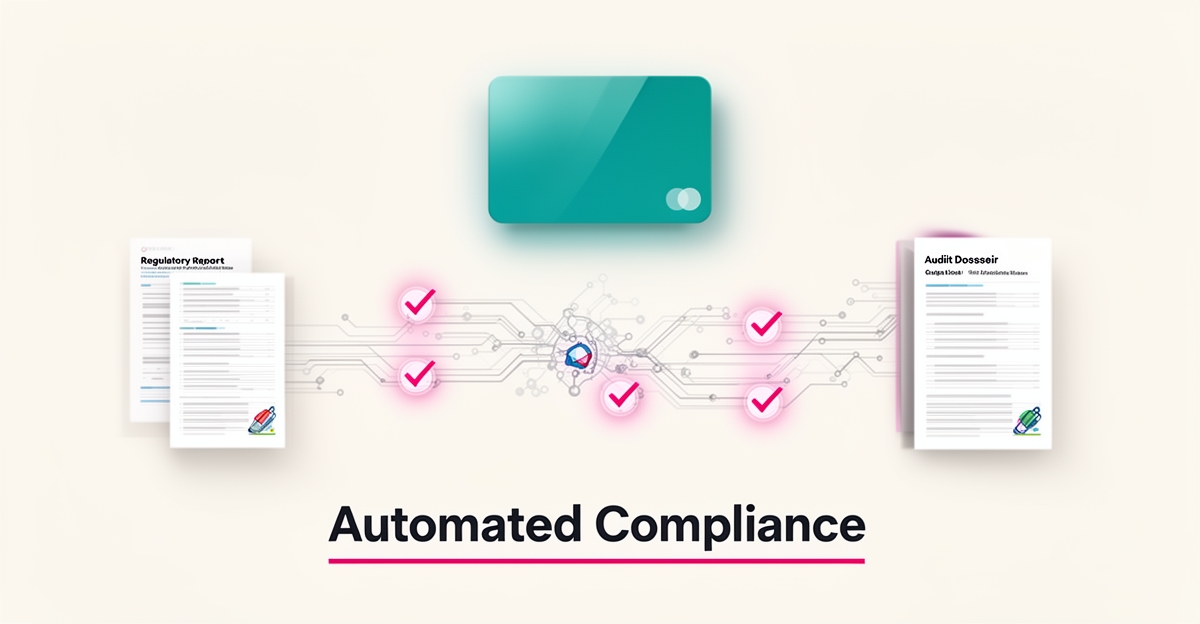
Automated document analysis allows AI systems to parse lengthy regulatory frameworks in minutes, extracting obligations and mapping changes to internal policies—a task that typically consumed days for human analysts. This capability helps fuel card providers stay ahead of jurisdictional updates across operating regions without delaying core business functions.
Risk scoring agents continuously evaluate transaction patterns, assigning severity levels to potential violations and, per compliance automation studies, reducing false positives by 60–90% compared to legacy monitoring systems. By prioritizing high-risk alerts, compliance teams focus resources on genuine threats rather than noise, improving detection accuracy while lowering operational strain.
Audit automation further strengthens readiness, with implementations showing audit cycle times cut by roughly 75% and coverage expanded meaningfully without additional headcount. Automated audit trails generate comprehensive, timestamped records for every compliance action, ensuring reports are always examination-ready and reducing the manual effort traditionally required for audit preparation.
- Real-time transaction monitoring for suspicious activity detection
- Proactive risk scoring with severity-based alert prioritization
- Audit automation that reduces cycle time and expands coverage
- Continuous regulatory change tracking across multiple jurisdictions
- Automated document analysis of complex regulations in minutes
For fuel card providers navigating complex, multi-jurisdictional requirements, these capabilities eliminate the lag between regulatory updates and operational response. AIQ Labs builds compliant, auditable AI systems that embed these monitoring functions directly into existing workflows—whether as an AI Workflow Build targeting your costliest reporting process or a broader AI Operating System connecting compliance across your whole operation. The result is a compliance posture that is not only faster and more accurate but inherently resilient to evolving regulatory demands.
From Manual Workflows to Audit-Ready Automation
The shift from manual compliance workflows to automated systems transforms how fuel card providers handle regulatory reporting. Manual processes demand significant time and resources, with compliance teams commonly spending dozens of hours per week on document review alone. For organizations processing thousands of cases annually, this adds up to substantial yearly costs driven by labor-intensive tasks like data entry, policy mapping, and audit preparation.
AI automation slashes these burdens dramatically. Industry studies of compliance automation report cost reductions of up to 85% for high-volume case processing, while cutting data entry error rates from a typical 4–8% in manual processes to less than 0.5%. This precision is critical for fuel card providers managing high transaction volumes, where even small errors can trigger regulatory scrutiny or fines. Real-time monitoring ensures violations are flagged instantly, preventing escalation and enabling proactive risk management.
Onboarding and reporting timelines also see major improvements. Client onboarding that takes 3–5 days manually can shrink to minutes with AI-powered verification, and audit cycle times can be cut by roughly 75%. These gains free up compliance teams to focus on strategic oversight rather than repetitive tasks, with industry research suggesting a majority of compliance hours are automatable. For fuel card operators, this means faster customer activation and continuous audit readiness without expanding headcount.
- Automated regulatory monitoring scans thousands of daily transactions for policy violations
- Real-time SAR generation eliminates multi-day filing delays
- Audit trails are continuously updated, ensuring examination-ready documentation
- Risk scoring prioritizes high-severity issues, reducing alert fatigue
- Vendor compliance tracking monitors third-party regulatory status in real time
Implementation approaches vary by scale. Smaller providers can start with a targeted workflow rebuild delivered in phases at a fixed price, while larger providers may opt for a full connected operating layer. Regardless of scale, AIQ Labs ensures systems align with fuel card-specific needs—handling real-time processing, multi-jurisdictional rules, and vendor compliance—while maintaining audit trails and human oversight for regulatory acceptance. The result is a shift from reactive compliance to proactive, automated governance.
Building a Compliant AI System You Own
Fuel card providers operate in a high-stakes regulatory environment where reporting accuracy and audit readiness directly impact operational continuity. Manual compliance processes consume significant resources, with teams commonly spending dozens of hours per week on document review—a burden AI can substantially alleviate.
AIQ Labs builds compliant multi-agent AI systems designed specifically for fuel card compliance needs. This approach enables continuous transaction monitoring, real-time policy violation detection, and automated generation of audit-ready reports—reducing error rates from a typical 4–8% in manual processes to under 0.5%. The system maintains comprehensive audit trails for every action, satisfying regulatory examination requirements while cutting audit cycle times by roughly 75%, consistent with results demonstrated in regulated industries. With 200+ multi-agent systems deployed, this is proven architecture, not theory.
Our build methodology emphasizes true ownership and compliance-first architecture. Fuel card providers receive full control over their AI system—no vendor lock-in, no platform dependencies—ensuring long-term adaptability to evolving regulations. Human-in-the-loop guardrails validate AI outputs before action, addressing regulator demands for transparency and accountability. Payment models align with your stage: Start Monthly for ongoing support, Build in Milestones for phased workflow automation, or Own It Outright for complete system ownership, with transparent pricing provided after a strategy consultation. This approach transforms compliance from a cost center into a streamlined, auditable function that scales with transaction volume.
Still paying for 10+ subscriptions that don’t talk to each other?
We build custom AI systems you own outright. No vendor lock-in. Full control.
Not sure where to start? Ask our AI planner
Frequently Asked Questions
How much can AI automation reduce compliance costs for fuel card providers?
How long does it take for AI to analyze complex regulatory documents compared to human analysts?
What improvement in audit cycle time can fuel card providers expect from AI compliance automation?
How much time do compliance teams typically spend on manual document review that AI can automate?
What reduction in data entry error rates can be achieved with AI-powered compliance systems?
How quickly can fuel card providers onboard new clients using AI-powered verification systems?
Turning Compliance from Cost Center to Competitive Advantage
Fuel card providers no longer need to choose between regulatory adherence and operational efficiency—an AI compliance officer delivers both. By automating document analysis, real-time transaction monitoring, and audit readiness, these systems can cut compliance costs dramatically while reducing error rates from manual levels of 4–8% to under 0.5%, consistent with industry implementations. For teams spending dozens of hours weekly on manual review, this means reclaiming time for strategic oversight instead of reactive firefighting. The result is faster client onboarding, continuous audit readiness, and resilience against evolving multi-jurisdictional demands—all without expanding headcount. To explore how an owned, auditable AI system can transform your compliance workflow, take the 2-minute Fit Check and then book a free 30-minute strategy call to map your highest-impact automation opportunities.
Make AI your competitive advantage — not just another tool.
Strategy, implementation and ongoing optimization. One partner, end to end.
Not sure where to start? Ask our AI planner