How an AI Dispatch Agent Can Optimize Route Planning for Pressure Washing Services
Key Facts
- AI-powered route optimization typically delivers meaningful fuel savings by analyzing job locations, traffic, and vehicle capacity in real time.
- Businesses using AI dispatch agents typically see faster on-time arrival rates compared to manual routing methods.
- AI dispatch agents can reduce dispatcher workload substantially by automating repetitive sequencing and re-routing, freeing staff for customer service and quality control.
- Manual dispatch locks crews into outdated plans while AI agents re-sequence routes instantly when jobs run long or conditions change.
- AI dispatch systems work best with clean data on job locations, vehicle capacity, and traffic patterns, and improve as that data accumulates.
Hire a team member that works 24/7 — for less than a part-time wage.
AI receptionists, SDRs, dispatchers and 99+ roles. Trained on your business, fully managed.
Not sure where to start? Ask our AI planner
The Hidden Cost of Manual Route Planning in Pressure Washing
Manual dispatching looks cheap until the fuel receipts and missed windows pile up. For pressure washing crews covering scattered residential and commercial jobs, every extra mile and every late arrival erodes margin and reputation.
Dispatchers are forced to build routes by memory and static maps, guessing traffic and job times. That human bottleneck creates wasted fuel, missed appointments, and dispatcher overload that scales poorly as the route list grows.
Route optimization is a well-studied problem, and AI-driven approaches consistently outperform manual sequencing by analyzing job locations, traffic, and vehicle capacity together. Without that optimization, businesses absorb the cost as higher fuel spend and longer drive times.
On-time performance suffers in the same way. Routes built before traffic, wash time variability, and access issues are known almost guarantee late arrivals. Crews chase a plan that stopped matching reality hours ago.
Dispatcher workload compounds the problem. When sequencing and re-routing are manual, the dispatcher becomes the constraint, reworking routes all day while crews wait for assignments. As IBM notes, modern AI systems can handle decision-making tasks like these autonomously, which is exactly what dispatch demands.
The hidden costs show up across the operation:
- Fuel burn from backtracking and inefficient sequencing
- Missed or late appointments that damage customer trust
- Dispatcher overload that limits growth without hiring
- Idle crew time between jobs due to poor ETA visibility
This is a classic case for a targeted fix. An [AI Workflow Build](/workflow-builds) rebuilds the one workflow that costs you the most, dispatch and routing, at a fixed price, in phases. AIQ Labs builds custom AI systems that connect to existing dispatch and GPS platforms, reducing fuel costs and improving on-time performance for mobile service businesses.
Manual methods also struggle with change. When a job runs long or a gate code changes, the ripple effect is handled by phone calls and guesswork. AI dispatch agents can re-sequence on the fly, while manual dispatch locks crews into a plan that no longer matches reality.
The cumulative impact is a business that feels busy but leaks profit. Fuel costs rise, crews spend more time driving than washing, and customers receive vague windows instead of accurate ETAs. Those are the operational inefficiencies pressure washing businesses face with manual dispatching before optimization is applied.
How AI Dispatch Agents Optimize Routes in Real Time
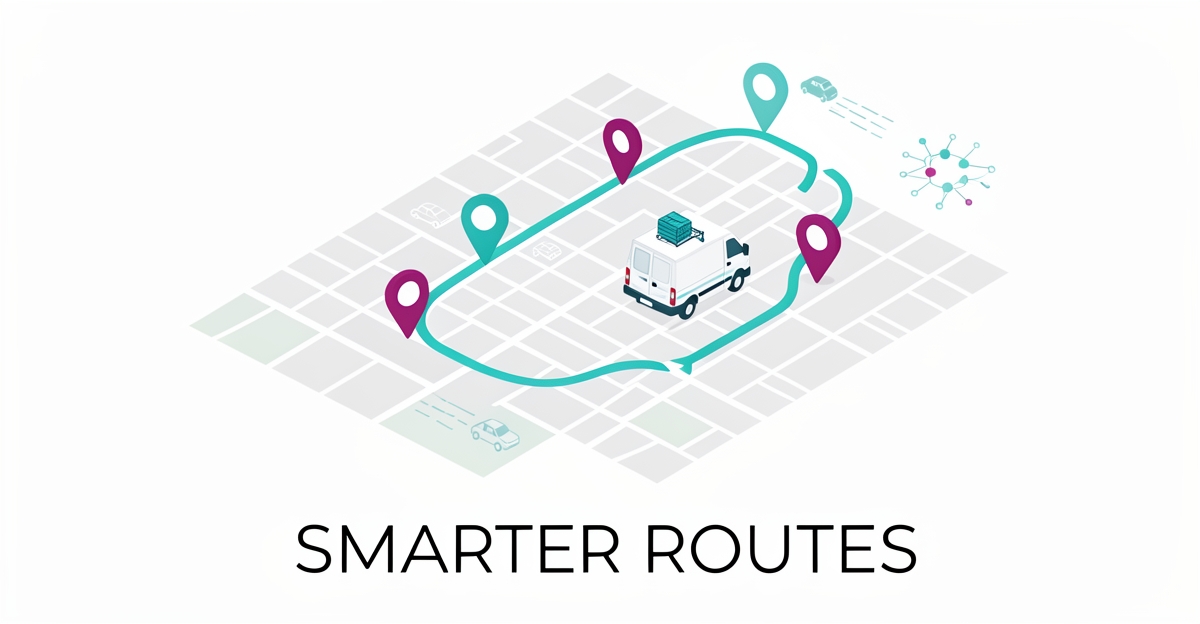
Picture a fleet of pressure washing trucks moving through a busy metro area, each route continuously optimized to save time and fuel. That is what an AI dispatch agent does: it analyzes job locations, live traffic, and vehicle capacity to build and rebuild the most efficient routes as conditions change.
AI dispatch agents work by continuously analyzing real-time data to adjust routes dynamically. If a traffic jam occurs or a new job is added, the AI instantly recalculates the best path. This automates the repetitive sequencing and re-routing that consumes a dispatcher's day, allowing human staff to focus on exceptions, customer communication, and quality control. It also improves customer satisfaction through accurate ETAs and proactive notifications.
One of the key advantages of AI dispatch agents is their ability to integrate with existing systems. For pressure washing services, this means connecting with GPS tracking and scheduling tools to provide a unified view of operations. AIQ Labs builds custom AI systems that integrate with these tools, so businesses can adopt AI without disrupting current workflows. This integration is crucial for maintaining the data quality the AI needs to function effectively.
The benefits extend beyond fuel and on-time performance. Optimized routing reduces total miles driven, which lowers one of the largest operating expenses for mobile service businesses, and shrinks their environmental footprint at the same time.
- Real-time route optimization based on job locations, traffic, and vehicle capacity
- Automated sequencing and reduced dispatcher workload
- Accurate ETAs and proactive customer notifications
- Lower fuel spend and improved on-time performance
Implementing AI dispatch agents does come with challenges, such as the need for high-quality data and some upfront investment. However, the long-term benefits typically outweigh these initial hurdles. For businesses that prefer managed staff over software projects, a dispatch-focused [AI Employee](/ai-employees) can handle routing, scheduling calls, and customer updates as part of your team. Either way, the goal is the same: a clear path to improved efficiency and customer satisfaction.
Implementing AI Dispatch: From Integration to Measurable ROI
Moving from manual dispatch to AI-driven routing is a step change in how pressure washing crews spend their day on the road. An AI dispatch agent continuously analyzes job locations, live traffic, and vehicle capacity to build routes that adapt as conditions change.
Integration starts with connecting the agent to the tools your team already uses. GPS tracking, scheduling software, and job management systems feed real-time data into the model, while the agent writes optimized routes back to the dispatcher dashboard. AIQ Labs builds custom AI systems that integrate with GPS and scheduling tools, reducing fuel costs and improving on-time performance for mobile service businesses.
Data quality determines how quickly value appears. Accurate service addresses, equipment capacity per truck, average wash times, and historical traffic patterns give the agent the context it needs to avoid costly rework. Clean inputs also enable real-time route optimization that responds to delays, cancellations, or last-minute bookings without manual replanning.
Workload relief is typically immediate and measurable. Dispatchers stop hand-sequencing routes and start managing exceptions, which frees hours every day for customer service and quality control. The exact gains vary by operation, but the pattern is consistent across fleets that adopt AI dispatch.
A practical rollout follows a clear sequence:
- Map current dispatch workflows and data sources to define integration points with GPS and scheduling tools.
- Validate and clean job location, traffic, and vehicle capacity data before training the agent.
- Deploy a pilot on a single crew or region, then train dispatchers on exception handling and overrides.
- Monitor fuel use, on-time arrivals, and dispatcher time per route to establish baseline and targets.
- Scale to the full fleet and add proactive ETA notifications to boost customer satisfaction.
Performance monitoring turns early wins into sustained ROI. Track on-time performance, miles per job, fuel spend, and dispatcher hours against your pre-AI baseline. With consistent data and integration, the agent learns crew-specific patterns and improves recommendations over time.
For businesses that want dispatch connected to quoting, invoicing, and customer follow-up in one system, an [AI Operating System](/ai-operating-systems) provides a single connected operating layer, built in phases and owned outright. The result is lower operating costs, fewer missed windows, and a dispatch team focused on high-value work rather than manual rerouting.
Still paying for 10+ subscriptions that don’t talk to each other?
We build custom AI systems you own outright. No vendor lock-in. Full control.
Not sure where to start? Ask our AI planner
Frequently Asked Questions
How much can AI-powered route optimization save on fuel costs for pressure washing services?
Will using an AI dispatch agent reduce the workload for our dispatch team?
Can AI dispatch agents improve on-time arrival rates for pressure washing jobs?
Is it difficult to integrate an AI dispatch agent with our existing GPS and scheduling tools?
What happens if a job runs late or a gate code changes, can the AI adjust routes in real time?
Do I need perfect data to start using an AI dispatch agent, or can we improve data quality over time?
Turn Route Chaos into Competitive Advantage
Manual dispatching silently drains pressure washing businesses through wasted fuel, missed appointments, and overloaded dispatchers, costs that compound as the job list grows. AI dispatch agents reverse this by optimizing routes in real time using job locations, traffic, and vehicle capacity. The result is lower operating costs, fewer idle miles, and a team focused on service instead of spreadsheet juggling. For pressure washing companies ready to stop leaking profit and start scaling, the path forward begins with clarity. Take the free two-minute [Fit Check](/apply) to see where AI can unlock measurable ROI in your dispatch workflow, then book a free 30-minute strategy call to map your biggest bottleneck and high-impact opportunities. Questions first? Reach us at [email protected].
Make AI your competitive advantage — not just another tool.
Strategy, implementation and ongoing optimization. One partner, end to end.
Not sure where to start? Ask our AI planner