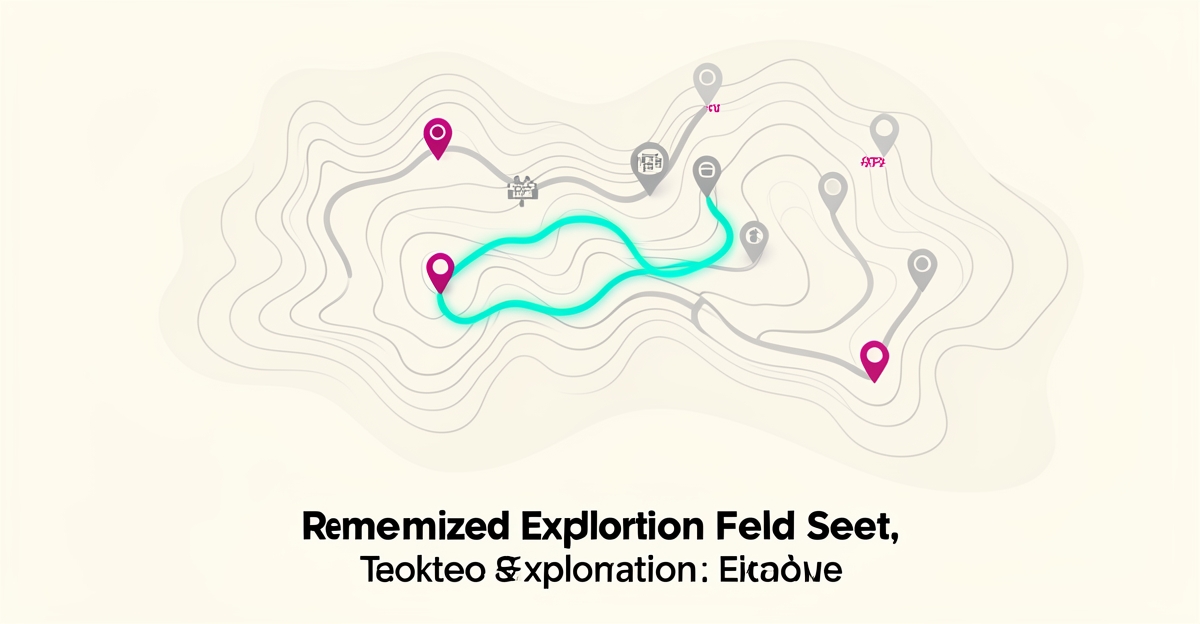
How an AI Dispatch Manager Can Optimize Field Team Routing in Remote Exploration Zones
Key Facts
- A large majority of decision-makers say they need better tools to manage field technician scheduling, according to field service industry research
- A majority of European field service leaders already use AI for scheduling and routing, per industry surveys
- Roughly half of repeat visits are caused by parts or equipment unavailability, according to field service data
- AI-powered route optimization has been associated with delivery cost reductions of around 28% in delivery operations analysis
- A large share of delivery costs, often cited near 40%, is attributed to the last mile, according to industry analysis
- AI-powered dispatch management has been associated with on-time rates approaching 98% in delivery operations studies
Hire a team member that works 24/7 — for less than a part-time wage.
AI receptionists, SDRs, dispatchers and 99+ roles. Trained on your business, fully managed.
Not sure where to start? Ask our AI planner
The Routing Problem in Remote Exploration Zones
Remote exploration zones present unique logistical hurdles that strain even well-prepared field teams. Unpredictable terrain, vast distances between sites, and limited infrastructure make every mile traveled a critical operational decision. When routing is handled manually or with outdated tools, teams often backtrack, miss optimal sequencing, and waste valuable time and fuel navigating inefficient paths. These inefficiencies compound quickly in remote areas where resupply points are scarce and weather windows are tight.
According to industry research, a large majority of decision-makers say they lack adequate tools to manage field technician scheduling effectively. This gap leaves exploration crews relying on spreadsheets or gut instinct, increasing the likelihood of repeat visits to the same site due to missed equipment, unclear priorities, or poor sequencing. Such avoidable return trips burn through fuel budgets and delay downstream operations like sampling, drilling, or environmental assessments.
The consequences extend beyond immediate costs. Poor routing in remote zones amplifies exposure to risk, vehicles travel more miles on rough roads, teams spend extra hours in isolated locations, and critical windows for data collection may close before work is completed. Field teams end up reacting to delays instead of preventing them, turning what should be a streamlined campaign into a series of costly corrections. Without intelligent routing that accounts for terrain, accessibility, and real-time conditions, even the most skilled exploration crews operate at a fraction of their potential efficiency.
AIQ Labs addresses this challenge by deploying AI Employees that function as intelligent dispatch managers, continuously analyzing site locations, terrain data, and team availability to generate optimal routes in real time. This approach minimizes unnecessary travel, reduces fuel consumption, and ensures crews spend more time on productive exploration work rather than navigating between sites. By turning routing from a reactive task into a proactive, data-driven process, exploration campaigns gain the predictability and efficiency needed to succeed in the most demanding environments.
How AI Dispatch Managers Optimize Field Routes
Remote exploration zones punish guesswork. Distances stretch, terrain shifts, and crews operate where a single misrouted stop can cost hours of fuel and lost productivity.
AI-powered dispatch systems analyze complex data sets, optimize routes, and assign tasks to the most suitable technicians, reducing travel time and improving response rates. In field service, that means solving a multi-stop problem across an entire team while enforcing time windows, skill requirements, and SLA deadlines as hard constraints.
Real-time optimization is where the gains materialize. Industry analysis has associated AI-powered route optimization with delivery cost reductions of around 28%, with roughly 40% of delivery costs typically attributed to the last mile. The same research documents on-time rates approaching 98% with AI-powered dispatch management, a critical metric when exploration crews depend on predictable arrivals.
Demand for better tools is rising fast. Field service industry reporting has found that a large majority of decision-makers say they need better tools to manage field technician scheduling. Adoption is already underway, with a majority of European field service leaders reported to be using AI for scheduling and routing as of late 2026.
An AI dispatch manager replaces manual spreadsheets and phone calls with continuous calculation. The system evaluates constraints simultaneously so value scales with complexity, not despite it.
Core inputs the AI evaluates in real time include:
- Site distances and travel time, including terrain difficulty and access restrictions
- Team availability, current location, and remaining capacity for the shift
- Skill requirements and certifications matched to exploration task complexity
- SLA risk scoring, site time windows, and equipment or parts availability
This constraint-aware routing eliminates the back-and-forth that slows manual dispatch. AIQ Labs deploys AI Employees that act as 24/7 dispatch managers, handling real-time routing and scheduling for exploration crews with full visibility and control. The result is reduced travel time and fuel costs and improved team productivity without adding headcount, at roughly 80% less cost than a comparable human hire.
Because the system predicts delays and recommends the most suitable crew for each task, response rates improve while paperwork automates. For remote operations, that combination of speed, accuracy, and continuous learning turns dispatch from a bottleneck into a competitive advantage.
Implementing AI Dispatch with AIQ Labs' Managed AI Employees
Deploying an AI Dispatch Manager in remote exploration zones starts with clean data and clear constraints, not with the model itself. Field teams operate where terrain, weather and crew availability shift by the hour, so the system must ingest site distances, skill requirements and inventory status before it can route reliably.
Data preparation is the foundation. According to industry research, roughly half of respondents cite data quality as a key implementation challenge for AI dispatch. That means curating technician skill and certification records, historical job duration benchmarks, site time-window preferences and SLA rule definitions so the AI has a trustworthy view of reality. With quality inputs, AI-powered dispatch systems can analyze complex data sets, optimize routes, and assign tasks to the most suitable technicians, reducing travel time and improving response rates.
Constraint configuration turns data into decisions. Field service routing requires optimizing multiple stops across an entire team simultaneously while enforcing time windows, skill requirements and SLA deadlines as hard constraints. The value gap between AI dispatch and manual scheduling scales with the number of constraints the system evaluates simultaneously. For exploration crews this typically includes:
- Skill tiers and certifications matched to site hazards and equipment
- Inventory status to prevent repeat visits, since roughly half of repeat visits are attributed to parts unavailability
- SLA risk scoring and site preference weighting for remote access windows
- Terrain and travel time variables that change with weather and road conditions
Integration happens through standard connectors, allowing the AI Dispatch Manager to connect to existing CRMs, scheduling tools, inventory systems and field communication platforms without rebuilding workflows. This preserves visibility and control while enabling real-time re-routing when conditions change.
AIQ Labs deploys these capabilities as managed AI Employees that work alongside human teams, with three ways to engage. Start Monthly puts a managed AI dispatcher on your team for a flat monthly cost, roughly 80% less than a human hire, with build, training on your business, tool integrations, monitoring and improvements included. If dispatch is your single most expensive workflow, a fixed-price Workflow Build rebuilds it in phases. And when you're ready to connect dispatch with the rest of your operation, an AI Operating System provides one connected operating layer, built in phases and owned outright, with no vendor lock-in.
The operational impact is measurable. Delivery operations analysis has associated AI-powered route optimization with cost reductions of around 28% and on-time rates approaching 98%. Demand is rising because most decision-makers say they need better tools to manage field technician scheduling, and a majority of European field service leaders already use AI for scheduling and routing.
With constraints configured and integrations live, the AI Dispatch Manager handles real-time routing and scheduling for exploration crews, continuously learning from completed jobs to improve future assignments.
Still paying for 10+ subscriptions that don’t talk to each other?
We build custom AI systems you own outright. No vendor lock-in. Full control.
Not sure where to start? Ask our AI planner
Frequently Asked Questions
How does an AI dispatch manager actually reduce fuel costs in remote exploration zones?
What data does an AI routing system need to work effectively for field teams?
Can AI dispatch handle last-minute changes like weather delays or equipment failures?
How does AI routing prevent repeat visits to the same exploration site?
Is AI dispatch worth the investment for small exploration teams?
How long does it take to implement an AI dispatch system for field operations?
Your Route to Smarter Exploration Starts Here
The gap between manual dispatch and AI-powered routing isn't just operational, it's existential for remote exploration teams. Every unnecessary mile burns budget, every missed window delays discovery, and every repeat visit compounds costs that AI dispatch managers eliminate by design. With industry analysis pointing to cost reductions around 28% and on-time rates approaching 98%, the business case is measurable. AIQ Labs has deployed 200+ multi-agent systems and runs four live SaaS products daily, this is technology we use on ourselves, not just sell. AI Employees function as 24/7 dispatch managers, continuously optimizing routes based on terrain, crew availability, and real-time constraints so your teams spend less time navigating and more time exploring. The only variable left is whether you'll implement it before your competitors do. Ready to see what intelligent dispatch looks like for your operation? Start with the two-minute Fit Check, then book a free 30-minute strategy call to map your highest-ROI automation opportunity. No pitch, no pressure, just a clear roadmap to fewer wasted miles and faster discoveries.
Make AI your competitive advantage — not just another tool.
Strategy, implementation and ongoing optimization. One partner, end to end.
Not sure where to start? Ask our AI planner