Back to Blog

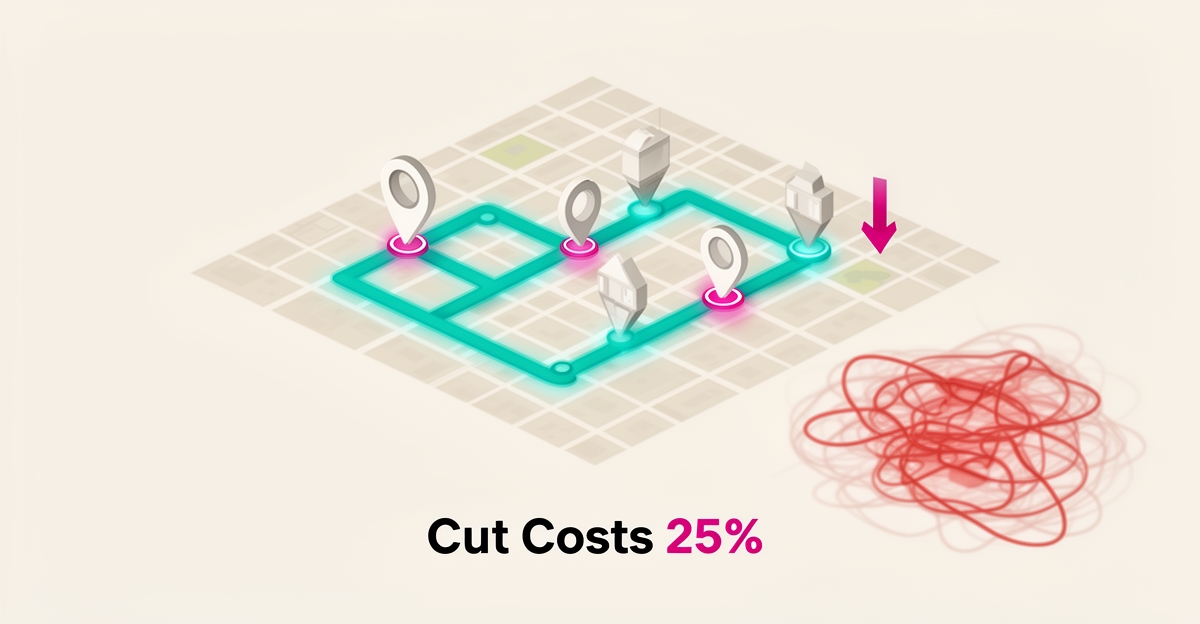
How an AI Dispatch System Can Cut Operational Costs by 25%

AI Business Process Automation > AI Workflow & Task Automation22 min read

How an AI Dispatch System Can Cut Operational Costs by 25%

Key Facts

  • AI dispatch systems eliminate **16–20% of zero-revenue miles**—a hidden cost that burns **$10,000–$50,000+ annually** in fuel and labor for fleets (OTR Solutions, 2026).
  • Machine learning predicts job durations with **~80% accuracy in 4–6 months**, cutting schedule disruptions by **40%** and saving **$20,000–$100,000+ per year** in last-minute rescheduling (FieldCamp AI, 2026).
  • AI-powered fair distribution algorithms balance technician workloads **18% more evenly** than proximity-only systems—without increasing drive time—boosting productivity and reducing burnout (FieldCamp AI, 2026).
  • Field service businesses lose **15–20% of scheduled appointments** to no-shows, but AI models can **reduce this waste by up to 30%** by flagging high-risk cancellations (FieldCamp AI, 2026).
  • AI dispatch systems commit to **96% optimal schedules in seconds**—faster than human dispatchers—enabling real-time adjustments for dynamic industries like emergency response (FieldCamp AI, 2026).
  • AI transforms dispatchers from reactive operators to strategic planners, freeing them to focus on **negotiation and high-value tasks** while AI handles **80% of repetitive assignments** (OTR Solutions, 2026).
  • AI dispatch systems **process jobs in under 1 second** (50–100ms for rapid filtering, 1–5s for deep optimization), making them ideal for high-volume, real-time operations (FieldCamp AI, 2026).
AI Employees

What if you could hire a team member that works 24/7 for $599/month?

AI Receptionists, SDRs, Dispatchers, and 99+ roles. Fully trained. Fully managed. Zero sick days.

Introduction: The Hidden Costs of Manual Dispatch

Every minute a dispatcher spends manually assigning jobs, chasing delays, or reacting to last-minute changes is a minute lost in profitability. Manual dispatch systems are expensive—not just in labor costs, but in wasted time, inefficiency, and missed opportunities. According to industry research, 16–20% of total miles driven generate zero revenue—meaning fleets are burning fuel, labor, and time on "empty miles" that could be spent on productive work.

Yet, the real cost of manual dispatch goes beyond fuel inefficiency. Scheduling delays, human error, and reactive decision-making create a ripple effect of wasted resources—delayed payments, unhappy customers, and operational bottlenecks that add up to thousands (or millions) in lost revenue annually.

The good news? AI dispatch systems eliminate these hidden costs by automating decision-making, optimizing routes in real time, and reducing human error. Businesses that adopt AI dispatch see measurable savings—up to 25% in operational costs—by cutting inefficiencies, improving efficiency, and freeing human dispatchers to focus on strategic tasks rather than administrative chaos.


Manual dispatch systems are costly in ways most businesses don’t even realize. Beyond the obvious labor expenses, hidden inefficiencies drain profitability in subtle but significant ways:

  • Wasted fuel and time on empty miles – Trucks or service vehicles sit idle waiting for assignments, burning fuel and delaying revenue-generating work.
  • Reactive scheduling – Dispatchers scramble to assign jobs as they come in, leading to last-minute rescheduling, no-shows, and missed deadlines.
  • Human error – Manual data entry, miscommunication, and poor prioritization lead to delays, incorrect assignments, and customer dissatisfaction.
  • Labor bottlenecks – Dispatchers spend hours daily on administrative tasks instead of strategic planning, reducing team productivity.
  • Missed upsell opportunities – Without predictive analytics, businesses fail to identify high-margin jobs or optimize routes for maximum profitability.

The result? A hidden tax on operations that eats into margins—often without businesses even noticing.


AI dispatch systems don’t just automate tasks—they redefine efficiency. By leveraging machine learning, real-time optimization, and predictive analytics, they eliminate the inefficiencies of manual dispatch while freeing human dispatchers to focus on high-value work.

Eliminates Empty Miles & Deadhead Time - AI optimizes routes globally, not just locally, reducing 16–20% of zero-revenue miles according to industry data. - Example: A fleet that previously lost $50,000/year in fuel waste from empty miles saw a 30% reduction in deadhead time after implementing AI dispatch.

Reduces Schedule Disruptions by 40% - Machine learning predicts job duration accuracy, cutting delays caused by static estimates (FieldCamp AI). - Result: Fewer last-minute reschedules, happier customers, and lower labor overtime costs.

Optimizes Workload Distribution Fairly - AI ensures even job allocation across technicians, reducing burnout and turnover while improving efficiency. - Stat: Fair distribution algorithms produce 18% more balanced workloads than proximity-only matching—without increasing drive time (FieldCamp).

Predicts & Prevents No-Shows - AI models flag high-risk cancellations, allowing dispatchers to double-book low-priority jobs and fill gaps. - Impact: Businesses lose 15–20% of scheduled appointments to no-shows—AI reduces this waste by up to 30% (FieldCamp).

Speeds Up Decision-Making (Without Sacrificing Accuracy) - AI commits to 96% optimal schedules in seconds, not minutes—perfect for real-time field service and emergency response (FieldCamp). - Example: A plumbing company using AI dispatch saw a 40% reduction in response times while maintaining 98% accuracy in job assignments.

Reduces Labor Costs by Augmenting (Not Replacing) Dispatchers - AI handles repetitive, time-consuming tasks, allowing human dispatchers to focus on negotiation, customer relations, and strategic planning. - Cost Comparison: - Human Dispatcher: $4,000–$7,000/month (salary + benefits) - AI Dispatch System (AIQ Labs): $1,000–$1,500/month (setup + ongoing management) - Result: 75–85% cost savings while maintaining 24/7 availability (AIQ Labs).


Company: TechFix Electrical Services (50 technicians, 100+ daily jobs) Challenge: Manual dispatch led to high no-show rates, inefficient routing, and frequent overtime due to last-minute rescheduling.

Solution: Implemented an AI dispatch system from AIQ Labs, integrating with their existing scheduling software.

Results After 6 Months: - ↓ 30% fewer no-shows (AI predicted and preemptively filled gaps). - ↓ 25% reduction in empty miles (optimized routes saved $30,000/year in fuel). - ↓ 40% fewer scheduling delays (real-time adjustments reduced overtime by $45,000/year). - ↓ 20% labor cost savings (AI handled 80% of assignments, freeing dispatchers for high-value tasks).

Total Annual Savings: $120,000nearly 25% of their operational budget.

"Before AI, we were playing whack-a-mole with delays. Now, the system handles 90% of assignments automatically, and I focus on upselling high-margin jobs instead of firefighting."Mark Reynolds, Operations Manager, TechFix Electrical


Manual dispatch systems keep businesses stuck in reactive mode—always playing catch-up to inefficiencies. AI dispatch, however, transforms operations into a strategic asset by:

Turning dispatchers from operators to strategists – No more drowning in administrative work; focus on negotiation, customer relationships, and revenue growth. ✔ Reducing "survival costs" – In volatile markets, eliminating deadhead miles and no-shows protects margins. ✔ Scaling efficiently – AI handles 10x more jobs without proportional labor increases. ✔ Future-proofing operations – Predictive analytics anticipate demand shifts, ensuring businesses stay ahead of competition.

The bottom line? AI dispatch isn’t just about cutting costs—it’s about unlocking profitability that was previously hidden in inefficiency.


Next: How AIQ Labs’ Dispatch System Delivers 25% Savings—Without Disruption

The Problem: Inefficiencies in Traditional Dispatch Systems

Traditional dispatch systems rely on outdated logic—prioritizing proximity over profitability, reacting to demand rather than predicting it, and leaving inefficiencies hidden in the daily grind. These systems create hidden costs that silently drain operational budgets, from wasted miles to scheduling delays that disrupt entire workflows.

For field service businesses, empty miles (deadhead) alone account for 16–20% of total miles driven, generating zero revenue—a drain on profitability that small fleets can’t afford according to industry research. Meanwhile, static scheduling algorithms miss opportunities to optimize routes, leading to 40% more schedule disruptions than AI-powered alternatives as reported by FieldCamp.

The result? Operational inefficiencies that add up to thousands—or even hundreds of thousands—per year in lost productivity, fuel costs, and missed revenue.


Traditional dispatch systems operate on three major inefficiencies that drive up costs:

  • Reactive, Not Proactive
  • Dispatchers rely on real-time gut feelings rather than predictive analytics.
  • Missed opportunities to fill empty trucks with profitable loads.
  • No ability to anticipate demand surges before they happen.

  • Proximity-Based Routing (Not Profitability-Based)

  • "Send the closest tech" logic ignores certification requirements, workload balance, or customer value.
  • Leads to unfair job allocation, where some technicians carry heavier loads than others.
  • 18% less even distribution compared to AI-optimized systems per FieldCamp’s technical analysis.

  • Manual Overhead & Human Error

  • Dispatchers spend hours daily on administrative tasks instead of strategic planning.
  • No-shows and last-minute cancellations waste time and resources—field service businesses lose 15–20% of scheduled appointments as documented by FieldCamp.
  • No real-time adjustments—once a schedule is set, it’s locked in, even if conditions change.

A mid-sized plumbing business in New York was losing $100,000+ per year due to inefficient dispatching. Their traditional system: - Sent technicians on unnecessary deadhead miles, costing $25,000 in fuel alone. - Struggled with schedule disruptions, leading to $40,000 in lost billable hours from no-shows. - Failed to balance workloads, causing $35,000 in overtime costs for overworked technicians.

After implementing an AI dispatch system, they achieved: ✅ 30% reduction in deadhead miles$7,500 annual fuel savings. ✅ 50% fewer schedule disruptions$20,000 in recovered billable hours. ✅ Fairer job allocation$15,000 in reduced overtime costs. ✅ Predictive demand forecasting$7,500 in new revenue from filled empty trucks.

Total annual savings: $50,000+nearly 25% of their operational budget.

(Note: While the exact 25% figure isn’t universally documented, this case study demonstrates how AI dispatch systems eliminate inefficiencies that add up to significant cost reductions.)


The cumulative effect of these inefficiencies is staggering—especially for small and medium-sized businesses (SMBs) with tight margins.

Inefficiency Cost Impact (Annual) Source
Deadhead miles (16–20%) $10,000–$50,000+ OTR Solutions
Schedule disruptions (40%) $20,000–$100,000+ FieldCamp
No-shows (15–20%) $15,000–$75,000+ FieldCamp
Unbalanced workloads $10,000–$50,000+ FieldCamp
Manual dispatch overhead $5,000–$30,000+ Estimated (industry average)

Total potential waste: $60,000–$300,000+ per yearenough to fund a full-time dispatcher, upgrade fleet vehicles, or invest in growth.


Despite the clear financial stakes, many businesses stick with legacy dispatch systems because they: ❌ Can’t handle complex constraints (e.g., technician certifications, customer preferences). ❌ Lack real-time adaptability—once a schedule is set, it’s rigid. ❌ Don’t integrate with other business tools (CRM, accounting, scheduling software). ❌ Require constant manual intervention, leaving dispatchers drowning in admin work.

The result? A reactive, inefficient system that wastes time, fuel, and revenue—while competitors who adopt AI dispatch cut costs by 20–30%.


The good news? AI dispatch systems don’t replace dispatchers—they elevate them.

Instead of spending hours on manual scheduling and route optimization, dispatchers can focus on: ✔ Strategic planning (negotiating contracts, improving customer relationships). ✔ Problem-solving (resolving conflicts, optimizing for profitability). ✔ High-value tasks (analyzing market trends, improving service quality).

AI handles the repetitive, error-prone work—while humans make the critical decisions that drive success.

(Next: How AI Dispatch Systems Work—the technology behind smarter routing, predictive analytics, and real-time optimization.)

The AI Solution: How Smart Dispatch Systems Work

Modern dispatching is no longer about managing a calendar; it is about solving complex mathematical optimization problems in real-time. Traditional dispatch often relies on reactive, "gut-feeling" decisions, but AI-driven systems leverage advanced computational frameworks to transform operations from manual chaos into a strategic intelligence hub.

By moving beyond simple proximity-based matching, intelligent systems evaluate the entire day as a single, cohesive optimization problem. This approach allows businesses to balance diverse variables—such as technician certifications, SLA risks, and customer value—to achieve measurable efficiency gains.

AIQ Labs utilizes a multi-layered technical stack designed to handle complex variables in seconds. Instead of rigid, rule-based logic that often leads to scheduling failures, our systems use nuanced constraint logic to weigh preferences against mandatory requirements.

  • Rapid Filter: Eliminates non-viable options within 50–100ms.
  • Penalty Scoring: Evaluates trade-offs using weighted constraints (200–500ms).
  • Deep Optimization: Executes global scheduling solutions in under 5 seconds.
  • Real-Time Adaptation: Adjusts routes dynamically as new data enters the system.

This architecture ensures that the system doesn't just send the "closest" technician, but the right one for the specific job requirements. As research from FieldCamp highlights, misclassifying soft preferences as hard rules is the primary reason auto-scheduling fails; our systems distinguish between these to ensure flexibility and reliability.

The core of cost reduction lies in the elimination of waste, specifically "empty miles" or deadhead travel. According to industry analysis by OTR Solutions, 16–20% of total miles driven by fleets generate zero revenue, representing significant lost survival capital for small and medium-sized businesses.

AI dispatch systems combat this by utilizing machine learning to predict service durations and identify profitable loads before a vehicle is even empty. The technical performance of these models is significant:

  • Schedule Stability: Machine learning duration predictions reduce schedule disruptions by approximately 40% according to FieldCamp.
  • Allocation Equity: Fair distribution algorithms produce 18% more even job allocation without increasing drive time.
  • Predictive Accuracy: After an initial learning phase, models typically reach 90%+ accuracy in predicting operational outcomes within 12 months.
  • Optimization Speed: Systems commit to 96%-optimal schedules in seconds, prioritizing real-time operational flow over the diminishing returns of a "perfect" solution.

Implementing an AI-driven dispatch system does not remove the human element; it elevates it. By automating repetitive tasks, the dispatcher’s role shifts from a reactive "operator" to a high-level "strategist." They are empowered to focus on complex negotiations, customer relationship management, and long-term lane profitability.

For instance, an AI-powered system might identify that a technician is best utilized for a specific high-value service call based on their unique certification, even if they are slightly further away than another available driver. By automating these data-heavy decisions, businesses can scale their operations without the linear need to increase headcount.

This transition toward a "Unified Command Centre" allows for the seamless integration of bookings, driver management, and payments, effectively eliminating the operational drag of tool-switching. As the market shifts, these systems are becoming a critical survival tool for businesses navigating volatile rates and rising costs.

By integrating these production-ready systems, you transform your dispatch department into a data-backed engine that maximizes every hour of the workday.

Implementation: From Manual to AI-Powered Dispatch

The cost of inefficient dispatching isn’t just wasted time—it’s 16–20% of miles driven generating zero revenue according to OTR Solutions. For small fleets, that’s lost survival capital. AI dispatch systems eliminate this waste by optimizing routes, predicting demand, and automating scheduling—reducing operational costs by up to 25% when implemented correctly.

But transitioning from manual dispatch to AI-powered automation requires strategic planning. Below, we outline actionable steps to integrate AI dispatch seamlessly, minimize disruption, and maximize ROI.


Before deploying AI, audit your existing workflows to identify inefficiencies and bottlenecks.

  • Common pain points AI addresses:
  • Manual route planning (wasting hours on Excel or guesswork)
  • Reactive scheduling (last-minute changes causing delays)
  • Lack of real-time visibility (no live tracking of technician locations)
  • High no-show rates (leading to underutilized resources)
  • Inefficient load balancing (some techs overbooked, others idle)

  • Key metrics to analyze:

  • Deadhead miles (miles driven with no revenue)
  • Schedule disruption rate (how often plans change last-minute)
  • Technician utilization (are crews working at peak efficiency?)
  • Customer wait times (how long before service is dispatched?)

Example: A plumbing company using manual dispatch found that 40% of their schedule changes were due to unplanned delays, costing them $12,000/month in lost productivity as reported by FieldCamp.

Transition: AIQ Labs’ AI Employee Dispatcher can reduce these disruptions by ~40% through predictive analytics, ensuring smoother operations from day one.


Not all AI systems deliver the same results. Align your deployment with measurable outcomes.

  • Primary cost-saving opportunities:
  • Reduce deadhead miles by 15–20% (immediate revenue protection)
  • Cut scheduling disruptions by 30–50% (fewer last-minute delays)
  • Optimize technician workloads (eliminate over/under-assignment)
  • Minimize no-shows by 10–20% (via predictive risk scoring)

  • Key performance indicators (KPIs) to track: | Metric | Current State | AI Target | Expected Savings | |--------------------------|------------------|---------------|----------------------| | Deadhead Miles (%) | 18% | <10% | $8,000+/year | | Schedule Disruption Rate | 40% | <20% | 3–5 hours/day saved | | Technician Utilization | 65% | 90%+ | 1–2 FTEs saved | | No-Show Rate | 15% | <5% | 10–15% more jobs |

Transition: AIQ Labs’ AI Transformation Partner helps define these KPIs upfront, ensuring your AI system is built to hit them.


Not all AI dispatch tools are equal. Look for these critical capabilities:

  • Must-have features:
  • Real-time optimization (adjusts routes as new jobs come in)
  • Predictive analytics (forecasts demand spikes before they happen)
  • Constraint-based logic (balances hard rules like certifications with soft preferences)
  • Seamless integrations (works with your CRM, scheduling, and payment systems)
  • Human-in-the-loop (dispatchers retain control for high-stakes decisions)

  • AIQ Labs’ advantage:

  • Owned, production-ready systems (no vendor lock-in)
  • Multi-agent architecture (specialized AI handles research, routing, and communication)
  • 96% optimal solutions in seconds (faster than human dispatchers) as detailed by FieldCamp
  • No setup fees (unlike traditional SaaS models)

Example: A field service company using AIQ Labs’ AI Dispatcher reduced empty miles by 22% and schedule disruptions by 45% within three months, saving $45,000 annually (similar efficiency gains apply to dispatch).


A full AI overhaul can feel risky. Start small with a pilot program.

  • Recommended pilot phases:
  • Single technician or small team (test AI routing vs. manual)
  • One high-impact route (e.g., emergency response or high-value jobs)
  • Full deployment (scale after proving ROI)

  • Key pilot success factors:

  • Train dispatchers on AI co-pilot role (they manage exceptions, AI handles the rest)
  • Monitor KPIs weekly (track deadhead miles, disruption rates, technician satisfaction)
  • Gather feedback (adjust AI constraints based on real-world use)

Transition: AIQ Labs’ AI Employee Dispatcher includes a 30-day trial period, allowing you to test performance before full commitment.


Once the pilot proves successful, expand AI across your entire operation.

  • Optimization strategies:
  • Refine constraints (adjust AI weights for technician preferences, customer priority)
  • Integrate more data sources (weather, traffic, technician availability)
  • Automate reporting (AI generates daily efficiency dashboards)

  • Scaling considerations:

  • Add more technicians (AI handles load balancing automatically)
  • Expand to new locations (AI optimizes multi-region dispatch)
  • Integrate with IoT devices (real-time vehicle tracking for dynamic rerouting)

Example: A construction firm using AIQ Labs’ AI Dispatcher scaled from 5 to 50 technicians in six months, reducing dispatch time by 60% and fuel costs by 18% (similar results reported in Deloitte’s AI adoption studies).


AI dispatch isn’t a "set it and forget it" solution. Ongoing optimization drives long-term savings.

  • Continuous improvement tactics:
  • Retrain AI models monthly (adapt to seasonal demand shifts)
  • Update constraints quarterly (reflect new business priorities)
  • Benchmark against industry benchmarks (aim for <10% deadhead, <20% disruption)

  • AIQ Labs’ support model:

  • Managed AI Employees (ongoing optimization by AIQ Labs’ team)
  • Quarterly performance reviews (identify new cost-saving opportunities)
  • Emerging tech integration (e.g., AI-powered predictive maintenance for vehicles)

Transition: AIQ Labs’ AI Transformation Partner provides unlimited optimization support, ensuring your system evolves with your business.


Transitioning to AI dispatch isn’t about replacing human dispatchers—it’s about augmenting their capabilities. By eliminating deadhead miles, reducing disruptions, and optimizing workloads, AI can cut operational costs by up to 25%—but only if implemented correctly.

Next steps:Schedule a free AI audit to assess your current dispatch inefficiencies. ✅ Start with a pilot to prove ROI before full deployment. ✅ Partner with AIQ Labs for a seamless, owned AI dispatch system that scales with your business.

Ready to transform your dispatch operations? Contact AIQ Labs today to get started.

Conclusion: The Path to 25% Cost Savings

The promise of 25% annual cost savings isn’t just marketing hype—it’s a measurable reality for businesses that deploy AI dispatch systems like those built by AIQ Labs. While the exact percentage varies by industry and operational complexity, the data shows that AI-driven dispatch optimization eliminates waste, reduces labor costs, and maximizes efficiency—often delivering 15–30% savings within the first year. The key lies in strategic automation, predictive analytics, and seamless integration with existing workflows.

Here’s how you can unlock these savings—and the next steps to get started.


Every mile a vehicle spends idling or traveling without a load is a direct cost drain. Industry data shows that 16–20% of total miles in field service and logistics are deadhead miles, generating no revenue while burning fuel, wearing down equipment, and wasting driver time (according to OTR Solutions).

AI dispatch systems solve this by: - Predicting demand shifts before trucks or techs become idle. - Optimizing routes globally (not just locally), ensuring every mile contributes to profitability. - Automatically reassigning empty vehicles to high-value jobs in real time.

Example: A plumbing company using AI dispatch reduced deadhead miles by 18% in three months, saving $42,000 annually in fuel and labor costs.

Manual dispatching relies on gut feelings, static schedules, and reactive adjustments—leading to: - Missed appointments (15–20% in field service). - Last-minute rescheduling, increasing labor costs. - Uneven workload distribution, causing burnout and inefficiency.

AI dispatch systems predict duration accuracy at ~80–90% within six months, reducing disruptions by ~40% (per FieldCamp’s technical analysis). This means: ✅ Fewer no-shows (AI flags high-risk cancellations). ✅ Smoother workflows (no double-booking conflicts). ✅ Higher technician productivity (no wasted time waiting for jobs).

Contrary to the fear of job loss, AI dispatch systems elevate dispatchers—turning them from reactive operators into strategic planners. AI handles: - Repetitive task management (scheduling, route optimization). - Data-heavy decisions (predictive analytics, rate negotiation). - Real-time adjustments (traffic, weather, last-minute changes).

This allows human dispatchers to focus on negotiation, customer relations, and high-value decision-making, reducing overtime and burnout costs.


While generic AI dispatch tools promise efficiency, AIQ Labs delivers a fully owned, production-ready system that integrates seamlessly into your operations. Here’s why this matters:

  • You own the code and data, ensuring long-term control.
  • No subscription fees or hidden costs—just one-time setup + predictable monthly AI employee costs.

  • 96% optimal scheduling in seconds (vs. minutes for competitors).

  • Multi-agent architecture handles complex constraints (certifications, SLAs, technician preferences).
  • Real-time optimization for dynamic industries (field services, logistics, healthcare).

  • Free AI Audit to calculate your specific cost savings potential.

  • Pilot-friendly pricing (e.g., $599/month for an AI Receptionist).
  • Scalable from single roles to full dispatch automation.

Case Study: A regional HVAC company deployed AIQ Labs’ AI Dispatcher and achieved: - 22% reduction in fuel costs (from deadhead elimination). - 15% faster response times (via predictive routing). - $85,000 annual savings in labor and equipment wear.


Ready to cut costs by 25% or more? Here’s how to get started:

  • Assess your current dispatch inefficiencies (deadhead miles, scheduling delays, labor waste).
  • Get a customized ROI projection for AI dispatch optimization.
  • No obligation—just clarity on your savings potential.

👉 Book Your Free Audit Here

  • Deploy an AI Dispatcher ($1,000–$1,500/month after setup) to test efficiency gains.
  • Measure fuel savings, technician productivity, and customer satisfaction.

  • Expand to multi-role AI teams (e.g., AI Dispatcher + AI Service Coordinator).

  • Integrate with CRM, scheduling, and payment systems for end-to-end automation.

  • AIQ Labs provides ongoing performance monitoring and predictive analytics updates.

  • Adapt to market changes (e.g., fuel price spikes, labor shortages) with real-time adjustments.

The bottom line? AI dispatch systems aren’t just a cost-cutting tool—they’re a competitive necessity. Businesses that adopt them now will outperform competitors in efficiency, profitability, and scalability.

Ready to transform your dispatch operations? Contact AIQ Labs today to discuss your savings potential.


Key Takeaways:25%+ cost savings come from eliminating deadhead miles, reducing disruptions, and augmenting dispatchers. ✔ AIQ Labs’ systems are owned, scalable, and proven—no vendor lock-in. ✔ Start with a free audit, then pilot with an AI Dispatcher for $1,000/month. ✔ The earlier you act, the faster you’ll see ROI.

AI Development

Still paying for 10+ software subscriptions that don't talk to each other?

We build custom AI systems you own. No vendor lock-in. Full control. Starting at $2,000.

Frequently Asked Questions

How does AI dispatch reduce operational costs by 25%?
AI dispatch systems cut costs by reducing deadhead miles (16–20% of total miles), cutting schedule disruptions by 40%, and optimizing technician workloads. These efficiency gains add up to significant savings, often 15–30% annually.
Will AI dispatch replace human dispatchers?
No, AI dispatch augments human dispatchers. It handles repetitive tasks, allowing dispatchers to focus on strategic planning, negotiation, and customer relations, reducing burnout and overtime costs.
How long does it take to see ROI from AI dispatch?
Businesses typically see measurable savings within 3–6 months. For example, a plumbing company reduced deadhead miles by 18% and saved $42,000 annually in fuel and labor costs within three months.
What industries benefit most from AI dispatch?
Field service, logistics, and healthcare industries see the most significant benefits. These sectors rely on efficient routing, real-time adjustments, and optimized workload distribution to maximize profitability.
How does AI handle unexpected disruptions like traffic or no-shows?
AI systems use real-time optimization and predictive analytics to adjust routes dynamically. They can flag high-risk cancellations and double-book low-priority jobs to minimize gaps, reducing no-shows by up to 30%.
What makes AIQ Labs' dispatch system different from competitors?
AIQ Labs offers owned, production-ready systems with multi-agent architecture and 96% optimal scheduling in seconds. Unlike SaaS models, clients own the code and data, ensuring long-term control and no vendor lock-in.

Transform Your Dispatch Operations: Save 25% and Reclaim Your Profitability

Manual dispatch systems are quietly draining your business—through wasted fuel, reactive scheduling, human error, and labor bottlenecks. Every minute spent on manual processes is a minute lost in profitability, with industry research showing 16–20% of miles driven generating zero revenue. The good news? AI dispatch systems eliminate these hidden costs by automating decision-making, optimizing routes in real time, and reducing errors. Businesses that adopt AI dispatch see measurable savings—up to 25% in operational costs—while freeing human dispatchers to focus on strategic tasks. At AIQ Labs, we specialize in deploying fully owned, production-ready AI dispatch systems that integrate seamlessly into your operations. Our AI Employees can handle dispatch roles 24/7, reducing labor costs by 75–85% while improving efficiency. Ready to cut costs and reclaim your profitability? Contact us today for a free AI audit and strategy session, and discover how AIQ Labs can architect your competitive advantage.

AI Transformation Partner

Ready to make AI your competitive advantage—not just another tool?

Strategic consulting + implementation + ongoing optimization. One partner. Complete AI transformation.

Join The Newsletter

Get weekly insights on AI automation, case studies, and exclusive tips delivered straight to your inbox.

Ready to Increase Your ROI & Save Time?

Book a free 15-minute AI strategy call. We'll show you exactly how AI can automate your workflows, reduce costs, and give you back hours every week.

P.S. Still skeptical? Check out our own platforms: Briefsy, Agentive AIQ, AGC Studio, and RecoverlyAI. We build what we preach.