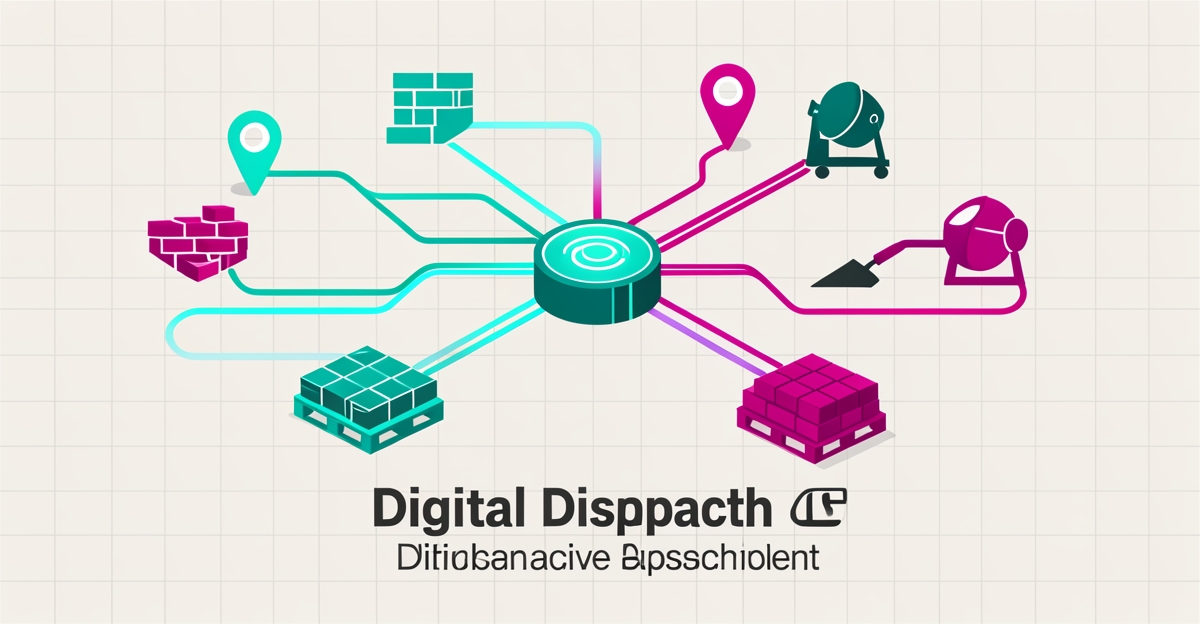
How an AI Dispatch System Can Optimize Job Assignments for Masonry Teams
Key Facts
- Field service research suggests a meaningful share of billable technician time, often cited in the double digits, disappears when scheduling and field capture run in separate systems.
- Unintegrated dispatch platforms are commonly associated with revenue leakage in the low single digits from assignment errors, duplicate visits, and missed updates.
- Emergency and reactive repairs typically cost multiples of planned maintenance, so scheduling quality has direct margin impact.
- AI-powered dispatch is increasingly common across construction and logistics as crews and fleets digitize coordination.
- Integration with existing scheduling, CRM, and field capture tools is widely regarded as the deciding factor in whether AI dispatch actually gets adopted.
Hire a team member that works 24/7 — for less than a part-time wage.
AI receptionists, SDRs, dispatchers and 99+ roles. Trained on your business, fully managed.
Not sure where to start? Ask our AI planner
The Hidden Cost of Manual Masonry Dispatch
Manual dispatch for masonry crews looks busy on the surface, but the waste is hidden in the gaps between scheduling, field capture, and payroll. When those systems don't talk, productivity leaks out in small, compounding ways that show up as idle crews and missed deadlines.
Disconnected tools create invisible downtime. Field service research suggests that a meaningful share of billable technician time, figures often cited in the double digits, can disappear when scheduling and field capture run in separate systems. That time is not lost to slow workers; it is lost to re-entry, status chasing, and rework after the fact.
Revenue follows the same cracks. Unintegrated platforms create dispatch errors, missed updates, duplicate visits, incorrect crew assignments, that mean jobs get billed late or not at all, while customers experience delays. Industry analyses commonly associate this kind of setup with revenue leakage in the low single digits.
The coordination problem compounds on site. Emergency repairs typically cost multiples of planned maintenance, yet manual dispatch pushes crews into reactive mode. Without real-time visibility into location, skill, equipment, and availability, dispatchers default to who is closest, not who is best fit.
This is a systemic coordination problem, not a labor problem. Masonry teams are skilled and willing, but they are constrained by information latency. Poor job assignment leads to idle workers and missed deadlines because the system cannot match jobs to crews based on location, skill, equipment, and availability in real time.
The friction points repeat across teams:
- Scheduling in one app, field capture in another, and invoicing in a third forces manual transfers and data errors.
- Dispatch decisions rely on memory and phone calls instead of live crew status and job requirements.
- Skill and equipment mismatches cause rework, delays, and customer callbacks.
- Lack of automated capture means billable hours are under-reported and utilization looks lower than reality.
An AI Workflow Build addresses this by unifying data and automating matching logic. An AI dispatch system continuously aligns jobs with the right crew using live constraints, reducing manual coordination and freeing dispatchers to manage exceptions.
AIQ Labs works with SMBs to rebuild these broken workflows into owned, production-ready systems. The focus is not on adding another dashboard, but on eliminating the handoffs that create idle crews and missed deadlines. When scheduling, field capture, and assignment are integrated, billable time is recovered and revenue leakage shrinks.
The result is a dispatch operation that runs on current information, not yesterday's notes. Crews move with purpose, customers get reliable completion dates, and labor costs are controlled without cutting capacity.
How AI Matches Jobs to Crews on Location, Skill and Availability
Masonry crews lose money every time a job lands with the wrong team. An AI dispatch system removes the guesswork by matching work to crews in real time based on where they are, what they can do, and what they have on hand.
The system continuously evaluates live availability against incoming requests. Proximity is weighted first to cut drive time and protect billable hours. Skill set filters ensure stone cutting, repointing, or structural repair is only assigned to qualified masons.
Equipment needs are checked before confirmation. A crew without a mixer, scaffolding, or specific trowel sets is automatically deprioritized, preventing costly site delays. Live availability prevents double-booking and overtime by syncing calendars, current job progress, and travel time.
Automated assignment reduces labor costs by eliminating manual coordination and idle time. Industry analysis consistently links automated dispatch to lower labor costs through faster, more accurate job routing. Productivity rises when the right crew gets the right job without phone tag or spreadsheet juggling.
Customer satisfaction improves as first-time completion rates climb. Dispatch errors drive repeat visits, and matching by skill and equipment reduces callbacks and protects margins.
AI dispatch logic typically evaluates:
- Current GPS proximity and estimated travel time to the job site
- Certified skill sets and historical performance on similar masonry work
- Equipment inventory on the truck and required tools for the scope
- Live availability, remaining hours, and crew capacity for the day
This approach mirrors broader industry momentum: AI-powered dispatch is increasingly common across construction and logistics as of late 2026. Integration with existing scheduling and field capture tools is crucial for clean data flow, a point emphasized consistently in guidance on automated dispatch design.
For SMB masonry teams, the result is tighter control over labor spend and more predictable completions without adding headcount. AIQ Labs unifies CRM, scheduling, and field data so dispatch decisions run on a single source of truth. The matching engine can be delivered as a fixed-price Workflow Build or as a managed AI Employee dispatcher that works alongside human teams around the clock.
Integration, Data and Implementation Reality for Masonry
The promise of AI dispatch hinges on integration with the tools masons already use. When scheduling and field capture operate in separate systems, billable time leaks through re-entry and status chasing. High on-time performance is only attainable when dispatch data flows accurately between job scheduling, equipment tracking, and field logs. For masonry businesses, this means AI dispatch must connect with existing CRM, accounting, or project management software to avoid creating new silos that undermine productivity gains.
Accurate job assignments depend on rich, real-time data inputs that many masonry teams currently lack. AI dispatch systems generally need a meaningful volume of clean data to function well, a hurdle for smaller contractors relying on paper logs or basic spreadsheets. Critical inputs include crew skill certifications (e.g., bricklaying vs. stone veneer expertise), equipment availability (mixers, scaffolding, lasers), real-time location tracking, and historical job duration patterns. Without this granular data, AI cannot optimize assignments based on proximity, skill match, or equipment readiness, risking misallocated crews and idle time. Integration complexity usually stems from data readiness, not just software compatibility, so masonry firms should audit their data collection practices before implementation.
Implementation demands careful weighing of complexity against investment. Off-the-shelf dispatch platforms can deliver productivity gains, but often come with complex setup and meaningful upfront cost. Others excel at operational optimization but struggle for teams with limited historical data, since effectiveness relies on robust input streams. Some prioritize seamless integration with entrenched tools like QuickBooks or Jobber, but achieving that integration often requires technical effort. For masonry contractors, the path forward involves starting with a data readiness assessment, prioritizing solutions with pre-built connectors to the current stack, and adopting a phased rollout to manage complexity and cost while validating ROI early. AIQ Labs supports this approach through phased Workflow Builds, ensuring dispatch systems enhance rather than disrupt existing workflows.
From Pilot to Production: A Practical Rollout Plan
A masonry dispatch that works on paper still bleeds time in the field. Poor job assignment creates idle crews and missed deadlines, and the cost shows up in labor and callbacks.
Start by mapping the current dispatch reality. Document how jobs move from lead to crew, where scheduling and field capture split, and where manual handoffs create delay. The gap between systems is the first target for automation.
Evaluate solutions against integration, not just features. An AI dispatch system must match jobs to crews based on location, skill, equipment, and availability while connecting to existing CRM, accounting, and project management tools. Industry guidance on automated dispatch consistently emphasizes integration with existing systems as crucial for adoption.
Pilot with one crew and one workflow. Choose a contained route or job type to prove matching logic, data capture, and crew feedback loops. Define success metrics up front, on-time starts, first-time completion, travel miles per job.
Train crews on the new assignment flow before go-live. Show foremen how the system recommends jobs, how to accept or flag exceptions, and how field updates feed back into dispatch. Adoption improves when the interface respects existing habits and reduces phone tag.
Roll out in phases with clear ownership. A practical rollout for SMB masonry contractors follows a staged plan:
- Assess current dispatch and quantify idle time, travel, and rework
- Integrate an AI dispatch workflow with existing tools
- Pilot with one crew and measure on-time starts and first-time completion
- Train crews and foremen on assignment logic and field capture
- Expand to all crews and monitor KPIs weekly
Monitor KPIs weekly and adjust rules. Track on-time starts, travel miles per job, crew utilization, and first-time completion. Emergency repairs typically cost multiples of planned maintenance, so improving planned scheduling has direct margin impact.
AIQ Labs supports this path through Build in Milestones, you rebuild the one dispatch workflow that costs the most, approve and pay per phase, and keep what ships. For ongoing dispatch support, Start Monthly delivers a managed AI Employee dispatcher that builds, trains, integrates, and monitors the workflow at roughly 80% less cost than a human hire. Teams that want dispatch, scheduling, and field capture connected across the whole business can graduate to an AI Operating System, built in phases and owned outright.
Still paying for 10+ subscriptions that don’t talk to each other?
We build custom AI systems you own outright. No vendor lock-in. Full control.
Not sure where to start? Ask our AI planner
Frequently Asked Questions
Will an AI dispatch system actually save my masonry crews time or just add another dashboard?
How does AI decide which crew gets which masonry job?
What kind of revenue leakage happens with manual dispatch?
Is AI dispatch only for big companies with lots of data?
Can AI dispatch really reduce labor costs for a small masonry team?
What results should we expect after a pilot rollout?
Turning Dispatch Chaos into Masonry Momentum
Masonry teams don't lose time because of workers, they lose it in the gaps between scheduling, field capture, and invoicing. An AI dispatch system closes those gaps by matching jobs to crews based on location, skill, equipment, and live availability, reducing idle time and protecting margins. The result is fewer callbacks, tighter labor control, and more predictable completions without adding headcount. For SMB contractors, the path forward starts with assessing data readiness, piloting with one crew, and scaling in phases. AIQ Labs builds dispatch systems that unify CRM, scheduling, and field data so dispatch runs on a single source of truth, whether as a fixed-price Workflow Build, a managed AI Employee dispatcher, or a full AI Operating System owned outright. The goal is the same: eliminate the coordination friction that drains billable hours. If dispatch errors and idle crews are costing you, start with the two-minute Fit Check to see where AI can deliver the fastest win.
Make AI your competitive advantage — not just another tool.
Strategy, implementation and ongoing optimization. One partner, end to end.
Not sure where to start? Ask our AI planner