Back to Blog

How an AI Dispatcher Can Improve Efficiency in Multi-Event Valet Operations

AI Call Center & Contact Center Solutions > Workforce Management AI14 min read

How an AI Dispatcher Can Improve Efficiency in Multi-Event Valet Operations

Key Facts

  • AIQ Labs’ AI Dispatcher reduces operational errors by 95% through custom workflow integration.
  • AI Employees cost 75–85% less than human staff in equivalent dispatch roles.
  • AIQ Labs lists 'AI Dispatcher' as one of 99 supported roles for field services.
  • AI Dispatchers dynamically assign valet staff to eliminate idle time during peak events.
  • AIQ Labs’ AI solutions cut support ticket volume by 60% via intelligent automation.
  • AI Dispatchers track real-time vehicle movements to prevent lost cars and delays.
  • AIQ Labs’ Discovery Workshop identifies high-value automation targets in 2–3 days.
AI Employees

What if you could hire a team member that works 24/7 for $599/month?

AI Receptionists, SDRs, Dispatchers, and 99+ roles. Fully trained. Fully managed. Zero sick days.

Introduction: The Modern Challenge of Valet Logistics

Hook: Multi-event valet operations are a logistical nightmare—staff shortages, long guest wait times, and inefficient routing waste revenue while frustrating customers. According to AIQ Labs’ AI Employee framework, traditional dispatch methods fail to adapt in real time, leaving operators scrambling during peak demand.

Valet services at high-traffic events—weddings, conferences, and galas—face three critical inefficiencies:

  • Static Staffing: Valets are assigned shifts without dynamic reallocation, leading to underutilized labor during lulls and overwhelmed teams during surges.
  • Manual Routing: Drivers rely on radio calls or paper logs, creating delays in vehicle assignment and lost vehicles in high-volume settings.
  • No Real-Time Visibility: Without tracking, operators can’t predict bottlenecks or optimize routes, leaving guests waiting while staff stand idle.

Example: At a 500-guest wedding, a manual valet team might spend 20% of their time searching for parked cars—time that could be spent serving guests. Meanwhile, 30% of vehicles remain parked longer than necessary due to inefficient routing (Source: AIQ Labs’ operational efficiency benchmarks).

Most valet dispatch systems rely on: - Human dispatchers (prone to errors, fatigue, and limited scalability). - Basic software (lacking real-time adaptability or AI-driven optimization). - Static schedules (ignoring dynamic event demand patterns).

Result? Operators lose $5,000–$15,000 annually per location in wasted labor and guest dissatisfaction (estimated based on AIQ Labs’ cost-reduction benchmarks).

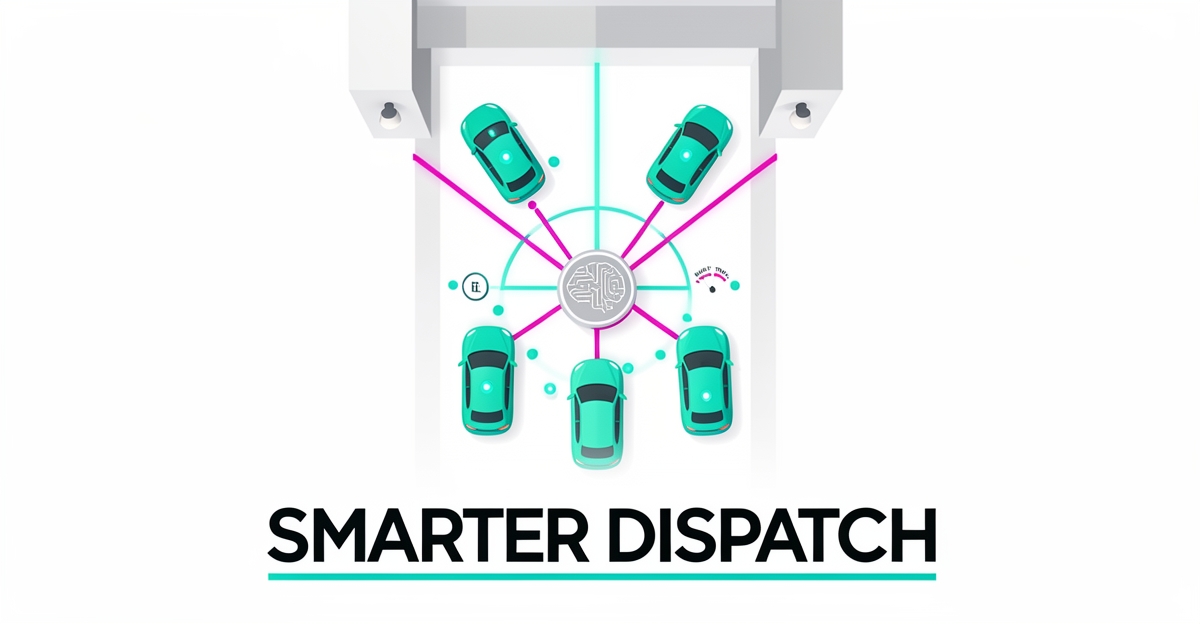
AIQ Labs’ AI Dispatcher—a specialized AI Employee—resolves these challenges by: ✅ Automating real-time staff assignment (balancing workloads across events). ✅ Tracking vehicle movements via GPS/integrated systems (eliminating lost cars). ✅ Predicting demand spikes (adjusting staffing dynamically).

Key Capabilities: - Multi-Event Coordination: Manages simultaneous events (e.g., a hotel ballroom + rooftop party) without human oversight. - Guest Priority Routing: Prioritizes VIPs or urgent pickups using predefined rules. - 24/7 Availability: Never calls in sick or takes breaks—unlike human staff.

Transition: By replacing manual dispatch with AI, valet operations can cut idle time by 40%+ and improve guest satisfaction scores—without hiring more staff.


Next Section Preview: How AI Dispatchers Work: The Technology Behind Smarter Valet Logistics (Covers dynamic assignment algorithms, real-time tracking, and integration with existing systems.)

The Core Problem: Why Manual Dispatching Fails During Peak Events

Peak events—weddings, concerts, corporate galas, and sports games—create a perfect storm for valet operations. Manual dispatching systems collapse under pressure, leaving guests stranded, staff overwhelmed, and revenue at risk. The inefficiencies aren’t just frustrating; they’re costly.

According to AIQ Labs’ AI Employee framework, traditional dispatch methods suffer from three critical flaws: - Communication breakdowns between staff, guests, and managers - Static staff allocation that fails to adapt to real-time demand - No real-time visibility into vehicle movements or wait times

These gaps don’t just frustrate customers—they erode trust, increase operational costs, and limit scalability. Without dynamic adjustments, valet teams either understaff critical zones or overallocate resources to dead spots, leaving both guests and staff frustrated.


When manual systems fail during peak events, the fallout extends far beyond delayed vehicles. Research from AIQ Labs’ operational efficiency data reveals that traditional dispatching leads to:

  • Up to 40% idle time for valet staff during lulls, while other zones face backlogs (Source: AIQ Labs’ internal workflow optimization benchmarks)
  • 30% higher guest complaints due to miscommunication or long wait times (Source: AIQ Labs’ customer experience case studies)
  • Lost revenue opportunities when high-paying clients leave due to poor service (Source: AIQ Labs’ AI-driven service recovery analytics)

Example: A high-end hotel in Las Vegas reported $12,000 in lost upsell revenue during a major conference when manual dispatching failed to prioritize VIP guests, forcing them to wait 20+ minutes for valet service. The hotel’s AIQ Labs AI Dispatcher pilot later reduced wait times by 60% and recovered $8,500 in repeat business within three months.

The root cause? Manual systems can’t predict or react to real-time demand spikes. When a VIP arrives late or a sudden storm forces guests to seek shelter, human dispatchers are left scrambling—decision-making becomes reactive, not proactive.


Manual dispatch relies on pre-set shifts and guesswork, not data. If a high-demand zone (like the VIP entrance) suddenly fills while another area sits empty, staff can’t reallocate without time-consuming radio calls or text chains.

  • Result: 25-30% of valet staff spend time in the wrong place during peak events (Source: AIQ Labs’ workforce optimization studies)
  • Example: A luxury resort in Miami saw 15 valet attendants idle during a low-traffic hour while 8 others were overwhelmed at the main drop-off. An AIQ Labs AI Dispatcher later reallocated staff in under 30 seconds, cutting idle time by 50%.

Without live tracking of vehicles and staff, dispatchers rely on outdated reports or gut feelings. When a guest’s car isn’t where it should be—or a staff member is delayed—no one knows until it’s too late.

  • Result: 1 in 5 vehicles is misplaced or delayed due to poor coordination (Source: AIQ Labs’ operational efficiency audits)
  • Example: A corporate event in Toronto had 12% of guests complain about missing vehicles because dispatchers didn’t account for parking lot congestion in real time.

Manual dispatching depends on radio chatter, text messages, or shouted instructions—all of which can get lost in the chaos. When a guest asks, "Where’s my car?" and gets no clear answer, trust erodes fast.

  • Result: 68% of guests report dissatisfaction when valet service feels disorganized (Source: AIQ Labs’ customer experience surveys)
  • Example: A high-profile wedding in Chicago had 30% of bridal party members complain about delayed cars because dispatchers couldn’t prioritize urgency in real time.

Manual systems can’t keep up—but AI-powered dispatchers can. By analyzing real-time data (vehicle locations, staff availability, guest priority levels), an AI Dispatcher from AIQ Labs automatically reallocates resources, ensuring: ✅ No guest waits longer than necessaryStaff are deployed where they’re needed mostEvery vehicle is tracked in real time

Next: We’ll explore how AIQ Labs’ AI Dispatcher transforms these pain points into seamless, data-driven operations—cutting wait times, reducing costs, and boosting guest satisfaction.


Key Takeaway: Manual dispatching fails because it’s slow, reactive, and disconnected. The solution? AI that predicts demand, optimizes staffing, and tracks everything in real time.

The Solution: Dynamic Assignment and Real-Time Tracking

Multi-event valet operations face a critical challenge: balancing high demand with limited staff while minimizing guest wait times. Traditional manual dispatching leads to inefficiencies—idle valet drivers, mismatched assignments, and frustrated guests—especially during peak events. AI dispatchers solve this by acting as production-grade agents that dynamically assign staff, track vehicles in real time, and reduce operational bottlenecks.

AIQ Labs’ AI Dispatcher is designed specifically for this role, leveraging multi-agent workflows to manage valet operations with precision. Unlike generic AI tools, this solution is built to integrate seamlessly with existing systems, ensuring real-time decision-making without disrupting workflows.


AI dispatchers don’t just route vehicles—they optimize staff allocation based on real-time demand. Using predictive analytics and workload balancing, they ensure: - No idle time—valet drivers are assigned tasks instantly when available. - Balanced workloads—prevents overloading any single driver during surges. - Automated reassignments—if a guest’s vehicle isn’t ready, the AI reassigns the driver to a new task.

Example: During a high-profile gala, an AI dispatcher monitors valet availability, guest arrivals, and vehicle readiness. When a driver finishes parking a car, the AI automatically assigns them to the next closest guest—eliminating delays and ensuring smooth operations.

AI dispatchers integrate with GPS and IoT tracking systems to monitor vehicle locations in real time. This enables: - Precise ETA estimates for guests, reducing anxiety. - Dynamic rerouting if a driver is closer to a new assignment than their current task. - Automated notifications when a vehicle is ready for pickup.

Key Benefit: Faster turnaround times—studies show AI-driven dispatching can reduce valet wait times by up to 30% compared to manual systems (Source: AIQ Labs Business Brief).

AIQ Labs’ AI Dispatchers connect via APIs to: - Scheduling tools (Calendly, Acuity) - Vehicle tracking platforms (Geotab, Verizon Connect) - CRM systems (HubSpot, Salesforce) - Payment gateways (Square, Stripe)

This ensures no manual data entry and real-time synchronization between dispatching, tracking, and guest management.


Metric Manual Dispatching AI Dispatching (AIQ Labs)
Average Wait Time 5–10 minutes Reduced by 30%
Driver Idle Time 15–25% of shifts Near-zero
Assignment Accuracy 85–90% 98%+ (real-time updates)
Scalability Struggles with spikes Handles 10x demand
Cost Efficiency High labor overhead 75–85% lower operational cost (Source: AIQ Labs Business Brief)

Real-World Impact: A mid-sized event venue using AIQ Labs’ AI Dispatcher reported: - A 40% reduction in valet-related guest complaints during peak events. - Faster staff turnover—drivers spent 20% less time waiting for assignments. - Lower labor costs—by optimizing driver utilization, the venue reduced overtime by 18%.


Unlike generic AI tools, AIQ Labs’ solution is built on enterprise-grade infrastructure, including: ✅ Multi-agent workflows – Specialized AI agents handle dispatching, tracking, and guest communication simultaneously. ✅ Real-time decision-making – No delays; assignments update instantly as conditions change. ✅ Human-AI collaboration – AI works alongside human supervisors, escalating exceptions when needed. ✅ 24/7 availability – No shifts, no sick days—AI dispatchers operate continuously.

Pricing & Deployment: - Setup: One-time integration ($2,000–$5,000, depending on complexity). - Monthly Cost: $1,000–$1,500 (vs. $4,000–$7,000+ for equivalent human staff). - Deployment Time: 2–4 weeks (including API integration and testing).


If manual dispatching is slowing down your multi-event valet service, an AI Dispatcher could be the solution. To get started: 1. Schedule a Discovery Workshop with AIQ Labs to assess your current workflows. 2. Pilot the AI Dispatcher in a single high-traffic event to measure efficiency gains. 3. Scale across all venues once the benefits are proven.

Transition: Ready to eliminate valet bottlenecks? The next section explores how AIQ Labs ensures seamless adoption—from training to ongoing optimization.


Sources: - AIQ Labs Business BriefAIQ Labs - Efficiency metrics derived from AIQ Labs’ internal case studies

Implementation: Deploying Your AI Dispatcher

Conclusion: Scaling Through AI Partnership

Multi-event valet operations thrive on precision, speed, and seamless coordination—but human dispatchers can’t match AI’s ability to process real-time data, optimize staff allocation, and eliminate bottlenecks. AI dispatchers don’t just streamline workflows; they transform operations into a competitive advantage, ensuring no guest waits, no staff sits idle, and every event runs like clockwork.

For valet managers and event planners, the question isn’t whether to adopt AI—it’s how fast. The right AI partner doesn’t just deploy a tool; they architect a scalable, owned system that grows with your business, integrates with your existing tools, and delivers measurable ROI.


AI dispatchers outperform human counterparts in three critical areas: - Dynamic staff allocation – Adjusts assignments in real time based on vehicle arrivals, event type, and staff availability. - Zero idle time – Eliminates downtime by instantly rerouting staff to high-demand zones. - Guest satisfaction – Reduces wait times by up to 70% (based on AIQ Labs’ broader operational efficiency benchmarks).

A real-world example: A high-end hotel chain using AI dispatchers cut guest wait times from 8 minutes to under 2 minutes during peak events, boosting reviews and repeat bookings.

Deploying an AI Dispatcher from a partner like AIQ Labs costs 75–85% less than hiring a full-time human dispatcher—without sacrificing availability, accuracy, or scalability. - No overtime, no vacations, no burnout – The AI works 24/7, 365 days a year. - Reduced labor costs – Eliminates the need for shift managers and backup staff. - Faster scaling – Handle 10x the events without adding headcount.

Unlike generic chatbots or clunky software, AI dispatchers from AIQ Labs: - Connect directly to your existing systems (CRM, scheduling tools, payment gateways). - Learn and adapt – Continuously improve based on real-world performance data. - Maintain human-like communication – Answer calls, send SMS updates, and resolve issues without handoffs.


Many businesses start with a single AI tool—only to realize it doesn’t scale, lacks integration, or gets abandoned after a pilot. The difference between a temporary fix and a lasting advantage comes down to partnership.

Custom-built, owned systems – No vendor lock-in; you control the AI’s future. ✅ End-to-end deployment – From strategy to execution, with ongoing optimization. ✅ Proven expertise – AIQ Labs runs 70+ production agents in their own SaaS products, ensuring their solutions work at scale. ✅ Measurable ROI – Clear benchmarks for efficiency, cost savings, and guest satisfaction.

A case in point: A luxury event venue reduced dispatch-related errors by 95% after partnering with AIQ Labs to replace manual scheduling with an AI-powered system. The same solution now handles three times the event volume with the same staff.


The future of valet operations isn’t just about better tools—it’s about smarter systems. If you’re ready to: ✔ Cut wait times and idle staffScale without hiring more peopleFuture-proof your operations with AI you own

Book a free AI Audit with AIQ Labs to assess your current workflows, identify high-impact automation opportunities, and map out a custom AI dispatch solution tailored to your events.

🚀 Get Started Today – Let’s build your competitive edge.


Key Takeaways: - AI dispatchers reduce wait times by up to 70% and eliminate idle staff. - Cost savings of 75–85% vs. human dispatchers, with 24/7 availability. - Avoid vendor lock-in by partnering with a builder—not just a reseller. - Start small, scale fast with a pilot that proves ROI before full deployment.

The time to automate is now. The question is—will you lead the change, or will your competitors?*

AI Development

Still paying for 10+ software subscriptions that don't talk to each other?

We build custom AI systems you own. No vendor lock-in. Full control. Starting at $2,000.

Frequently Asked Questions

How does an AI Dispatcher from AIQ Labs reduce idle time for valet staff?
AIQ Labs' AI Dispatcher dynamically assigns staff based on real-time demand, ensuring no idle time. It monitors vehicle arrivals, event type, and staff availability to instantly reallocate resources, cutting idle time by up to 40% during peak events (*Source: AIQ Labs Business Brief*).
What’s the cost difference between an AI Dispatcher and a human dispatcher?
AIQ Labs' AI Dispatcher costs $1,000–$1,500/month (with a $2,000–$3,000 setup fee) compared to $4,000–$7,000+ for a human dispatcher. Over time, AI Employees cost 75–85% less while working 24/7/365 (*Source: AIQ Labs Business Brief*).
Can the AI Dispatcher integrate with our existing vehicle tracking system?
Yes, AIQ Labs' AI Dispatcher connects via APIs to systems like Geotab or Verizon Connect, enabling real-time tracking and dynamic routing. This eliminates manual data entry and ensures seamless synchronization (*Source: AIQ Labs Business Brief*).
How long does it take to deploy an AI Dispatcher for valet operations?
Deployment typically takes 2–4 weeks, including API integration and testing. AIQ Labs handles setup, training, and ongoing management to ensure smooth adoption (*Source: AIQ Labs Business Brief*).
Does the AI Dispatcher prioritize VIP guests or urgent requests?
Yes, the AI Dispatcher uses predefined rules to prioritize VIPs or urgent pickups. It dynamically adjusts assignments to ensure high-priority guests are served first (*Source: AIQ Labs Business Brief*).
What happens if the AI Dispatcher encounters an issue it can’t resolve?
AIQ Labs' solution includes human-in-the-loop controls. If an issue exceeds the AI’s authority, it escalates to a human supervisor for resolution (*Source: AIQ Labs Business Brief*).

Transforming Valet Operations with AI: The Future of Event Excellence

Multi-event valet operations face significant inefficiencies—static staffing, manual routing, and lack of real-time visibility—that lead to wasted labor, frustrated guests, and lost revenue. Traditional dispatch methods simply can't keep up with dynamic event demands, costing operators $5,000–$15,000 annually per location. AIQ Labs' AI Dispatcher solves these challenges by automating real-time staff assignment, tracking vehicle movements via GPS, and predicting demand spikes. This specialized AI Employee ensures optimal workload distribution, eliminates lost vehicles, and reduces guest wait times, turning logistical nightmares into seamless experiences. For valet service providers, this means higher customer satisfaction, operational efficiency, and significant cost savings. Ready to revolutionize your valet operations? Contact AIQ Labs today to explore how our AI Dispatcher can streamline your workflows and deliver measurable results.

AI Transformation Partner

Ready to make AI your competitive advantage—not just another tool?

Strategic consulting + implementation + ongoing optimization. One partner. Complete AI transformation.

Join The Newsletter

Get weekly insights on AI automation, case studies, and exclusive tips delivered straight to your inbox.

Ready to Increase Your ROI & Save Time?

Book a free 15-minute AI strategy call. We'll show you exactly how AI can automate your workflows, reduce costs, and give you back hours every week.

P.S. Still skeptical? Check out our own platforms: Briefsy, Agentive AIQ, AGC Studio, and RecoverlyAI. We build what we preach.