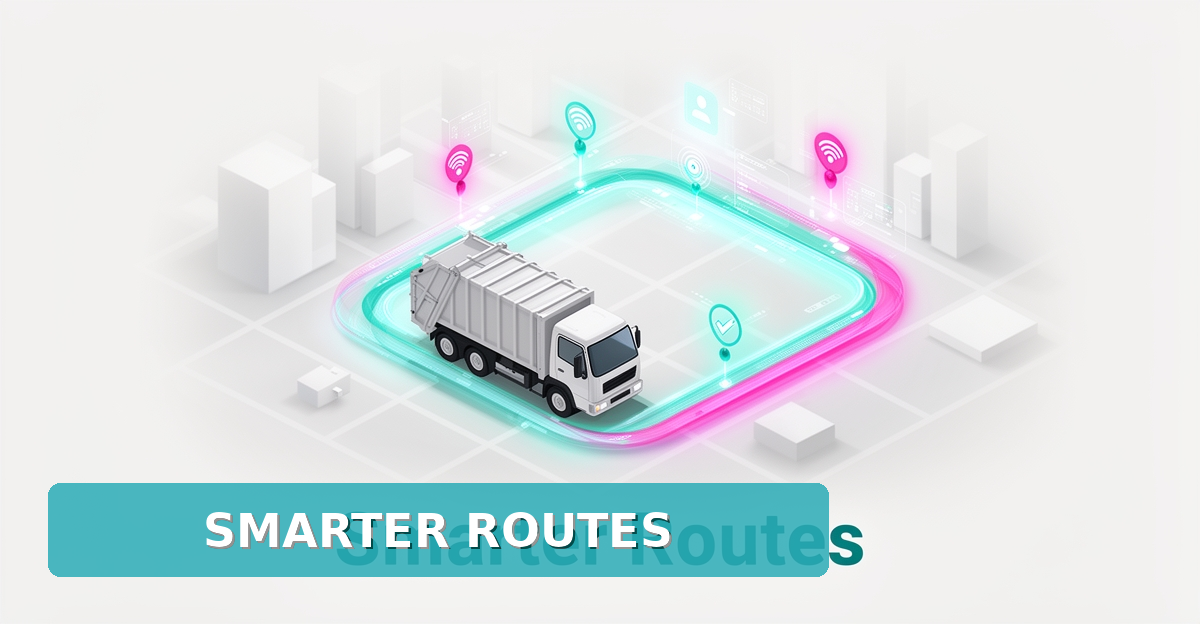
# How an AI Dispatcher Can Improve Pickup Efficiency in Waste Management
**Quick Answer:** AI dispatchers improve waste pickup efficiency through real-time routing, 24/7 availability, and proactive customer notifications, cutting missed appointments and fuel waste. AIQ Labs delivers managed AI dispatchers that integrate with your existing systems and include human-in-the-loop oversight. Start with a free strategy call to see where the gains are in your operation.
## Key Facts
- AI dispatchers reduce missed pickups by analyzing real-time technician location, traffic conditions, and job priority according to industry analysis
- Routing platforms like OptimoRoute typically offer live ETAs and real-time tracking on monthly subscriptions, with entry pricing that varies by fleet size per software pricing data
- AI-powered dash cams from vendors like Samsara automatically flag risky driving events, eliminating manual footage review for managers based on customer feedback
- AI systems can perform at very high accuracy in controlled environments but remain vulnerable to unfamiliar, unseen data patterns per TechRadar research
- Real-time route optimization increases daily pickup capacity by minimizing drive time between jobs per operational workflow analysis
## Table of Contents
1. [The Hidden Cost of Inefficient Waste Pickup Operations](#the-hidden-cost-of-inefficient-waste-pickup-operations)
2. [How AI Dispatchers Optimize Real-Time Waste Pickup Workflows](#how-ai-dispatchers-optimize-real-time-waste-pickup-workflows)
3. [Implementing AI Dispatching: From Pilot to Full-Scale Waste Management Automation](#implementing-ai-dispatching-from-pilot-to-full-scale-waste-management-automation)
## The Hidden Cost of Inefficient Waste Pickup Operations
Waste management operations face hidden costs that erode profitability and customer trust, often stemming from manual dispatching practices that struggle to keep pace with dynamic field conditions. Missed appointments, inefficient routing, and underutilized technicians create a cascade of inefficiencies that directly impact service reliability and increase operational waste. These pain points are not merely inconveniences, they represent quantifiable losses in time, fuel, and customer goodwill that accumulate daily across routes.
Manual dispatch systems frequently fail to adapt to real-time variables such as traffic congestion, technician availability, or sudden job cancellations, leading to suboptimal routing and idle time between pickups. This rigidity results in technicians driving unnecessary miles or waiting at locations, reducing the number of jobs completed per shift. Industry analysis shows that AI-powered dispatch tools can mitigate these issues by analyzing live data to assign the nearest qualified technician and generate efficient multi-stop routes, directly addressing the core causes of wasted effort.
Beyond routing inefficiencies, manual processes contribute to missed appointments due to poor communication and lack of real-time updates between dispatchers, technicians, and customers. When technicians arrive outside scheduled windows or fail to show up entirely, it damages customer satisfaction and increases the likelihood of service cancellations or complaints. AI dispatchers help prevent these outcomes by continuously monitoring job status and enabling proactive customer notifications, ensuring alignment between service delivery and client expectations.
The cumulative effect of these inefficiencies extends beyond immediate service failures to include higher fuel consumption, increased vehicle wear, and technician burnout from unpredictable workloads. Without intelligent dispatching, waste management companies operate with blind spots that prevent them from identifying patterns of delay or underperforman
AI Employees
Hire a team member that works 24/7 — for less than a part-time wage.
AI receptionists, SDRs, dispatchers and 99+ roles. Trained on your business, fully managed.
See If You’re a Fit — AI Employees from $700/mo
Not sure where to start? Ask our AI planner
ce. AIQ Labs addresses these challenges by deploying [AI Employees](/ai-employees) with dispatcher capabilities that function 24/7, integrating real-time data analysis with seamless tool connectivity to optimize routes, reduce missed pickups, and enhance overall service consistency, turning operational friction into measurable efficiency gains.
## How AI Dispatchers Optimize Real-Time Waste Pickup Workflows
Imagine a waste collection truck stuck in unexpected traffic while three urgent pickup requests come in simultaneously. In traditional dispatching, this scenario creates delays, missed appointments, and frustrated customers. But AI dispatchers transform this chaos into coordinated efficiency by processing multiple data streams instantly.
AI dispatchers analyze live operational data to make split-second decisions that human dispatchers simply cannot match at scale. These systems continuously monitor technician GPS locations, current vehicle capacity and load status, real-time traffic conditions, job priority levels, and customer availability windows. By processing these variables simultaneously, AI dispatchers automatically assign the right technician to each job and generate optimized multi-stop routes that minimize drive time while maximizing daily pickup capacity.
The technology delivers measurable operational improvements. According to industry analysis of AI dispatch software, modern routing platforms provide live ETAs and real-time tracking that significantly reduce "where is my driver?" calls from customers, freeing staff to focus on service delivery rather than status updates. AI-powered dash cams can automatically flag risky driving events, eliminating the need for managers to manually review hours of footage while improving fleet safety.
The waste management industry is increasingly adopting these intelligent dispatch solutions to address persistent efficiency challenges. Standalone AI dispatch platforms typically offer accessible entry points for operations of varying sizes, with subscription pricing that scales by fleet size and feature set, entry tiers commonly starting in the tens of dollars per month, while enterprise-grade platforms with custom pricing run considerably higher.
However, successful implementation requires understanding AI's limitations alongside its capabilities. Research highlighted by TechRadar reveals that AI systems can achieve very high accuracy in controlled environments yet still be fooled by unexpected scenarios when encountering new data patterns. As researcher Christoph Adami notes, "AI has an Achilles' heel: it can see a pattern and completely misclassify it. There needs to be a human in the loop."
This is where **managed AI employees** deliver distinct value. Unlike standalone software requiring in-house expertise to configure and monitor, AIQ Labs deploys AI dispatchers as fully managed team members with built-in oversight protocols. These AI employees work 24/7 while maintaining the critical human-in-the-loop checks that prevent routing errors and ensure service reliability.
The result is a dispatch operation that combines AI's computational speed with supervised decision-making. Waste management companies gain **real-time route optimization** that adapts to changing conditions throughout the day, reducing missed pickups and improving on-time service rates without sacrificing operational control.
## Implementing AI Dispatching: From Pilot to Full-Scale Waste Management Automation
Implementing AI dispatching in waste management requires a structured approach to ensure seamless integration and measurable efficiency gains. The process begins with data preparation, where historical pickup records, technician availability, vehicle inventory, and customer preferences are cleaned and formatted for AI analysis. This foundational step enables the system to accurately analyze real-time data such as traffic conditions, job priority, and technician skill sets to assign the best resources and create optimal multi-stop routes. According to industry research, AI-powered dispatch software can significantly improve pickup efficiency by automating these complex decisions.
Integration with existing tools is critical for operational continuity. AI dispatchers must connect with CRM systems to access customer service history, GPS platforms for live technician tracking, and scheduling software to align pickups with availability. T
AI Development
Still paying for 10+ subscriptions that don’t talk to each other?
We build custom AI systems you own outright. No vendor lock-in. Full control.
See If You’re a Fit — AI Employees from $700/mo
Not sure where to start? Ask our AI planner
his creates a unified workflow where data flows seamlessly between systems, eliminating manual entry and reducing errors. AIQ Labs supports this through deep two-way API integrations that build seamless operational workflows, ensuring the AI employee works within the current technology stack rather than replacing it entirely.
Staff training and ongoing supervision complete the implementation roadmap. Technicians and dispatchers need hands-on guidance to understand the AI's capabilities and limitations, particularly its reliance on data quality and pattern recognition. As noted in research on AI limitations, systems can be prone to errors when presented with unfamiliar data, making human-in-the-loop controls essential. Regular audits, feedback loops, and performance monitoring help prevent issues like incorrect route assignments or missed appointments while maximizing the efficiency gains from automated dispatching.
## Frequently Asked Questions
**How does an AI dispatcher improve pickup efficiency in waste management compared to manual dispatching?**
An AI dispatcher analyzes real-time data like technician location, traffic, and job priority to automatically assign the nearest qualified technician and generate optimized multi-stop routes, reducing idle time and increasing daily pickup capacity. This directly addresses the inefficiencies of manual systems that struggle with dynamic conditions, leading to missed appointments and wasted fuel.
**What specific features of AI dispatch software help reduce customer inquiries about driver location?**
AI dispatch platforms typically provide live ETAs and real-time tracking, which significantly reduce 'where is my driver?' calls from customers by offering accurate, up-to-the-minute service updates. This frees staff to focus on service delivery rather than status inquiries.
**Can AI dispatchers make errors, and how are those risks managed in practice?**
Yes. AI systems can be fooled by new data patterns, research shows they can achieve very high accuracy in controlled environments yet fail when encountering unseen scenarios. To prevent errors like incorrect route assignments, AIQ Labs deploys AI dispatchers as managed employees with human-in-the-loop oversight to ensure reliability.
**What does AI dispatch software cost?**
Pricing varies widely as of late 2026. Entry-level routing platforms typically start in the tens of dollars per month, mid-market dispatch platforms often run several hundred dollars monthly, and enterprise fleet platforms usually require custom quotes based on fleet size and features.
**How does AIQ Labs' approach to AI dispatchers differ from standard AI software subscriptions?**
AIQ Labs deploys AI dispatchers as fully managed AI employees that work 24/7 with built-in supervision, training, and tool integrations, unlike standalone software requiring in-house expertise. This model includes ongoing monitoring, updates, and performance optimization, reducing the burden on internal teams while ensuring consistent service delivery.
**What steps are involved in implementing AI dispatching in a waste management operation?**
Implementation begins with data preparation, cleaning historical pickup records, technician availability, and customer preferences, followed by integration with CRM, GPS, and scheduling systems via two-way APIs. Staff training and ongoing supervision are essential to ensure proper use, address AI limitations, and maintain human-in-the-loop controls for critical decisions.
## Turning Waste Pickup Chaos into Predictable Precision
AI dispatchers transform waste management operations by replacing reactive, manual scheduling with proactive, data-driven coordination that adapts to real-time traffic, technician availability, and customer windows, directly reducing missed pickups, fuel waste, and customer frustration. Modern routing platforms deliver live ETAs and real-time tracking that cut down on 'where is my driver?' inquiries, while AI-powered dash cams automate safety monitoring so managers can focus on service improvements instead of footage review. The result is more consistent on-time service, lower operational costs, and happier customers, all without requiring waste management companies to build AI expertise in-house.
If a single broken dispatch workflow is costing you the most, a targeted [Workflow Build](/workflow-builds) can rebuild it at a fixed price. If you want dispatch connected to scheduling, billing, and customer communication as one operating layer, an [AI Operating System](/ai-operating-systems) gets you there in phases, owned outright. Either way, start with the free two-minute [Fit Check](/apply) to identify your highest-impact automation opportunity, then schedule a no-obligation 30-minute strategy call with an AIQ Labs engineer to map out a practical path forward.
AI Transformation Partner
Make AI your competitive advantage — not just another tool.
Strategy, implementation and ongoing optimization. One partner, end to end.
See If You’re a Fit — AI Employees from $700/mo
Not sure where to start? Ask our AI planner