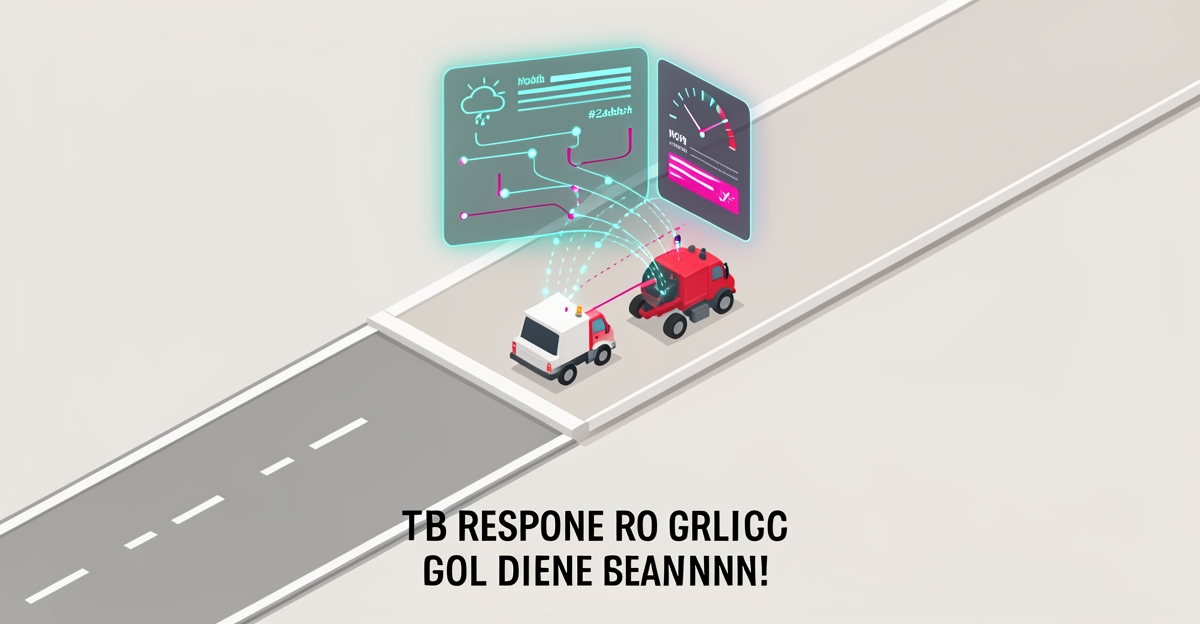
How an AI Dispatcher Can Improve Response Times for Sidewalk & Curb Jobs
Key Facts
- Manual dispatch struggles to keep up with real-time variables like traffic, weather, and last-minute cancellations
- AI dispatchers evaluate location, traffic, weather, and crew availability simultaneously to assign jobs in seconds
- AI can reduce response times by automatically routing requests to the right technician the first time
- AI can improve customer satisfaction by providing instant responses outside business hours
- AI can automate routine tasks such as ticket sorting and quick replies, easing the load on stretched field teams
- AIQ Labs has deployed 200+ multi-agent systems, including dispatch roles for field operations
Hire a team member that works 24/7 — for less than a part-time wage.
AI receptionists, SDRs, dispatchers and 99+ roles. Trained on your business, fully managed.
Not sure where to start? Ask our AI planner
The Response Time Bottleneck in Field Operations
Sidewalk and curb repair jobs often face delays not because of technician skill, but because of how work gets assigned. Manual dispatch processes struggle to keep up with real-time variables like traffic congestion, sudden weather changes, or last-minute cancellations, leaving crews waiting or rerouted inefficiently. This creates a ripple effect where even small scheduling gaps snowball into missed deadlines and frustrated customers.
Frontline teams are typically stretched thin. Industry surveys in recent years have consistently found that a majority of frontline workers say they don't have enough time to finish tasks, and roughly half report burnout. When dispatch relies on phone calls, spreadsheets, or gut instinct, technicians spend more time coordinating than repairing, increasing fatigue and reducing the capacity to handle urgent jobs. Overloaded schedules force trade-offs: either rush through work and risk errors, or fall further behind.
AI dispatchers remove this bottleneck by continuously analyzing location, traffic, weather, and crew availability to assign jobs in real time. Unlike static scheduling, they adapt instantly, redirecting a technician en route to a higher-priority curb repair if a storm delays another job nearby. This dynamic adjustment ensures the closest, most qualified technician gets the task without manual intervention. By eliminating guesswork and reducing idle time, AI-driven dispatch directly tackles the delays that plague field operations, setting the stage for faster, more reliable service.
How AI Dispatchers Optimize Location, Traffic, Weather and Availability
AI dispatchers analyze job location, traffic conditions, weather patterns, and technician availability in real time to assign the most suitable technician for each sidewalk and curb job. This dynamic evaluation ensures tasks are routed to the right person at the right time, minimizing delays and improving on-time completion rates. By continuously monitoring these variables, AI-powered systems can predict high-demand areas and guide technicians along quicker routes, reducing response times significantly. The technology evaluates multiple data streams simultaneously, such as road congestion, precipitation impact on travel, and real-time crew availability, to make optimal dispatch decisions within seconds.
This level of precision allows field service providers to respond faster to urgent repair requests while maintaining balanced workloads across teams. Well-implemented AI dispatch systems consistently make more consistent assignment decisions than manual dispatch, reducing misassignments and ensuring that technicians with the right skills, proximity, and availability are selected for each job. By eliminating guesswork in routing, AI dispatchers enhance operational reliability and support faster resolution of infrastructure issues.
- Real-time traffic analysis to avoid delays
- Weather impact assessment for route safety
- Technician skill and location matching
- Dynamic workload balancing across teams
- Predictive routing based on demand patterns
AIQ Labs builds these capabilities into its AI Employees for field operations, so businesses can deploy intelligent dispatching without building systems from scratch. The solution scales with operational needs while maintaining accuracy and response efficiency. By automating complex routing logic, companies can redirect human focus toward skilled field work rather than administrative coordination. This approach supports sustainable improvements in service delivery for sidewalk and curb maintenance teams.
From Dispatch to Completion: AI Support Across Field Service
Field service operations succeed when every step, from initial ticket intake to job completion, flows smoothly. AI dispatchers fit naturally into this workflow by handling the critical first phase: analyzing incoming requests for sidewalk and curb jobs and matching them with the right technician based on real-time data like location, traffic, weather, and availability. This automation eliminates manual sorting delays and ensures jobs are assigned correctly the first time.
Once dispatched, AI continues to support field teams by taking over routine tasks that slow down human agents. For example, AI can automatically sort incoming service tickets and generate quick replies to common customer inquiries, freeing up technicians to focus on complex, on-site work. Automating ticket sorting and quick replies reduces the administrative burden that contributes to frontline burnout.
Beyond automation, AI dispatchers provide real-time insights that help human agents make faster, better-informed decisions while on the job. Whether it's updating a technician about sudden weather changes or flagging a parts delay before they arrive on site, this continuous flow of information helps prevent avoidable delays, directly improving on-time completion rates and customer satisfaction.
This combination of automated task handling and intelligent support allows human workers to focus on what they do best: applying judgment, customer care, and technical expertise to solve problems in the field. Dispatch stops being a bottleneck and becomes a strategic advantage.
For businesses looking to implement this level of intelligence in their field service operations, AIQ Labs offers managed AI Employees, including AI Dispatcher roles, that integrate directly with existing tools and workflows. These AI team members work 24/7, learn from performance data, and scale with operational demands, providing a practical path to faster response times and more reliable service delivery.
Implementing an AI Dispatcher with a Managed AI Employee
Sidewalk and curb jobs live or die on minutes. When a dispatcher is juggling location, traffic, weather and technician availability manually, delays stack up and crews finish the day behind schedule.
Field teams are already stretched. An AI Dispatcher removes the bottleneck by analyzing job location, traffic, weather, and technician availability in real time to assign tasks to the most suitable technicians.
Deployment starts with a clear role definition, not a platform build. Businesses provide a job description just like for a human hire, and the system is trained on specific processes, voice, and tool integrations. The AI Employee goes live with a phone number, email, and chat presence and works 24/7/365 alongside human teams. Production-ready deployment without building in-house is the practical path for field operations.
AIQ Labs supports this through three payment models tied to its service lineup:
- Start Monthly, one AI employee with setup plus a flat monthly plan, typically around 80% less than the cost of a human hire, including build, training, integrations, monitoring, and improvements, with the ability to pause or adjust anytime.
- Build in Milestones, rebuild the one workflow that costs you the most, split into phases. Approve and pay per phase; stop anytime and keep everything built so far. See Workflow Builds.
- Own It Outright, a full AI Operating System built in phases, with full ownership of code, agents, and data when complete.
Integration connects the dispatcher to existing dispatch systems, CRMs, calendars, and work order tools via API. Real-time routing reduces response times, and the same systems can predict high-demand areas and guide crews along quicker routes.
The result is faster assignments, fewer missed windows, and less manual triage for supervisors. AI can reduce response times by automatically routing customer interactions to the correct specialist, and improve customer satisfaction by providing instant responses to basic queries even outside business hours.
Still paying for 10+ subscriptions that don’t talk to each other?
We build custom AI systems you own outright. No vendor lock-in. Full control.
Not sure where to start? Ask our AI planner
Frequently Asked Questions
How does an AI dispatcher improve response times for sidewalk and curb repair jobs?
Do field teams really lose that much time to coordination?
How consistent are AI dispatch decisions compared to manual dispatch?
Can an AI dispatcher work with our existing systems like CRM or scheduling tools?
What are the implementation options for deploying an AI dispatcher through AIQ Labs?
Will using an AI dispatcher reduce the administrative burden on our field teams?
Turning Dispatch Delays into Service Advantage
Sidewalk and curb repair teams don't fail due to lack of skill, they lose time when dispatch can't keep up with real-world variables like traffic, weather, and sudden changes. AI dispatchers eliminate this bottleneck by continuously analyzing location, crew availability, and conditions to assign the right technician to the right job instantly. This reduces idle time, improves on-time completion, and lets frontline workers focus on repairs instead of coordination. For businesses looking to move beyond manual scheduling and spreadsheets, AIQ Labs offers managed AI Employees, including AI Dispatcher roles, that integrate with existing tools and scale with operational needs. Start with the free 2-minute Fit Check, then schedule your free 30-minute strategy call to map your biggest bottlenecks and identify where AI can deliver measurable impact.
Make AI your competitive advantage — not just another tool.
Strategy, implementation and ongoing optimization. One partner, end to end.
Not sure where to start? Ask our AI planner