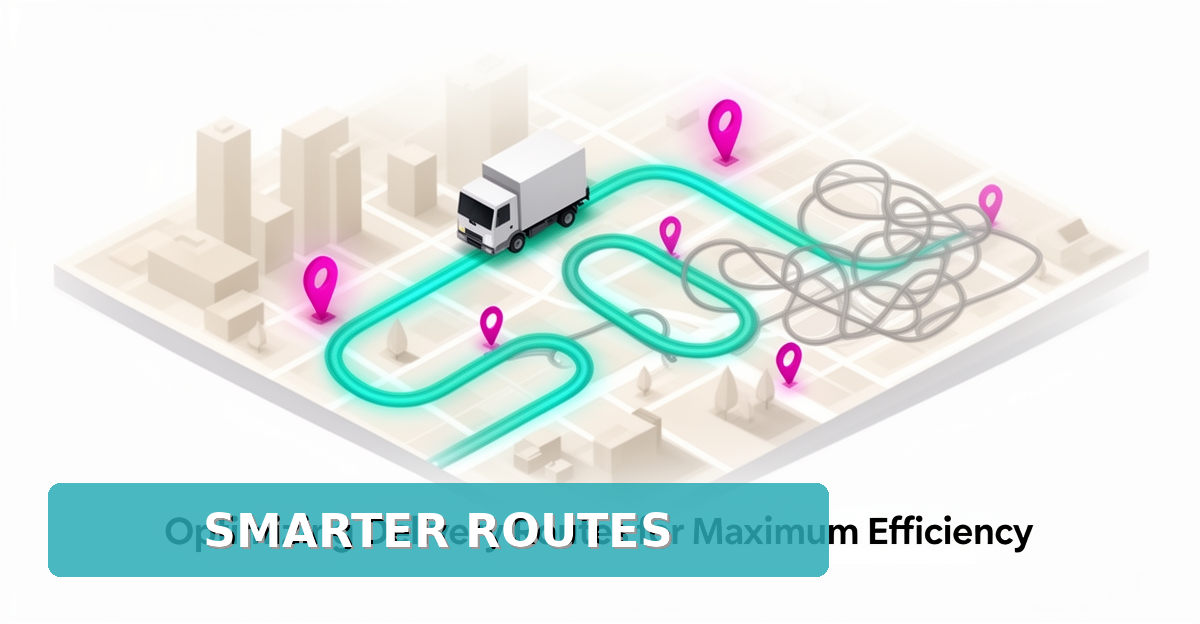
How an AI Dispatcher Can Optimize Delivery Routes in Furniture Removal
Key Facts
- Manual dispatchers commonly spend around 2.5 hours daily on routes, while AI completes comparable planning in minutes according to operational analysis.
- AI routing is reported to achieve 95-99% on-time delivery versus roughly 70-80% with manual methods per fleet analysis.
- Manual routing is associated with 15-30% higher fuel consumption from static plans per industry data.
- One retention study found 43% of customers never return after a delivery failure according to reported research.
- AI route optimization has been credited with cutting cost per delivery by roughly 27% in reported fleet deployments.
- One reported fleet saw on-time delivery rise from 81% to 97.4% after AI implementation per delivery performance studies.
Hire a team member that works 24/7 — for less than a part-time wage.
AI receptionists, SDRs, dispatchers and 99+ roles. Trained on your business, fully managed.
Not sure where to start? Ask our AI planner
The Hidden Cost of Manual Route Planning in Furniture Removal
Manual route planning feels productive until you measure what it actually costs a furniture removal operation. Dispatchers spend hours each morning building routes by hand, and those hours compound into missed windows, excess fuel burn, and lost customers.
The time drain is immediate and measurable. Operational analysis points to roughly 2.5 hours of daily dispatch time on manual route building, with AI routing completing comparable work in minutes. That is time that never returns to exception handling or customer service.
Fuel waste follows the same pattern. Industry data attributes 15-30% higher fuel consumption to manual routing because static plans cannot adapt to live traffic, detours, or load sequencing. For bulky furniture, every extra mile adds handling risk and driver overtime.
Delivery reliability suffers most visibly. Delivery performance studies record 19% of orders arriving outside the promised delivery window for one grocery chain before AI implementation, with manual dispatch typically achieving 70-80% on-time rates versus 95-99% with optimization.
The hidden cost of manual routing isn't just the dispatcher's time, it's the compounded inefficiency of every suboptimal decision that cascades through the rest of the day. Furniture removal amplifies this because vehicle capacity, item dimensions, and access constraints must be balanced alongside traffic and windows.
Manual planning creates recurring profit leaks:
- Hours of daily planning per dispatcher that could shift to exception management
- 15-30% higher fuel consumption from suboptimal sequencing and late reroutes
- A meaningful share of deliveries missing promised windows, increasing churn risk
- Overtime and rework from routes that fall apart the moment traffic changes
Customer retention is directly tied to these misses. Retention research finds 43% of customers never return after a delivery failure. In furniture removal, where appointments are large and trust is critical, a single late arrival can erode lifetime value.
AI-powered dispatchers change the equation by analyzing delivery routes, estimating travel times, and assigning jobs based on vehicle capacity and traffic. AIQ Labs deploys AI dispatchers as managed AI Employees, built, trained on your business, and integrated with your existing operations so teams stop doing repetitive planning by hand.
The shift moves dispatchers from routine route building to higher-value work. In one reported deployment, two dispatchers moved to exception management after AI implementation, while on-time delivery climbed from 81% to 97.4%.
How AI Dispatchers Solve Furniture Delivery Complexity with Real-Time Optimization
Furniture removal is a routing puzzle that changes by the minute. Bulky loads, tight delivery windows, and congested urban streets make static planning expensive, and AI dispatchers turn that complexity into a live optimization problem.
AI-powered dispatchers ingest real-time traffic, weather, vehicle capacity, and customer windows at the same time, then generate optimal routes in seconds rather than hours. According to industry research, manual route building can consume around 2.5 hours daily, while AI routing completes the process in minutes. That shift frees dispatchers from routine planning to exception handling and customer service.
The system continuously learns from historical data and adapts as conditions change. Fleet analysis shows AI routing delivering 95-99% on-time delivery rates versus 70-80% with manual methods, alongside 15-20% fuel cost reduction. Dynamic rerouting happens automatically when traffic jams or road closures appear, updating driver apps in seconds instead of the 10-20 minutes typically lost to manual rerouting.
For furniture removal specifically, the value is in handling constraints that rule-based tools miss. AI evaluates load order, vehicle dimensions, and access restrictions alongside traffic and time windows, so trucks arrive full and on time without unsafe stacking or wasted miles.
Key inputs the dispatcher analyzes in real time include:
- Live traffic and weather feeds to avoid delays before they happen
- Vehicle capacity and load sequencing for bulky furniture
- Delivery windows and customer preferences for access
- Historical performance to predict travel times with improving accuracy
This multi-variable view enables dynamic rerouting that maintains efficiency through disruptions. Reported deployments credit AI route optimization with a roughly 27% average reduction in cost per delivery, and larger fleets often recover their costs quickly once fuel and overtime savings compound.
AIQ Labs builds these systems to integrate with your existing operations and automate routing decisions, whether as a single dispatcher role under AI Employees, a focused rebuild through AI Workflow Builds, or a full connected layer via AI Operating Systems. The result is measurable: fewer wasted miles, higher on-time performance, and dispatchers focused on high-value work instead of spreadsheet planning.
Implementing AI Dispatchers: From Data Integration to Fleet Scaling
Deploying an AI dispatcher is less a single software install than a phased operational shift, and the businesses that treat it that way are the ones seeing returns within months rather than years. The good news: the path from first data pull to a fully scaled fleet is well mapped, and each stage builds directly on the last.
The foundation is data. Before any algorithm can optimize a route, it needs clean internal records, vehicle capacities, delivery schedules, historical job logs, combined with external feeds like live traffic and weather. According to route optimization research for furniture logistics, integrating these datasets into a single operational view is what allows the system to uncover recurring bottlenecks and average delivery times that manual planners typically miss. Skipping the data-cleaning stage is the most common reason early deployments underperform.
From there, implementation follows a predictable sequence:
- Connect the AI to existing tools, TMS, ERP, and telematics systems, via API so data flows automatically rather than through manual re-entry.
- Run predictive models against historical delivery data to simulate traffic patterns and order clusters before going live.
- Train drivers and dispatchers on the new workflow, with industry analysis suggesting roughly one to two weeks for teams to adapt.
- Establish continuous monitoring and a feedback loop so the system keeps learning from real delivery outcomes.
That final step matters more than most operators expect. Because machine learning systems refine themselves with every completed route, fleet data suggests route predictions become meaningfully more accurate within the first 90 days of operation. The system you deploy on day one is the least accurate version you will ever run.
The scaling economics are equally compelling. Where a human dispatcher typically manages 10-12 vehicles, an AI-supported dispatcher can coordinate 35-50, and delivery fleets have reported a 3.4x average ROI within the first year of machine learning deployment. For small and mid-sized removal companies wary of the upfront commitment, engagement structure matters as much as the technology. AIQ Labs' Start Monthly model, a flat monthly plan covering the build, training on your business, tool integrations, and ongoing monitoring, lets an SMB deploy a single AI Dispatcher and prove the ROI on live routes before scaling across the fleet, with the flexibility to pause or adjust at any point. Larger operations can graduate to milestone-based builds or own the system outright.
Because the monthly plan includes continuous optimization, the system keeps improving without demanding internal technical headcount, which is precisely what makes enterprise-grade routing accessible to a five-truck operation, not just a national carrier.
Still paying for 10+ subscriptions that don’t talk to each other?
We build custom AI systems you own outright. No vendor lock-in. Full control.
Not sure where to start? Ask our AI planner
Frequently Asked Questions
How much time can an AI dispatcher save compared to manual route planning each day?
What fuel savings can furniture removal companies expect from AI route optimization?
How does AI improve on-time delivery rates for furniture removals?
Can AI dispatchers handle real-time disruptions like traffic jams or road closures?
What is the typical ROI timeline for implementing an AI dispatcher in a furniture removal fleet?
How many vehicles can one AI-supported dispatcher manage compared to a human dispatcher?
From Spreadsheet Dispatch to Live Optimization
Manual route planning in furniture removal quietly erodes margin through wasted hours, excess fuel, and missed windows that drive customers away. AI dispatchers reverse that pattern by turning traffic, weather, vehicle capacity, load sequencing and delivery windows into live decisions, cutting planning from hours to minutes and enabling dynamic rerouting as conditions change. The result is fewer miles, higher on-time performance and dispatchers freed to handle exceptions instead of rebuilding routes all morning. Implementation works best as a phased shift, clean data, connect TMS/ERP/telematics, simulate with history, train the team, then monitor and let the model learn. For SMBs that want enterprise-grade routing without subscription sprawl, AIQ Labs deploys AI dispatchers through its AI Employees program on the Start Monthly model, so you prove ROI on live routes before scaling, and larger operations can build in milestones or own the system outright. If you're ready to find the biggest routing leak in your fleet, start the 2-minute Fit Check at https://aiqlabs.ai/apply and book a free 30-minute strategy call at https://aiqlabs.ai/book. Fleets using AI optimization routinely reach 95-99% on-time delivery rates versus 70-80% with manual methods according to industry analysis.
Make AI your competitive advantage — not just another tool.
Strategy, implementation and ongoing optimization. One partner, end to end.
Not sure where to start? Ask our AI planner