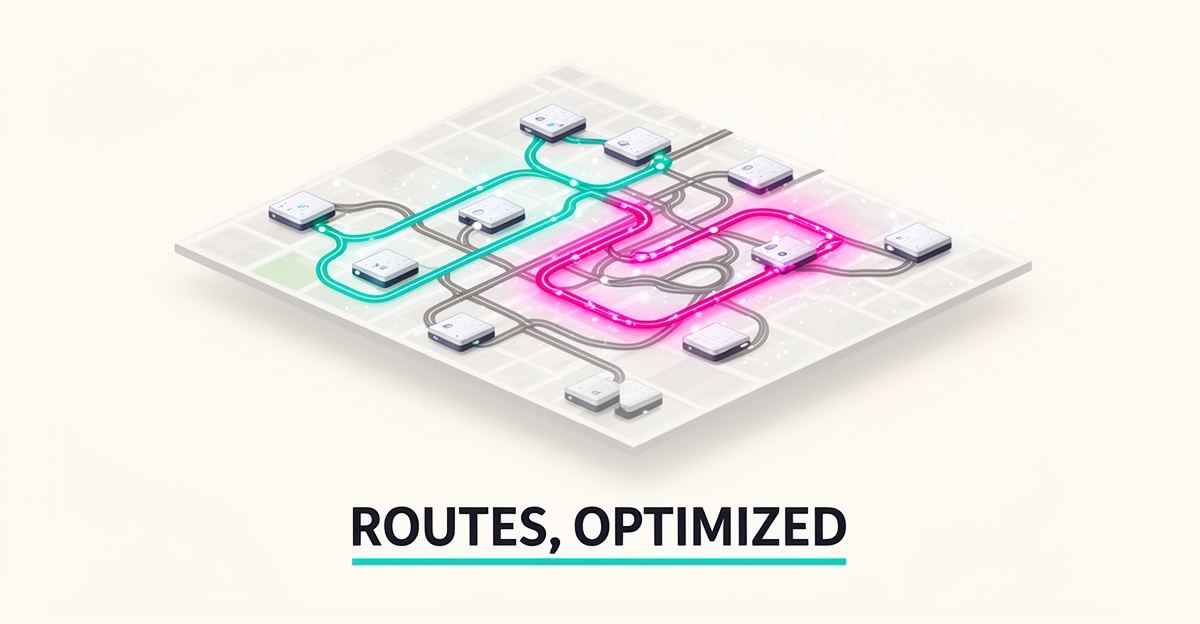
How an AI Dispatcher Can Optimize Mattress Pickup Routes in Real Time
Key Facts
- AI dispatch software can substantially reduce manual planning time, many operators report savings of 80% or more on routine coordination
- Real-time route optimization typically reduces total miles driven for the same number of pickups, directly cutting fuel and labor costs
- AI dispatch systems commonly recalculate routes every 5–15 minutes as new data arrives
- AI employees work 24/7/365 with no missed calls, no sick days, and no overtime, per the AIQ Labs AI Employees model
- AIQ Labs has deployed 200+ multi-agent systems and runs 4 live SaaS products daily
Hire a team member that works 24/7 — for less than a part-time wage.
AI receptionists, SDRs, dispatchers and 99+ roles. Trained on your business, fully managed.
Not sure where to start? Ask our AI planner
The High Cost of Inefficient Mattress Pickup Routing
Mattress removal runs on tight windows, heavy loads, and routes that change by the hour. When dispatch stays manual, the cost shows up in fuel, overtime, and missed pickups that ripple through the week.
Manual route planning consumes hours every day. Dispatchers juggle calls, confirmations, and map checks while trying to keep trucks full and crews on time. Operators using AI dispatch tools commonly report cutting routine planning time by 80% or more, freeing staff from repetitive coordination. That time is lost capacity in a sector where every hour on the road has a direct cost.
Fuel waste compounds quickly with suboptimal paths. Without real-time re-optimization, drivers take longer loops, idle in traffic, and backtrack between pickups. Continuously optimized routes mean fewer miles for the same number of mattresses collected, and for bulky waste businesses, mileage equals disposal fees and labor hours.
Missed time windows damage reputation and revenue. Residents and property managers book narrow slots, and a delayed truck forces reschedules or leaves a mattress curbside overnight. Traditional boards and spreadsheets cannot adapt when a cancellation opens a gap or an urgent pickup appears mid-route.
The inability to adapt is the core weakness of traditional dispatch. Manual methods rely on static plans made hours earlier. When traffic, weather, or a last-minute request hits, dispatchers rework the day by hand, often choosing the fastest fix rather than the best overall route.
Operational pain shows up as:
- Hours lost daily to manual planning and phone tag
- Fuel and labor waste from inefficient sequencing
- Missed windows and customer complaints from rigid schedules
- No real-time response to urgent or overflow pickups
This is where logistical inefficiency wastes time and fuel and constrains growth. AI dispatchers built for workflow and task automation can dynamically assign pickups, re-sequence stops as conditions change, and balance load across crews without constant human intervention.
AIQ Labs approaches this through managed AI Employees, dispatchers, receptionists, and 99+ other roles that handle real workflows end-to-end alongside your human team, typically at around 80% less cost than an equivalent human hire. The focus is improving service efficiency and lowering operational costs by automating repetitive coordination and enabling instant route adaptation.
Without real-time optimization, mattress pickup businesses stay reactive. With it, dispatch becomes a competitive advantage that protects margins and customer trust.
How AI Dispatch Cuts Planning Time
Mattress pickup is a moving target, trucks roll out with incomplete information, traffic shifts, and last-minute cancellations pile up. AI dispatch changes that by turning reactive planning into continuous, real-time optimization.
An AI dispatch system is a logistics layer that uses machine learning and automated decision-making to assign routes, drivers, and resources in real time. The core components are predictive analytics engines, real-time data processing systems, machine learning models for pattern recognition, and automated decision-making algorithms that adapt to changing conditions throughout the day.
Predictive analytics is the first lever. Models ingest historical pickup windows, driver performance, and mattress dimensions to forecast service times before a route is built. Pattern recognition then finds hidden inefficiencies, such as repeated backtracking in dense neighborhoods. Real-time data processing closes the loop, updating ETAs as traffic, weather, or customer availability changes.
The planning impact is measurable. Operators deploying AI dispatch commonly report cutting manual planning time by 80% or more, freeing dispatchers from spreadsheet juggling and manual re-routing. The same automation typically reduces total miles driven, which shows up directly in fuel and labor costs.
That shift redefines the dispatcher role. Instead of building routes from scratch each morning, teams become exception handlers who review automated suggestions, approve changes, and focus on customer experience. AIQ Labs deploys AI Employees for exactly this kind of real-time dispatching, working 24/7 alongside human teams.
Automation is delivered through specific capabilities that work together:
- Predictive analytics engines that forecast demand and service duration
- Real-time data processing systems that ingest traffic, weather, and live order updates
- Machine learning pattern recognition for route and driver matching
- Automated decision-making algorithms that re-optimize routes without manual intervention
For mattress pickups, this means dynamic assignment of pickups, real-time route optimization, and reduced delivery times as conditions evolve. Integration with existing ERP, WMS, and TMS systems remains a key consideration for scaling without proportional increases in operational complexity.
The net effect is less fuel waste, fewer missed windows, and dispatchers focused on exceptions rather than planning.
Real-Time Adaptation: Handling Same-Day Pickups and Route Disruptions
Static morning route plans quickly become obsolete when new mattress pickup requests arrive midday or unexpected disruptions occur, leaving drivers stuck in inefficient loops. AI dispatchers solve this by continuously recalculating optimal routes as conditions change, ensuring maximum efficiency throughout the day. Many systems re-evaluate active routes every 5–15 minutes as new data arrives, making real-time adaptation not just beneficial but essential for modern mattress pickup services.
The AI dispatcher's automated decision-making algorithms process live data streams, including new pickup requests, traffic congestion, weather alerts, and driver availability, to dynamically reassign stops and sequences. When a same-day request comes in, the system instantly evaluates insertion points across all active routes, minimizing detours while maintaining delivery windows. If traffic slows on a primary corridor, the AI reroutes affected drivers using real-time congestion data, preserving schedule integrity without manual intervention. In cases of driver absences, the system redistributes their workload across the remaining fleet by recalculating optimal assignments based on proximity, vehicle capacity, and remaining shift time.
- Continuous route recalculation, commonly every 5–15 minutes, as new data arrives
- Priority-based insertion of urgent same-day pickups
- Traffic-aware rerouting using live congestion feeds
- Automated load balancing when drivers call in sick
- Real-time ETA updates sent to customers and dispatch teams
This level of dynamic optimization is impossible with static planning, where morning routes remain fixed regardless of shifting realities. By contrast, AI dispatchers treat each minute as an opportunity to improve efficiency, reducing idle time, cutting fuel waste, and increasing the number of pickups per driver per day. For mattress pickup operations dealing with bulky, time-sensitive items, this adaptability directly translates to higher customer satisfaction and lower operational costs. AIQ Labs implements these capabilities through managed AI Employees that function as intelligent dispatchers, working 24/7 to ensure routes stay optimized even as conditions evolve throughout the service day.
Choosing and Implementing AI Dispatch for Your Pickup Operation
Choosing the right AI dispatch approach requires evaluating scalability, integration capabilities, and real-time performance to match your mattress pickup operation's specific demands. A system must handle increasing delivery volumes without adding complexity, scalability is critical for avoiding operational bottlenecks. Integration with existing ERP, WMS, or TMS platforms ensures seamless data flow and eliminates manual workarounds. Real-time performance enables dynamic rerouting based on traffic, weather, or last-minute changes, which is where the bulk of the planning-time savings come from.
Implementation considerations extend beyond features to include cost structures, compliance, and long-term adaptability. Off-the-shelf dispatch subscriptions vary widely in price and capability, and per-seat pricing can climb as your team grows. AIQ Labs takes a different approach with three clear entry points: AI Employees (managed AI staff at roughly 80% less cost than a human hire), Workflow Builds (rebuild the one workflow that costs you the most, at a fixed price, in phases), and AI Operating Systems (one connected operating layer, built in phases and owned outright). Payment models are straightforward, start monthly, build in milestones, or own it outright, with no fake prices and no lock-in. Compliance with data privacy and transportation safety standards should still be verified during selection to avoid legal risk.
Deploying an AI Dispatcher: From Manual Chaos to Automated Efficiency
Deploying an AI dispatcher transforms mattress pickup operations from reactive chaos to proactive efficiency. The implementation begins with assessing current scheduling workflows and identifying integration points with existing customer management systems. AIQ Labs ensures seamless connectivity by building integrations that sync dispatch logic with CRM platforms, calendar tools, and payment processors, eliminating data silos and manual handoffs. This foundational step creates a unified operational view where pickup requests flow directly into the AI dispatcher's decision engine.
Training requirements focus on shifting team roles rather than replacing staff. Dispatchers transition from manual route plotting to exception-based oversight, monitoring AI-generated schedules and intervening only when constraints like time windows, vehicle capacity, or driver availability require human judgment. Meanwhile, drivers receive optimized pickup sequences via mobile apps, reducing idle time and fuel consumption. Operators using this approach commonly report cutting manual planning time by 80% or more, which translates directly to lower operational costs and faster service delivery.
The AI dispatcher continuously learns from real-time variables, traffic patterns, last-minute cancellations, and geographic clustering, to refine route efficiency throughout the day. By handling routine assignment logic, the AI employee frees human teams to focus on customer service quality, fleet maintenance, and strategic growth initiatives such as expanding service areas or introducing value-added offerings like mattress recycling partnerships. This shift not only improves daily throughput but builds resilience against demand fluctuations, ensuring consistent performance even during peak seasons. With 200+ multi-agent systems deployed and 4 live SaaS products it runs daily, AIQ Labs builds this kind of automation as phased, milestone-based projects, you see it working before you scale it.
Still paying for 10+ subscriptions that don’t talk to each other?
We build custom AI systems you own outright. No vendor lock-in. Full control.
Not sure where to start? Ask our AI planner
Frequently Asked Questions
How much time can an AI dispatcher save on manual route planning for mattress pickup services?
Can AI dispatch really cut fuel waste and mileage in mattress pickup operations?
How does an AI dispatcher handle last-minute pickup requests or cancellations during the day?
What happens to dispatcher roles when AI handles route planning?
Is AI dispatch scalable for growing mattress pickup businesses?
How do AI Employees from AIQ Labs differ from standard AI dispatch software subscriptions?
The Route You Build at 6 AM Is Obsolete by 9
Mattress pickup operations live and die by how fast they adapt. Manual dispatch burns hours on planning, wastes fuel on inefficient loops, and cracks under the pressure of same-day requests, while an AI dispatcher cuts manual planning time dramatically and re-optimizes routes continuously as traffic, cancellations, and urgent pickups reshape the day. The result isn't just fewer missed windows; it's dispatchers freed to handle exceptions, drivers completing more pickups per shift, and margins that hold even as volumes grow. The question isn't whether real-time optimization works, it's whether your operation can afford to stay static while competitors adapt. If you're ready to see what an AI dispatcher could do for your routes, start with the two-minute Fit Check at aiqlabs.ai/apply, then book a free 30-minute strategy call at aiqlabs.ai/book, a no-obligation working session with an AI engineer to map your biggest bottleneck and identify where automation delivers the clearest win. And if there isn't one, we'll tell you that too. You can also reach the team directly at [email protected].
Make AI your competitive advantage — not just another tool.
Strategy, implementation and ongoing optimization. One partner, end to end.
Not sure where to start? Ask our AI planner