How an AI Dispatcher Can Optimize Patio Job Scheduling and Resource Allocation
Key Facts
- AI dispatchers can optimize routes in seconds, cutting the time crews spend traveling between job sites.
- Route optimization is widely reported to deliver fuel savings in the 10-20% range, with some implementations doing considerably better depending on how inefficient the prior routing was.
- Real-time tracking enables proactive response to delays, which is what drives improved on-time arrival rates.
- The fleet and field service management market continues to grow steadily as of late 2026, driven largely by demand for intelligent routing and resource optimization.
- AI adoption in field operations shows measurable improvements in on-time delivery and resource efficiency across industries.
- Implementing AI dispatching well requires the right infrastructure and expertise, which is why working with an experienced build partner matters.
Hire a team member that works 24/7 — for less than a part-time wage.
AI receptionists, SDRs, dispatchers and 99+ roles. Trained on your business, fully managed.
Not sure where to start? Ask our AI planner
The Patio Scheduling Bottleneck Costing You Time and Margin
Manual patio job dispatching creates a cascade of inefficiencies that directly hit both operational costs and customer satisfaction. When technicians sit idle waiting for the next assignment, or materials arrive late because of poor coordination, billable hours evaporate and project timelines slip. These avoidable delays erode profit margins and damage client trust when service windows are missed. The shift from manual to software-based dispatching isn't optional anymore, it's a competitive necessity for patio and field service businesses that want to stay ahead. Industry research on fleet dispatching consistently shows that inefficient routing and scheduling produce significant avoidable fuel and labor waste, and those costs compound over hundreds of weekly jobs.
The root of these bottlenecks lies in the limits of manual systems. A dispatcher juggling spreadsheets, whiteboards, and phone calls simply cannot process the volume of variables involved in optimized patio job allocation. Technician skill sets, travel time between jobs, material delivery schedules, and weather-dependent curing times create a scheduling matrix that exceeds human capacity for real-time optimization. As a result, companies routinely face scenarios where one crew finishes early while another waits on materials, or urgent jobs get bumped because nobody has clear visibility into crew availability. Businesses relying on manual methods typically carry noticeably higher fuel and travel costs than those using optimized systems, and the same waste applies to patio-specific materials like sealant, pavers, and sand that go unused when jobs are poorly sequenced.
These inefficiencies aren't just operational headaches, they represent measurable revenue leakage that grows with every manual dispatch decision. Consider the hidden costs: technicians driving back to the shop for forgotten supplies, customers calling to reschedule after missed arrival windows, or crews idling during peak season because the next job isn't ready. Each instance chips away at utilization rates and raises overhead per billable hour. Businesses that adopt intelligent dispatching generally see measurable improvements in on-time delivery and resource efficiency, outcomes that translate directly into higher customer retention and better job profitability in patio contracting. Without addressing this core scheduling bottleneck, even the most skilled teams will keep underperforming relative to their potential.
How an AI Dispatcher Optimizes Timelines, Materials, and Crews
AIQ Labs helps businesses transform patio job scheduling by deploying AI dispatchers that analyze timelines, materials, and crew availability in real time. These systems process complex scheduling variables instantly, ensuring every job is assigned to the right technician at the optimal moment. By continuously evaluating project timelines, material delivery windows, and technician skill sets, AI dispatchers eliminate guesswork and prevent bottlenecks before they occur. This proactive approach keeps projects on track and reduces the risk of delays caused by misaligned resources.
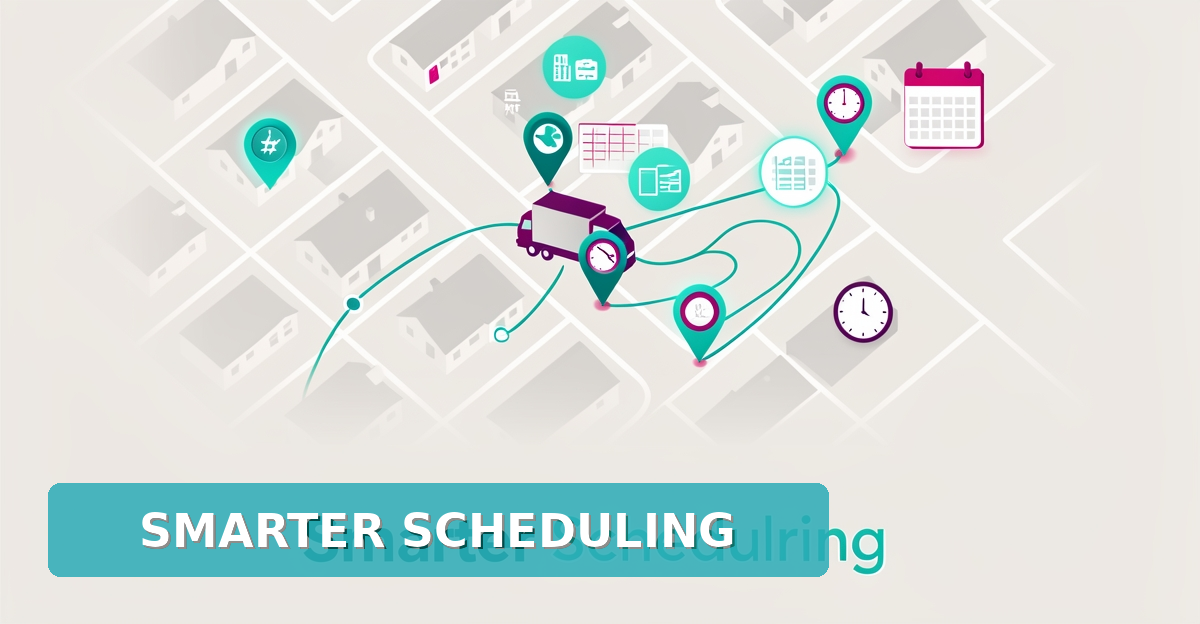
Route optimization happens in seconds, allowing AI dispatchers to calculate the most efficient paths for crews traveling between job sites. This reduces fuel consumption and travel time, directly lowering operational costs. Real-time tracking enables continuous monitoring of vehicle and technician locations, letting the system respond instantly to traffic delays, weather disruptions, or last-minute changes. When a delay is detected, the AI dispatcher automatically reassigns tasks or adjusts schedules to maintain on-time performance. The result: crews spend more time working and less time waiting or rerouting.
- AI dispatchers optimize routes in seconds, cutting the time it takes crews to complete their daily runs.
- Real-time tracking enables proactive response to delays, improving on-time arrival rates.
- Route optimization is widely reported to deliver fuel savings in the 10-20% range, with some implementations doing considerably better.
By intelligently allocating materials and synchronizing crew schedules, AI dispatchers minimize idle time and maximize utilization of both human and material resources. Technicians are assigned jobs that match their expertise and location, reducing unnecessary travel and ensuring materials arrive just in time for installation. This level of coordination prevents overbooking, underutilization, and costly rework. Businesses see improved team productivity, higher customer satisfaction, and more predictable project outcomes. AIQ Labs builds custom AI dispatchers that integrate with your existing workflows, giving patio service providers the intelligence they need to operate at peak efficiency.
Proven Impact from AI-Powered Dispatch in Field Operations
AI-powered dispatch systems deliver measurable improvements in fuel efficiency and operational performance, directly impacting field service profitability. Optimized dispatching is widely reported to achieve fuel savings in the 10-20% range through smarter routing and reduced idle time, with some implementations doing considerably better depending on how inefficient the prior routing was. These savings come from AI's ability to analyze technician schedules, material availability, and project timelines in real time, ensuring every job is assigned with minimal travel distance and wait time.
Beyond fuel efficiency, AI dispatching improves on-time delivery rates and customer satisfaction by enabling proactive responses to delays through real-time vehicle and crew tracking. This visibility allows the system to reroute technicians instantly when traffic or weather disruptions occur, maintaining service reliability. For patio and outdoor service providers, where job completion often depends on precise sequencing of material delivery and crew availability, this responsiveness prevents costly bottlenecks and improves first-time fix rates.
The broader market trend underscores the urgency of adoption: the fleet and field service management market continues to grow steadily as of late 2026, driven by demand for intelligent routing and resource optimization. As AI becomes embedded in field operations, businesses that adopt these tools gain a competitive edge through lower operating costs, higher technician utilization, and stronger service consistency, key factors in scaling field operations sustainably. AIQ Labs supports this transition through workflow builds that connect dispatching with your existing scheduling and CRM systems, turning route optimization into a capability you own long-term rather than a temporary fix.
Implementing AI Dispatch for Patio Teams Without Disruption
Transitioning to AI-powered dispatching doesn't require overhauling your entire operation overnight. Many patio businesses hesitate due to fears of downtime, steep learning curves, or costly infrastructure upgrades, but AIQ Labs designs implementations that integrate smoothly with existing workflows, minimizing disruption while maximizing long-term gains.
The process begins with a thorough assessment of your current scheduling, inventory, and project management tools to identify integration points. AI dispatchers connect via APIs to platforms like Google Calendar, QuickBooks, or custom job management software, enabling real-time synchronization of technician availability, material stock levels, and project timelines. The AI operates within your familiar ecosystem rather than replacing it.
Key implementation steps include:
- Mapping existing workflows to pinpoint bottlenecks in job assignment and resource allocation
- Configuring the AI dispatcher to align with your business rules, such as priority job types or technician skill matching
- Running parallel tests alongside manual dispatching to validate accuracy before full transition
- Providing role-specific training for dispatchers and technicians to build confidence in the new system
- Establishing feedback loops for continuous optimization based on real-world performance
Infrastructure requirements are modest: a stable internet connection, access to your core business tools via API, and basic hardware to support cloud-based AI processing. AIQ Labs handles the technical setup, including secure data pipelines and validation layers that prevent errors before they impact operations. Successful AI implementations depend on having the right infrastructure and expertise, elements AIQ Labs provides as part of an end-to-end partnership, with 200+ multi-agent systems deployed to date.
By focusing on incremental adoption and leveraging your existing investments, patio teams can begin seeing benefits like reduced idle time and improved on-time delivery within weeks, not months. AI dispatchers analyze project timelines, material availability, and technician schedules to optimize job dispatching, enabling efficient resource allocation that directly addresses common pain points in seasonal businesses.
With AIQ Labs, you retain full ownership of the custom-built dispatcher, avoiding vendor lock-in while gaining a system tailored to your unique patio operations. Whether you choose to Start Monthly, Build in Milestones, or Own It Outright, the approach ensures AI enhances your team's capabilities without disrupting the workflows your business relies on.
Start the Fit Check, a free, 2-minute assessment of your current dispatching challenges, then book a free 30-minute strategy call to explore how an AI dispatcher can integrate with your patio business. No obligation, just clarity on your AI opportunity.
Still paying for 10+ subscriptions that don’t talk to each other?
We build custom AI systems you own outright. No vendor lock-in. Full control.
Not sure where to start? Ask our AI planner
Frequently Asked Questions
How much money can an AI dispatcher actually save my patio business?
My dispatchers already use spreadsheets and whiteboards, why switch to AI?
What happens when a job gets delayed by traffic or weather mid-day?
Will implementing AI dispatching disrupt my current operation or require expensive upgrades?
How does an AI dispatcher handle material deliveries and crew availability together?
Do I own the AI dispatcher or am I locked into a vendor subscription?
From Scheduling Bottlenecks to Predictable Patio Profit
Manual dispatching is quietly eroding patio margins through idle crews, late materials, and missed windows. An AI dispatcher changes that by analyzing project timelines, material delivery windows, and technician skill sets in real time to assign the right job to the right crew at the right moment. The result is faster route optimization, proactive delay response, and synchronized materials that keep teams working instead of waiting. Businesses using optimized dispatch typically report fuel savings in the 10-20% range and stronger on-time performance. AIQ Labs builds custom AI dispatchers that integrate with your existing scheduling and CRM systems, so you can start with incremental adoption and see reduced idle time within weeks. If you're ready to turn scheduling into a competitive advantage, take the free 2-minute Fit Check at aiqlabs.ai/apply, then book a free 30-minute strategy call to map your biggest dispatch bottleneck and explore a tailored AI opportunity.
Make AI your competitive advantage — not just another tool.
Strategy, implementation and ongoing optimization. One partner, end to end.
Not sure where to start? Ask our AI planner