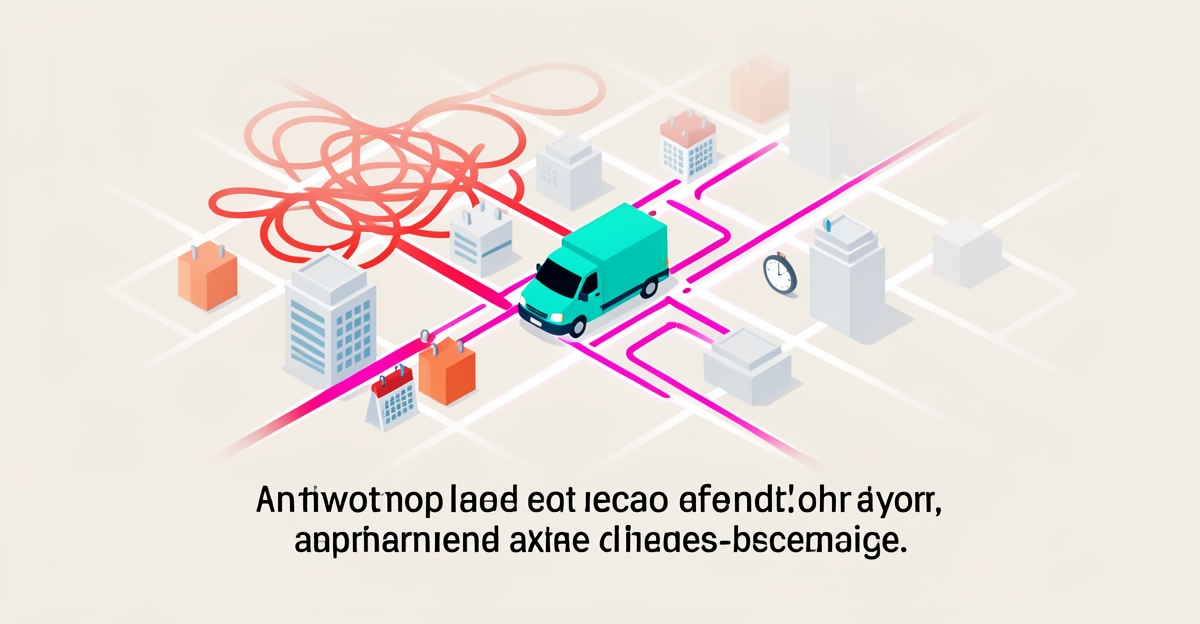
How an AI Dispatcher Can Optimize Project Scheduling for Acoustic Contractors
Key Facts
- Manual scheduling typically leaves crews idle waiting on site access, material deliveries, or route decisions, wasted hours that compound across every job
- AI dispatchers analyze technician location, skill set, traffic conditions, and job priority in real time to reduce idle time between jobs and unnecessary travel
- Optimized routing typically lowers fuel consumption and vehicle wear while increasing the number of jobs a crew can complete per day
- Implementing an AI dispatcher eliminates manual scheduling errors and double-bookings while improving client retention via accurate arrival windows
- AIQ Labs has deployed 200+ multi-agent systems and runs 4 live SaaS products daily, this is production technology, not a prototype
- AI Employees in dispatcher and coordination roles typically cost around 80% less than an equivalent human hire while working 24/7/365
Hire a team member that works 24/7 — for less than a part-time wage.
AI receptionists, SDRs, dispatchers and 99+ roles. Trained on your business, fully managed.
Not sure where to start? Ask our AI planner
Why Acoustic Contractor Scheduling Breaks Down
Acoustic contractor scheduling often breaks down due to unpredictable site conditions and material lead times that manual dispatching struggles to accommodate. When crews arrive only to find access restrictions or delayed deliveries, valuable hours are lost waiting, directly impacting project timelines and profitability. These disruptions create a ripple effect where one delayed job can push back multiple subsequent sites, compounding inefficiencies across the workload.
For acoustic contractors, the problem is exacerbated by the need to synchronize specialized labor with material deliveries like soundproofing panels or ceiling systems, which often have long lead times and narrow delivery windows. Without real-time visibility into both crew location and material status, dispatchers routinely assign teams to sites that aren't ready, resulting in avoidable downtime.
- Site access constraints from ongoing construction or safety protocols
- Material delivery delays disrupting crew readiness
- Travel time inefficiencies between geographically dispersed jobs
- Crew skill mismatches due to limited visibility into qualifications
- Last-minute cancellations or rescheduling without real-time adjustment
These challenges are amplified by the geographic dispersion of acoustic jobs, where travel between sites consumes significant portions of the workday. Manual dispatching rarely optimizes routes dynamically, leading to redundant mileage and increased fuel costs, especially problematic when servicing urban centers with traffic congestion or remote locations with limited access. AIQ Labs' [AI Workflow Builds](/workflow-builds) address this by rebuilding the one workflow that costs you the most, often dispatch, with continuously analyzed technician location, job priority, and travel conditions that minimize non-billable travel time.
For acoustic contractors, whose profitability hinges on maximizing billable hours per technician, replacing static schedules with adaptive, data-driven routing translates directly to recovered revenue and improved crew utilization. AI dispatch ensures teams spend more time installing acoustic solutions and less time in transit or waiting for site access.
How AI Dispatchers Make Scheduling Decisions
Acoustic contractors operate in environments where timing and precision directly impact project success. When crews must navigate site access restrictions, material delivery windows, and specialized skill requirements, traditional scheduling methods often fall short. An AI dispatcher functions as a continuously working coordinator that evaluates technician location, skill set, job priority, traffic patterns, and customer availability to assign and sequence work in real time.
Unlike static scheduling tools, AI systems recalculate optimal assignments every time new data emerges, such as a sudden traffic delay or a last-minute customer availability change, ensuring crews are always directed toward the highest-value next action. It behaves like a dispatcher who can see every variable at once and make the best available decision, every time conditions change.
For acoustic contractors, this means accounting for factors like soundproofing material delivery schedules, site noise restrictions during certain hours, and the need for certified technicians on specialized installations. By processing these constraints continuously, AI dispatchers reduce idle time between jobs and minimize unnecessary travel.
- Optimized routing decreases fuel consumption and vehicle wear-and-tear
- Increased technician productivity allows for more jobs completed per day
- Enhanced customer satisfaction results from accurate arrival times and faster service response
- Administrative overhead drops significantly through automation of complex scheduling tasks
These improvements directly address the operational pain points acoustic contractors face when managing multiple concurrent projects with interdependent timelines. AIQ Labs builds dispatcher logic that integrates with your project management tools, ensuring scheduling decisions align with broader job timelines and resource dependencies. The result is a scheduling approach that adapts to real-world complexities while maintaining project momentum.
The Business Impact: Efficiency, Cost, and Customer Satisfaction
Every project manager in the acoustic contracting world knows the sinking feeling of watching a schedule unravel because a crew arrived at a site that wasn't ready. However, the true cost of inefficient dispatching goes far beyond a single bad day; it bleeds profitability through wasted fuel, idle labor, and administrative chaos.
Implementing an AI dispatcher fundamentally changes this equation by moving from reactive guesswork to proactive, data-driven logistics. By analyzing variables like traffic patterns, site readiness, and crew location in real-time, these systems deliver significant operational improvements that impact the bottom line immediately.
The most tangible savings often appear in fleet management and resource allocation. AI optimization reduces fuel consumption and vehicle wear-and-tear by calculating the most efficient routes between job sites. This efficiency allows contractors to fit more jobs into a workday without overworking their crews, directly increasing daily revenue capacity.
Beyond logistics, the administrative burden of scheduling shrinks. Instead of project managers spending hours cross-referencing material delivery dates with labor availability, AI handles the complex coordination instantly. This shift reduces overhead and allows office staff to focus on higher-value tasks like client relationship management and business development.
The cost argument is straightforward: an [AI Employee](/ai-employees) in a dispatcher or coordination role typically costs around 80% less than an equivalent human hire, and works around the clock. For an acoustic contractor operating on tight margins, recapturing that overhead can be the difference between stagnation and growth.
Customer satisfaction also sees a measurable boost when scheduling is precise. Providing accurate arrival times and faster service response builds trust and improves retention. When a general contractor knows exactly when your team will arrive to install ceiling grids or wall panels, your reputation for reliability solidifies.
Key advantages of AI-driven scheduling include:
- Lower operational costs through optimized routing and reduced fuel usage
- Higher daily job completion rates per crew
- Elimination of manual scheduling errors and double-bookings
- Improved client retention via accurate, reliable arrival windows
At AIQ Labs, we've deployed 200+ multi-agent systems for trades and field services, and we run 4 live SaaS products daily ourselves, so we build on technology we depend on. By integrating an AI Dispatcher into your existing operations, you stop managing chaos and start managing growth. The technology doesn't just save money on gas; it professionalizes the entire customer experience, ensuring your business remains competitive in an increasingly digital construction landscape.
Implementation Roadmap: From Manual Scheduling to AI Dispatch
Acoustic contractors often find themselves juggling tight site windows, material lead times, and crew availability, turning scheduling into a daily puzzle. Manual methods like spreadsheets or basic calendars struggle to adapt when a delivery is delayed or a crew member calls in sick, leading to idle time and frustrated clients. This is where an AI dispatcher transforms reactive planning into proactive optimization.
By continuously analyzing project timelines, labor skills, and real-time travel data, an AI dispatcher can significantly reduce scheduling inefficiencies. For acoustic contractors, this means fewer gaps between jobs, better utilization of specialized crews, and more accurate client commitments, all without adding administrative burden.
The journey to AI dispatch begins with a clear audit of current workflows. Map out how jobs are currently scheduled: who makes decisions, what tools are used (such as CRM, project management software, or shared calendars), and where delays or errors commonly occur. Identify data gaps, like inconsistent job duration estimates or missing travel time logs, that could undermine AI accuracy. This foundational step ensures the AI system is built on reliable inputs and aligned with actual operational pain points.
Next, prioritize seamless integration with existing tools. An effective AI dispatcher must pull real-time data from calendars (like Google Calendar or Outlook), update project status in platforms such as Jobber or Buildertrend, and sync client details from your CRM. AIQ Labs specializes in building custom integrations that create a unified operational view, eliminating manual data entry and the errors that come with it. This connectivity allows the AI to make informed decisions, like assigning a crew to a job based on proximity, skill match, and material delivery schedules, without human intervention.
Data quality is non-negotiable. Before deployment, cleanse historical scheduling data: standardize job types, confirm crew availability patterns, and validate address accuracy for travel time calculations. Inaccurate inputs lead to poor AI recommendations, so invest time in establishing clean, consistent data practices. Once the system is live, continuous monitoring ensures it adapts to changing conditions, such as seasonal workload shifts or new service offerings.
Finally, plan for team adoption through targeted training and change management. Frame the AI dispatcher as a tool that reduces administrative load, freeing schedulers to focus on client relationships and complex exceptions. Start with a pilot group, gather feedback, and refine the system before full rollout. AIQ Labs supports this transition with flexible engagement models, [Start Monthly](/pricing), Build in Milestones, or Own It Outright, providing guidance on training, performance tracking, and ongoing optimization to ensure the technology delivers lasting value.
With a structured approach, auditing workflows, securing integrations, ensuring data integrity, and supporting team adoption, acoustic contractors can move from manual scheduling chaos to intelligent, AI-driven dispatch. The result is a more agile operation where jobs flow smoothly, crews stay productive, and clients receive reliable service. For contractors ready to explore this shift, the path starts with a 2-minute [Fit Check](/apply), followed by a free 30-minute strategy call to assess readiness and map a practical path forward. Starting with a single workflow fix, like dispatch automation, can deliver measurable improvements in weeks, not months, laying the groundwork for a broader [AI Operating System](/ai-operating-systems) when you're ready.
Overcoming the Common Adoption Challenges
For acoustic contractors, adopting an AI dispatcher often raises practical concerns about integration, accuracy, cost, training, and workforce impact, all valid considerations when introducing new technology into established workflows. Addressing these challenges head-on with a thoughtful, phased approach ensures smoother transitions and sustainable results.
Integration with existing business systems is frequently cited as a top hurdle, but modern AI dispatch solutions are designed to connect with tools already in use, such as project management platforms, accounting software, and scheduling calendars. By leveraging APIs and middleware, data flows bidirectionally between systems, eliminating silos and reducing manual entry, freeing up significant administrative hours each week. This connectivity ensures the AI dispatcher operates within the contractor's current tech stack rather than requiring a complete overhaul.
Data accuracy is another common concern, yet AI systems continuously improve through machine learning, refining predictions based on real-world outcomes like job completion times and travel delays. When trained on historical project data, these models become increasingly precise in forecasting labor needs and optimizing routes. Regular validation layers and human oversight further ensure reliability without sacrificing automation benefits.
Initial investment and employee training are often perceived as barriers, but flexible engagement models, such as starting with a single workflow fix at a fixed price, or deploying an AI Employee on a monthly basis, allow contractors to begin small, prove value, and scale confidently. Training is role-specific and hands-on, focusing on how teams interact with the AI dispatcher rather than replacing their expertise. This human-in-the-loop approach builds trust, as workers retain control over critical decisions while the AI handles routine optimization.
Finally, fears of job displacement are mitigated by positioning the AI dispatcher as a force multiplier: it takes over repetitive scheduling logic, freeing skilled staff to focus on client relations, complex problem-solving, and on-site coordination. Rather than eliminating roles, this shift enhances job satisfaction and operational capacity, proving that AI adoption, when guided by partnership and phased implementation, strengthens rather than disrupts the workforce. Contractors that follow this path consistently report higher adoption rates and faster realization of benefits, turning skepticism into sustained advantage.
Still paying for 10+ subscriptions that don’t talk to each other?
We build custom AI systems you own outright. No vendor lock-in. Full control.
Not sure where to start? Ask our AI planner
Frequently Asked Questions
How does an AI dispatcher reduce idle time for acoustic contractor crews?
What kind of cost savings can acoustic contractors expect from using AI dispatch software?
Will implementing an AI dispatcher require replacing my current scheduling tools?
How does AI dispatch improve customer satisfaction for acoustic contracting jobs?
Is there a risk that AI dispatch will replace human schedulers or dispatchers?
What data do I need to prepare before implementing an AI dispatcher?
Turn Scheduling Chaos into Your Competitive Edge
Acoustic contractors lose valuable time and profit when scheduling breaks down due to site access issues, material delays, and inefficient routing, problems that compound across multiple jobs and erode margins. An AI dispatcher solves this by continuously analyzing technician location, skill sets, traffic, job priority, and material delivery windows to optimize assignments in real time, reducing idle time, cutting fuel costs, and increasing daily job completion rates. This shift from reactive planning to proactive logistics not only lowers operational costs but also improves customer satisfaction through reliable arrival windows and faster service response. For contractors ready to move beyond spreadsheets and manual coordination, the path forward starts with assessing current workflows and identifying where AI-driven automation can deliver immediate impact. Take the first step with a free 30-minute strategy call to explore how a custom AI dispatcher can integrate with your existing systems and begin recovering lost productivity, no obligation, just clarity on where AI can work for your business.
Make AI your competitive advantage — not just another tool.
Strategy, implementation and ongoing optimization. One partner, end to end.
Not sure where to start? Ask our AI planner